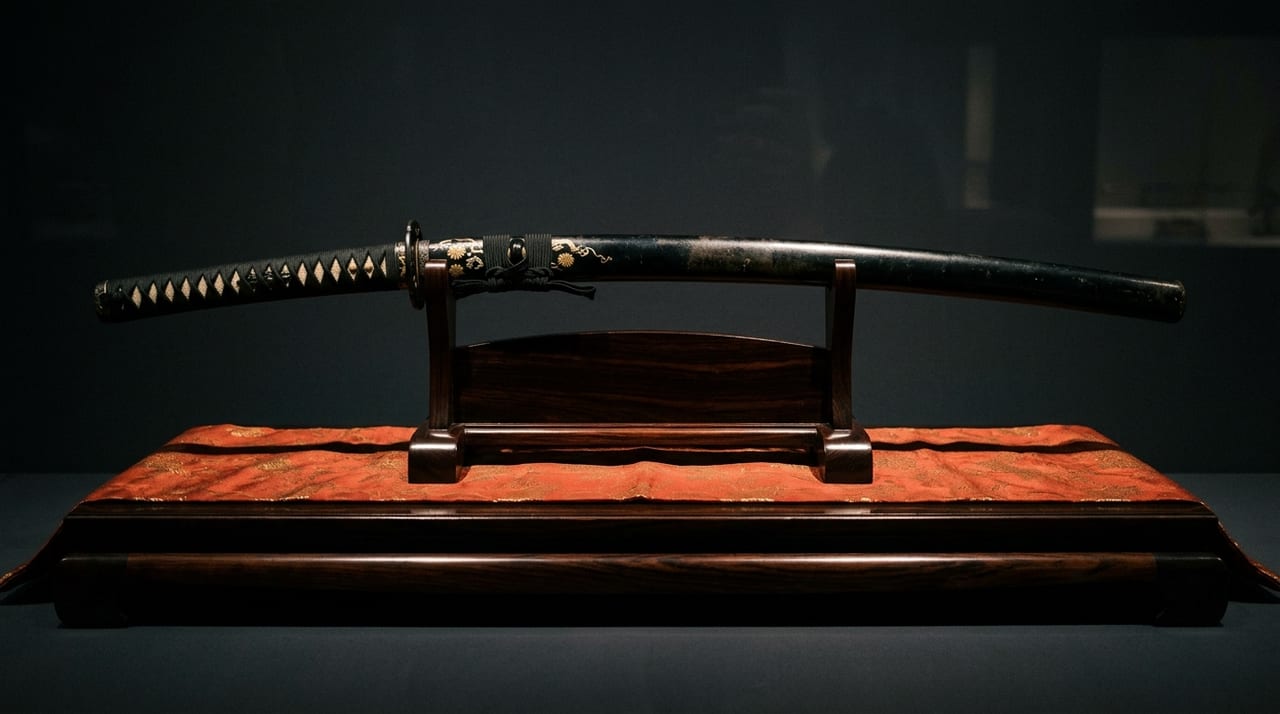
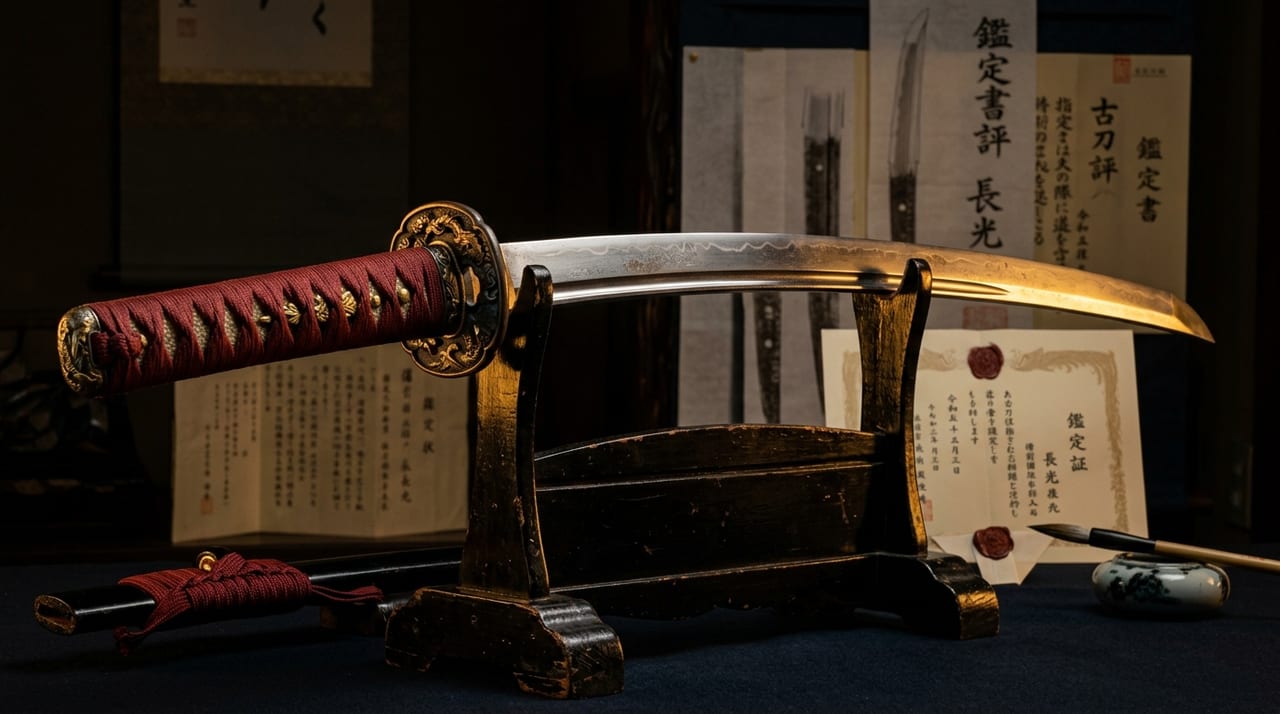
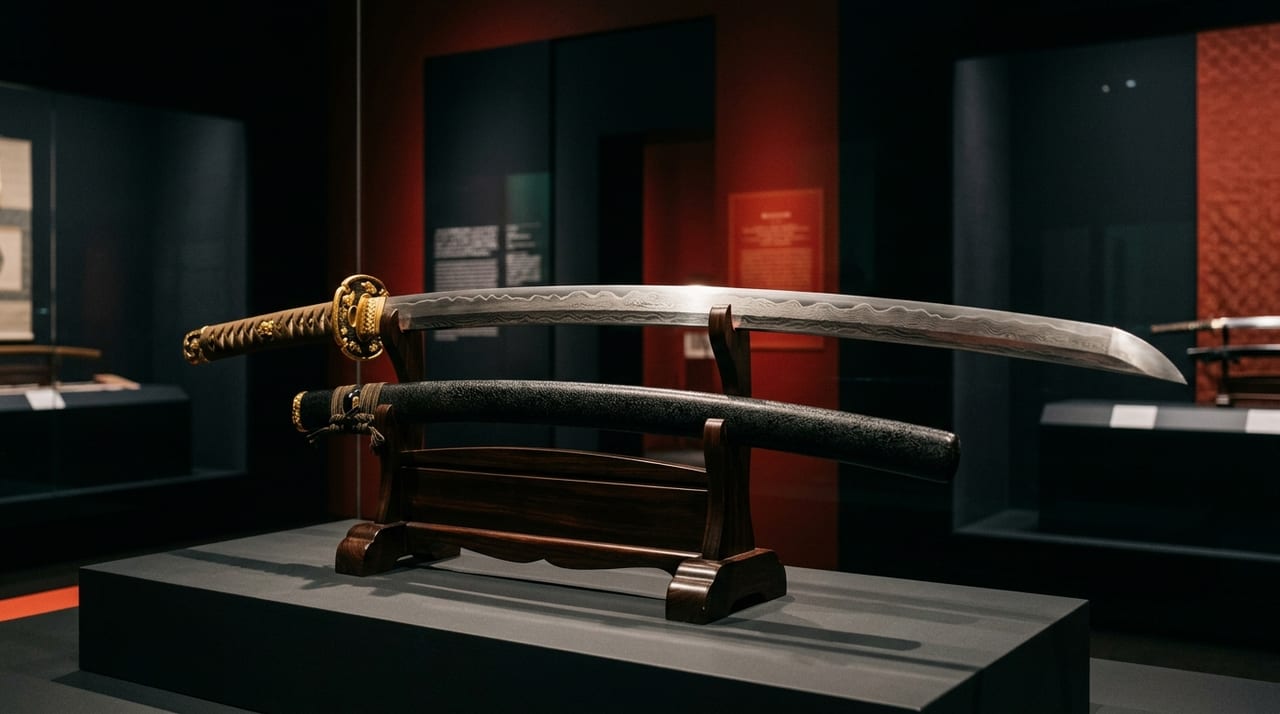
The Golden Age of Blade Patterns in the Nanboku-chō Period: The Greatest Masterpieces of Chōji Midare and Their Influence on Later Generations
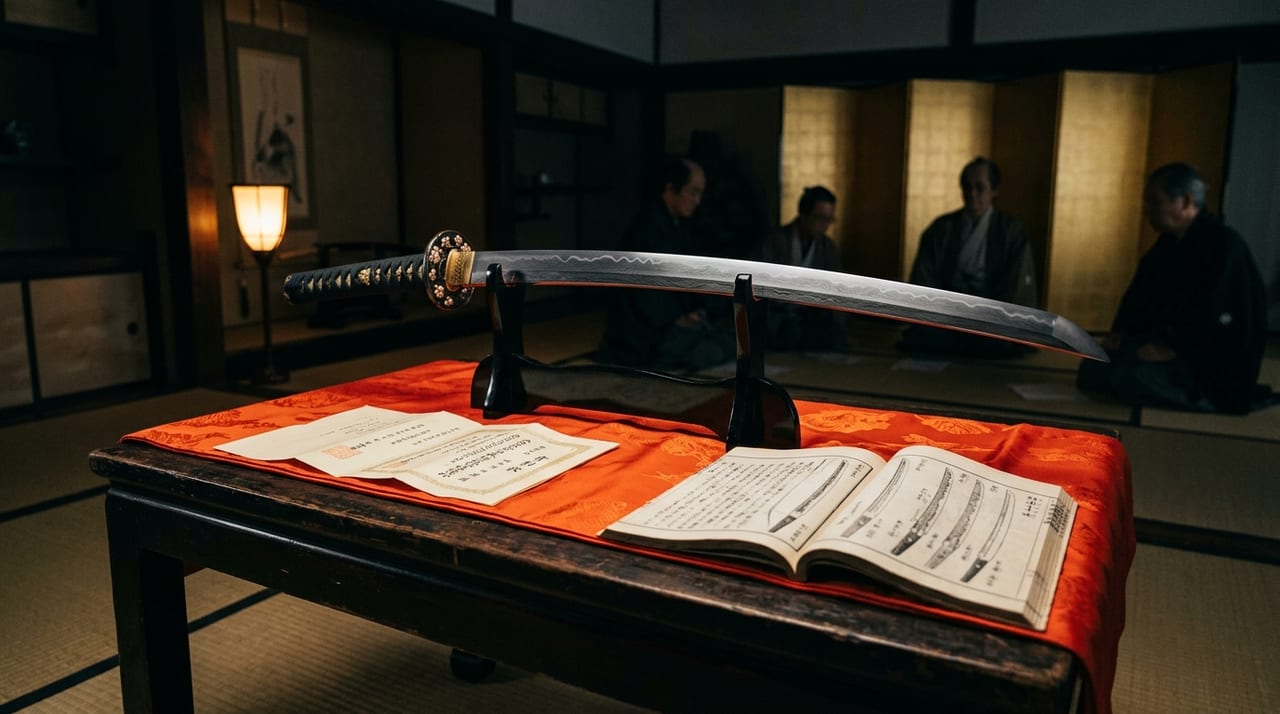 * Image is for illustrative purposes only.
Table of Contents
Nanbokucho Era — The Intersection of Turbulence and Art
The Nanbokucho era (1336–1392) was one of the most intensely tumultuous periods in Japanese history, characterized by political disorder and armed conflict. Following the collapse of Emperor Godaigo's Kenmu Restoration (1333), an unprecedented situation emerged where the Northern Court in Kyoto (supported by the Ashikaga clan) and the Southern Court in Yoshino (supporting Emperor Godaigo) coexisted for nearly 60 years.
During this era, the explosive expansion of demand for weaponry caused Japanese sword production to surge dramatically. However, beyond mere mass production, Japanese sword aesthetics reached a pinnacle during this period. The choji-midare hamon, the supreme masterpiece of blade patterns, was born precisely in this turbulent era. The expansion of sword demand during this period of upheaval is also addressed in The Nanbokucho Sword Revolution.
What is Choji-Midare — A Blade Pattern Resembling Clove Flowers
Choji-midare is a hamon characterized by successive hardened-edge sections that swell into rounded shapes resembling clove flowers. Patterns featuring rounded "heads" and "feet" at their bases repeatedly appear along the blade edge.
Technical Classification of Choji-Midare
Choji-midare has several morphological variations:
Ko-choji (small choji): Small, refined choji forms requiring delicate and precise technique. This was a specialty of the Ichimonji school in the Kamakura period.
Dai-choji (large choji): Large, magnificent choji forms that reached their peak during the Nanbokucho era. The boldness of the hamon reflects the intensity of the age.
Kaeru-ko choji (tadpole choji): A special form where the choji head elongates like a tadpole.
Nioi choji (scent choji): Choji with few nie particles, centered instead on nioi (a soft, diffuse luster). These convey a calm and refined impression.
The Technical Difficulty of Creating Choji-Midare
Choji-midare ranks among the most difficult hamon to create. The reasons are as follows:
- Precision in yakiba-tsuchi application: Creating each choji form requires extremely fine control of how yakiba-tsuchi (hardening clay) is applied to the blade before quenching
- Uniform control of quenching temperature: Even slight variations in furnace temperature affect choji form
- The method of water quenching: The angle and speed of water cooling subtly alter choji shape
Only by perfectly controlling all these elements can a beautiful choji-midare be created.
Master Smiths and Masterpieces of the Nanbokucho Era — The Golden Age of Choji-Midare
Master swordsmiths who perfected choji-midare during the Nanbokucho era and their representative works:
Osafune Kanemitsu
A swordsmith from Osafune in Bizen Province and one of the most important smiths of the early Nanbokucho era (mid-14th century). Kanemitsu's hamon is characterized by notare-midare (a nie-out pattern) heavily influenced by the Soshu tradition, though the largest dai-choji-midare is represented by the Ichimonji school of the Kamakura period (Fukuoka Ichimonji and Yoshioka Ichimonji). Kanemitsu's nie-out notare-midare is powerful with a wide hardening width. Many fine extant swords by Kanemitsu exist, and several are designated as NBTHK Important Swords or Important Cultural Properties. Kanemitsu's life and representative works are detailed in the article Osafune Kanemitsu.
The Succession of Osafune Kagehide and Nagamitsu Lines
The techniques of Nagamitsu (a renowned master of the late Kamakura period) were inherited by his descendants and students during the Nanbokucho era, who as members of the Osafune school preserved and advanced choji-midare technique.
The Fukuoka Ichimonji Lineage
The Ichimonji school is a lineage continuing from the Kamakura period, and Ichimonji blades bearing the "Yoshiji" signature are highly regarded as choji-midare masterpieces. Swordsmiths descending from the Ichimonji tradition were active during the Nanbokucho era. The complete genealogy of the Ichimonji school is compiled in The Complete History of the Ichimonji School.
Morphological Features of Nanbokucho Swords — "Tanto of the Enbunji Joji Era"
Nanbokucho swords possess distinctive morphology distinctly different from those of the preceding Kamakura period and the following Muromachi period.
Increase in blade length (trend toward odachi and nodachi): In the intense field warfare of the Nanbokucho era, longer swords were favored, and odachi and nodachi exceeding 3 shaku (approximately 90 cm) in blade length were produced. The prevalence of tachi today that have been "repolished from odachi" (shortened through reworking) is also a product of this era.
Wide blade width and grand appearance: The blade is broad with an overall magnificent impression. A distinguishing feature is the large difference between the width at the base (motozuke) and the width at the point (sakizuke), with the center of gravity shifted toward the handle.
Shallow curve (reduced curvature): Reflecting the transition from cavalry to foot combat, there is a tendency toward reduced curvature.
Influence on Later Periods — The Lineage of Choji-Midare
Nanbokucho choji-midare exerted profound influence on subsequent Japanese sword technique.
Succession into the Muromachi and Sengoku Periods
Entering the Muromachi period (1392–1573), mass production demands following the Onin War (1467) led to the dominance of suguha and gunome patterns, which were easier to produce than choji-midare. However, master smiths of Bizen continued to produce choji-midare.
The "Koto-utsushi" Boom of the Edo Period
During the Edo period (1603–1868), as smiths turned to "studying ancient works," Nanbokucho choji-midare was studied as an "ideal model." Masters such as Suishinshi Masahide and Taikei Naotane sought to revive techniques by emulating celebrated swords of the Nanbokucho and Kamakura periods.
A Challenge for Modern Swordsmiths
Modern Living National Treasures and swordsmiths designated as Important Intangible Cultural Properties also engage with choji-midare as "the most challenging hamon." Creating works surpassing the dai-choji-midare of the Kamakura Ichimonji school or the nie-out notare-midare of Kanemitsu from the Nanbokucho era is said to be one ultimate goal of contemporary swordsmiths.
Appreciation Points for Nanbokucho Swords
Points collectors and enthusiasts should consider when appreciating Nanbokucho swords:
- The boldness of choji-midare: Characterized by large, dynamic choji. Those conveying a "lively" impression are highly valued
- The condition of the blade steel (jigane): The vibrancy of itame-flow jigane. Those with active jikei (movement in the grain) are supreme
- The form of the kissaki (tip): Large, turbulent kissaki are characteristic of the Nanbokucho period. Those with deep kaeri are typical
- Whether the sword has been repolished: If an odachi has been repolished, ascertain the original blade length and understand the morphological change.
Conclusion — The Gift the Nanbokucho Era Gave to Japanese Sword Aesthetics
The 60 years of the Nanbokucho era were politically turbulent. However, from a decorative arts perspective, it was a "golden age of hamon" in which choji-midare, the supreme artistic form, blossomed.
The warfare drove swordsmiths to produce countless blades, refining technique and deepening the pursuit of beauty — this is the paradoxical allure of Nanbokucho swords.