Osafune Kanemitsu: Master Craftsman of Bizen Osafune and the Grandeur of the Northern and Southern Courts
 * Image is for illustrative purposes only.
Table of Contents
Osafune Kanemitsu and His Role as a Swordsmith
Osafune Kanemitsu was a swordsmith who flourished in the mid-14th century based in Osafune, Bizen Province during the Nanboku-chō period. He is widely known as one of the master craftsmen who embodied the golden age of the Bizen Osafune school, and he left many excellent works especially in large tachi and long swords. His father is said to be Kagemitsu, and he was born into a family line that carried the blood of renowned craftsmen from the late Kamakura period. Multiple signatures such as "Osafune Kanemitsu," "Kanemitsu," and "Nagamitsu Kanemitsu" have been confirmed on his works, suggesting the breadth of his production period and working area. Many of his works are estimated to have been forged from the Kemmu era (1334-1338) through the Teihan and Kan'ō eras (around 1345-1352).
The Nanboku-chō period was also a major turning point in sword history. Against the backdrop of large-scale warfare in warrior society, there was demand for larger and more magnificent swords, and the demand for naginata and large tachi increased. Kanemitsu is evaluated as a swordsmith who responded to the demands of this era by crafting large swords and pushing the technical possibilities of the Bizen Osafune school to their limits.
The Working Style and Technical Characteristics of Kanemitsu's Swords
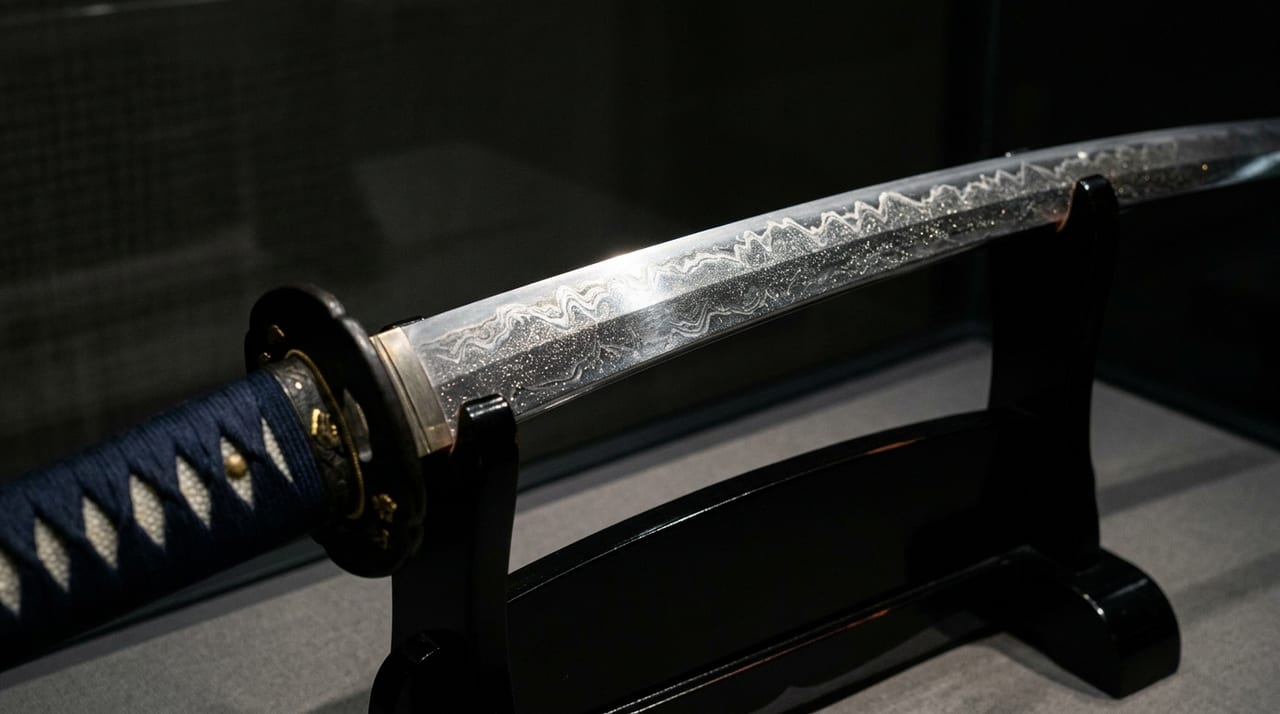
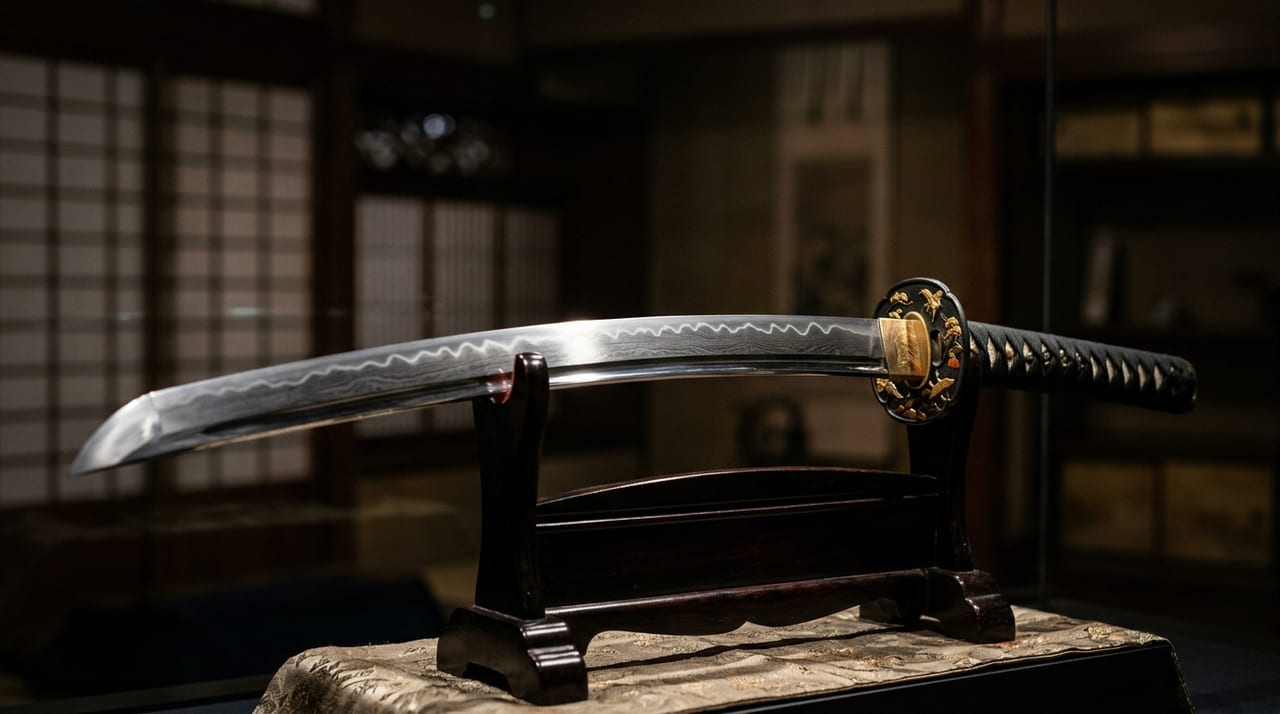
As a characteristic of Kanemitsu's swords, the first point to mention is the magnificent hamon patterns. While inheriting the lineage of Nagamitsu and Kagemitsu from the Kamakura period, his works frequently display hamon with large undulating patterns, box-wave patterns, and gunome characteristic of the Nanboku-chō period. The nie and nioi patterns within the hamon are abundant, and with high yakiba-tsuchi, they leave a strong impression on the viewer.
The jihada often displays utsuri patterns on itamehada, clearly inheriting the characteristics of the Bizen tradition. On the other hand, some examples show intense yakiba widths close to the "hitatsura" all-over tempering characteristic of the Nanboku-chō period, possessing a dynamic beauty different from the serene Bizen style of the early Kamakura period. Most of his surviving works have come down to the present day with shallow curves due to heavy repolishing. Many swords from the Nanboku-chō period have undergone repolishing and alteration after wartime, and to restore their original form, the manufacturing date must be estimated from the signature and the shape of the nakago.
Representative Existing Works and Cultural Property Designations
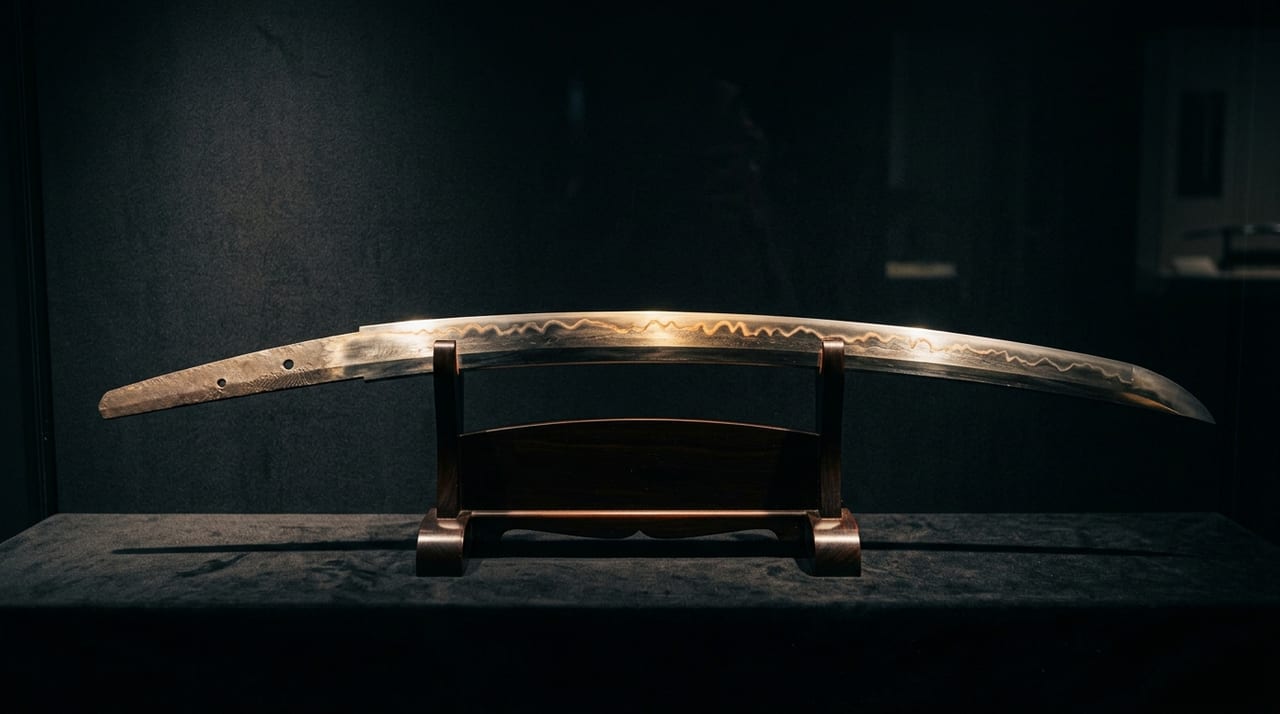
Kanemitsu's works are housed in major museums and art museums throughout the country, and several are designated as Important Cultural Properties or Important Art Objects. Kanemitsu is particularly renowned for his production of large tachi, and large swords created for presentation to shrines or as gifts to warrior houses survive in various locations. The large tachi, with overwhelming presence even in form alone, represents the totality of the ironworking and forging techniques of the time, and is inseparable from the turbulent historical background of the Nanboku-chō period.
It is worth noting that "Uguisumaru" is known as a famous sword-related item, but this is a tachi (blade length approximately 81.8 cm) attributed to the work of Tomenari, a swordsmith of ancient Bizen, and is held in the imperial collection by the Imperial Household Agency. Since it is not a work of Kanemitsu and differs in maker, type, and collection, care should be taken not to confuse it.
The Environment Surrounding Swordsmiths in the Nanboku-chō Period
The Nanboku-chō period in which Kanemitsu flourished was an era when political turmoil and increased military demand progressed simultaneously. Internal conflicts exemplified by the confrontation between brothers Ashikaga Takauji and Ashikaga Tadayoshi, and the resistance movements led by Kusunoki Masashige, created nationwide demand for weapons. Bizen Osafune, as a sword-producing center continuing from the Kamakura period, possessed overwhelming production capacity, and many swordsmiths supplied swords in mass production systems.
Against this social background, some master craftsmen produced not only mass-produced items but also large swords with advanced techniques and swords as works of art. Kanemitsu is a prime example, and his works can be understood from both the economic and social environment in which swordsmiths were placed and their pride as craftsmen. As the Sengoku period began, daimyo throughout the regions competed to acquire Osafune swords, and the name Kanemitsu became synonymous with Bizen blades.
Kanemitsu's Successors and Their Influence on the Bizen Osafune School
Kanemitsu's techniques influenced later swordsmiths and enriched the lineage of the Bizen Osafune school. During the Ōei period (early 15th century), many excellent swordsmiths such as Shigemitsu, Yasumitsu, Motemitsu, and Motoshige were active, and their styles inherited in some form the dynamic hamon expressions established by Kanemitsu of the Nanboku-chō period.
Within the larger framework of the Bizen tradition, Kanemitsu occupies a unique position as a swordsmith who embodied the "splendid beauty of the Nanboku-chō period." The dynamic beauty of hamon patterns unique to the Nanboku-chō period, which differs both from the refined beauty of the Kamakura period and from the technical expressions of the Shintō period, appears most vividly in Kanemitsu's works. When later swordsmiths undertook reproductions titled "Nanboku-chō Kanemitsu-style," the large undulating hamon patterns and magnificent form became the core of the reproduction.
Key Points for Authenticating Osafune Kanemitsu Swords
The main points for authenticating a sword by Kanemitsu are as follows.
- The scale and scope of the hamon
- The height of the yakiba-tsuchi
- The presence or absence of utsuri in the jihada
- The finish of the nakago
The jihada of Bizen swords from the Nanboku-chō period shows utsuri patterns more prominently than contemporary swords from other production areas, making it one element that increases confidence in Bizen attribution. Additionally, whether the nakago retains its original form before repolishing affects the estimation of the manufacturing period, and the script style of the signature and the appearance of chisel marks are also important authentication materials.
For modern sword collectors and enthusiasts, works by Osafune Kanemitsu are highly regarded as masterpieces of the Bizen tradition representative of the Nanboku-chō period. For those interested in Bizen tradition swords and those from the Nanboku-chō period, the sword information and columns featured in TOUKENZA's online catalog should be helpful references. Inquiries regarding swords are accepted anytime through the site's inquiry form.