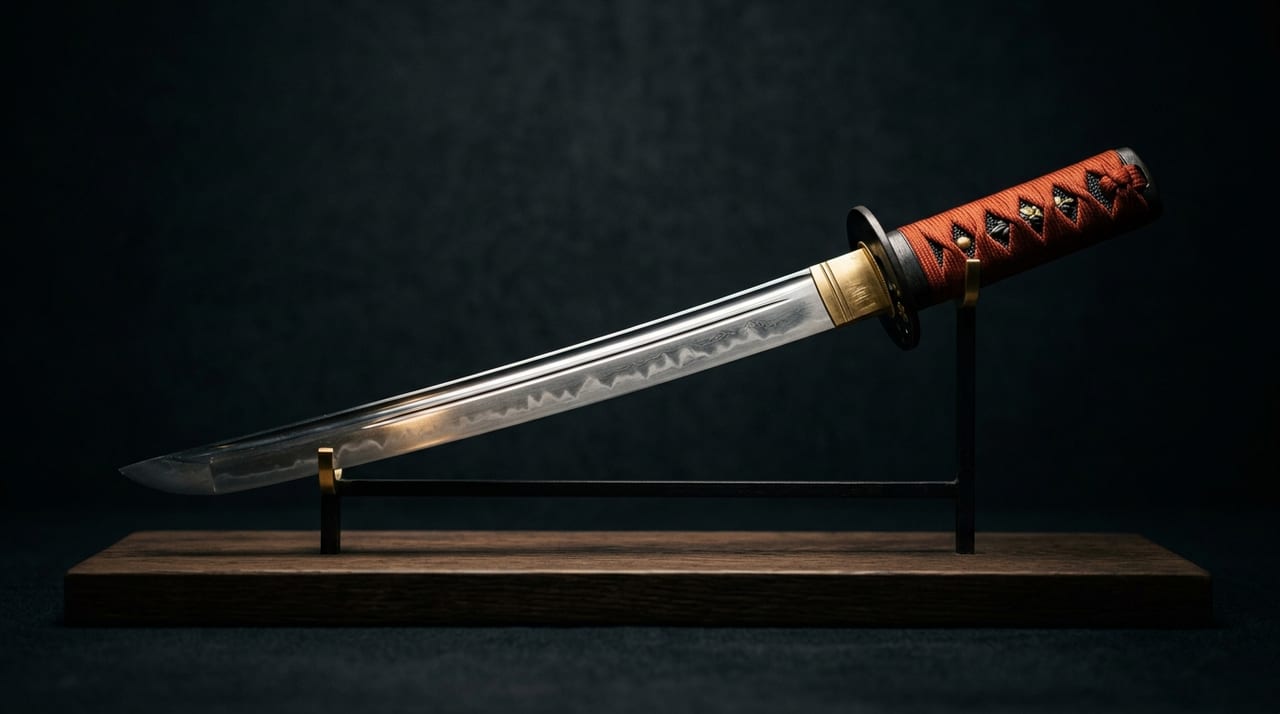
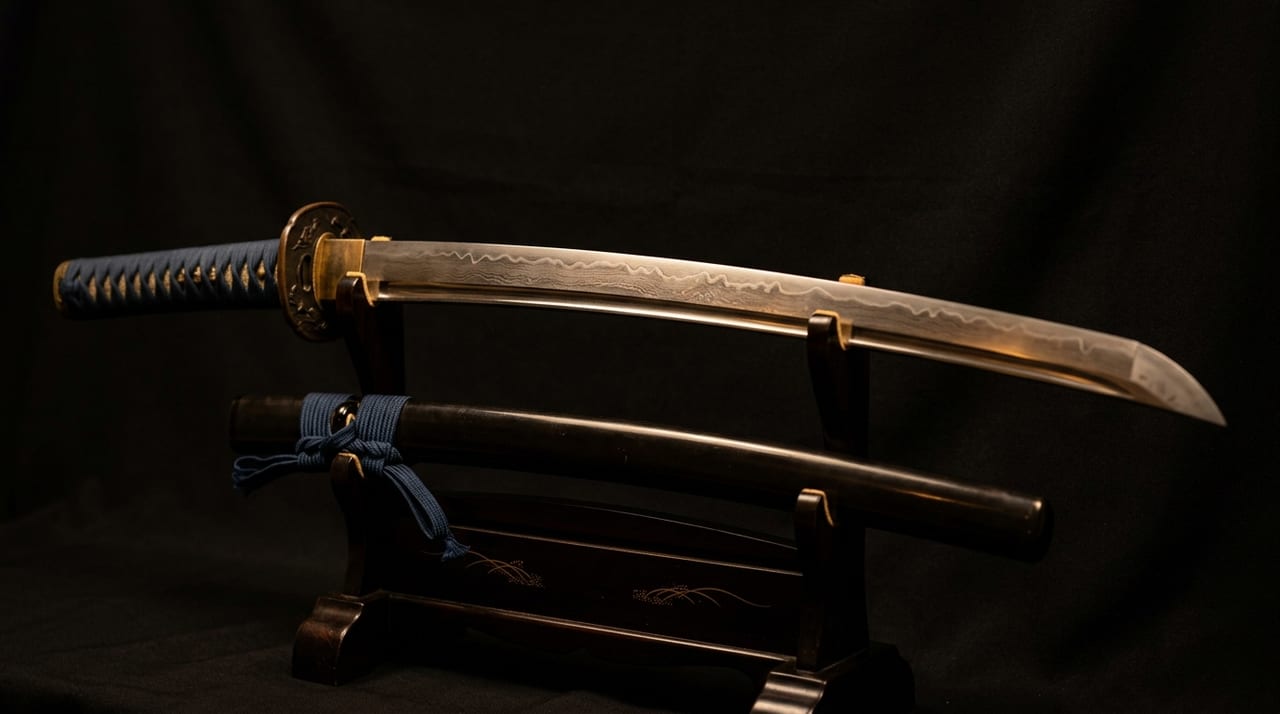
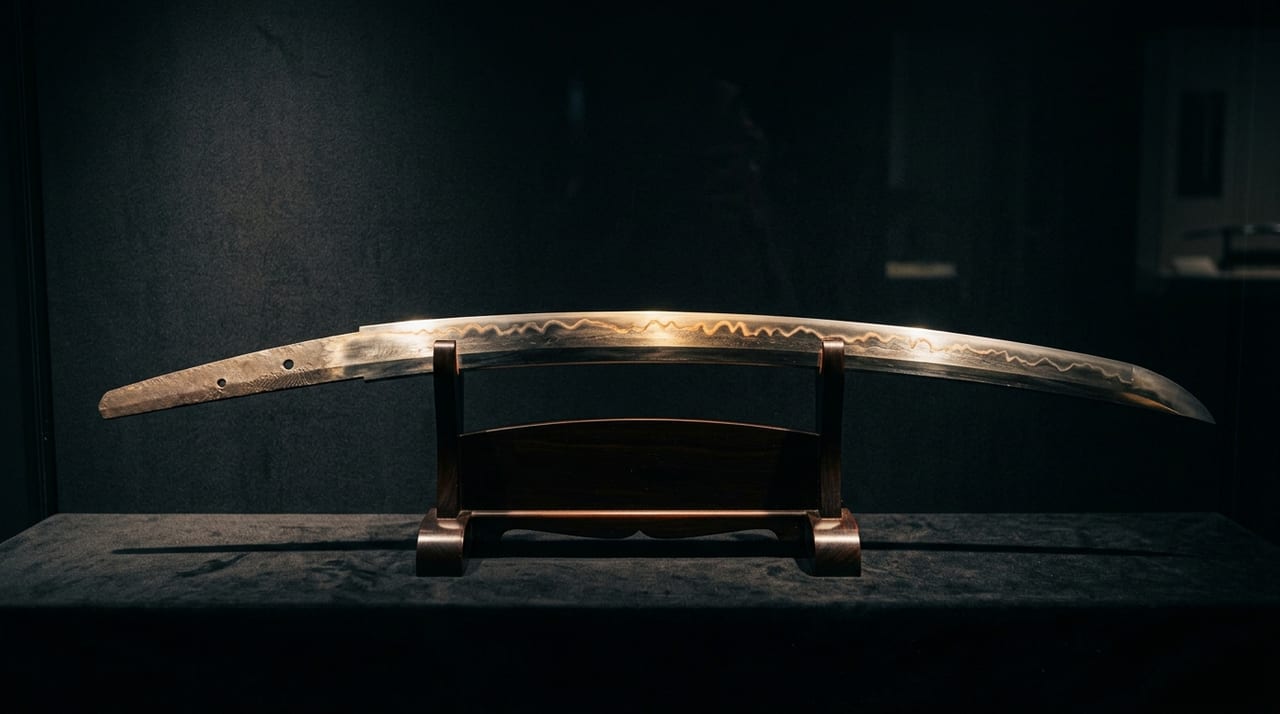
Hasebe Kunishige — the tōkō who brought Sōshū-den to Yamashiro, master of the Nanbokuchō period who created the kokuhō "Heshikiri Hasebe"
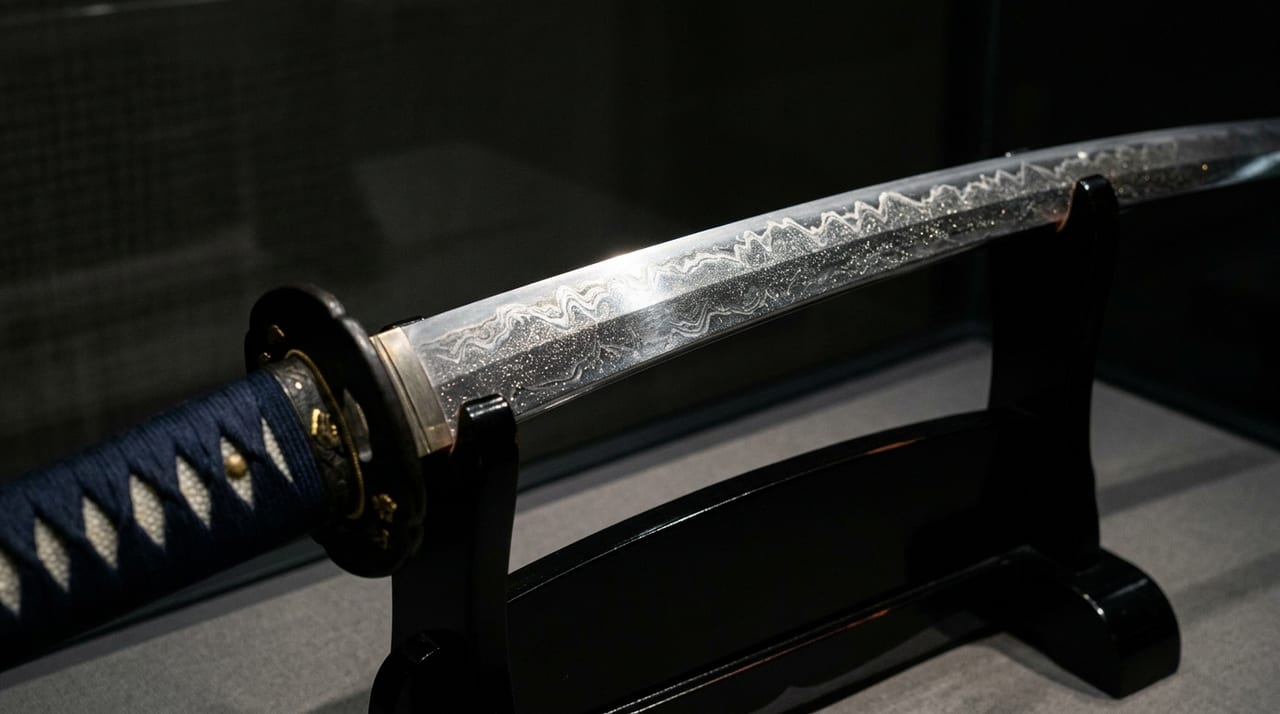 * Image is for illustrative purposes only.
Table of Contents
The tōkō who brought Sōshū-den to the capital
Hasebe Kunishige was a tōkō active during the Nanbokuchō period, known as one of the Jūtetsu of Masamune. His origins are disputed, but he is most often described as the tōkō who transmitted the Sōshū-den style to Yamashiro (Kyoto), and his work is said to represent a fusion of the Sōshū-den tradition with that of Yamashiro.
The Nanbokuchō period was also an era in which tachi grew more imposing, and many surviving swords had their dimensions reduced through ō-suriage. Among Hasebe's surviving works, pieces brought into their current form through suriage are known.
The swords of the Nanbokuchō period
The Nanbokuchō period, in which Hasebe Kunishige was active, is known as the time in Japanese sword history when blades took on their most imposing forms. Swords with broad mihaba, greatly extended kissaki, and long overall dimensions were favored. It is thought that the demand for practical power amid continued warfare was reflected in the sugata of this era.
Such long blades were often shortened to more manageable dimensions in later periods, and many works from great smiths of the era survive mumei because the nakago was cut down through suriage. The high proportion of mumei works among celebrated Nanbokuchō smiths is a consequence of exactly this.
The individuality of hitatsura
Indispensable in describing the style of Hasebe Kunishige is the hamon known as hitatsura. Rather than being confined to the cutting edge, the yaki-ire extends into the ji as well, producing a complex and vivid scene in which the hamon and ji-activity intermingle. The lively, exuberant expression that develops the powerful nie-rich Sōshū-den aesthetic yet further is regarded as a hallmark of the Hasebe school.
The jigane shows raised itame grain with ji-nie, and the combination of the vigorous quality characteristic of the Nanbokuchō period with the refinement associated with Kyoto work is considered a particular attraction.
Ō-suriage mumei and kantei attribution
Swords that have lost their mei have been identified through kantei (kiwame) — the process of determining a sword's school or maker from characteristics such as sugata, jigane, and hamon. During the Edo period the Hon'ami family, whose hereditary profession was sword appraisal, carried out this work, and that tradition has been passed down to modern appraisal bodies.
That a sword ō-suriage mumei can nonetheless be attributed to a specific tōkō is itself proof that the stylistic personality of the work is clearly discernible. Works of the Hasebe school, with their distinctive hitatsura, offer abundant points of interest even when mumei, and one of their pleasures is being able to verify for oneself the grounds for an attribution through direct observation.
The kokuhō "Heshikiri Hasebe"
The work that has most widely spread the name of Hasebe Kunishige is the kokuhō "Heshikiri Hasebe." This sword is known for having been handed down as Oda Nobunaga's Beloved Sword and subsequently passing to the Kuroda family; it is currently held at Fukuoka City Museum. The name "Heshikiri" is said to derive from the story that Nobunaga used this sword to crush (heshikiru) an adversary during an execution.
Although ō-suriage mumei, this blade has been attributed to Hasebe Kunishige, and it stands as one of the most celebrated works in the entire history of the Japanese sword — a representative piece that conveys to the present day the brilliance of hitatsura and the power of Sōshū-den.
Brief glossary — nie and nioi
Indispensable when discussing the appeal of Sōshū-den are nie and nioi. Both refer to the glow of fine particles formed in the steel through yaki-ire, but they differ in how those particles appear.
| Term | Appearance |
|---|---|
| nie | particles large enough to be seen individually by the eye |
| nioi | appearing as a fine mist, like haze |
Sōshū-den is characterized by a style in which nie glows powerfully, and in the hitatsura of the Hasebe school as well, the brilliance of nie scattered through both ji and hamon creates the richness of the scene. When viewing a sword, try slowly changing the angle of the light and following the shifts in how these particles catch and release it.
Points for appreciation
When viewing works of the Hasebe school, it is worth focusing first on the brilliance of the hamon. The rich activity within the hamon and the scene of yaki-ire reaching into the ji carry a different appeal from orderly suguha or well-ordered chōji. By savoring together the imposing sugata of the Nanbokuchō period and the beauty of the nie rooted in Sōshū-den, the individuality of this tōkō comes into clearer, three-dimensional relief.
It is also rewarding to compare these works with pieces by other schools active during the same Nanbokuchō period. Doing so clarifies the contrast between the imposing sugata common to the era and the individual character of each school's yaki-ire, and should make it possible to feel directly just how singular the hitatsura of the Hasebe school is.
Incidentally, "Jūtetsu of Masamune" is the later appellation for ten celebrated smiths said to have been disciples and senior students of Masamune, who brought Sōshū-den to its fullest expression. The actual master-pupil relationships are disputed, and scholarship treats them as tradition, but the term continues to be widely used as an expression symbolizing how the influence of Sōshū-den spread to celebrated smiths across the provinces. The very fact that Hasebe Kunishige has been counted among these Jūtetsu can itself be taken as evidence that the essence of Sōshū-den has long been recognized in his work. Because the three-dimensional quality of hitatsura is difficult to convey in photographs, we recommend seeing the real sword in person under lighting, turning it gradually to different angles, whenever the opportunity arises.
Those with an interest in the lineage of master smiths such as Hasebe Kunishige are welcome to browse and purchase listed works online. For any enquiries, please feel free to contact us through the enquiry form.