Ko-Bizen — The Dawn of Bizen Swords Built by Tomonari and Masatsune, the Oldest Layer from Late Heian to Early Kamakura
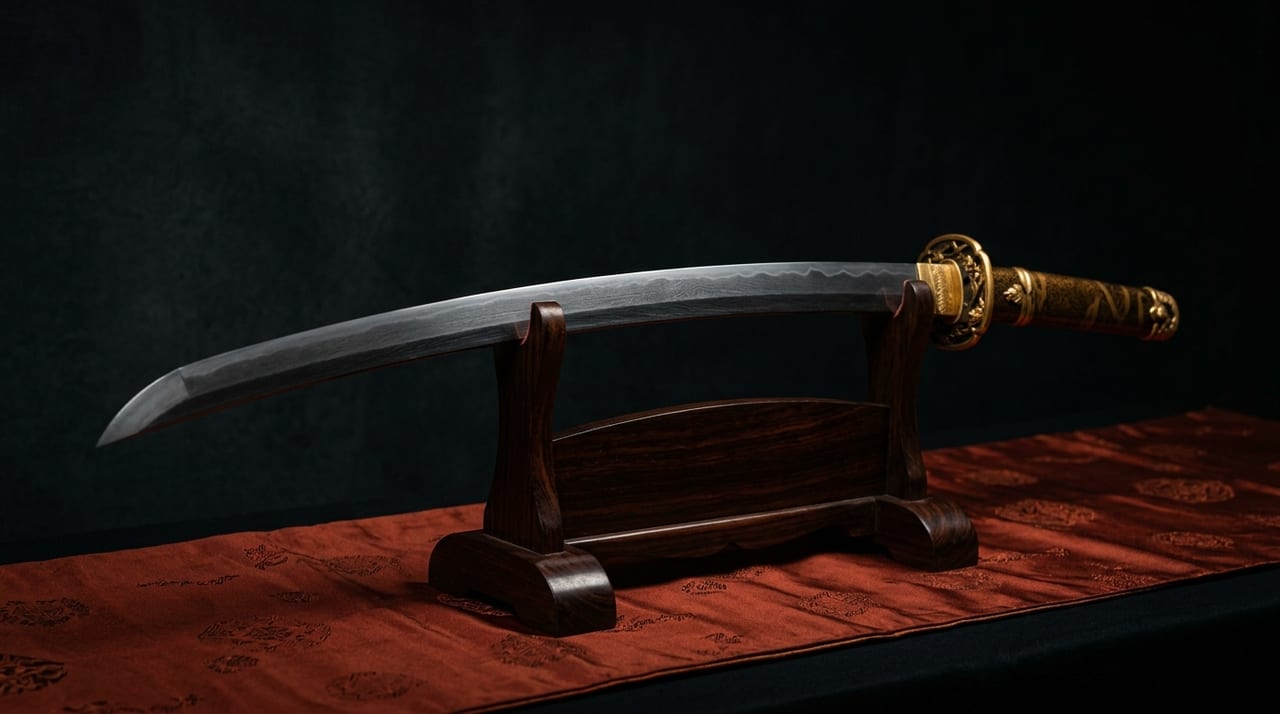 * Image is for illustrative purposes only.
Table of Contents
The Oldest Layer of Bizen Swords
Ko-Bizen is the collective name for the group of tōkō active in Bizen Province (present-day eastern Okayama Prefecture) from the late Heian period through the early Kamakura period. Bizen would later see the flourishing of major schools such as the Ichimonji and Osafune schools, but the earliest layer of smiths who preceded them are collectively called "Ko-Bizen."
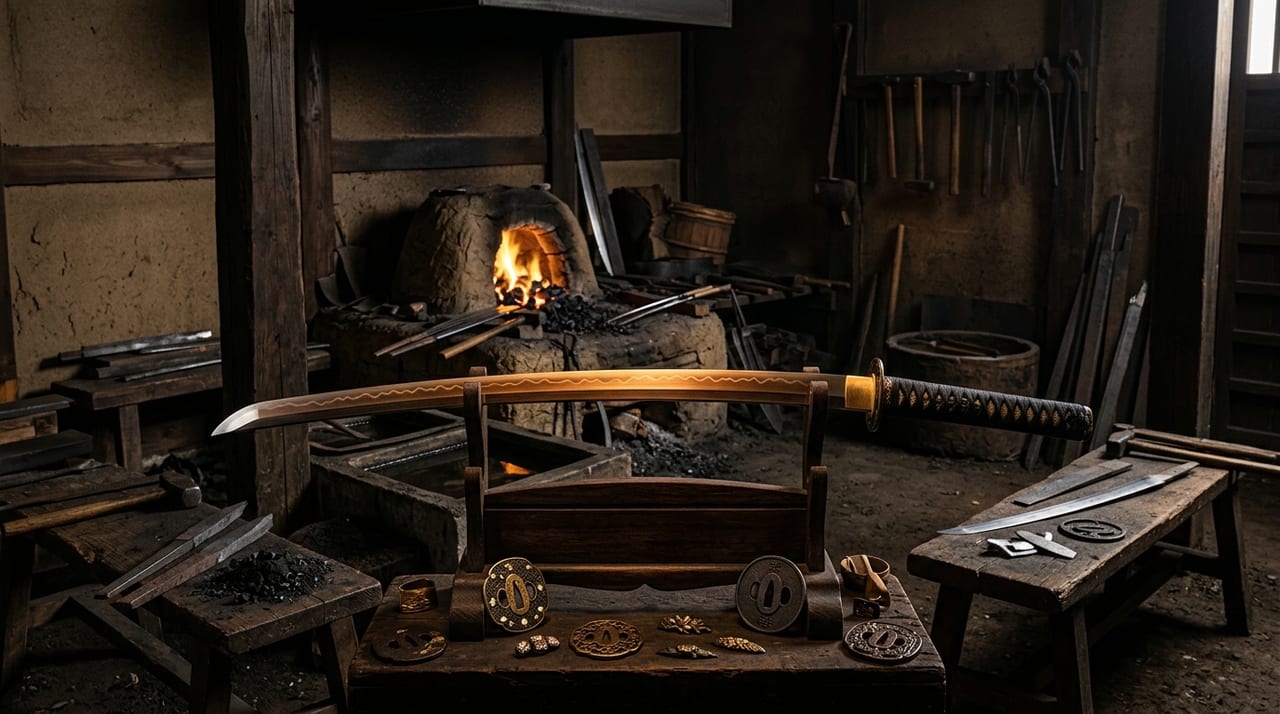
Bizen was blessed with high-quality iron sand and water transportation, and had long been a major center of sword production. Ko-Bizen stands at the very beginning of that long history.
The Historical Background of the Late Heian Period
The late Heian period, when Ko-Bizen emerged, was a major turning point in the history of Japanese swords. It was the era in which curved swords — the form we call "nihontō" today — came to replace the straight swords of earlier times. It is thought that the rise of warriors across the country and the growing demand for curved tachi suited to mounted combat provided the background for this change.
The tōkō of Ko-Bizen were the makers who worked through this very era "in which the form of the nihontō was moving toward its completion." Their works carry the breath of the process by which the curved sword was being refined, and their great value lies not simply in their age, but in the fact that they embody the very origins of the nihontō.
Tomonari and Masatsune: The Leading Smiths
Among the tōkō representing Ko-Bizen, the names of Tomonari and Masatsune stand out. Both are said to have been active in the late Heian period, and their works are held to have an archaic elegance in their tachi form, with a simple yet powerful character different from later Bizen swords.
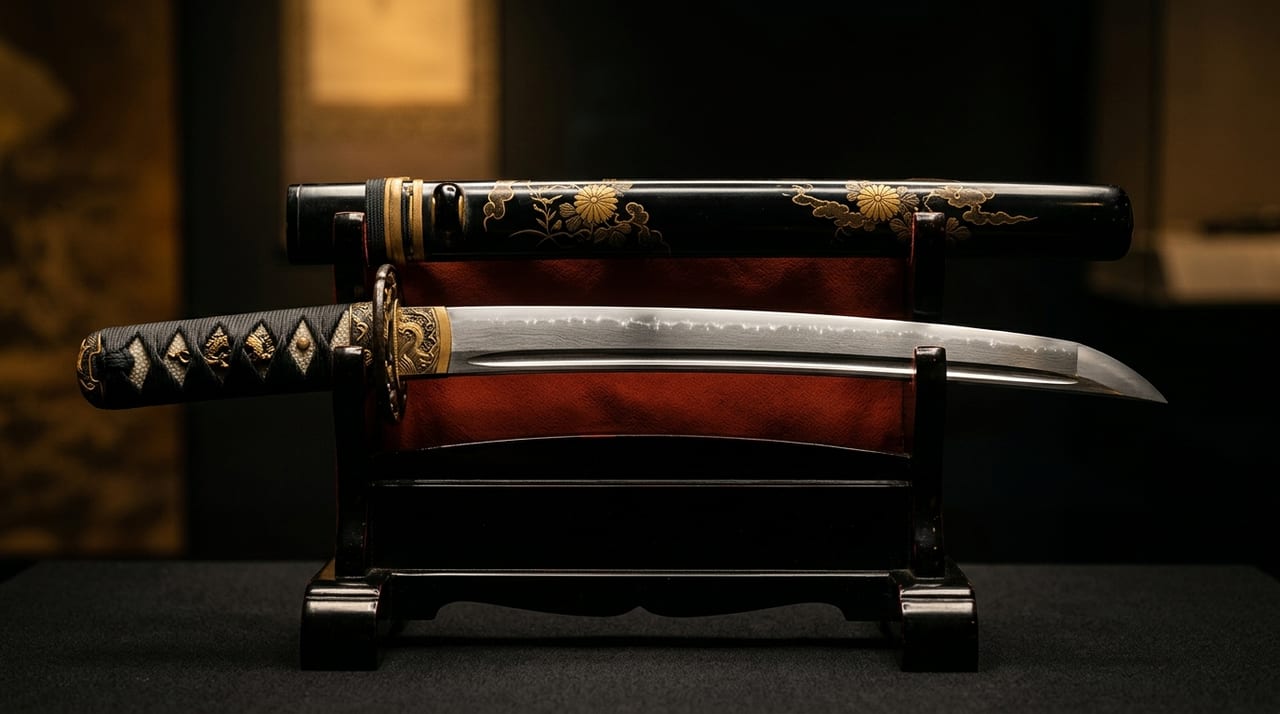
Their shapes tend toward high koshi-zori, displaying graceful tachi forms; the jigane shows tightly packed ko-itame; and the hamon is characterized by calm patterns based on ko-midare or suguha style. The archaic beauty distinct from the later Ichimonji school — known for its spectacular chōji — is the very appeal of Ko-Bizen.
A Closer Look at the Style
Ko-Bizen tachi typically feature koshi-zori that curves strongly near the base and becomes shallower toward the tip, combined with a small kissaki, giving an overall impression of slender elegance. The tapering from the width at the base to a narrower width at the tip, creating a sturdy form, is a characteristic widely shared among tachi of the late Heian through early Kamakura periods.
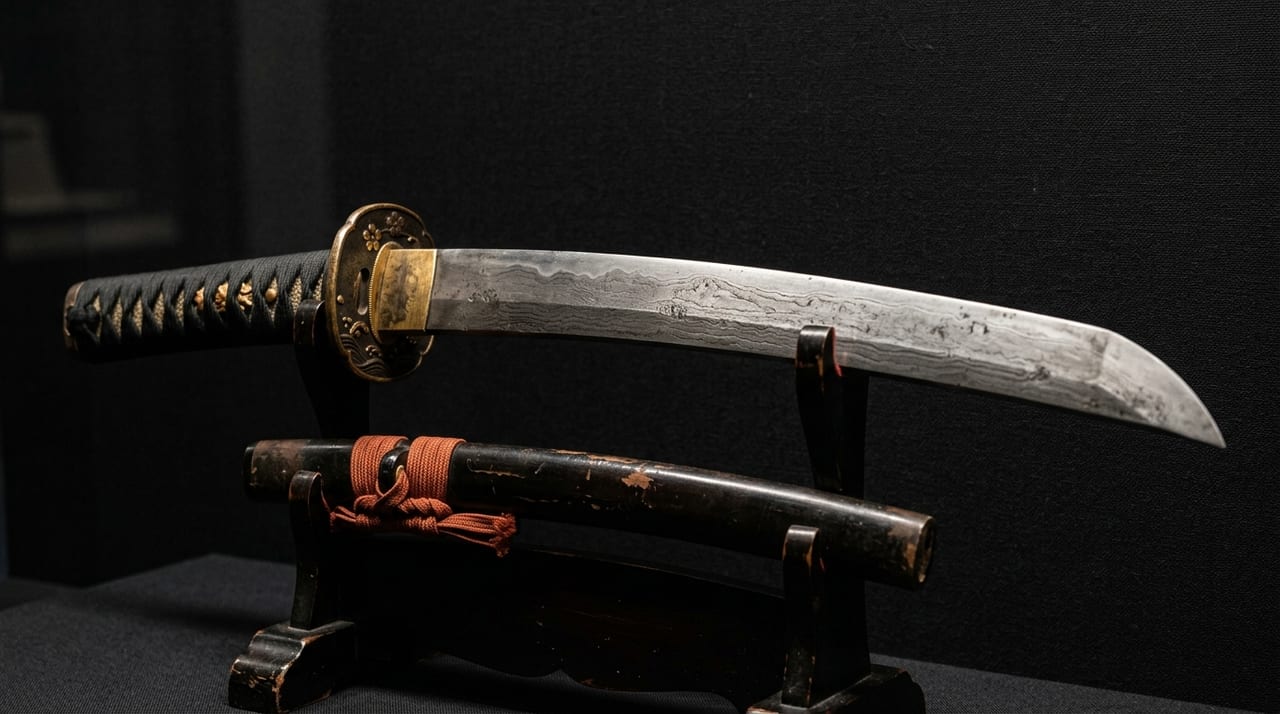
The jigane shows well-packed ko-itame grain with ji-nie, presenting a moist, lustrous surface. The hamon is known for patterns such as ko-midare mixed with small chōji, or suguha-style work with fine activity; in either case, a calm quenching that does not tend toward showiness is the underlying quality. Fine details such as kinsuji and sunagashi may be seen within the hamon, and while these works appear subdued at first glance, the more one looks the more depth one perceives.
The Rarity of Surviving Works
Works from the late Heian through early Kamakura periods are limited in number. Many long tachi were shortened by suriage in later ages and lost their mei, and Ko-Bizen works that retain both the original form and mei from the time of their making are extremely valuable as historical records. Furthermore, the older the work, the more unavoidable the wear from togi and fatigue, and those that remain in sound condition become even fewer. This rarity is one of the reasons Ko-Bizen is spoken of with particular reverence among sword enthusiasts.
The Current Flowing into Later Bizen Swords
The traditions of Ko-Bizen were eventually passed on to the Ichimonji school, including Fukuoka-Ichimonji, and to the Osafune school, and Bizen swords entered their golden age in the Kamakura period. Ko-Bizen is indispensable when discussing Bizen swords, as the headwaters of that grand current.
Viewing Bizen swords through the broad sweep of "Ko-Bizen → Ichimonji → Osafune" makes it easier to understand how the style changed from one era to the next.
Points for Appreciation
When savoring Ko-Bizen works, it is best to focus on the archaic tachi form and the calm, refined hamon. The quiet beauty unique to the oldest layer — different from the later, more spectacular Bizen swords — is the essence of appreciating these pieces.
When actually facing a work, proceeding in the following order will gradually reveal the rich expression hidden within the calm style:
- First stand back and observe the overall shape, checking where the center of the sori lies and what the balance of width between base and tip is
- Next bring your eye to the jigane, observing the fineness of the grain, its moisture, and the presence of ji-nie
- Finally trace the hamon, searching for small irregularities and activity within the hamon
It is also recommended to compare late Heian tachi with those of the mid-Kamakura period and later, using museum displays or illustrated books. Being able to physically sense the difference in form should make the archaic quality of Ko-Bizen stand out all the more clearly.
Works of earlier periods such as Ko-Bizen rarely come onto the market in the first place, but should you be fortunate enough to consider a purchase, always confirm whether a trustworthy kanteisho is present and what determination is recorded in it. The older the work, the more common mumei and suriage examples become, and the supporting determination becomes the foundation of value judgment. At the same time, the degree of togi wear and the presence of flaws are factors that carry considerable weight in evaluating period pieces. The moisture of the jigane surface is difficult to judge from photographs alone, so any concerns should be confirmed with the seller before making a decision.
Those with an interest in Ko-Bizen and the history of Bizen swords may browse and purchase the listed works online. For any questions, please use the inquiry form.