Awataguchiha — The Master Swordsmiths Who Flourished in Kyoto in the Early Kamakura Period and the Exquisite Beauty of Their tantō and tachi
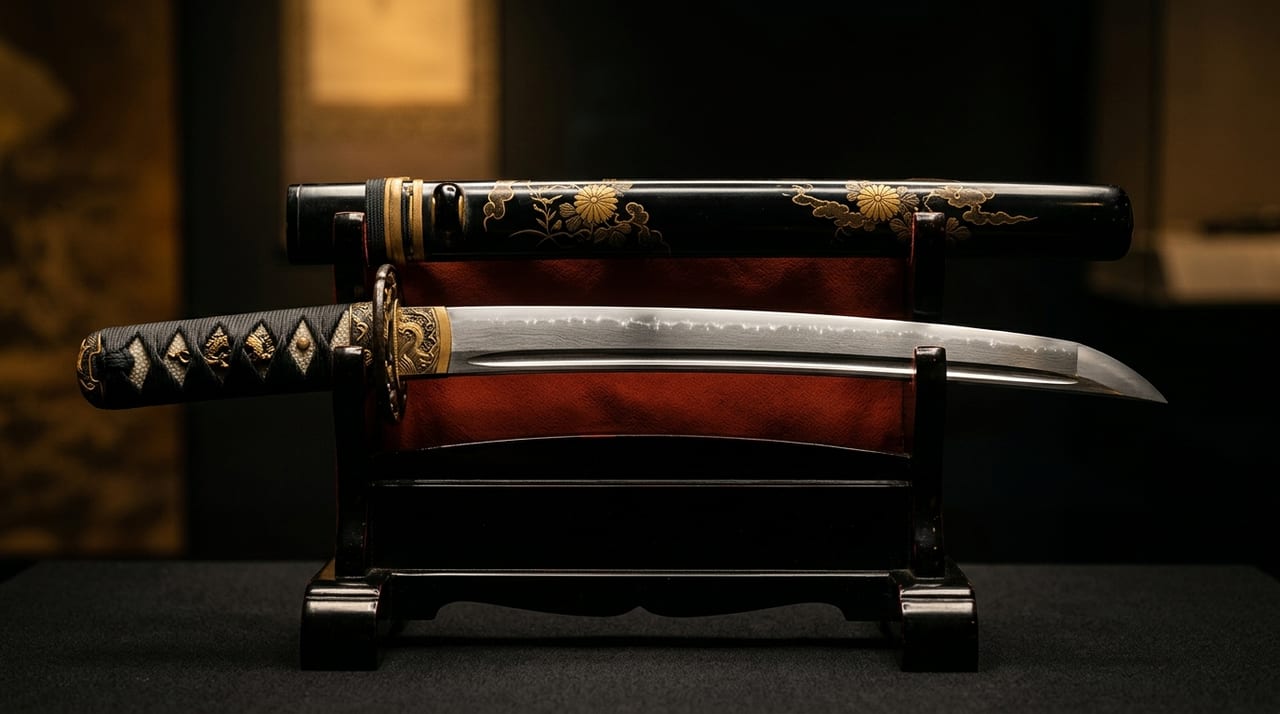 * Image is for illustrative purposes only.
Table of Contents
What Is Awataguchiha
Awataguchiha was a group of tōkō (swordsmiths) active from the early to middle Kamakura period, based in Awataguchiha, Kyoto (near the present-day boundary between Yamashina Ward and Higashiyama Ward, Kyoto). It is the representative school of Yamashiro Province (Yamashiro no kuni, present-day Kyoto Prefecture) and is regarded as the most important lineage that laid the foundations of Yamashiro-den.
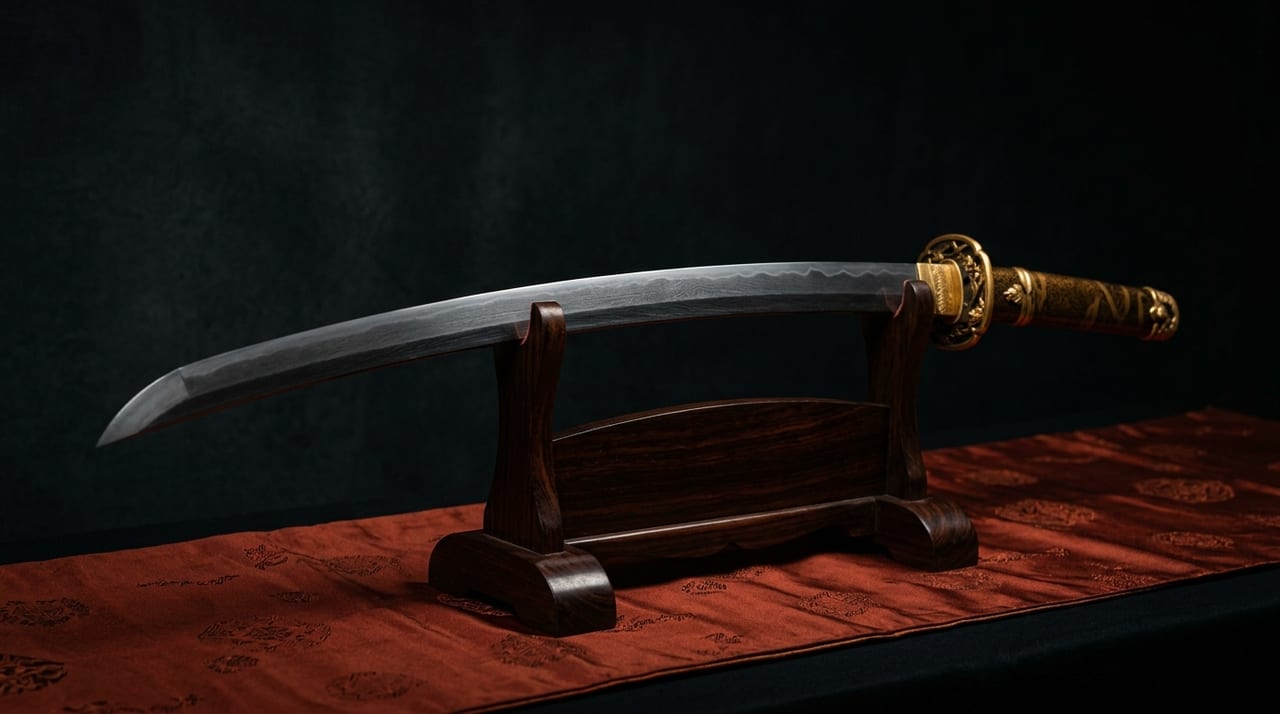
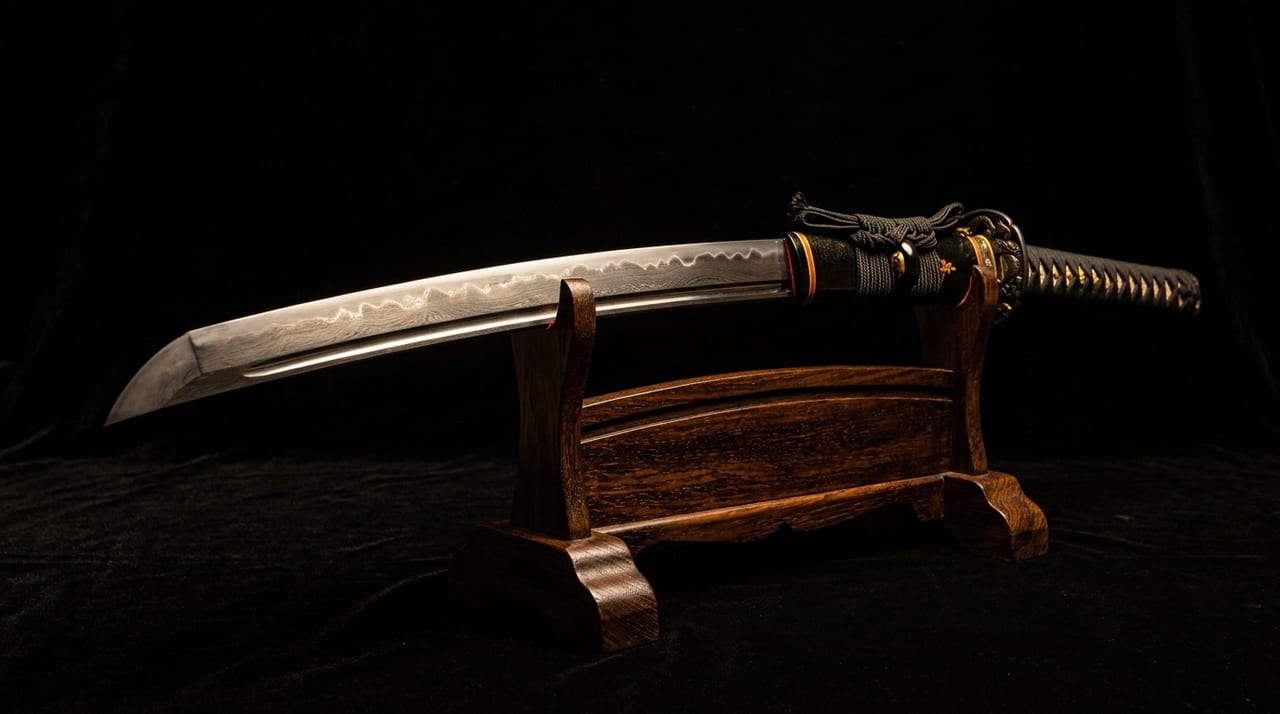
The defining characteristic of Awataguchiha works lies in their delicately refined jigane (steel of the blade surface) and their clear, luminous nioi edge on the hamon (temper line). The jigane is mainly ko-itame-hada (fine itame grain), through which intricate chikei flow, giving the entire surface an elegant luster. The hamon is grounded in ko-midare (small irregular) and suguha-style, with fine, evenly distributed nie. In contrast to the showy chōji-midare of Bizen-den, the aesthetic core of Awataguchiha is "dignified stillness."
The Six Brothers and the School's Lineage
The golden age of Awataguchiha was sustained by a group of swordsmith brothers known as the "Six Brothers of Awataguchiha." All six are known as distinguished tōkō, each having left outstanding works.
- Kunitomo
- Hisakuni
- Kuniyasu
- Kunikiyo
- Arikuni
- Kunitsuna
Whether all six were biological brothers is debated, but it is certain that they were a group who shared techniques under the same kaji (smith) workshop and master–apprentice relationships.
The figure who became the most celebrated in later ages is Tōshirō Yoshimitsu, though Yoshimitsu is not counted among the Six Brothers. He is placed in a category of his own as the greatest tōkō of the later Awataguchiha lineage, said to have been active in the mid-Kamakura period (around the 13th century). Particularly highly regarded as a master of the tantō, Yoshimitsu's tantō include many designated as kokuhō (National Treasures) or jūyō bunkazai (Important Cultural Properties), and are held in museums and art galleries throughout the country. His tantō are characterized by even, homogeneous jigane running the full length of the blade, a clear and luminous hamon, and a sculptural beauty calculated down to the finest detail.
Characteristics of Yamashiro-den and Its Technical Lineage
The defining characteristic of Yamashiro-den can be summed up in one word: "clarity." Both jigane (steel of the blade surface) and hamon (temper line) are unblemished, and the whole carries a refined elegance. Awataguchiha is regarded as the school that most purely embodied this Yamashiro-den aesthetic.
Technically, what stands out is the meticulous management of everything from the selection of tamahagane to the number and direction of orikaeshi tanren (folding) passes, carried to an extreme of homogeneity in the jigane. The application of the edge is also careful, and the nioi edge — where fine, evenly distributed nie particles line the boundary — sets it apart from other traditions. The formal characteristics can be summarized as follows.
- bōshi (temper line in the point): ko-maru (small round), with a short sweep, giving an overall graceful impression
- sori (curvature): koshi-zori is predominant, with a beautiful balance throughout the blade body
- mune (back of the blade): iori-mune (ridged back) is frequently seen
Awataguchiha and Kyoto Sword Culture in the Kotō Period
From the late Heian period through the Kamakura period, Kyoto was Japan's political and cultural center, and large numbers of craftspeople gathered there. Awataguchiha occupied a key transportation point at the entrance to the Tōkaidō, in an environment well supplied with high-quality steel and whetstones. Furthermore, Kyoto's tōkō, receiving demand for fine swords from both the court nobility and the warrior class, refined a sensibility for crafting not only "swords as weapons" but also "swords as works of art and ritual objects."
While many fine tachi also survive among Awataguchiha works, the school's presence is particularly outstanding in the tantō. As demand for tantō grew from the late Kamakura period through the Nanbokuchō period, Awataguchiha tantō established their reputation as the highest-caliber reference works.
Surviving Examples and Designated Cultural Properties
Many surviving works of Awataguchiha are designated as kokuhō (National Treasures), jūyō bunkazai (Important Cultural Properties), or jūyō bijutsuhin (Important Art Objects). Awataguchiha works are included in the major sword collections throughout the country, beginning with the Tokyo National Museum, Kyoto National Museum, and Nara National Museum. Some have been transmitted as dedicatory swords in shrines and temples, where periodic special viewings are held.
Yoshimitsu's tantō also exist in private collections and occasionally appear at domestic auctions, but works of kokuhō or jūyō bunkazai class are subject to restrictions on export under the Act on Protection of Cultural Properties. Museum visits for the purposes of research and appreciation are open to the general public and represent the finest opportunity for learning the standards of sword appraisal.
Historical Significance of Awataguchiha
The influence of Awataguchiha extended to later schools of the Yamashiro-den tradition — the Rai School, the Hasebe School, the Fujishima School, and others — and it became the aesthetic reference point for "Yamashiro refinement." Furthermore, the level of perfection in tantō exemplified by Yoshimitsu served as the model for tantō production by tōkō across the country from the late Kamakura period onward. In modern Japanese sword scholarship, Awataguchiha continues to be positioned as "one of the pinnacles of Japanese sword art" and to serve the role of kijunsaku (reference work) consulted by appraisers.
Appreciation and Collecting — Market Value of Awataguchiha
Awataguchiha swords belong to one of the most prestigious categories in sword collecting. Many works are designated Tokubetsu Jūyō Tōken or Jūyō Tōken by NBTHK (Society for the Preservation of Japanese Art Swords) assessments, and they are held in high international esteem as fine-art blades. For collectors and researchers alike, owning even a single Awataguchiha sword is a symbol of the caliber of a Japanese sword collection.
When appreciating a blade, tilt it under natural or white light to observe the grain of the jigane (steel of the blade surface) and the nioi (fine martensite mist) and nie of the hamon (temper line). The "clarity" of Awataguchiha often does not translate fully in photographs, and the first impression upon holding the actual object is the true pleasure of appreciation. By repeatedly viewing original works at the Japanese Sword Museum and special exhibitions, the aesthetic sensibility of Yamashiro-den becomes naturally ingrained.