The Awataguchi School of Yamashiro: Yoshimitsu and the Classical Peak of Nihonto
 * Image is for illustrative purposes only.
Table of Contents
Awataguchi — Reading and Origins as a Kyoto Place Name
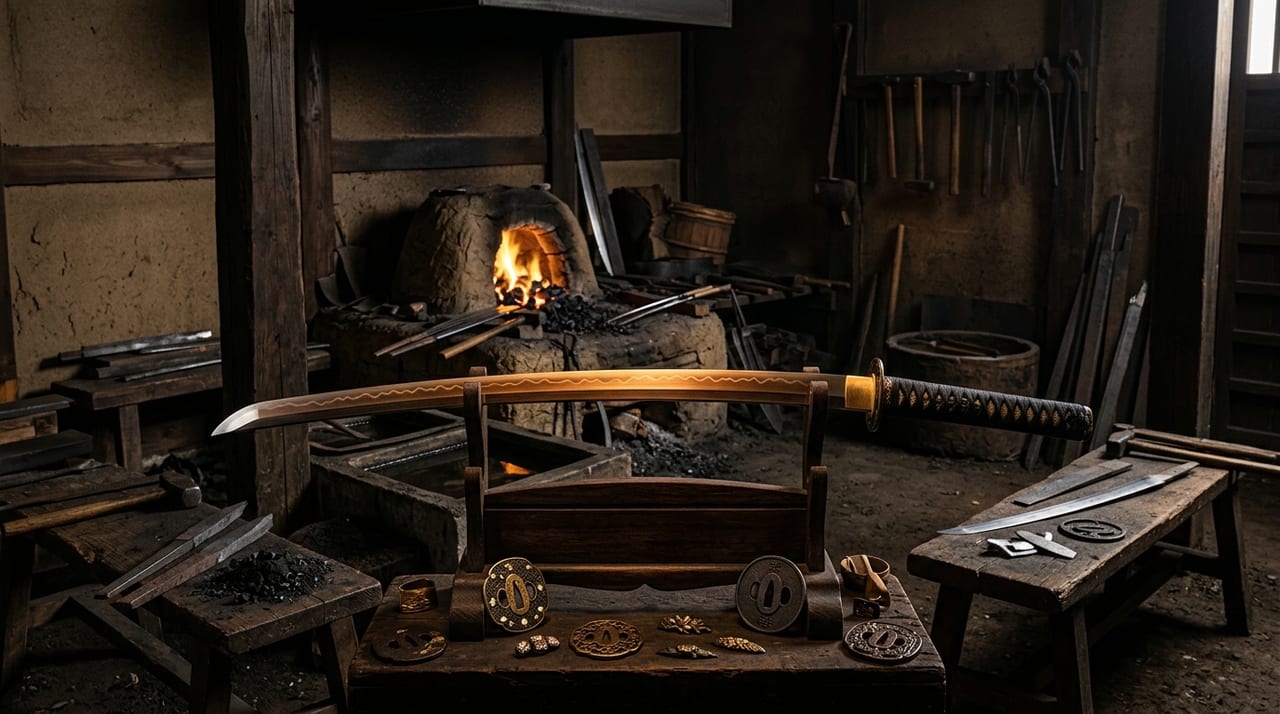
Awataguchi (粟田口) refers to a place name corresponding to the area around the Awataguchi intersection near Higashiyama Ward, Kyoto City, where Sanjo Street crosses over Higashiyama mountain to Yamashina. Located at the gateway of the Tokaido road connecting Kyoto and the eastern provinces, it was counted as one of the "Seven Mouths of Kyoto," a vital point for transportation. This location, where the flow of people and goods was active, offered favorable conditions for swordsmiths to obtain both materials (iron and charcoal) and technical information, and it has been known since the Heian period as a center of sword craftsmen. The availability of high-quality water essential for quenching and polishing from nearby sources is also considered one of the factors in its development as a sword-making center.
In the world of Japanese swords, "Awataguchi" refers to the school of swordsmiths called "Awataguchi-ha" who lived in this area. The Awataguchi school, which flourished throughout the Kamakura period, is often praised as achieving the highest standard in the beauty of jigane (steel quality) in the history of Japanese sword-making, and it is a prestigious school that overwhelms others in the number of designations as National Treasures and Important Cultural Properties.
The Six Brothers of Awataguchi — Master Craftsmen Who Laid the Foundation of the School
The founder of the Awataguchi school is said to be Awataguchi Kuniie, and his six sons — Kunitomo, Hisakuni, Kuniyasu, Kunikiyo, Arikuni, and Kunitsuna — became known as the "Six Brothers of Awataguchi" and flourished from the late Heian to early Kamakura periods (the order and composition are debated). Among the six brothers, Hisakuni and others are said to have served as "goban kaji" (imperial swordsmiths) commissioned by Emperor Gotoba, and through their connections with the imperial court, the school gained renown.
Each of the six brothers was an accomplished swordsmith, and rather than merely inheriting techniques, the entire family engaged in mutual refinement that elevated the overall standard, which set Awataguchi apart from other production centers. Yoshimitsu belonged to a later generation than the six brothers and is not counted among them.
Main Swordsmiths of the Awataguchi School
| Swordsmith | Period of Activity | Remarks |
|---|---|---|
| Kuniie | Late Heian | Said to be the founder of Awataguchi school |
| Kunitomo | Late Heian to early Kamakura | Elder brother of the six brothers |
| Hisakuni | Early Kamakura | Said to be imperial swordsmith to Emperor Gotoba. National Treasure tachi currently extant |
| Kuniyasu | Early Kamakura | One of the six brothers. Known as a master of tachi |
| Kunitsuna | Early Kamakura | Youngest of the six brothers. Creator of "Onimaru Kunitsuna," one of the Five Great Swords |
| Norikuni | Early Kamakura | Known for meticulous jigane |
| Kuniyoshi | Mid-Kamakura | Creator of the Important Cultural Property "Nakigitsune." Also said to be Yoshimitsu's teacher |
| Yoshimitsu | Mid to late Kamakura | Commonly known as Toshiro. Stands at the peak of Awataguchi as a master of short swords |
Technical Characteristics of the Awataguchi School — Clarity, Precision, and Refinement
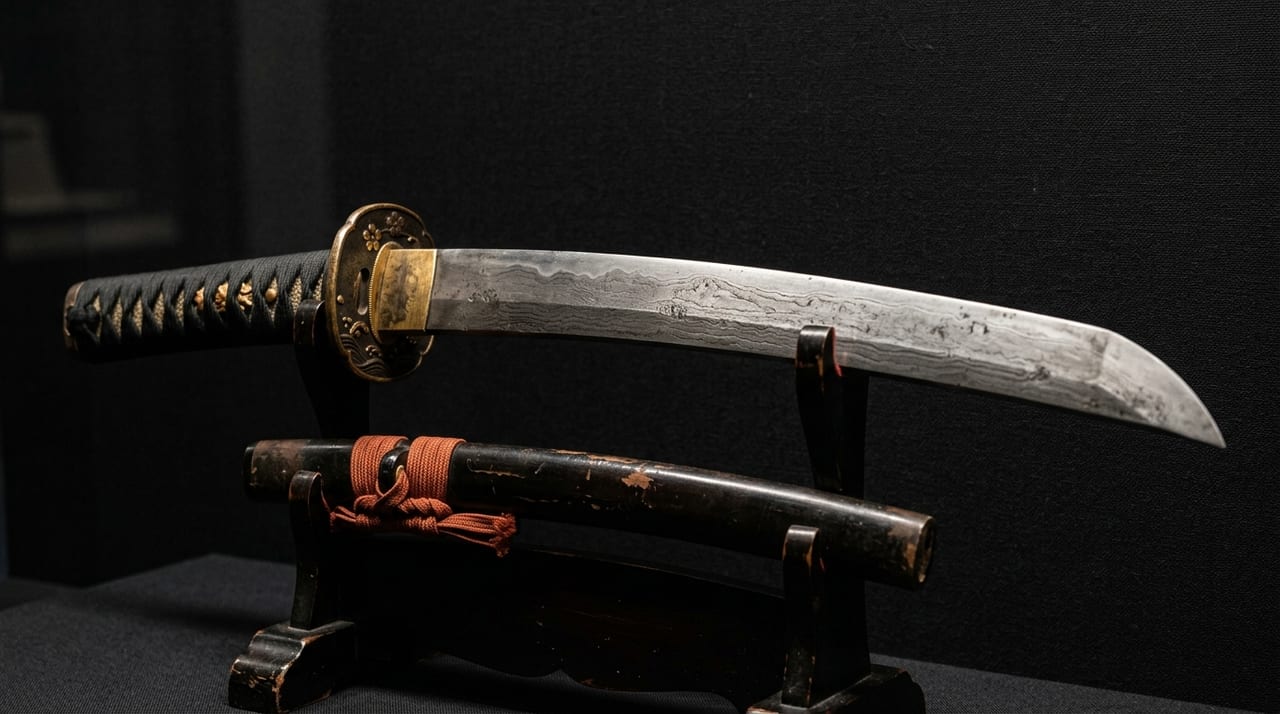
The greatest characteristic of Awataguchi swords is their "clarity." The jigane features small ko-itame (fine wood-grain pattern) packed tightly with fine jinie (surface crystals) spread across the entire surface, a pattern called "nashiji" (pear-skin) appearance. The hamon is typically a gentle and well-ordered style based on suguha (straight edge). In contrast to the brilliant clove-shaped (chōji) hamon of Bizen blades and the bold irregular hamon of Soshu tradition, Awataguchi's refined and dignified workmanship is a tradition of delicacy and refinement.
Particularly notable is the quality of the jigane. Awataguchi swords are often described as having "vivid jigane," indicating that the forging was thoroughly done, impurities were minimal, and a homogeneous metal structure was achieved. The orderly appearance of jikei (surface patterns) and kinsuji (golden lines) embodies the aesthetic sensibility unique to Awataguchi. In Kyoto, where courtly culture flourished, a value system that emphasized refinement as an art object, despite being a weapon, defined the direction of the entire Yamashiro tradition, and Awataguchi became its pinnacle, serving as a model for other Yamashiro swordsmiths.
Onimaru Kunitsuna — A Masterwork of Awataguchi Counted Among the Five Great Swords
The representative work of Awataguchi Kunitsuna (youngest of the six brothers) is the tachi "Onimaru Kunitsuna" (鬼丸国綱), counted as one of the Five Great Swords. According to legend recorded in the Taiheiki, following the words of an old man who appeared in a dream to Hojo Tokimasa, this tachi was stood upright; it then naturally fell and severed the demon's head carved into the base of the hibachi (charcoal brazier), ending the nightmares that had troubled Tokimasa — from this legend the name "Onimaru" was given. After the fall of the Hojo clan, it is said to have passed to Nitta Yoshisada and the Ashikaga shogunate, and from the era of Toyotomi Hideyoshi onward was kept by the Hon'ami family. In the Meiji period, it was presented to the imperial family and is now an imperial possession.
Kunitsuna's style is characterized by the peaceful wood-grain jigane, well-ordered hamon, and graceful curvature of the tachi form, embodying the "unity of practicality and dignity" that Kamakura-period warriors idealized.
Yoshimitsu (Toshiro) — Master of Short Swords and Celebrated Blades
Awataguchi Yoshimitsu is the pinnacle of the Awataguchi school and holds a special place in the history of Japanese sword craftsmanship. He was active during the mid to late Kamakura period (late 13th century). Known by the common name "Toshiro" (藤四郎), many of Yoshimitsu's works have been given celebrated names in the format "○○ Toshiro."
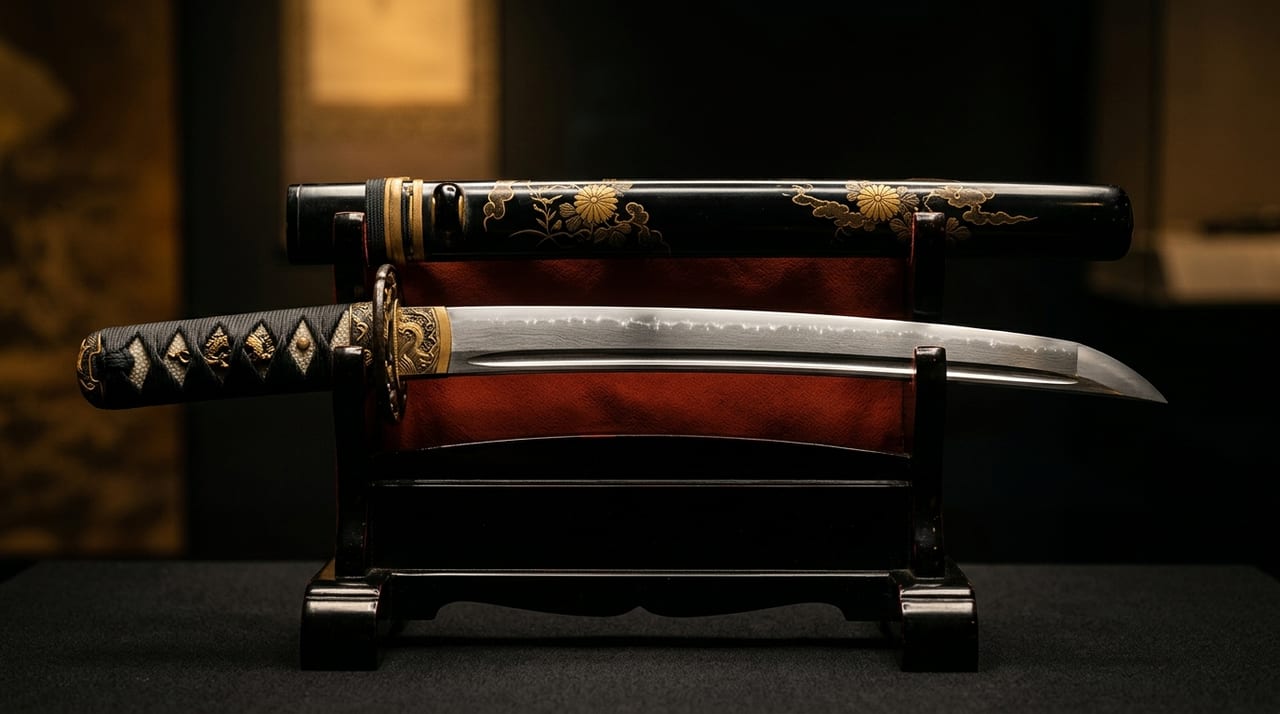
Yoshimitsu's greatest achievement lies in the perfection of the short sword. Yoshimitsu's short swords feature an orderly form with a blade length of about eight sun (approximately 24 cm), flat cross-section, and no curvature or slight inward curve, displaying the brilliance of the nashiji jigane and delicate hamon based on suguha. Together with Shintōgo Kunimitsu of the Soshu tradition, he is called a "master of short swords," and from the Muromachi period onward, his works held the highest prestige as gifts of honor among those in power.
Among the many celebrated blades by Yoshimitsu are the meibutsu "Atsutoshiro" (厚藤四郎, National Treasure, Tokyo National Museum), "Namazuotoshiro" (鯰尾藤四郎), which passed through the Toyotomi family and was re-edged from the burned remains of the fall of Osaka Castle (Tokugawa Art Museum), and "Yagentoshiro" (薬研藤四郎), which is said to have been burned along with Nobunaga in the Honnoji Incident. Among tachi, "Ichigo Hitofuri" (一期一振, Imperial possession) is famous, said to have been treasured by Toyotomi Hideyoshi as "a masterpiece made once in a lifetime." Nearly all of Yoshimitsu's extant works are treated as National Treasures or Important Cultural Properties, and their appearance on the market is extremely rare.
Awataguchi and Rai — Comparison of Two Major Schools of the Yamashiro Tradition
After the Awataguchi school, the Rai school rose to prominence in Yamashiro from the mid-Kamakura period onward. While sharing the clear aesthetic sensibility of the Yamashiro tradition, the two schools possessed contrasting individuality.
| Item | Awataguchi | Rai |
|---|---|---|
| Peak Period | Early to mid-Kamakura | Mid-Kamakura to Nanboku-cho |
| Representative Swordsmiths | Hisakuni, Kunitsuna, Yoshimitsu | Kuniyuki, Kunitoshi, Kunimitsu |
| Jigane | Nashiji appearance. Ko-itame packed tightly | Vivid ko-itame. Soft rai-hada texture sometimes mixed in |
| Specialty | Short swords and slender tachi | Wide range from tachi to short swords |
Besides these, Yamashiro had other schools such as the Sanjo school (founded earlier in the Heian period, with Sanjo Munechika being famous) and the Ayakoji school, demonstrating that Yamashiro as a region fostered high sword-making culture not as a single school but across the entire area.
What Kind of Swordsmith Community Was the Awataguchi School?
A swordsmith school that flourished in Kyoto's Awataguchi area from the late Heian to Kamakura periods, descended from Kuniie as founder and continuing through the six brothers (Kunitomo, Hisakuni, Kuniyasu, Kunikiyo, Arikuni, Kunitsuna) to Norikuni, Kuniyoshi, and Yoshimitsu. The beauty of its jigane is evaluated as the highest in Japanese sword history, and it produced Onimaru Kunitsuna, one of the Five Great Swords, and Toshiro Yoshimitsu, the pinnacle of short swords — a prestigious school indeed.
Where Can Awataguchi Swords Be Seen?
At major museums including the Tokyo National Museum (such as Atsutoshiro), Kyoto National Museum, and Tokugawa Art Museum (such as Namazuotoshiro), the actual works can be appreciated according to rotating displays. Onimaru Kunitsuna and Ichigo Hitofuri are imperial possessions and are not on permanent public display, though they have been shown in special exhibitions.
Conclusion — The Aesthetic of "Clarity" Born in Kyoto and Its Legacy
The aesthetic values of clarity, refinement, and delicacy established by the Awataguchi school represented the Yamashiro answer to the question "What is the beauty of Japanese swords?" This aesthetic, in stark contrast to the grandeur of Bizen tradition and the power of Soshu tradition, remains extraordinarily esteemed in modern times as one of the pinnacles of diverse Japanese sword appeal. The legacy of Awataguchi, with Yoshimitsu's short swords at its apex, continues to shine across a thousand years as the most refined expression of Japanese sword culture.