The Legacy of the Umetada School: Genius Craftsmen Who Combined Swordsmithing and Metalwork from Momoyama to Early Edo
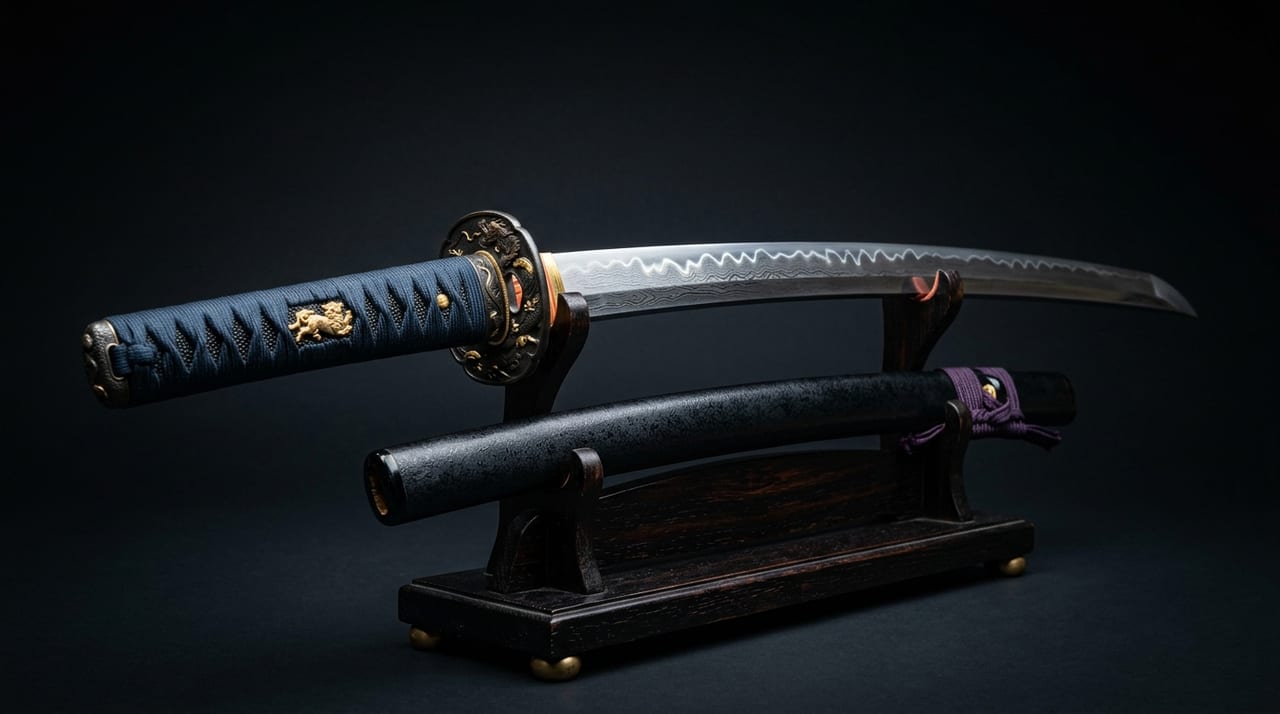
 * Image is for illustrative purposes only.
Table of Contents
The Umetada Clan's Two-Fold Mastery—Swordsmith and Metal Craftsman Combined
The defining characteristic of the Umetada clan was their simultaneous mastery of both the "swordsmith" who forged sword blades and the "metal craftsman" who created sword fittings. This combination was extraordinarily rare in Japanese sword history, granting them a unique advantage: the ability to unify the entire creation process—from blade to koshirae fittings—under a single aesthetic vision.
Typically, a swordsmith specialized in the forging and polishing of the blade, while the creation of sword fittings such as the tsuba, menuki, and fuchigashira was entrusted to separate metal craftsmen. However, the Umetada clan mastered both these distinct crafts within their own lineage. The integration of blade steel and decorative metalwork—two different materials and techniques—required training far beyond the ordinary. This two-fold mastery was the fundamental distinction that set the Umetada school apart from other sword and metal-working lineages.
Based in Kyoto, the Umetada clan is said to have begun their activities in the late Muromachi period, but their most brilliant era spanned the Azuchi-Momoyama period (late 16th century) to the early Edo period (early 17th century). During this age when the hegemon Toyotomi Hideyoshi luxuriantly cultivated a golden culture and feudal lords competed in the beauty of sword fittings, an outstanding figure named Umetada Myōju emerged, establishing the clan's unshakeable reputation.
Umetada Myōju (1558–1631)—Dual Renown
Umetada Myōju is said to have been born in 1558 and died in 1631. His lifetime spanned from the splendid culture of the Azuchi-Momoyama period to the early Edo period when the Tokugawa established feudal order, traversing a tumultuous age with the dual wheel of swordsmithing and metalwork.
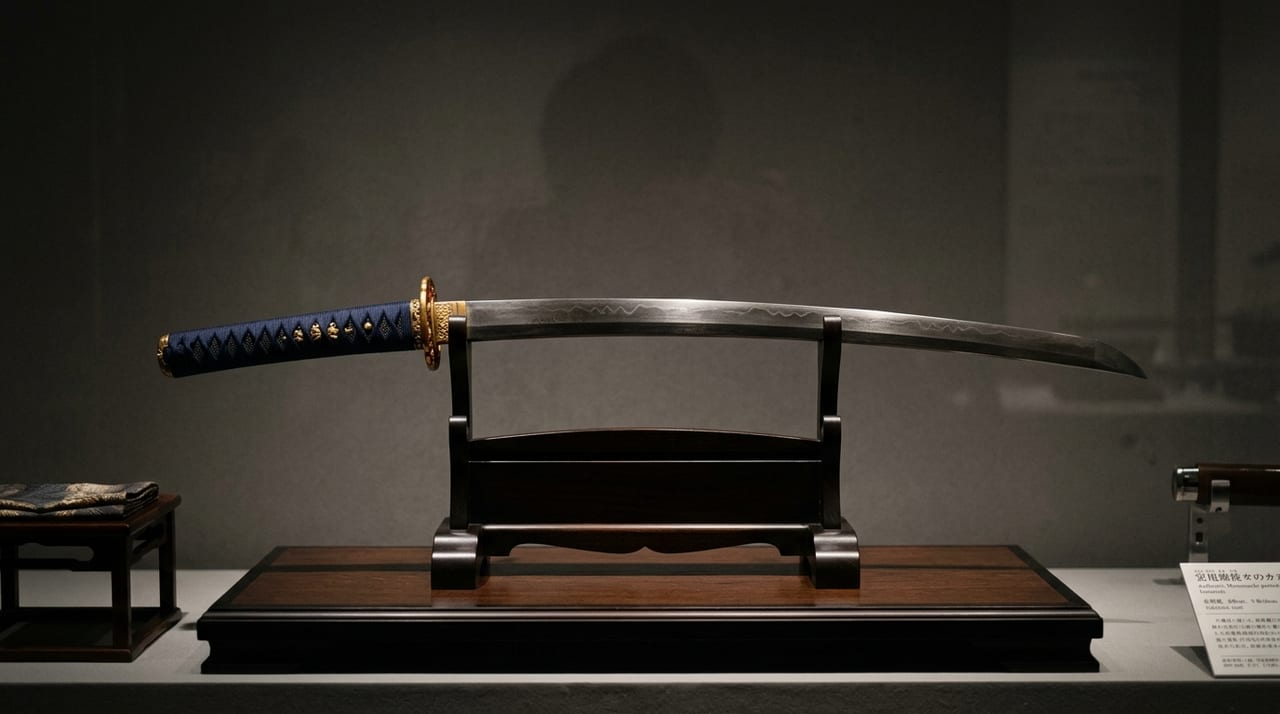
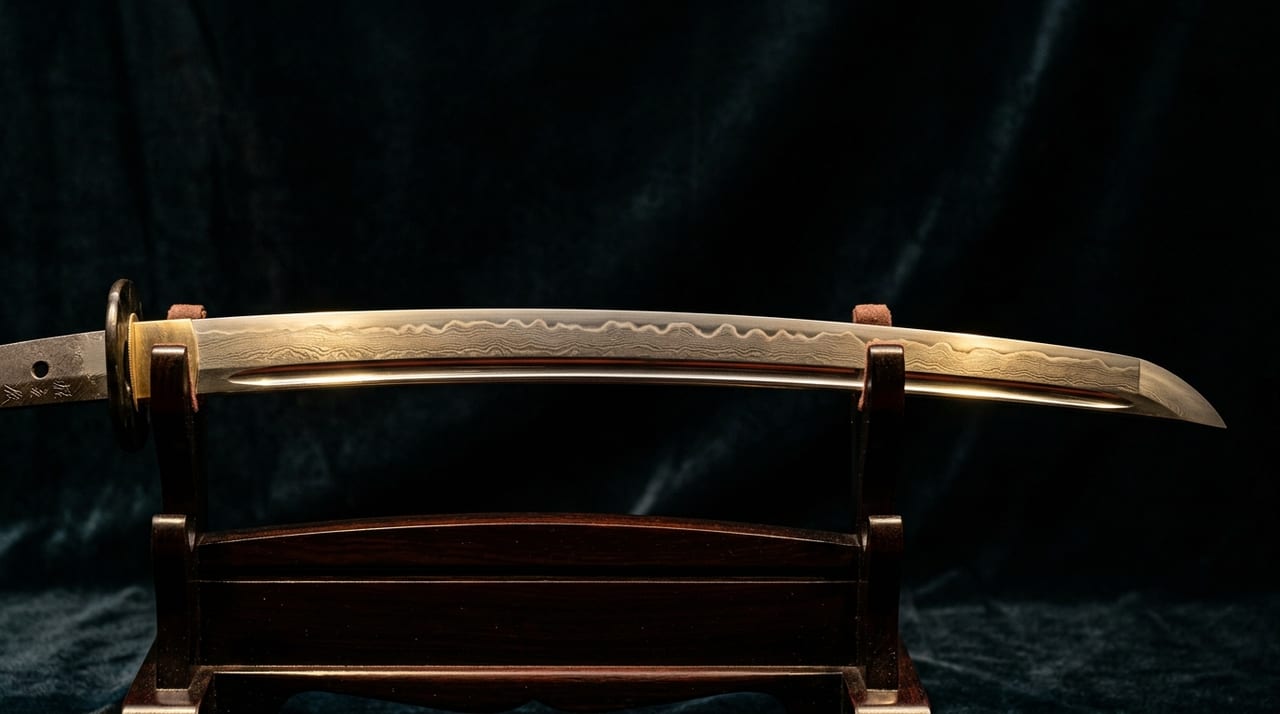
Myōju as Swordsmith: Blades bearing the swordsmith signature "Myōju" inherited the dignity of the Yamashiro-den old-sword tradition while embodying the spirit of the shintō of his time. His work earned high regard among Kyoto shintō for the tightly-finished nioi-guchi, the precision of the forging, and the beauty of the jihada. Examples featuring the gunome midare hamon are particularly renowned for their combination of refinement and bold execution. Many of his works also feature carving (horimono) on the blade itself, revealing his commitment to pursuing beauty in which blade and fittings formed a unified whole.
Myōju as Metal Craftsman: He also produced numerous first-rate works in the creation of sword fittings generally, including tsuba, menuki, and fuchigashira. The bold aesthetic sensibility of the Momoyama period merged at a high level with his meticulous technical mastery, placing him in a class apart among the metal craftsmen of his era. His works have often been praised by posterity as the "apex of Momoyama metalwork." Even today, when an authentic work bearing Myōju's signature appears on the market, collectors both domestic and international show keen interest.
The principal techniques in Myōju's metalwork are as follows.
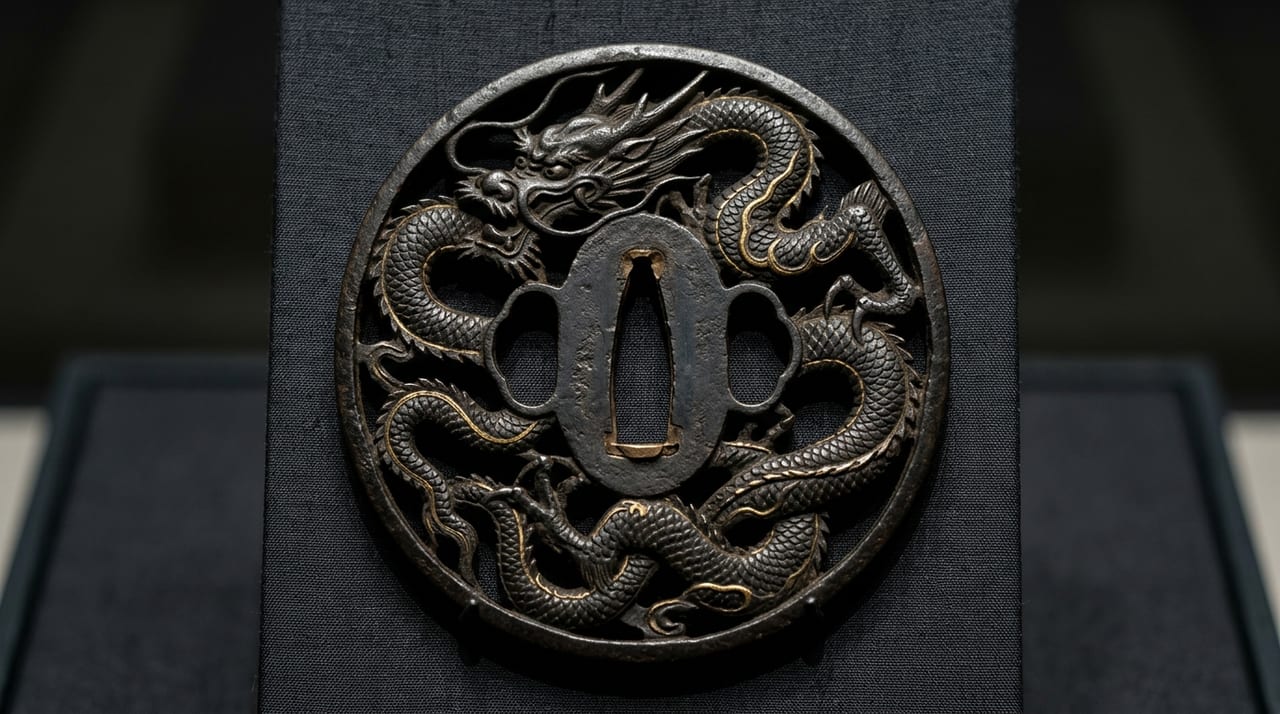
- Precise High Relief (takabori): A technique that raises the motif prominently above the surrounding ground. Human figures, dragons, birds, beasts, and plants emerge three-dimensionally, producing an impact akin to sculpture.
- Combination of Shallow Relief (usubori) and Hair-Line Carving (kebori): Fine hair-line carving applied to the outlines of larger high reliefs, meticulously rendering details such as feathers, wood grain, and ripples. A finishing technique that dramatically elevates the overall refinement.
- Inlay of Gold, Silver, and Shakudo (Red Copper): Diverse expression maximizing the color contrast of materials. By inlaying gold and silver into a black shakudo ground, he created a visual intensity reminiscent of stars twinkling in the night sky.
Representative Tsuba Styles of the Umetada School
The Umetada school developed multiple tsuba styles corresponding to different periods and patron demands.
Shakudo Ground with High Relief: A sumptuous expression featuring gold and silver inlay or high relief carving of shakudo itself on a shakudo ground—a copper alloy with several percent gold added, finished with a lustrous jet-black patina achieved through chemical darkening. This style exemplifies the bold taste favored by Momoyama-period feudal lords.
Iron Ground with Shallow Carving and Inlay: A technique employing "inlay carving" (kome-zougan), where shallow carving is made in an iron ground and gold and silver are inlaid within it. Designs stand out sharply, with the austere texture of iron contrasted against the brilliance of metallic ornament.
Twin Dragons and Cloud Dragons: The composition of two dragons swimming amid clouds was a favored subject of the Umetada school. The powerful carving and majestic composition made this design especially prized as a symbol of samurai authority.
Four Seasons Flowers and Plants: Works depicting the flowers and plants of each season with precision—spring cherry blossoms, summer irises, autumn chrysanthemums, winter plums. These pieces integrate realism and decoration at a high level and represent an elegant style used in the koshirae of court nobility and high-ranking samurai.
Umetada School Disciples and Influence on Posterity
Myōju's techniques and spirit rippled throughout the entire Edo period through his disciples and successors.
Particularly significant is that the Umetada school functioned as a "source of technical transmission." Metal craftsmen who studied under Myōju later established independent schools or introduced technical innovations to existing lineages. The high standard of Kyoto metalwork culture from the early to mid-Edo period is inseparable from the Umetada school's technical contributions.
The rise of notable Edo-period metalwork lineages—including the zaimei school that rivaled the Goto family—was not unrelated to Umetada influence. While the Goto family maintained their distinctive ie-bori carving style with its formal aesthetic beauty, the Umetada school advanced individualistic and free expression, fostering the diversification of later Edo metalwork. It should be noted that Shoami represents a separate lineage of metalworking from the Goto family.
In terms of swordsmithing technique as well, Myōju's lineage influenced Kyoto swordsmiths from the shintō period (17th century) onward, spreading the ideal of aesthetic unity between blade and fittings. This ideal eventually became established as the "aesthetics of the koshirae," carried forward into modern Japanese sword appreciation.
Market Value and Collecting of Umetada Works
Authentic works bearing Umetada Myōju's signature are extremely rare, and their appearance on the market is itself an uncommon event. When authenticity is confirmed, specialist collectors both domestic and international show strong interest, and high prices typically result.
Important markers in authentication are as follows. First, the presence or absence of an NBTHK (Society for Preservation of Japanese Art Swords) certification and its grade. Works designated as "Specially Important Sword Fittings" or "Important Sword Fittings" carry official recognition of authenticity and artistic value. Second, in the case of sword fittings, the quality of the carving and the condition of the inlay work. The loss of inlay material over time or the presence of later repairs significantly affect value.
Works in the "Umetada school style" (Umetada-fū)—those by disciples or later successors rather than Myōju himself—also receive considerable evaluation when they demonstrate high technical standards and good condition. Works that accurately capture the stylistic characteristics of the Umetada school while possessing distinctive finishing appeal to collectors. Observing authentic examples in the permanent and special exhibitions at the Kyoto National Museum and Tokyo National Museum, fixing the criteria in one's eye, is the shortcut to cultivating connoisseurship.
Conclusion—The Legacy of a "Two-Fold Master" to Sword-Fitting Culture
The legacy Umetada Myōju and the Umetada school left to Japanese sword-fitting history transcends the realm of individual works' rarity value. The spirit of two-fold mastery—simultaneously perfecting both swordsmith and metal craftsman—the aesthetics that integrated the grandeur of Momoyama culture with artisanal precision, and the technical foundation inherited by many later metal craftsmen—these constitute the Umetada school's true legacy.
Even today, by holding an Umetada school tsuba or menuki, one can sense the breath of the era from Azuchi-Momoyama through early Edo—the period of Japan's most violent transformation. The dragons and flowers carved upon metal are not mere decoration but the imprint of the craftsman's soul who lived in that age. For those who view history through the sword, the works of the Umetada school will continue to offer endless questions and inspiration across all times.