The World of Tōsōgu Woven by Metalworkers — The Beauty of Chōkin, Zōgan, and Nanako-uchi
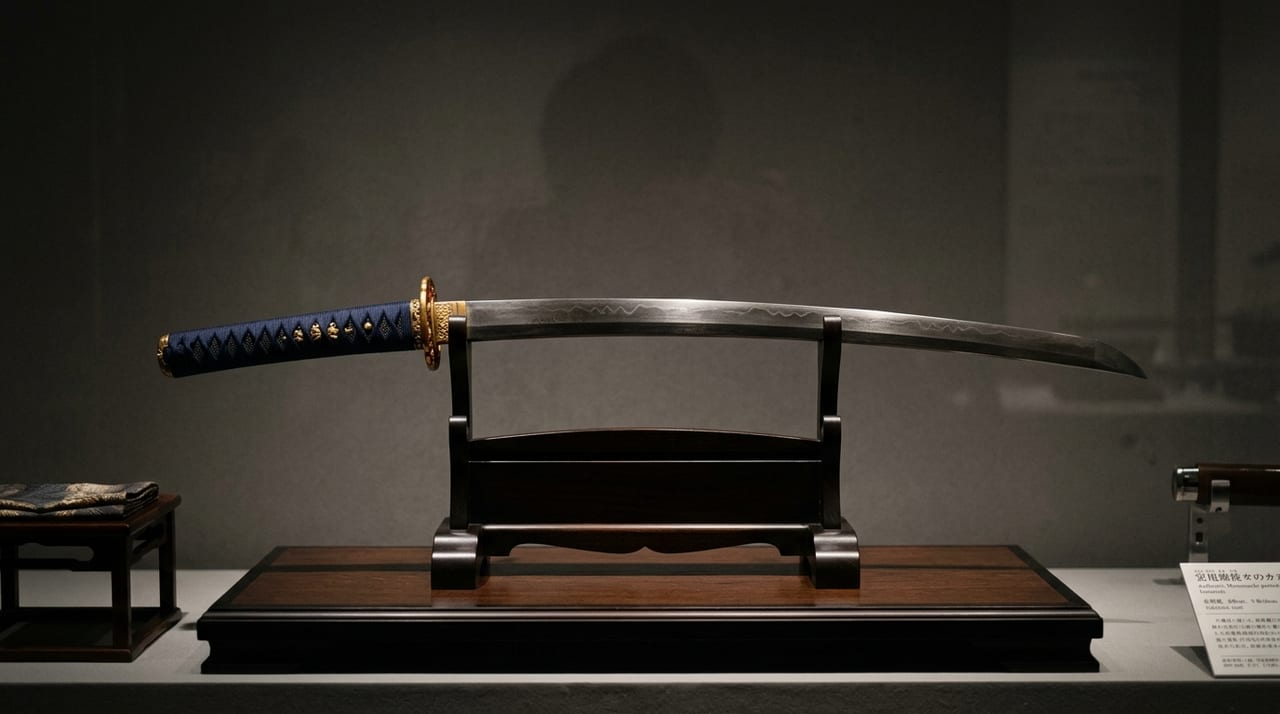 * Image is for illustrative purposes only.
Table of Contents
What Are Tōsōgu — The World of Metalwork That Adorns the Sword
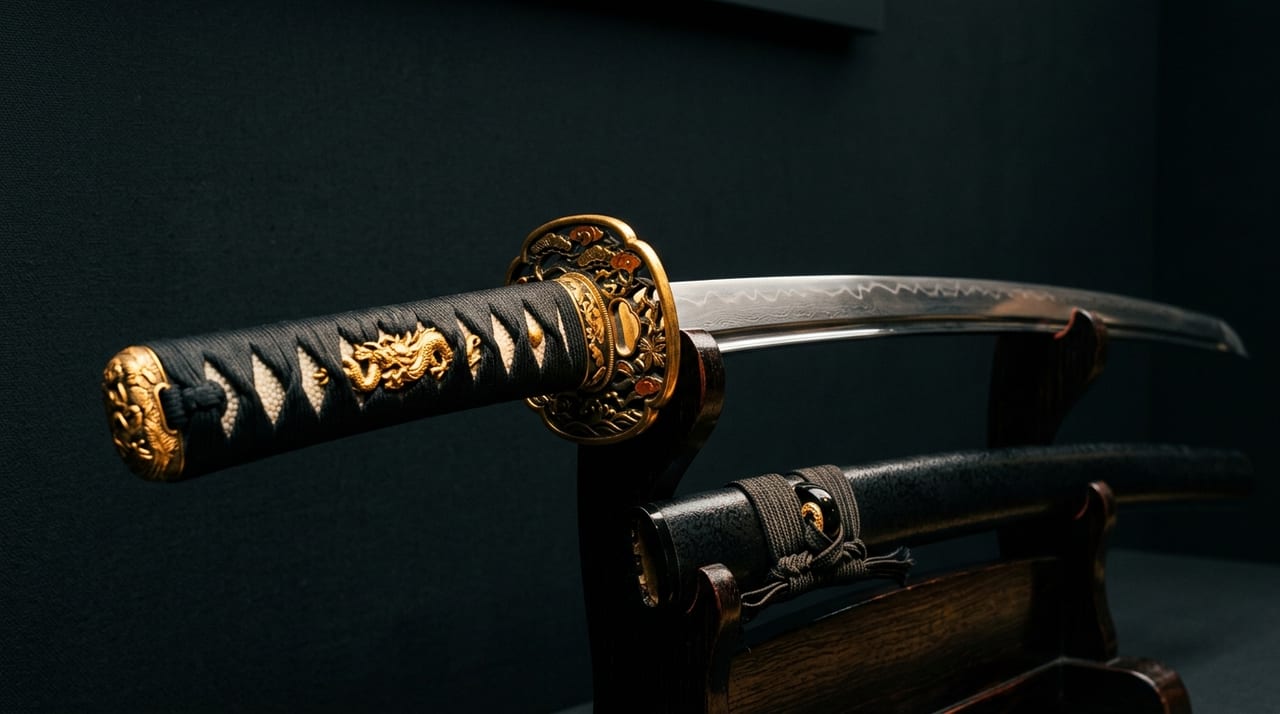
Japanese swords are appreciated not only for the blade itself but also for the collective ensemble of decorative metal fittings known as tōsōgu (sword fittings). Tōsōgu is the collective term for the metal craft objects used to secure the blade in the tsuka (hilt), protect the user's hand, and embody the social status and aesthetic sensibility of the samurai.
Let us look at the main types of tōsōgu and their roles.
| Type | Role and Features |
|---|---|
| Tsuba (hand guard) | A round or oval hand guard positioned between the tsuka and the blade. It serves the practical function of protecting the user's hand from the blade while also serving as the decorative centerpiece — the "face," so to speak — of the sword's mounting. Materials range widely from iron, copper, and brass to gold and silver, and the craftsman's skill is concentrated in a disk roughly 6 to 9 centimeters in diameter. |
| Menuki | Decorative metal fittings used as a base when wrapping the tsuka. They come as a matched pair and are placed at the position that falls between the thumb and forefinger when gripping the tsuka. They frequently take the form of auspicious motifs such as dragons, hawks, and peonies, with intricate carvings rendered in a mere 3 to 5 centimeters. |
| Kozuka | The handle of a small knife fitted into the outer face of the saya (scabbard). It is the grip portion of the small knife that samurai carried in daily life, and the reverse side is often decorated with shallowly carved designs. |
| Kōgai | A long, narrow metal fitting inserted into the inner face of the saya. Originally a tool for arranging the hair, it functioned purely as a decorative item by the Edo period. |
| Fuchi-kashira | Metal fittings that adorn both ends of the tsuka. The kashira (the cap at the tip of the tsuka) and the fuchi (the collar between the tsuka and the tsuba) are made as a matched pair and are as a rule unified with the same decorative motif. |
When all of these are assembled together, the set is called "daisho-soroi," completing the fittings of a single sword. A daisho-soroi crafted by a master metalworker can sometimes command a value equal to or greater than the blade itself.
The Techniques of Metalworkers — The Artisan's Hands That Create a Miniature Universe
The essence of tōsōgu's appeal lies in its intricate processing techniques. Metalworkers (kinkōshi) create works by combining multiple fundamental techniques using materials such as iron, copper, gold, silver, and brass. For those who wish to learn more about the differences between individual techniques, The Work of Metalworkers is also a useful reference.
Chōkin is the collective term for techniques used to carve designs into a metal surface using a tagane (chisel) and hammer. There are numerous methods including sen-bori (line carving), niku-bori (relief carving with height), and sukashi-bori (openwork designs that penetrate through the base metal), among others. A skilled metalworker carves dozens of varieties of plants, animals, and landscapes into a tsuba face measuring just a few centimeters.
Zōgan is a technique in which grooves are cut into the base metal and different metals are inlaid into them. Types include gold zōgan, silver zōgan, and shakudō zōgan, and the beauty of the contrast is striking. Among these, nunome-zōgan is a technique in which fine fabric-like crosshatch scoring is made into the base metal before thin sheets of gold or silver are hammered in, and it attained a high degree of development during the Edo period.
Kusubeiro and niiro are techniques for treating metal with chemicals or charcoal fire to bring out distinctive color tones. When the copper-gold alloy shakudō is treated with niiro, a deep blue-violet-black color appears, and it was widely used as the ground color of tōsōgu. The transformation of the shakudō ground through kusubeiro treatment possesses a profound beauty reminiscent of the night sky.
Nanako-uchi is a technique for hammering a fine granular texture onto a metal surface that appears as though fish roe (nanako) has been densely packed across it. This work, in which points are continuously struck at equal intervals using a dedicated nanako-tagane chisel, boasts a precision that requires 100 to 200 points per square centimeter. The ground pattern beautifully scatters light while also producing an effect that makes carvings and zōgan stand out against the background.
The Gotō Lineage — The Distinguished Workshop That Supported Edo Metalwork
When recounting the history of tōsōgu, the existence of the Gotō family is unavoidable.
The first generation, Gotō Yūjō (1440–1512), served as a metalworker retained by the Ashikaga shogunal family and is regarded as the person who established an unshakeable foundation for Japanese tōsōgu craft. Yūjō established a style combining shakudō grounds with shallow carvings in gold and silver, creating the prototype for what later generations called the "Gotō-fū" style.
The Gotō family was positioned at the highest rank as the official metalworkers (go-horimono-yaku / ōban-yaku) of the Tokugawa shogunate during the Edo period, serving for seventeen generations. Each generation upheld the family name through strict transmission of technique and quality control. Works by the Gotō family bore the kiwame (authentication) seal of each generation, which served as proof of authenticity. The manner in which the Gotō family, the Higo metalworkers, Shōami, and others competed in skill during the early Edo period is introduced in Tsuba of the Early Edo Period.
The characteristic style of the Gotō family lies in its depictions of animals and plants that are realistic yet stylized. The technique of carving auspicious motifs such as dragons, hawks, and pine, bamboo, and plum in high relief in gold on shakudō grounds was in perfect accord with the aesthetic sensibility of the formal samurai society. One must also note the importance placed on meaningful connections between motifs, as seen in daisho-soroi menuki, where a dragon is placed on the front and clouds on the reverse to form a pair.
The Aesthetic of Kyō Metalwork — A Lineage of Freedom and Innovation
If the Gotō family embodied formality as Edo's "official metalworkers," then the Kyō metalworkers (kyō-kinkō), based in Kyoto, enriched tōsōgu craft with a freer creativity.
Many of those who practiced Kyō metalwork were also active in other craft fields such as painting and maki-e lacquerwork, and under that influence, pictorial compositions and expressions were brought into tōsōgu. In the field of tsuba in particular, the e-tsuba (picture tsuba) — which expresses landscapes, figures, and scenes from poetry on thin iron plates — was developed by the Kyō metalworkers. This decorative tendency was further refined from the middle and late Edo period through the Meiji era, leading to the pinnacle of decoration described in Tsuba of the Middle and Late Edo Period through the Meiji Era.
In the Meiji era, the school represented by Unno Shōmin (1844–1915) received high acclaim at the Paris World's Fair (1900). Even after demand for tōsōgu plummeted following the Sword Abolishment Edict (Haitōrei) of 1876, these artists forged an independent artistic field as bijutsu-kinkō (fine art metalwork) and achieved the inclusion of their works in the collections of the Imperial Museum (present-day Tokyo National Museum).
Works by the Kyō metalworkers are often described as possessing "softness" and "poetic feeling" in contrast to the formal expressions of the Gotō family. The true strength of Kyō metalwork lies in the way expressions that could be mistaken for paintings — landscapes, scenes of nature with birds and flowers, scenes from stories — are rendered on minute metal surfaces.
Contemporary Metalworkers — Inheriting Traditional Techniques and New Expressions
Demand for tōsōgu declined sharply after the Sword Abolishment Edict (Haitōrei). However, traditional techniques continued to survive in the form of metalwork as fine art crafts. Even today, metalworkers specializing in tōsōgu exist throughout Japan, continuing to study and practice traditional techniques. Contemporary Tsuba Makers and the Inheritance of Traditional Techniques covers in detail how today's tsuba makers are inheriting tradition.
Many contemporary metalworkers follow a career path in which they study at institutions such as the Department of Craft at Tokyo University of the Arts before becoming apprentices to established master craftsmen. Acquiring the techniques is said to require a minimum of ten years, and emphasis is placed on absorbing the "feel of the hands" through close observation of the master's work.
An increasing number of artists are skillfully deploying traditional nanako-uchi and zōgan while incorporating contemporary subjects such as celestial bodies, modern flora and fauna, and abstract patterns. The annual "tōsōgu examination" conducted by NBTHK (Society for the Preservation of Japanese Art Swords) certifies outstanding works as "Tokubetsu Hozon Tōsōgu" and other designations, and it serves as an important benchmark in the evaluation of contemporary artists' works as well.
How to Enjoy Collecting and Key Points for Valuation
Collecting tōsōgu is a field that is easier to enter compared to collecting the swords themselves. The advantages are significant: storage space is small (a single tsuba fits in the palm of the hand), no legal registration procedures like those required for blades are necessary, and genuine works can be obtained in the price range of tens of thousands to hundreds of thousands of yen.
The main points for valuation are as follows.
- Verification of maker. Works by well-known workshops such as the Gotō family, the Yokoya Sōmin school, and the Ōtsuki school have their value guaranteed by mei (signature), kiwame seals, and provenance records. The hozon kanteisho (appraisal certificate) issued by NBTHK is the industry-standard evaluation benchmark, and its presence or absence directly affects market price.
- Technique and completeness. Criteria for evaluation include the uniformity of nanako-uchi, the precision of zōgan, and the strength of line in chōkin work. A moderate sense of age (jidaikan) accumulated over time is a positive factor, while later restoration or missing parts are negative factors.
- Rarity of subject matter and motif is also important. Works featuring specific narrative scenes, historical subjects, or rare flora and fauna command greater rarity value than those with common dragons or hawks.
- Integrity of dimensions and form must not be overlooked. In the case of tsuba, the fit with the blade — the condition of the nakago (tang) hole and the sekigane — indicates practical completeness. A complete set in which fuchi-kashira, menuki, kozuka, and kōgai are all present as one ensemble is evaluated as dramatically rarer and more expensive than individual pieces.
As advice for beginners, one is encouraged to begin collecting with works that come with a kanteisho (appraisal certificate), to build relationships with reliable sword dealers, and to actively create opportunities to encounter originals at exhibitions throughout the country by consulting Japanese Sword Museum and Exhibition Facility — National Map Guide.
The world of tōsōgu is a profound universe in which the finest of Japan's metalworking techniques are concentrated. The craftsman's spirit and skill imbued in a single tsuba continues even now, after hundreds of years, to captivate the hearts of those who behold it.