Late Edo to Meiji-Period Tsuba: The Peak of Decorative Art and Post-Sword-Ban Transformation
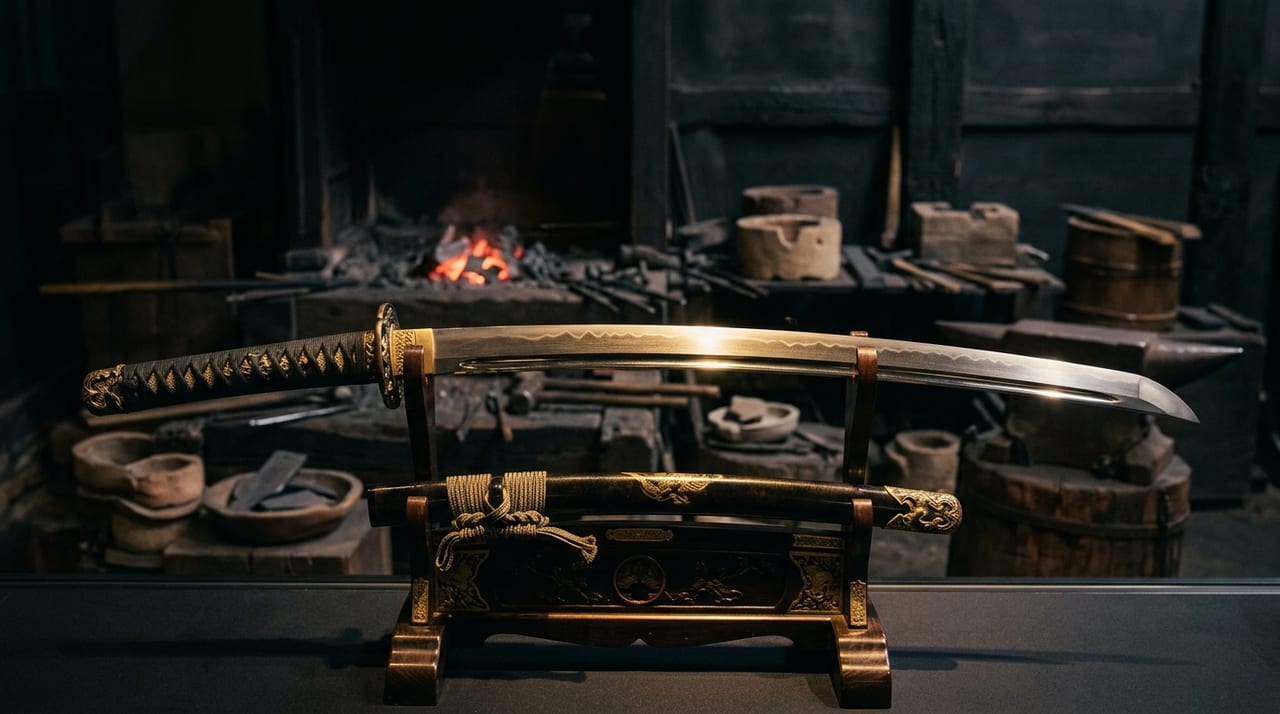 * Image is for illustrative purposes only.
Table of Contents
The Mid-Edo Period—The Age of Individual Artisans and the Innovation of Yokoya Sōmin
In the mid-Edo period (18th century), master metalworkers began to emerge as distinct "individual artisans" rather than merely members of schools. The emblematic figure of this transformation was Yokoya Sōmin (1670–1733).
After mastering the traditional metalworking techniques of the Goto family, Somin established his own naturalistic carving style. While previous metalworkers had adhered to the Goto school's traditional, stylized motifs—lions, dragons, and arabesques—known as ie-bori (house carving), Somin opened entirely new artistic territory by carving actual natural subjects—eagles, sparrows, fish and shellfish, lotus flowers—with keen observation. This methodology was later recognized as the establishment of machi-bori (town carving), which opened a new era that prioritized individual aesthetics and market principles over samurai formality.
Somin was equally innovative in technique. His mastery of inlaying gold and silver into shakudo grounds, combined with carving that captured the subtle textures of animal skin and feathers, greatly inspired his contemporaries. Somin's naturalistic direction exerted a direct influence on later Nara metalworkers and was inherited by numerous metalworkers of the late Edo period. For contemporary sword fittings artisans, Somin's works remain an enduring textbook for learning naturalistic carving.
Nara Metalwork—The Decorative Revolution of the Late Edo Period
Nara metalwork, centered in the city of Nara, brought revolutionary change to the culture of sword fittings in the late Edo period.
Sugiura Joi (1701–1761) was a pioneer of Nara metalwork who established his renown through naturalistic carving and exceptional technical skill. Nara's status as a center of Buddhist art influenced Joi's style, which is characterized by delicate and spiritually infused expression.
Nara Toshinaga (1667–1736) was especially highly regarded among Nara metalworkers, known for meticulous naturalistic carving and rich use of materials. His tsuba with depictions of fish and shellfish, inlaid with gold on shakudo grounds, are renowned masterpieces housed in major collections worldwide, including the British Museum.
Tsuchiya Yasuchika (1670–1744) established his distinctive artistic vision by incorporating Western motifs inspired by European engravings and imported ceramics. His works depicting chain mail, Southern Barbarian helmets, and foreign figures demonstrate how Japanese craftsmanship of the Edo period actively assimilated foreign cultural influences.
Nara metalwork is characterized by intricate, naturalistic carving combined with skillful use of diverse materials—shakudo, shibuichi, gold, silver, and copper—employed together. It is not uncommon to find more than five different metals coexisting within a single tsuba, bearing witness to the sophisticated aesthetic maturity of the late Edo period. Masterpieces of Nara metalwork continue to command high prices at auctions both domestically and internationally, remaining the objects of connoisseurs' desire.
The Late Edo Period—The Diverse Competition of Regional Schools
The late Edo period (late 18th to early 19th century) was also an era in which diverse regional schools competed with their own distinctive expressions.
Edo metalwork encompassed a broad range of practitioners, from master artisans creating high-quality wares for daimyo patrons to artisans mass-producing practical items for townspeople. Schools such as the Yanagawa, Ishiguro, and Otsuki lineages in particular produced renowned masters, each establishing their distinctive aesthetic. Ishiguro Masayoshi was one of the leading metalworkers of the late Edo period, and his meticulous hair-line carving and colored metalwork exemplify the highest standards of the time.
Osaka metalwork, reflecting the merchant culture of the commercial city of Osaka, is marked by greater ornamentation and commercial sophistication. Distinctive techniques such as rope-pattern inlay developed here, and when fused with Kyoto metalworking traditions, produced a unique aesthetic sensibility.
Regional metalwork from various domains deserves attention as well. In Satsuma, the domain actively protected metalworking, establishing a distinctive style called "Satsuma koshirae." Kaga metalwork attempted fusion with maki-e, and under the patronage of the Sendai domain's ruling Date family, "Sendai metalwork" developed. It is precisely this diversity of regional metalwork that formed the richness of late Edo sword fittings culture.
The Meiji Sword Ban—A Major Transformation in Sword Fittings Culture
The 1876 (Meiji 9) sword ban prohibited sword-bearing for all except military officers and police. This edict shook Japanese sword culture to its foundations and brought unprecedented hardship to metalworkers.
Demand for tsuba to be mounted on actual swords declined sharply. Many metalworkers lost their livelihood, and some were forced to cease operations. Paradoxically, however, interest in sword fittings as "fine art objects" increased. Within the context of the Meiji government's promotion of exposition diplomacy, sword fittings became an ideal medium for demonstrating Japanese craftsmanship to the world.
Many Meiji-era metalworkers applied techniques developed in sword fittings production to the following items:
- netsuke
- inro
- tobacco containers
- obi fasteners
- Western-style brooches and watch chain ornaments
This transition was not merely a matter of producing substitute items; it gave birth to new developments in metalworking technique. Inlaid jewelry and decorative objects created for overseas markets were treasured by European and American collectors riding the wave of the Japonisme boom, and many of today's major international collections were formed during this era.
Meiji and Taisho Metalworkers—The Transmission of Traditional Technique and Modern Development
Even after the sword ban, practitioners dedicated to transmitting traditional metalworking techniques emerged throughout the country. Beginning with the First Domestic Industrial Exhibition held in 1877 (Meiji 10), metalwork from the Meiji period exhibited at imperial expositions received high acclaim and attracted attention from both domestic and international audiences as a modern development of traditional technique.
Kano Natsuo (1828–1898) was a prime example. Trained by master artisans of the late Edo period, Natsuo continued to create works even after the sword ban and, upon his appointment as an imperial court artisan, was recognized as a top-ranking craftsman under the patronage of the imperial household. His carving technique came to be known as "Natsuo-bori" and exerted considerable influence on later generations; many contemporary sword fittings artisans take his methods as their standard.
It is also important to note that during this period, Western museums and art institutions actively collected Japanese sword fittings. The Edo-period tsuba collections held by the Boston Museum of Fine Arts, the Victoria & Albert Museum, and the Metropolitan Museum of Art were largely formed during the Meiji period of international opening. This collecting trend established the international foundation for positioning sword fittings as "art" rather than "weapons." As of 2026, the collections held by these foreign institutions continue to serve as important resources for appreciation and research.
Conclusion—The Endless Continuity of Tsuba Culture
The sword ban was both an end to one era and the opening of a new chapter in which tsuba were redefined as "pure fine art objects." The era of individual artisans opened by Yokoya Sōmin in the mid-Edo period, the revolution in naturalism and materials pioneered by Nara metalwork, the diversity of competing regional schools in the late period—all these accumulated achievements were elevated to the status of fine art through the discontinuity marked by the sword ban.
Today's culture, in which tsuba are appreciated in the world's major museums and command prices in the millions of yen at auctions both domestic and international, was shaped precisely by this major transformation of the Meiji period. Understanding the flow from the mid and late Edo periods into the Meiji period provides the most reliable key to deciphering the techniques, aesthetic sensibilities, and historical transformations embedded in a single tsuba.