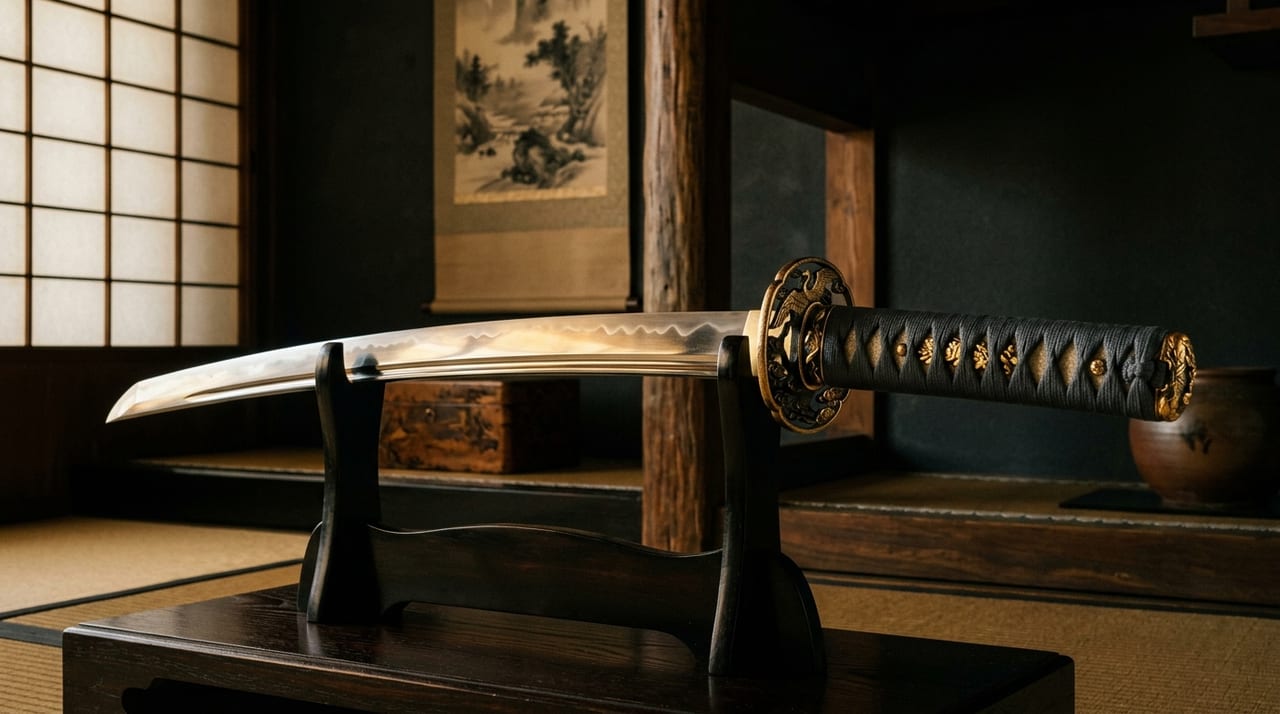
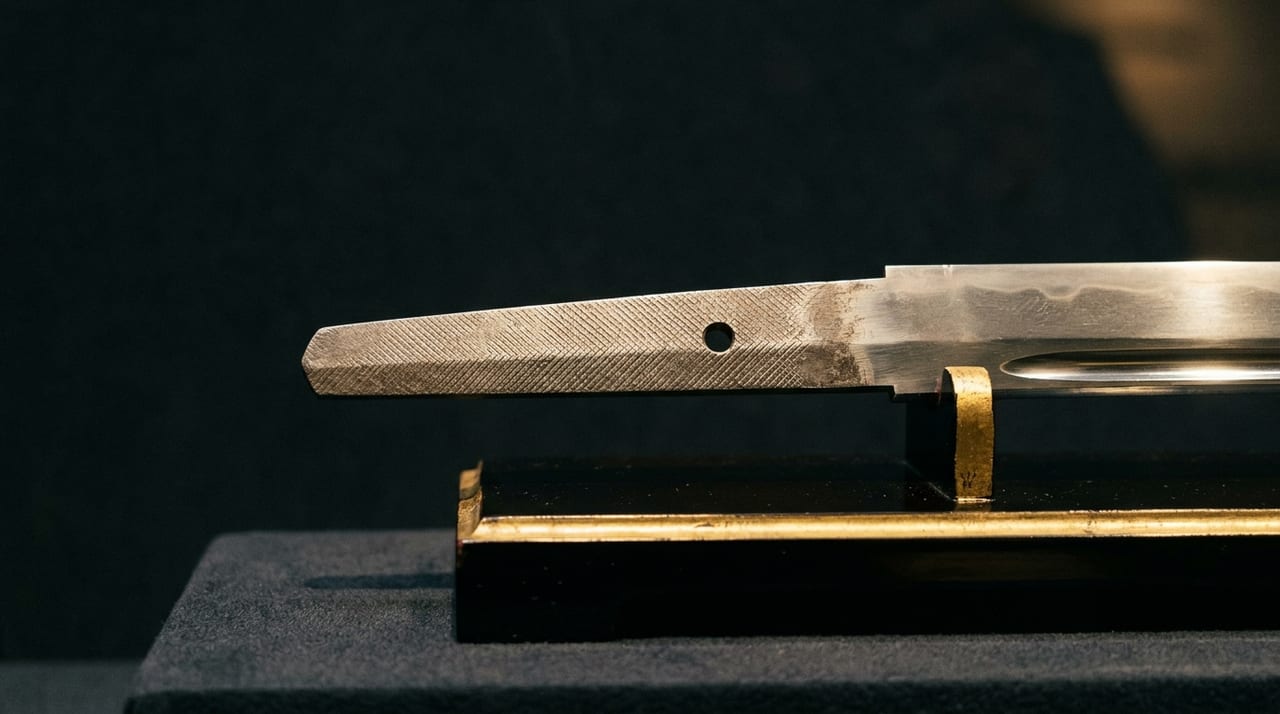
Master Craftsmen and Lineages of Higo Tsuba: The Styles and Legacy of the Artisans Who Established Higo Metal-Working, Including Hayashi Matashichi and Nishigaki Kanshirō
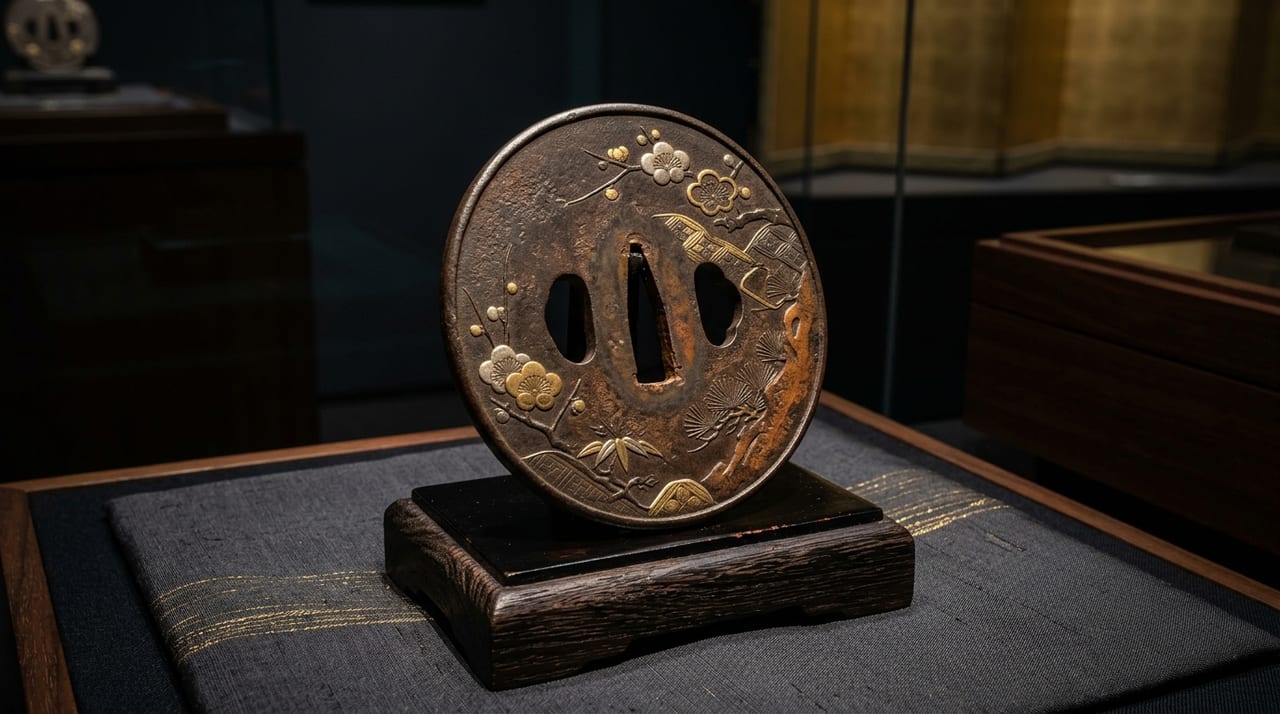 * Image is for illustrative purposes only.
Table of Contents
What Is Higo Metal-Working?
Higo metal-working (higo kinkō) is a school of sword-fitting metalwork that developed in the Kumamoto domain (Higo Province) during the Edo period. Under the patronage of the Hosokawa clan, the manufacture of tōsōgu — including tsuba, menuki, and fuchi-kashira — developed to a high level, establishing an aesthetic distinct from other regions (Owari, Kyoto, and Edo).
The greatest characteristic of Higo metal-working is a rugged beauty that strips away ornamentation. A "jisshitsu gōken" (robust simplicity) aesthetic — valuing the texture of the iron ground, restrained inlay, and spare forms over ornate carving or intricate piercing — runs throughout, reflecting the warrior culture and Zen spirituality of the Hosokawa domain.
Inlay Techniques of Higo Tsuba
The technical core of Higo metal-working is nunome-zōgan and hira-zōgan.
| Technique | Characteristics |
|---|---|
| Nunome-zōgan | A technique in which fine linen-weave-pattern cross-hatching is applied to the iron surface and gold, silver, or shakudō is hammered in, producing a composed appearance in which the design seems to become one with the iron |
| Hira-zōgan | A technique in which different metals are fitted into engraved grooves to express designs in the form of lines or planes |
In Higo metal-working, these techniques are combined to express designs of plants and flowers, family crests, lions, tomoe, and similar motifs in a restrained yet dignified manner. In contrast to sukashi tsuba (a technique in which designs are shown as negative space by perforating the ground, lending visual lightness), Higo inlay has a weighty, imposing presence.
Hayashi Matashichi: Founder of Higo Metal-Working
The founder said to have originated Higo metal-working is Hayashi Matashichi. His birth and death years are subject to various accounts, but he is considered a figure of the first half of the seventeenth century (early Edo period), a craftsman retained by the Hosokawa clan who settled in Kumamoto. Hayashi Matashichi's works frequently feature simple inlaid designs on an iron ground, and later generations have held them in high regard as the "prototype of the Higo tsuba."
Extant tsuba attributed to Hayashi Matashichi are few in number, and authentic works accompanied by a kanteisho are limited to museum holdings and first-rate collections. His influence extends beyond his direct students; it is immense in that it became the aesthetic foundation of the entire tradition of Higo metal-working in later generations.
Nishigaki Kanshirō: Master of Piercing Techniques
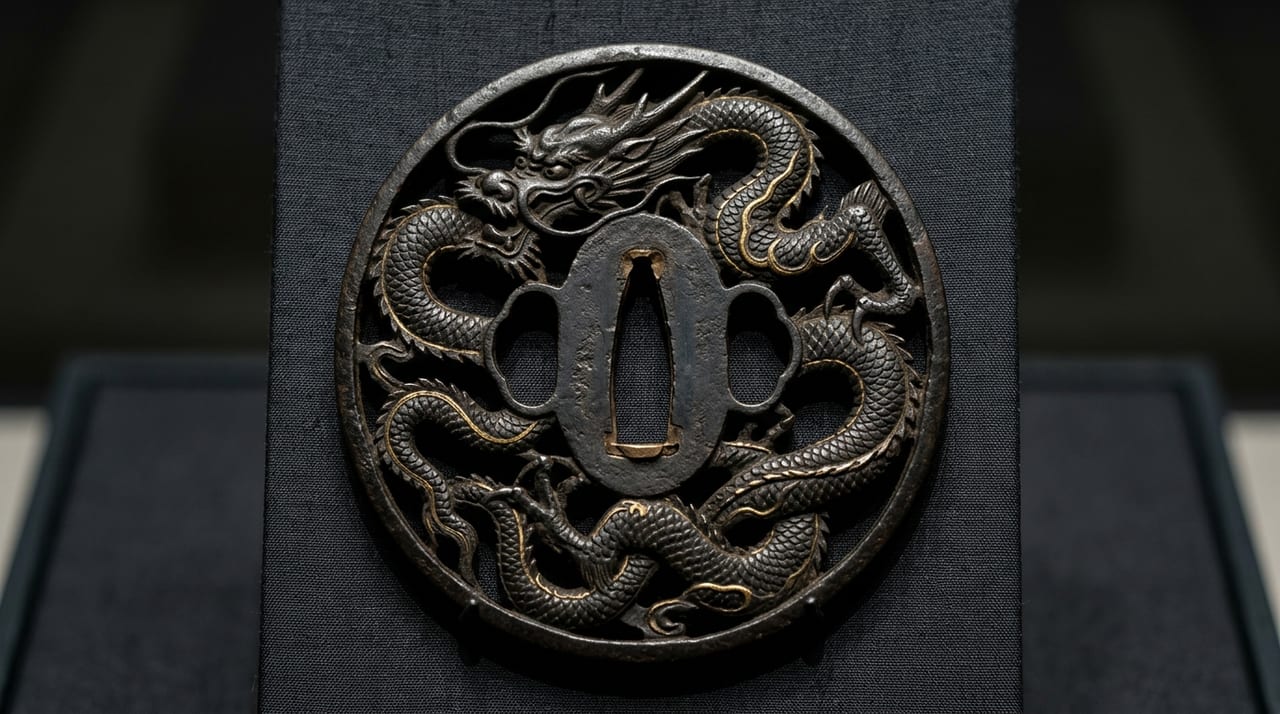
Nishigaki Kanshirō is the first-generation founder of the Nishigaki family, an important branch of Higo metal-working, a tōsōgu metalsmith who studied under Hirata Hikosaburō and then moved to Yatsushiro to work independently. He opened a distinctive realm by fusing piercing techniques with inlay, and his sukashi tsuba are characterized by their precise rendering of representational motifs such as plants, animals, and objects — not merely simple geometric openwork.
Nishigaki Kanshirō's style is described as possessing "delicacy within strength," and his achievement in adding poetic feeling to the robust image of the Higo tsuba is considerable. His refined skill was passed on to his students, and the Nishigaki family continued for multiple generations as a distinguished house of Higo metal-working.
Shimizu Jingorō and Later Higo Metal-Working
Shimizu Jingorō was a Higo metal-working craftsman who lived in the early Edo period (first half of the seventeenth century) and is said to have been a relative of Hirata Hikosaburō. He is known for having refined the precision of hira-zōgan on iron ground to the utmost, and many pieces that were actually used as practical tōsōgu by warrior households survive today. Shimizu's works are characterized by well-balanced compositions and precise inlay lines.
Despite the blow of the Sword Abolishment Edict (Haitōrei) and the sharp drop in demand for tōsōgu during the Bakumatsu and Meiji periods, the Higo metal-working tradition was maintained by a handful of craftsmen, and efforts to cultivate successors continue to the present day. In recent years, research and restoration activities aimed at preserving Higo metal-working techniques have been conducted in the area around Kumamoto City, drawing the attention of tsuba connoisseurs.
Points for Appreciating Higo Tsuba
When appreciating Higo tsuba, attention should be paid to the following points.
- Quality of the jigane——A fine Higo tsuba has an iron surface that is tight and uniform; as with swords, "rust with a lustrous sheen" is preferred in the condition of the rust
- Adhesion of the inlay——Pieces in which the metal adheres to the iron ground without gaps and has not flaked away with the passage of time are regarded as superior works
- Overall compositional balance——One should examine whether elements such as the proportion of jigane to inlay, the shape of the mimi (outer rim), and the finish of the seppadai (the area around the opening through which the nakago passes) are harmoniously integrated as a whole
By judging these points comprehensively, one can deeply appreciate the "aesthetic of the warrior" unique to Higo tsuba.
Contemporary Appreciation and Market Value of Higo Metal-Working
In today's tōsōgu market, works of Higo metal-working are highly regarded by collectors both in Japan and abroad. Works certified as genuine pieces by Hayashi Matashichi in particular can fetch high prices at fine art auctions. Among works of the Nishigaki and Shimizu families, there are pieces designated as NBTHK important tōsōgu, and the presence or absence of a reliable kanteisho has a major influence on transaction prices.
Abroad, it is known in the context of nihontō fittings research as the "Higo school," and there is a growing number of cases in which nihontō collectors in Germany and the United States specialize in collecting Higo tsuba. The honest beauty of the iron ground and the refinement of the inlay have appeal in foreign eyes as a "Japanese Zen aesthetic." To understand the appeal of Higo tsuba, the most direct path is to actively seek opportunities to handle actual pieces. Participating in sword fairs and auctions specializing in tōsōgu, and gaining experience of engaging directly with works, forms the foundation of a discerning eye.
Conclusion
Higo metal-working is a distinctive school of sword-fitting metalwork that originated with Hayashi Matashichi and was inherited and developed by Nishigaki Kanshirō, Shimizu Jingorō, and others. Works that make full use of nunome-zōgan, hira-zōgan, and sukashi embody the warrior aesthetic that rejects ostentation, and possess a particularly elevated spirituality among tsuba collections. Appreciating Higo tsuba offers an experience that goes beyond mere beauty of design and touches the very heart of Japan's bushidō culture.