How to Appreciate and Match Fuchi-kashira: Understanding the Unified Beauty of Tōsōgu
 * Image is for illustrative purposes only.
Table of Contents
What Is Fuchi-kashira: The Intersection of Function and Beauty
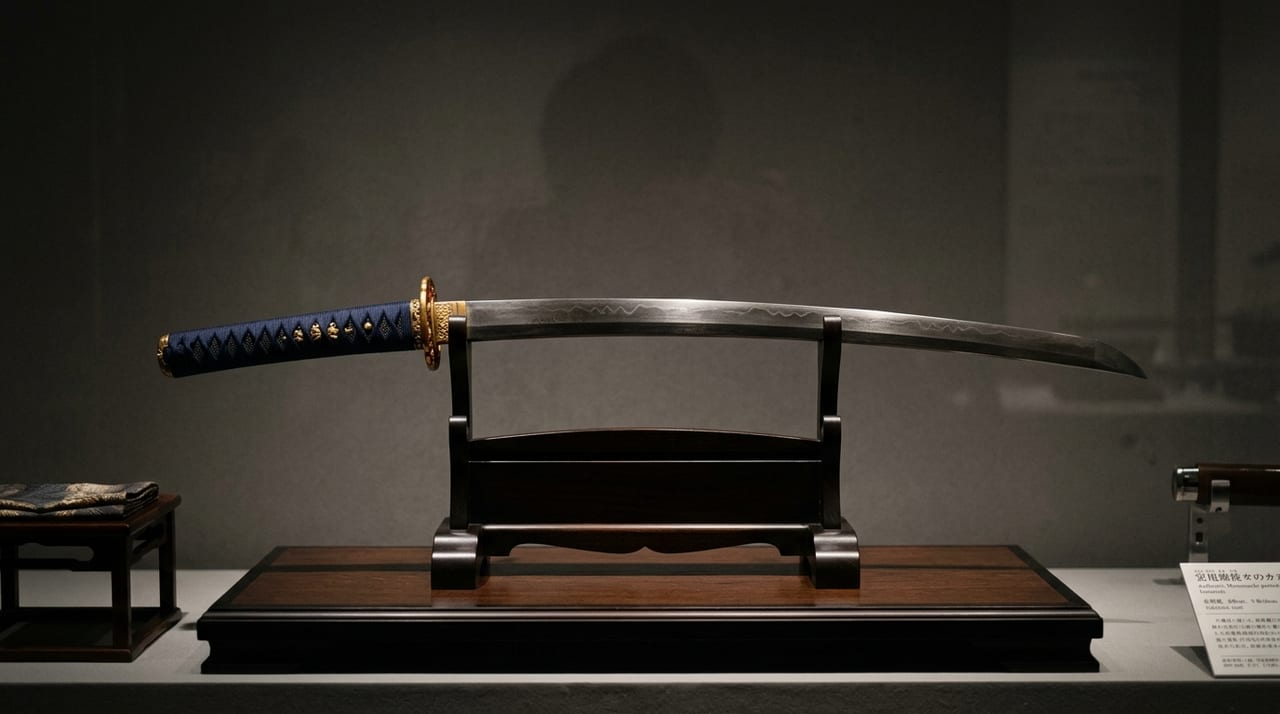
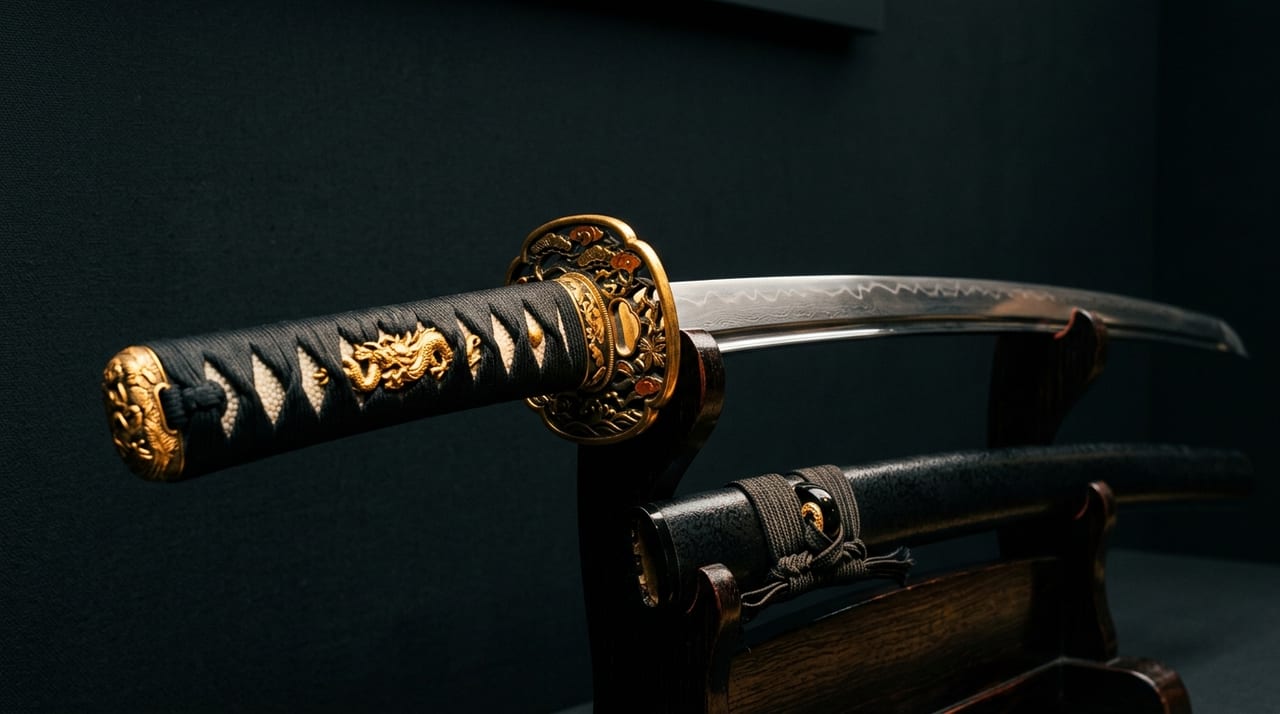
Fuchi-kashira is the collective term for the metal fittings attached to both ends of a Japanese sword's tsuka (hilt). The fuchi is a ring-shaped fitting positioned between the tsuka and the tsuba (hand guard), while the kashira is a cap-shaped fitting that covers the end of the tsuka. Although the two are independent components, they are ordinarily treated as a pair made by the same craftsman using the same subject, technique, and materials, and they have a great influence on the overall impression of the tōsōgu (sword fittings).
The primary function of fuchi-kashira is to secure the ends of the tsuka wrapping and protect the tsukagi (hilt wood). For swords subjected to hard use on the battlefield, reinforcing both ends of the tsuka with metal fittings was of great practical importance. However, as Japan entered the peaceful Edo period, the sword was elevated to a symbol of a samurai's status and aesthetic sensibility, and fuchi-kashira too developed beyond the realm of the practical into a miniature universe of intricate decorative carving. Adorned with traditional Japanese motifs such as cranes, pine, plum, dragons, waves, figures, and birds and flowers, fuchi-kashira have become one of the fields that enthusiasts collect most avidly within the world of tōsōgu collecting.
Materials and Major Techniques of Fuchi-kashira
The materials used for fuchi-kashira are wide-ranging. The most common are copper alloy types, and the representative materials are as follows.
- Shakudō: an alloy of copper and gold with a distinctive black-purple luster
- Suaka: close to pure copper, with a warm reddish-orange color
- Shibuichi: an alloy of copper and silver with a subdued silver-gray color
- Iron: works with gold inlay on an iron ground combine ruggedness with elegance
Carving techniques are also numerous.
- Takabori: a technique of raising the motif in high relief, creating a three-dimensional effect that reads well even from a distance
- Usuniku-bori: enables more delicate rendering of shadow and is well suited to depicting flowers, grasses, and rippling patterns
- Kebori: a technique of incising fine lines, used for minute details such as fur texture and leaf veins, and when combined with other techniques it adds depth to a work
- Gold inlay and silver inlay: in the late Edo period, many lavish fuchi-kashira featuring these techniques were produced
The major schools include the following.
- Yokoya school: founded by Yokoya Sōmin, renowned for its realistic depiction of animals and plants, and left a great influence on later metalwork expression
- Yanagawa school: characterized by the harmony of refined carving and material texture, producing many dignified works for the samurai class
- Gotō family: known as a distinguished house that preserved high-class traditional motifs (lions, peonies, dragons, etc.) going back to the Muromachi period, and was entrusted with the tōsōgu of the shogunal family and high-ranking daimyo
The "Matching" of Fuchi-kashira: Principles of Unified Beauty
In the appreciation of tōsōgu, when the various components such as fuchi-kashira, tsuba (hand guard), and menuki share a single unified theme, the sword mounting is called a soroi. A soroi mounting is regarded as the highest form both in samurai society and among modern collectors, and tends to be highly valued at auctions and sword markets as well.
The criteria for unity generally come down to three points.
- Unity of motif (for example, all parts share the theme of "autumn grasses")
- Unity of materials and technique (made by the same craftsman or the same school)
- Matching of period (sharing the same period and production background)
A mounting in which all three points align is also called a midokoro-zoroi, and it is often recorded in the kanteisho (appraisal certificate) as a pair or set; that documentation itself becomes a factor that enhances value.
In terms of the relationship between the fuchi and kashira, those made by the same craftsman as a single series are considered ideal. If the motif of the fuchi is "waves with plovers," the same motif is placed on the kashira as well, and the compositional ingenuity — how the horizontal spread of the waves is expressed on the fuchi, and how a flock of plovers is contained within the circular space on the kashira — becomes one of the highlights of appreciation.
The Aesthetics of Intentional Mismatching: Toriawase
In the world of tōsōgu there is a concept called toriawase. This is the idea of combining different parts so that they harmonize aesthetically and thematically, even when they are not by the same maker, of the same period, or with the same motif. It is a distinctly Japanese sense of aesthetics that connects to mitate in the tea ceremony, and it is a perspective that cannot be overlooked when appreciating fuchi-kashira.
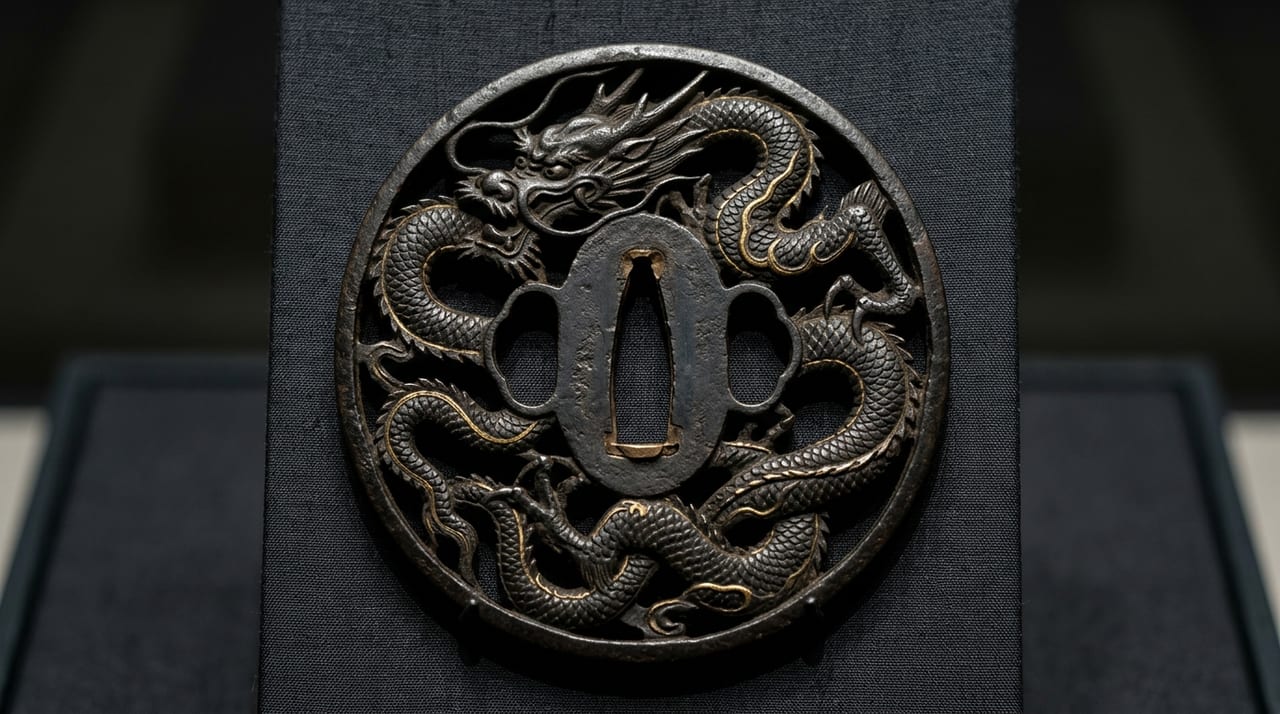
For example, if the fuchi-kashira bears a "dragon" motif and the tsuba (hand guard) bears a "cloud" motif, the combination is aesthetically justified even when they are by different makers, because dragons and clouds traditionally form a complementary pair ("un-ryū," dragon amid clouds). By contrast, if the fuchi-kashira has a delicate floral pattern while the tsuba has a bold warrior painting, the class and atmosphere of the motifs clash, and the toriawase is considered a failure.
Practical Points When Appreciating Fuchi-kashira
When actually taking a fuchi-kashira in hand to appreciate it, focusing on the following points will deepen your understanding.
- Precision and depth of carving: Confirm whether it is takabori or usuniku-bori, and whether the details of the motif are carefully finished. Looking in particular at whether carving or openwork extends even to the back surface (the side that contacts the tsukagi) conveys the craftsman's integrity toward his work.
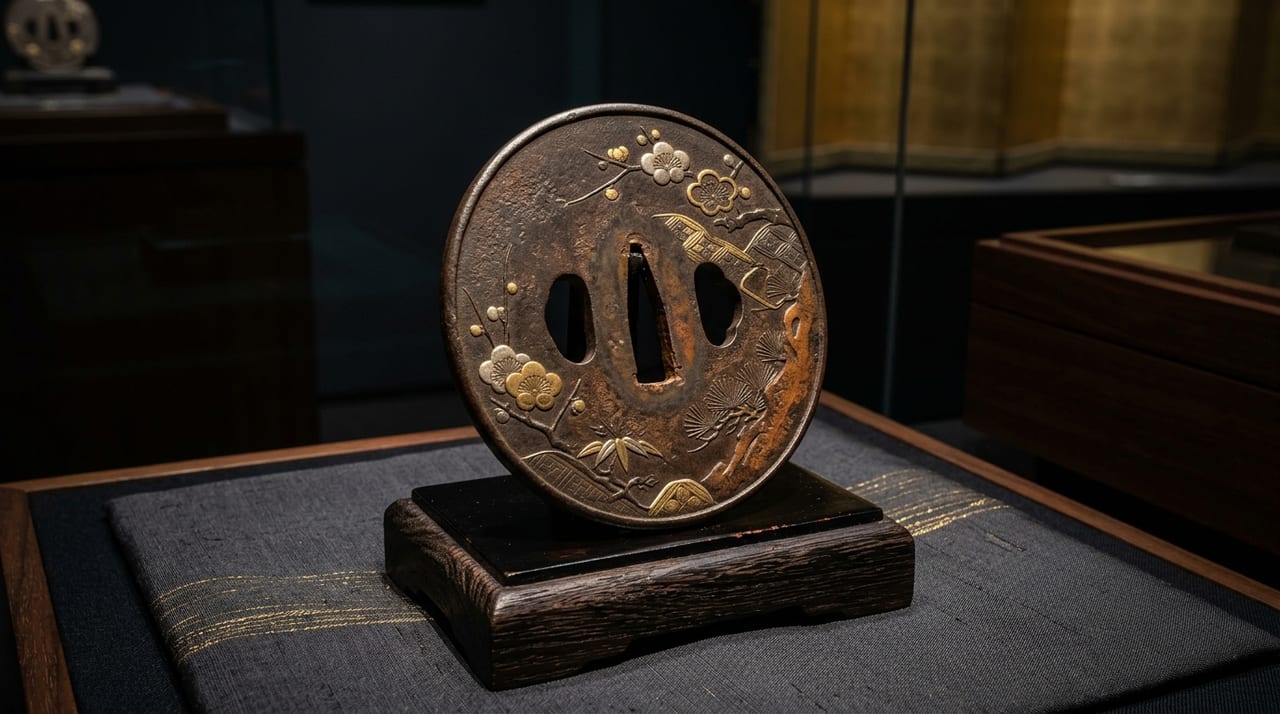
- Color of the materials and aging: Observe how the color of the metal — the black-purple of shakudō, the silver-gray of shibuichi, the gleam of gold inlay — has changed over time and with storage conditions. A fuchi-kashira of shakudō ground that has been properly stored emits a "withered" beauty with golden patterns floating against a deep black, a beauty that can never be achieved in a new piece.
- Compositional ingenuity of fuchi and kashira: Even with the same subject, the placement of the motif naturally differs because the fuchi (a horizontally elongated ring shape) and the kashira (a rounded cap shape) have different forms. Reading this difference in composition is one of the great pleasures of appreciation.
The Samurai Aesthetic as Read through Fuchi-kashira
Although fuchi-kashira are small metal fittings, they concentrate the finest metalworking techniques of their era and serve as a mirror reflecting the status, taste, and thought of the patron. The transition from the Sengoku period's fuchi-kashira, filled with motifs that proclaimed martial prowess, to the literary and poetic motifs favored in the peaceful Edo period, tells the very story of the maturation of Japan's samurai culture.
When we appreciate fuchi-kashira today, we are not simply looking at "old metal fittings." Condensed within them are the skills and thought of a particular craftsman, the aesthetic sensibility of the patron, and the spirit of the era in which the sword lived. If you have the opportunity to see originals at a museum or sword exhibition, take time to savor the completeness of the fuchi-kashira as a pair, the intricacy of the carving, and their harmony with the overall sword mounting.