Domain Patronage of Swordsmiths: The Role and Significance of Retained Sword Makers in the Edo Period
 * Image is for illustrative purposes only.
Table of Contents
The Okakae tōkō System: Why Domains "Employed" Swordsmiths
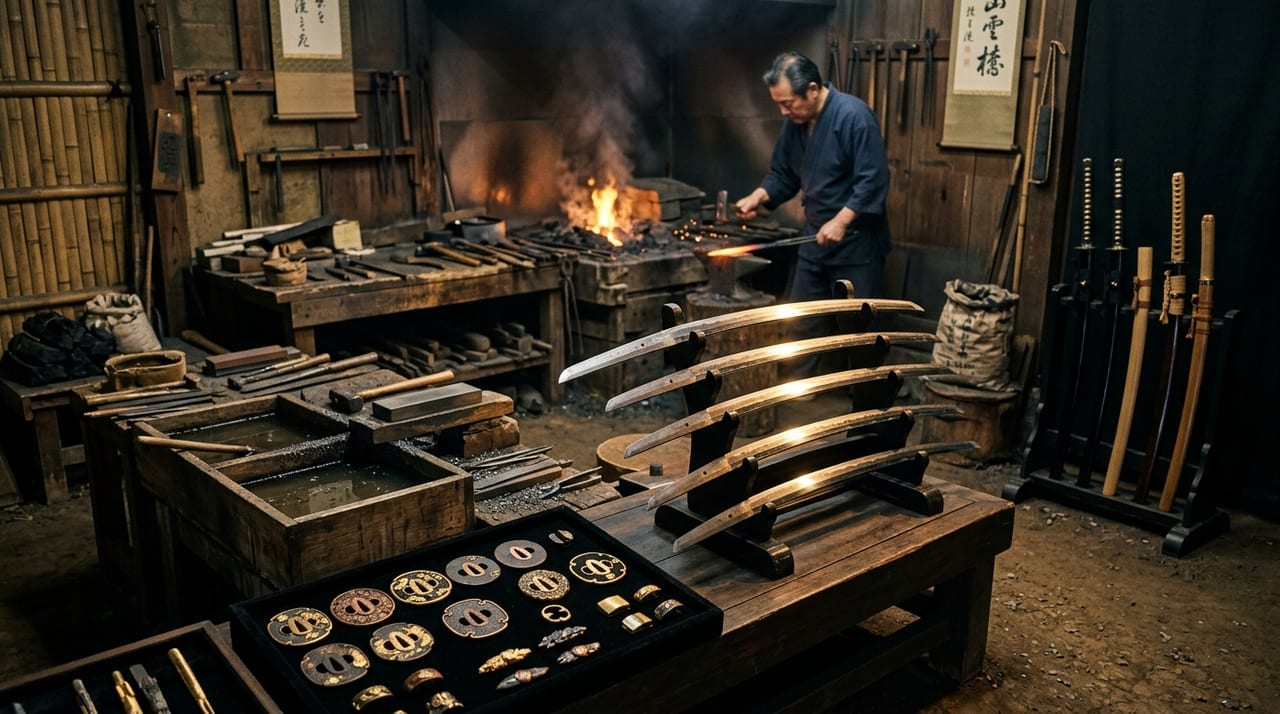
During the Edo period (1603–1868), each domain established a system to formally employ and protect talented swordsmiths as okakae tōkō (domain-employed swordsmiths). The primary role of okakae tōkō, who received status equivalent to domain samurai or similar treatment, was to forge swords for the domain lord, his family, and retainers.
Behind the establishment of this system lay the special positioning of swords within samurai society. The sword transcended mere weaponry—it was a "symbol of status and prestige." Whether as reward swords for retainers, diplomatic gifts to other domains, or votive swords dedicated to shrines, there was a strong demand that such swords be works of renowned swordsmiths authorized by the domain. Possessing swords crafted by master swordsmiths also served as proof of the domain's cultural and political sophistication.
Okakae tōkō were granted numerous privileges, exemplified by the following:
- Provision of residence and forging facilities
- Stipends paid in rice and silver
- Permission to inscribe signatures (mei) as "[Domain Name] + [Swordsmith Name]"
Signatures such as "Hizen-ju Tadayoshi" and "Kashū-jū Nobuie" served as a form of official certification proving that the swordsmith was a master bound to a specific domain. Conversely, the sale of swords outside the domain was often strictly restricted, and the swordsmith's activities were kept under domain control.
Notable Examples of Okakae tōkō: Achievements in Hizen, Kaga, and Satsuma
The Tadayoshi lineage of Hizen Domain (Saga) exemplifies a representative success story produced by the okakae tōkō system. The founder, Hizen Tadayoshi (Hashimoto Shinzaemon Tadayoshi), became an okakae tōkō of the Nabeshima domain and established a major school known as "Hizen-mono." Characterized by orderly jihada and mild hamon, their work—particularly the fine, densely-packed grain pattern called "konuka-hada"—was the product of advanced forging techniques difficult for other schools to replicate. Even today, blades signed "Hizen Tadayoshi" and "Hizen Tadahiro" are traded as the highest-grade swords, and some are valued at the level of National Treasures and Important Cultural Properties.
The swordsmith groups of Kaga Domain (Kanazawa) were another faction that greatly benefited from the okakae tōkō system. The Maeda family, lords of the great "million-koku" domain, generously protected not only swordsmiths but also artisans in related crafts such as metalwork, lacquer painting, and lacquerware, cultivating a comprehensive sword culture including fittings and mountings. The distinctive grand gold metalwork decoration characteristic of Kaga swords was born from an environment where the okakae tōkō system enabled craftsmen to refine each other's skills.
The okakae tōkō of Satsuma Domain (Kagoshima) established a distinctive style known as "Satsuma shintō." The Shimazu family, who valued martial prowess, took particular interest in sword quality, and swordsmiths including Masayoshi established the reputation of "Satsuma-mono" through jihada rich with rustic character and powerful hamon. They represent a rare example of continued production of practical combat-ready swords through the Boshin War and Satsuma Rebellion in the late Bakumatsu period.
Technology Transmission and Development of Regional Styles Supported by the System
The greatest achievement of the okakae tōkō system lay in intergenerational transmission of technique and the development of regional styles.
By guaranteeing an environment where swordsmiths could refine their craft across multiple generations under domain patronage, they were freed from short-term commercial pressures and could dedicate themselves to long-term technical exploration. The Hizen Tadayoshi lineage inherited the name across multiple generations from the founder onward, with each generation building on the previous generation's techniques while adding their own innovations, progressively raising the school's level of refinement.
Under domain management, the apprenticeship system was systematically organized to cultivate talented successors. This differed from the typical apprenticeship in which independent craftsmen took disciples at their own discretion—it was revolutionary in that the domain as an organization publicly participated in successor training.
The okakae tōkō system also played an important role in quality assurance. By establishing swordsmith brands bearing the domain's name, buyers could judge quality to some extent from the domain of origin and the swordsmith's name—a function close to modern brand authentication already existed in this era.
Swords and Politics: The Diplomatic and Ideological Aspects of the Okakae tōkō System
It is insufficient to view the okakae tōkō system merely as a craftsman protection policy. Even under the Tokugawa shogunate's control, each domain was permitted to maintain its own cultural and artistic identity, and employing okakae tōkō served as proof that the domain possessed its own level of cultural sophistication. Particularly when domain lords presented swords to the imperial court or shogun, whether the blade was created by a renowned okakae tōkō significantly determined its value.
Granting swordsmiths status equivalent to samurai made visible as an institution the samurai value system—the spirit of regarding the sword as the supreme work of craftsmanship. Okakae tōkō were not mere craftsmen but were positioned as embodiments of the domain's martial prowess and culture.
The Meiji Restoration and the Collapse of the System: Crisis of Discontinuity
With the Haihan Chiken (abolition of domains and establishment of prefectures) of 1871 (Meiji 4), the domain system itself was dismantled, and the okakae tōkō system disappeared along with it. Many swordsmiths lost their long-standing economic backing, and the rapid disappearance of demand from the Sword Abolition Edict of 1876 (Meiji 9) dealt a further blow. In the early Meiji period, the population of sword forgers plummeted, and the techniques refined under the okakae tōkō system faced the brink of extinction.
Nevertheless, some swordsmiths continued blade-making as traditional and fine art. Through the Imperial Craftsmen System beginning around 1890 and activities of the Japanese Sword Preservation Society in the early Showa period, the Japanese sword was reappraised, moving from "weapon" to "traditional art form." The modern Living National Treasure system represents a framework of state protection for swordsmiths that can be said to be the spiritual successor to the okakae tōkō system.
Legacy for Contemporary Sword Research
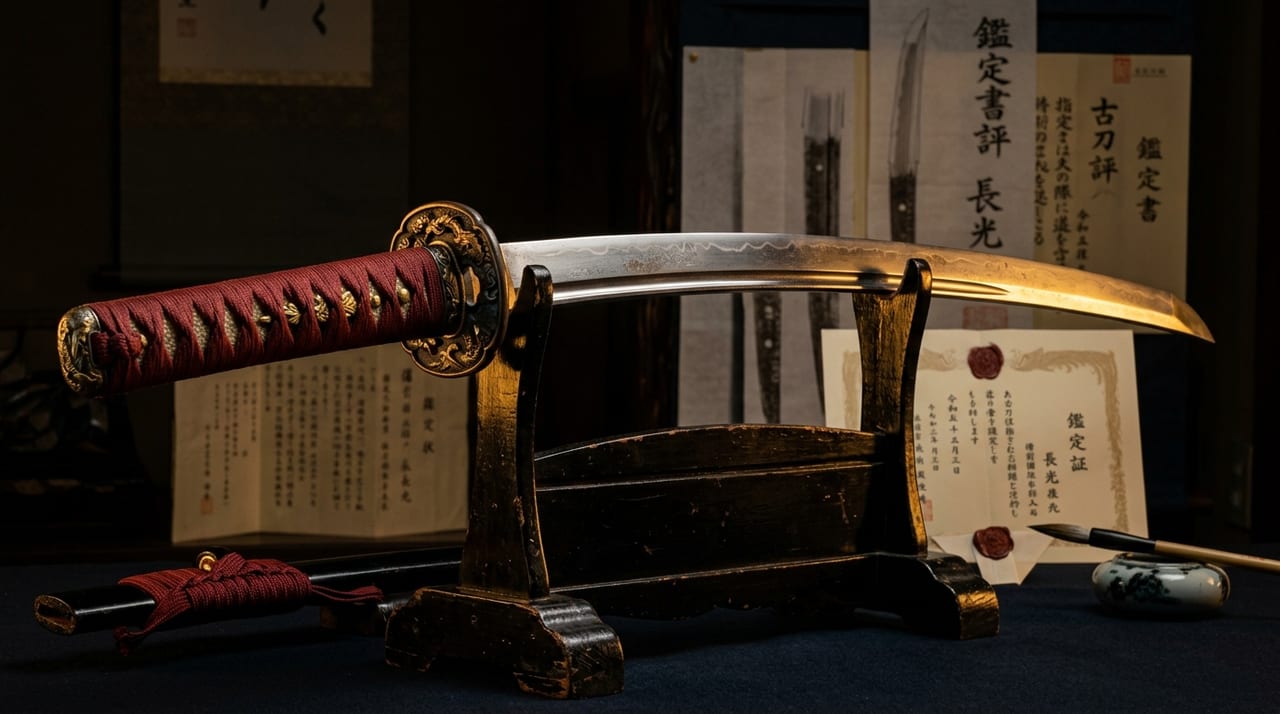
The accumulation of techniques and diversity of regional schools nurtured by the okakae tōkō system form an important foundation for contemporary Japanese sword authentication and research. Appraisers estimate a sword's school of origin, region, and period from the grain pattern of the jihada, the shape of the hamon, and the finishing of the nakago, but regional brands such as Hizen-mono, Kaga-mono, and Satsuma-mono became established precisely because each domain consciously continued to refine its distinctive style under the okakae tōkō system.
The works left by each domain's okakae tōkō also serve as primary documents attesting to the diversity of regional culture during the Edo period. Studying swords becomes a thread for unraveling the political, economic, and cultural circumstances of each domain and holds high value from the perspective of Japanese historical research. The okakae tōkō system can be said to be an institutional legacy indispensable for understanding not only sword history but Japanese early modern cultural history as a whole.