How to Buy a Japanese Sword in Japan: A Guide to Sword Markets, Antique Dealers, and Auctions
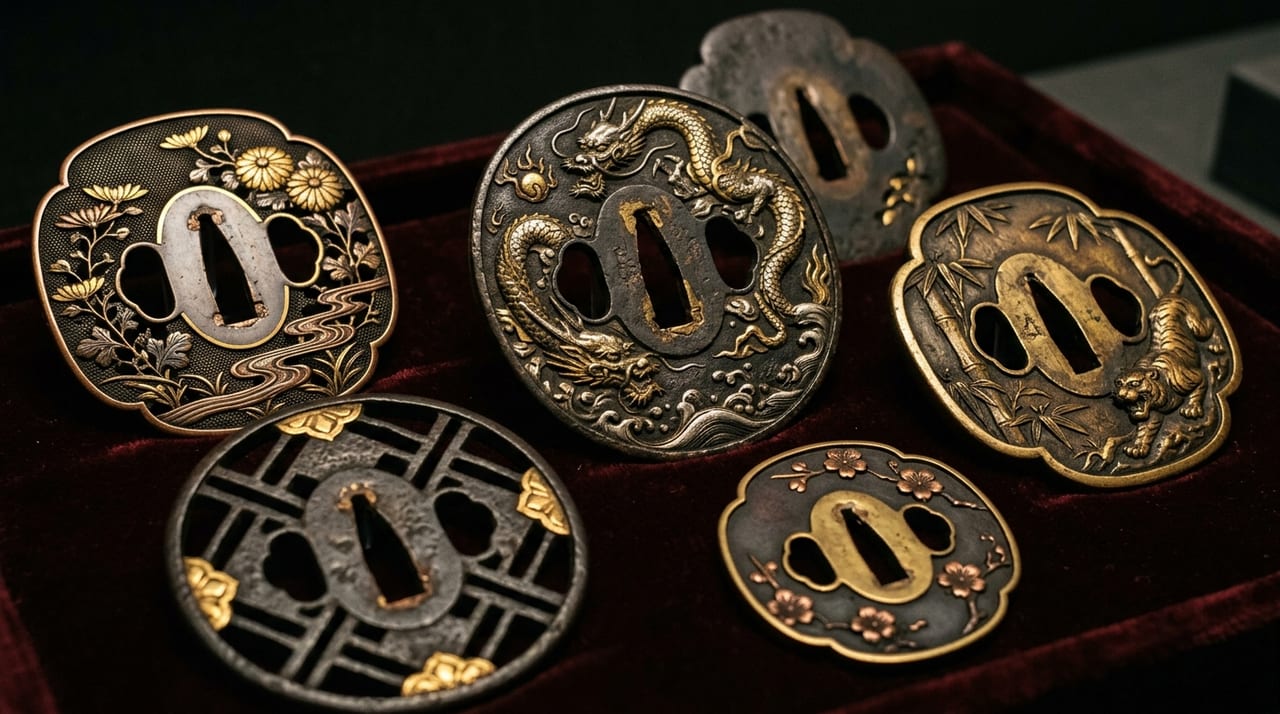 * Image is for illustrative purposes only.
Table of Contents
Prerequisites for Buying a Japanese Sword: Understanding Registration Certificates and the Law
To legally possess or buy and sell a Japanese sword in Japan, a sword registration certificate (issued by the prefectural Board of Education) is required. This is based on the Act for Controlling the Possession of Firearms or Swords and Other Such Weapons (Jūtōhō), and possessing a Japanese sword without registration is itself illegal.
When purchasing, always examine the original registration certificate in person and verify that the sword's shape, length, and characteristics match the entries on the certificate. The nagasa (blade length) is clearly stated on the registration certificate; a discrepancy of 1 bu (approximately 3 mm) or more raises suspicion of forgery or substitution. After a sale, there is an obligation to submit a change-of-possession notification to the prefectural Board of Education within 20 days of acquisition.
Foreign nationals may also possess Japanese swords within Japan, but export regulations on cultural properties apply to taking them abroad. Taking abroad a sword designated as a jūyō bunkazai (Important Cultural Property) or jūyō bijutsuhin (Important Art Object) is in principle prohibited, and even for other swords, obtaining an antique export inspection certificate from the Agency for Cultural Affairs (under Article 44 of the Act on Protection of Cultural Properties) is required. Since neglecting this procedure may constitute a violation of the Act on Protection of Cultural Properties, it is strongly recommended to consult in advance with a specialist administrative scrivener or dealer.
How to Find a Reliable Specialist Sword Dealer
The safest route for purchasing a Japanese sword is to buy from a certified dealer affiliated with the NBTHK (Society for the Preservation of Japanese Art Swords) or the National Sword Dealers' Cooperative Association (Zentōshō). Dealers affiliated with these organizations meet certain screening standards, and the risk of handling forgeries or unregistered items is significantly reduced.
As for major specialist sword dealer districts by region, in Tokyo specialist shops are concentrated in Asakusabashi, Jinbōchō, and Shibuya (around Antique Street). In Osaka, established dealers are scattered around the Dōtonbori and Senba areas, and in Kyoto around Teramachi-dōri and Sanjō, with no small number of shops handling items that have emerged from historic storehouses.
The specific checkpoints for choosing a shop are as follows.
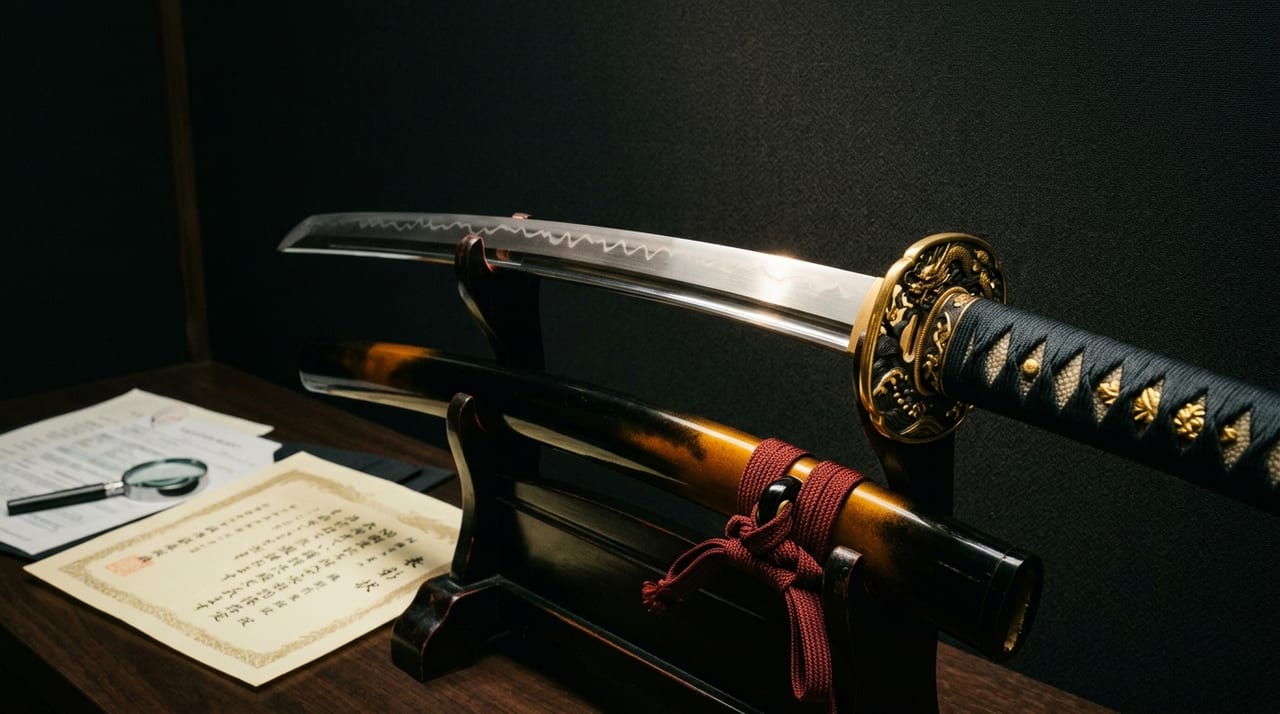
- Presence of a kanteisho (appraisal certificate): A sword accompanied by an NBTHK examination pass certificate or a Hon'ami family origami (appraisal certificate) is highly reliable in terms of authenticity and quality.
- After-sales service: A shop that can offer advice on togi (polishing), shirasaya (plain storage scabbard) production, and tsuka rewrapping, and can introduce skilled craftsmen, allows for a long-term relationship and peace of mind.
- Quality of explanation: Check whether the shop explains the sword's provenance, period, and tōkō (swordsmith) carefully, and whether it answers questions sincerely.
When visiting for the first time, it is important not to decide on a purchase immediately but to visit and compare several shops. Take your time to deliberate without being swayed by phrases such as "special price today only."
Making Use of Sword Markets and Exhibition Sales
Sword markets held on a regular basis are a precious opportunity in which many dealers gather under one roof, allowing you to compare multiple swords within the same budget range.
Examples of major sword markets:
- National Sword Market (held several times a year at the Tokyo Bijutsu Club; the largest sale event in Japan)
- Sword exhibitions organized by the NBTHK (held regionally by each branch)
- Regional antique markets (Kyoto antique market, Osaka flea market, Kanazawa antique market, etc.)
- Related events at the Japanese Sword Museum (Ryōgoku, Tokyo)
The greatest advantage of sword markets is the ability to make cross-comparisons of items from different dealers in the same venue. Even swords of the same period and school can vary greatly in price depending on the state of togi (polishing), the presence or absence of sword fittings, and differences in accompanying items, so repeated comparisons cultivate a sense of market value. Since you can ask each dealer questions directly, it is also an ideal opportunity to learn about appreciation points such as hamon (temper line) and jigane (steel of the blade surface) while receiving explanations.
For beginners, it is strongly recommended to attend events hosted by the NBTHK or local sword appreciation societies before visiting sword markets, and to acquire foundational knowledge from more experienced enthusiasts.
Using Auction Houses and Points to Note
Domestic auction houses are also a strong option for purchasing Japanese swords. Major houses such as SBI Art Auction and Tokyo Chūō Auction regularly list swords, and there are opportunities to encounter fine pieces with clear provenance. Since you can examine the actual item at a pre-sale preview, you can also directly verify the sword's condition, the thickness of its kasane (blade thickness), and the degree of its sori (curvature).
Tōken World is known as an online platform specializing in Japanese swords and can be used for buying and selling information as well as a tōkō (swordsmith) database. Swords submitted to NBTHK examination sessions also circulate on the market, and the grade of the examination pass certificate (Tokubetsu Jūyō Tōken, Jūyō Tōken, Tokubetsu Hozon Tōken, or Hozon Tōken) serves as a price benchmark.
On the other hand, Japanese swords are also listed on general secondhand marketplaces such as Yahoo Auctions and Mercari. However, since verifying the authenticity of the registration certificate, assessing genuineness, and evaluating the sword's condition are all difficult, these platforms are not recommended for beginners without specialist knowledge. If you must use them, be sure to follow the procedure of requesting a physical inspection from a specialist dealer after winning a bid, before making payment.
Price Range Guide and Budget Planning
The price range of Japanese swords is extremely wide, from tens of thousands of yen to hundreds of millions of yen. The following gives a general guide for those considering a first purchase.
| Category | Approximate price range |
|---|---|
| Iai swords and replica swords (not live blades) | 10,000–300,000 yen |
| Entry-level live blades (gendaitō, mumei (unsigned) pieces, etc.) | 200,000–1,000,000 yen |
| Maintained Edo-period swords (with mei (signature)) | 500,000–5,000,000 yen |
| Masterwork blades by renowned tōkō / Jūyō Tōken | 5,000,000 yen to tens of millions and above |
The main components of price are: ① the rank of the tōkō (swordsmith), ② the period (kotō, chūkotō, shintō, shinshintō, or gendaitō), ③ the grade of the kanteisho (appraisal certificate), and ④ the condition of the togi (polishing) and sword fittings. Even for works by the same tōkō, the difference in whether the togi is a fresh polish or not can result in a price difference of hundreds of thousands of yen.
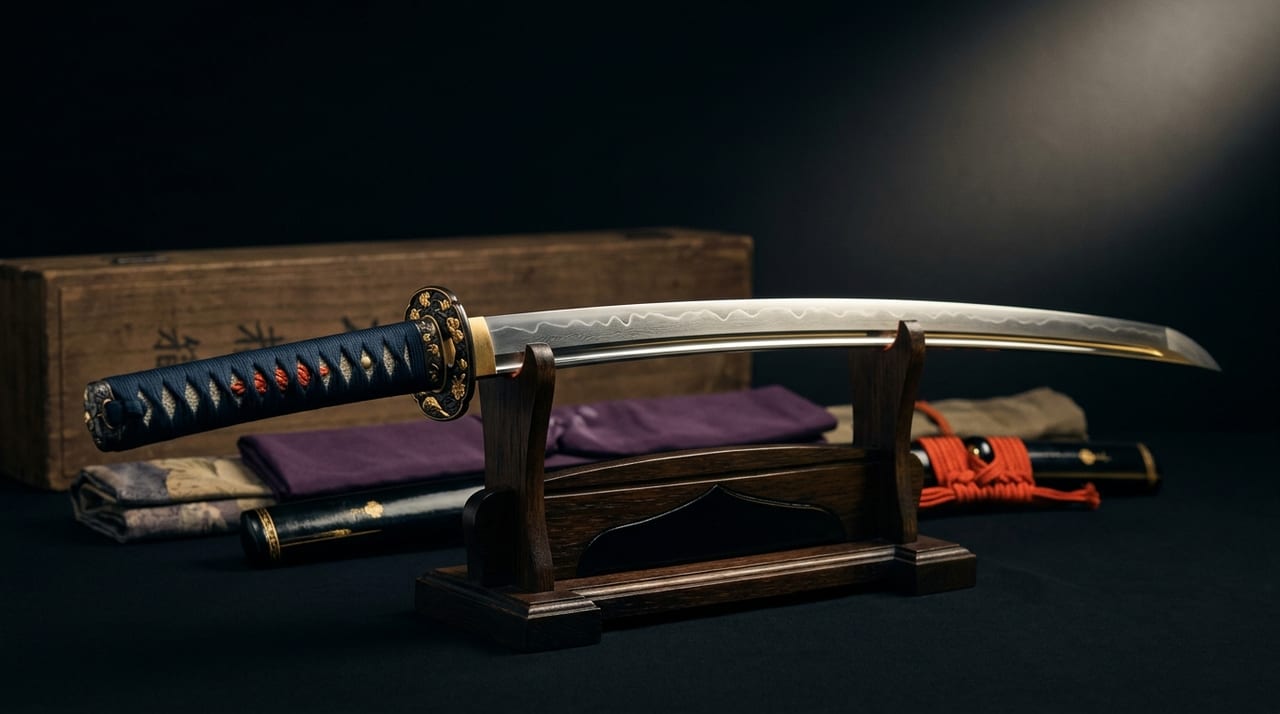
In addition to the purchase price of the blade, incidental costs also need to be factored into the budget. Budget for togi (polishing) fees (approximately 150,000–400,000 yen for a sword with a 70 cm nagasa (blade length)), shirasaya (plain storage scabbard) production costs (30,000–80,000 yen), the purchase of a sword stand and sword box (10,000–100,000 yen), and maintenance supplies (uchiko powder, chōji oil, mekugi punch, etc.).
For a first purchase, the most reliable approach is to honestly communicate your budget and preferences (period, school, intended use, and storage conditions) to a trusted dealer and ask them to recommend the best sword within that range.
Approaching the Purchase with Deepened Appreciation Knowledge
To enjoy Japanese swords more deeply, it is important to acquire basic knowledge of appreciation before purchasing. As highlights of the blade, the four points of hamon (temper line), jigane (steel of the blade surface), bōshi (temper line in the point), and nakago (tang) are particularly important. The hamon is the pattern of yaki-ire (quenching), with characteristics varying by school, including suguha, notare, and chōji. The jigane is the underlying surface of the blade, with surface grain patterns such as itame, mokume, and masame being the subject of appreciation.
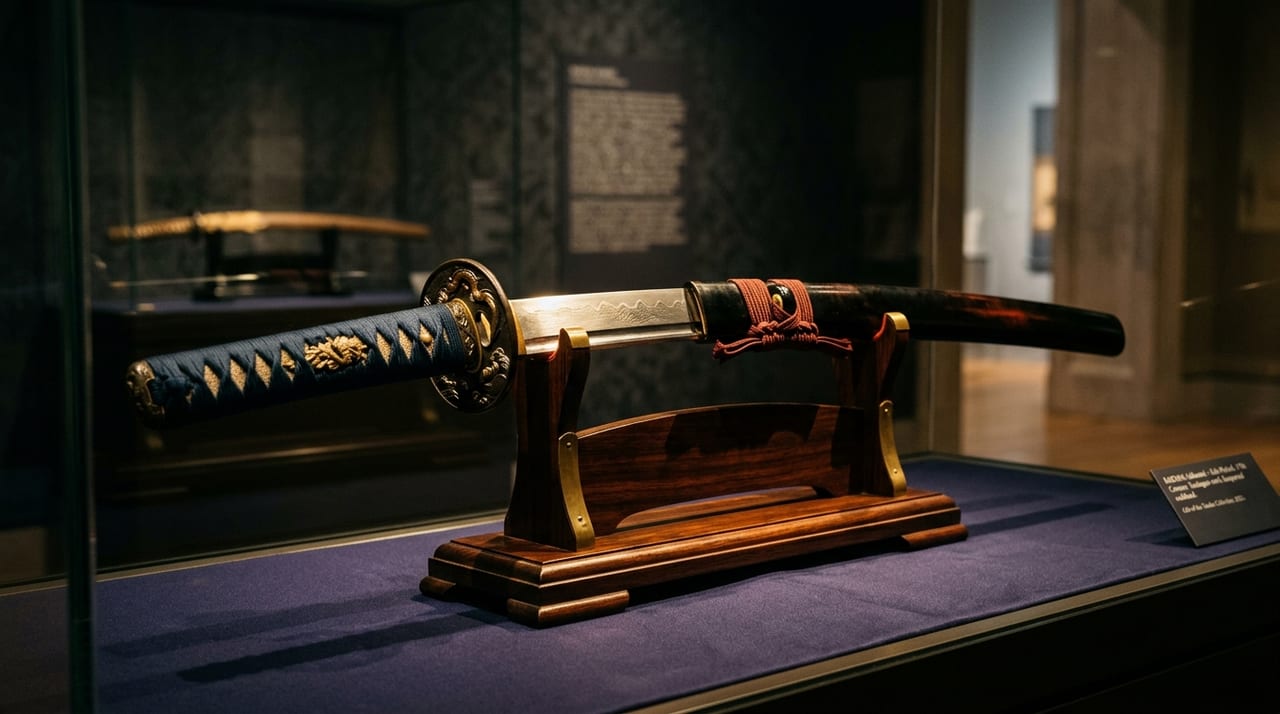
The Japanese Sword Museum (Ryōgoku, Tokyo) and art museums and museums throughout the country regularly hold special exhibitions where you can view masterwork blades of jūyō bunkazai (Important Cultural Property) class up close. For those considering a purchase, first experiencing genuine masterwork blades at such exhibitions and grasping what draws you to them will make subsequent purchase decisions significantly easier.
An encounter with a Japanese sword is a once-in-a-lifetime meeting. Abide by the law, deepen your knowledge, build a trustworthy network of people, and cherish the bond with the masterwork blade that is yours alone.