Donating Nihontō to Museums, Shrines, and Other Institutions — How to Leave a Personal Collection to a Public Organization, and the Practical Steps Involved
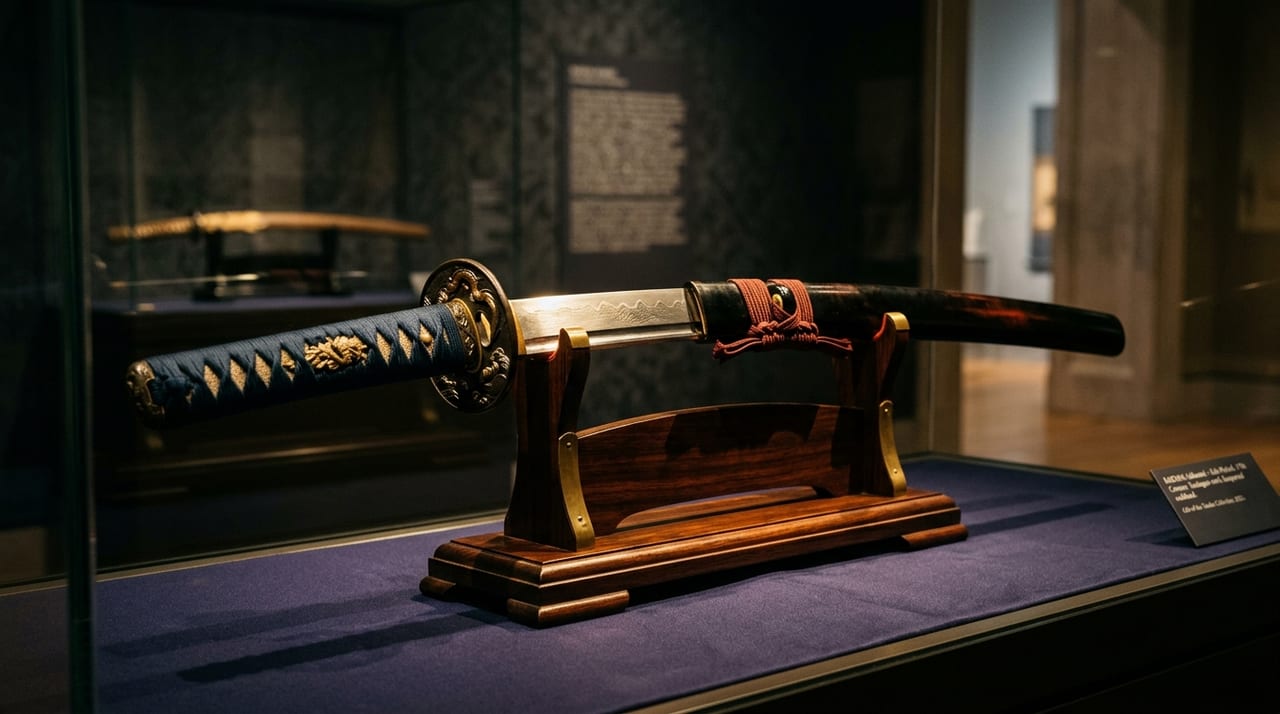 * Image is for illustrative purposes only.
Table of Contents
Why Donate Nihontō to a Public Institution
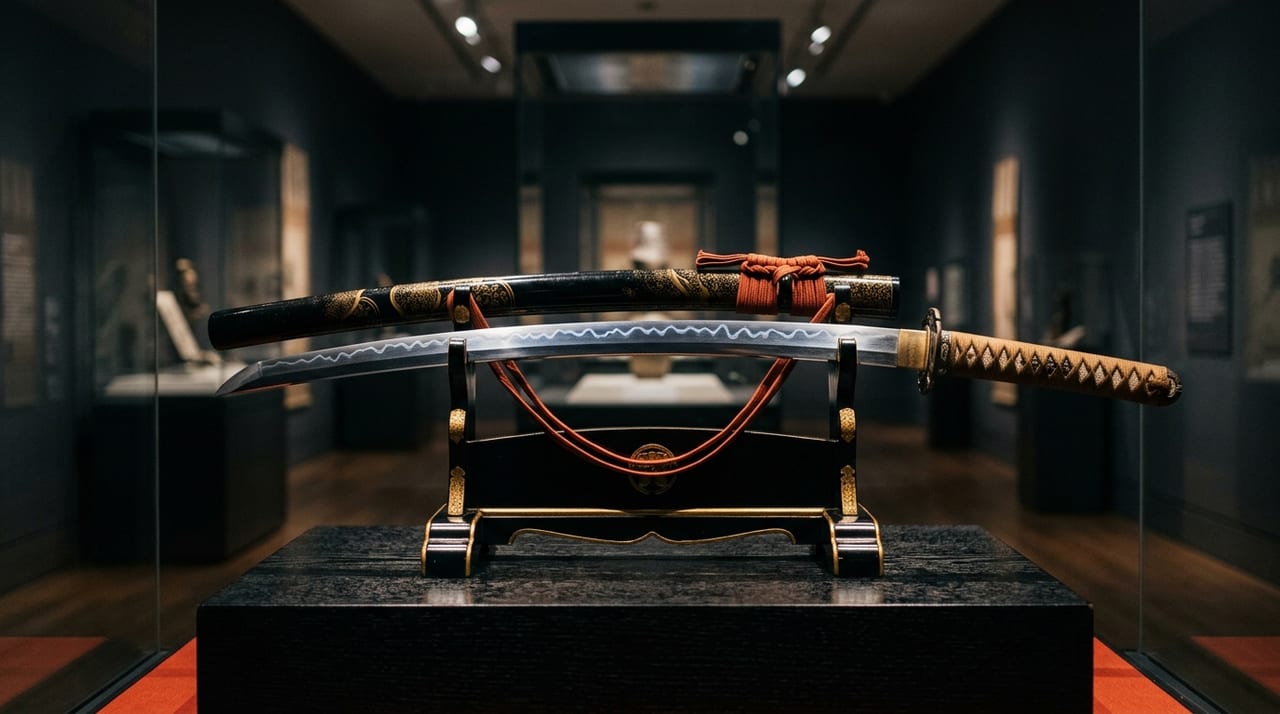
How to pass on a nihontō collection built over many years to the next generation — this is a question many sword enthusiasts face in their later years. When there is no heir within the family, donation is an option beyond selling or disposal. By donating to a museum, shrine, or other institution, the swords are preserved and displayed over the long term as part of a public collection, leaving them as a broad cultural asset for society.
The practical aspects of choosing to sell are covered in Nihontō Appraisal and Sale — Steps and Market Guidance for Parting with Heirlooms and Collections, but this article organizes the practical procedures and points of caution involved when an individual donates nihontō in their possession to a public institution.
Types of Receiving Institutions and Their Characteristics
There are broadly three types of institutions to consider as donation recipients for nihontō.
National and public museums have the most systematic preservation and management systems. National institutions such as the Tokyo National Museum, Kyoto National Museum, and Kyushu National Museum are equipped with specialist storage facilities and restoration systems for swords, making them the most likely to manage donated swords appropriately. However, their acceptance criteria are strict, and donations are often declined if the sword does not meet the standard of a jūyō bunkazai (Important Cultural Property).
Private museums and specialist museums may have more flexible acceptance criteria than national institutions. Facilities specializing in swords, such as the Japanese Sword Museum (Ryōgoku, Tokyo), have a track record of accepting swords across a wider range of grades. Regional local history museums and historical museums may also be proactive in accepting works by tōkō (swordsmiths) associated with the local area, or swords handed down through samurai families with local connections.
Shrines and temples are institutions with a historical tradition of receiving votive offerings. A sword connected to the history of a particular shrine or temple — for example, one of the same type as a sword dedicated by a warrior associated with that shrine — may be warmly received. However, some facilities do not have preservation environments as well-equipped as those of museums, and careful consideration is needed from the perspective of long-term sword preservation.
Preparation Before Donating — Research and Evaluation
Before planning a donation, it is important to understand the condition and value of the nihontō in your possession.
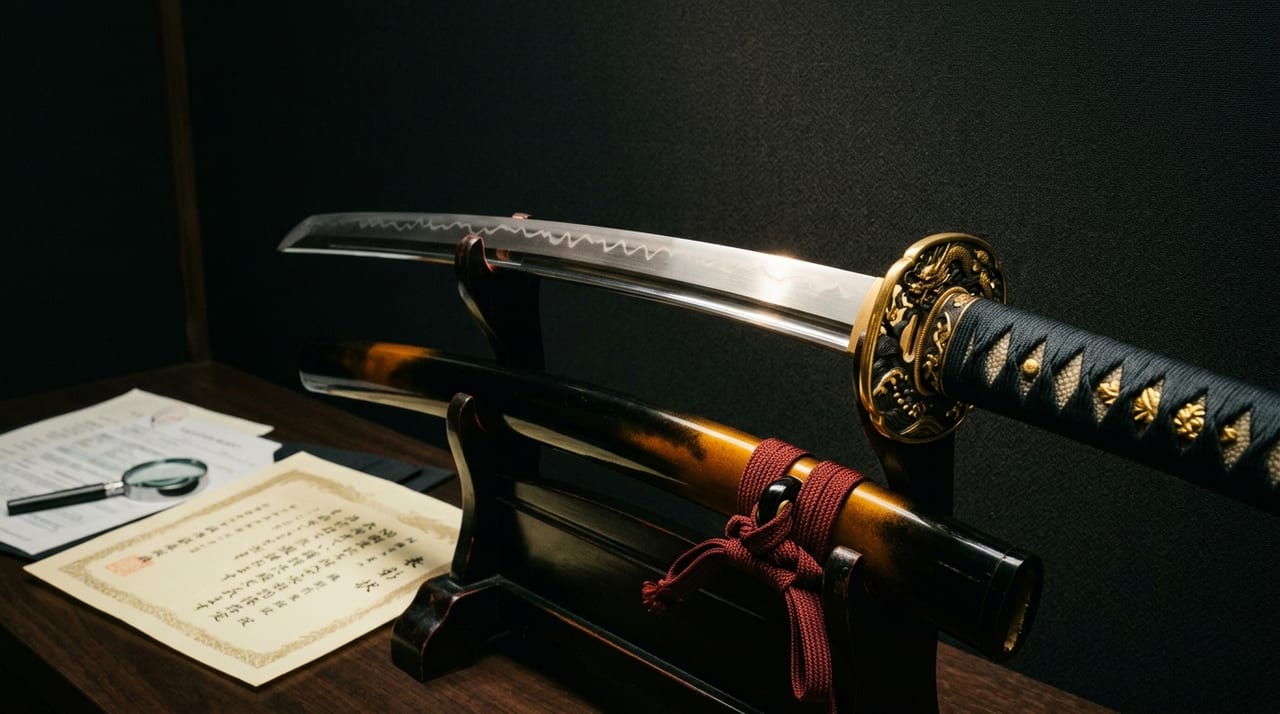
Whether a kanteisho (appraisal certificate) exists greatly influences the receiving institution's judgment. If you hold a preservation certificate issued by the NBTHK (Society for the Preservation of Japanese Art Swords) — such as Tokubetsu Jūyō Tōken, Jūyō Tōken, or Tokubetsu Hozon Tōken — the institution's evaluation work is substantially reduced. For swords without a kanteisho, it is worth considering submitting them to the NBTHK for assessment before donating.
Confirming the registration certificate is also essential. The firearm and sword registration certificate (issued by the Board of Education) is the sword's "passport," and when ownership changes through a donation, the recipient must notify the Board of Education of the prefecture where the sword was registered of the change of owner within 20 days (Act for Controlling the Possession of Firearms or Swords and Other Such Weapons (e-Gov Law Search), Article 17, Paragraph 1). Because the registration certificate must be handed over together with the sword (Article 18 of the same Act), if it has been lost, obtain a reissued certificate from the Board of Education that registered the sword before donating (Tokyo Metropolitan Board of Education, "Procedures for Reissuing a Registration Certificate"). There are also cases where the change of owner was not notified after an inheritance, and the steps for resolving this are summarized in Nihontō Inheritance and Estate Procedures — From Changing the Name on the Registration Certificate to Storage and Sale.
The Donation Negotiation Process
When conveying your intention to donate to a receiving institution, it is common to begin with an informal inquiry.
- Inquiry: Contact the curator (in the case of a museum) or the relevant staff member, attaching copies of photographs of the swords in your possession, the registration certificate, and the kanteisho (if any).
- Inspection of the actual item: If the institution indicates that it is willing to consider acceptance, you bring the item in person and a curator carries out a physical inspection.
- Acceptance decision: A formal decision to accept is made after the institution's internal review. In the case of national institutions, reporting to the Ministry of Education, Culture, Sports, Science and Technology may be required.
- Execution of the donation agreement: Once acceptance has been decided, a donation agreement (or donation application form) setting out the terms of the donation is drawn up.
Points of Caution in the Donation Agreement
There are several matters that require particular attention in a donation agreement.
Whether display is guaranteed: A donated sword is not necessarily put on permanent display. There is also the possibility that it will remain in storage and never be shown to the public. Confirm in advance the frequency and manner of display, and incorporate this into the agreement where possible.
Prohibition clause on sale or transfer: It is possible to include a clause preventing the institution from selling the sword to a third party after the donation. However, such provisions often remain a promise on paper, and providing a reliable guarantee is in many cases difficult.
Recording the provenance: By requesting that the donor's name, provenance, and history of ownership be preserved as a record, a collector can inscribe their footprint in the history of the sword.
Legal Procedures for Notifying the Change of Owner
When transferring ownership of a nihontō to an institution, the change of owner must be notified. Under Article 17, Paragraph 1 of the Act for Controlling the Possession of Firearms or Swords and Other Such Weapons (Jūtōhō), a person who acquires a registered sword has an obligation to notify, within 20 days, the Board of Education of the prefecture that handled the registration of that sword.
Specifically, the new owner (the receiving institution) submits a Notification of Change of Owner to the Board of Education that registered the sword within 20 days of receiving it (Firearms and Swords Registration Rules (e-Gov Law Search), Article 9). The registration certificate has no field for the owner, so this is not a procedure for rewriting the certificate (Form No. 3 of the same Rules). The notification is the institution's obligation, but it is advisable for the donor to also understand the flow of the procedure to ensure a smooth transfer.
Conclusion — Leaving Swords as "Assets of Society"
Donating a personal nihontō collection to a public institution is not simply relinquishing ownership; it is an active choice to pass on the history and value of the swords to the next generation. By selecting an appropriate institution and following the necessary procedures, swords that have been carefully preserved can continue to be seen by the public for many years as shared cultural assets.
If you are unsure whether donation or sale is more suitable for your collection, it is recommended that you compare the practical aspects of both options and then consult with a sword dealer or appraisal specialist to consider the best course of action.