Inheritance and Estate Clearance Procedures for Nihontō: From Registration Certificate Name Transfer to the Practicalities of Storage and Sale
 * Image is for illustrative purposes only.
Table of Contents
When a Nihontō Turns Up Among a Deceased Person's Belongings
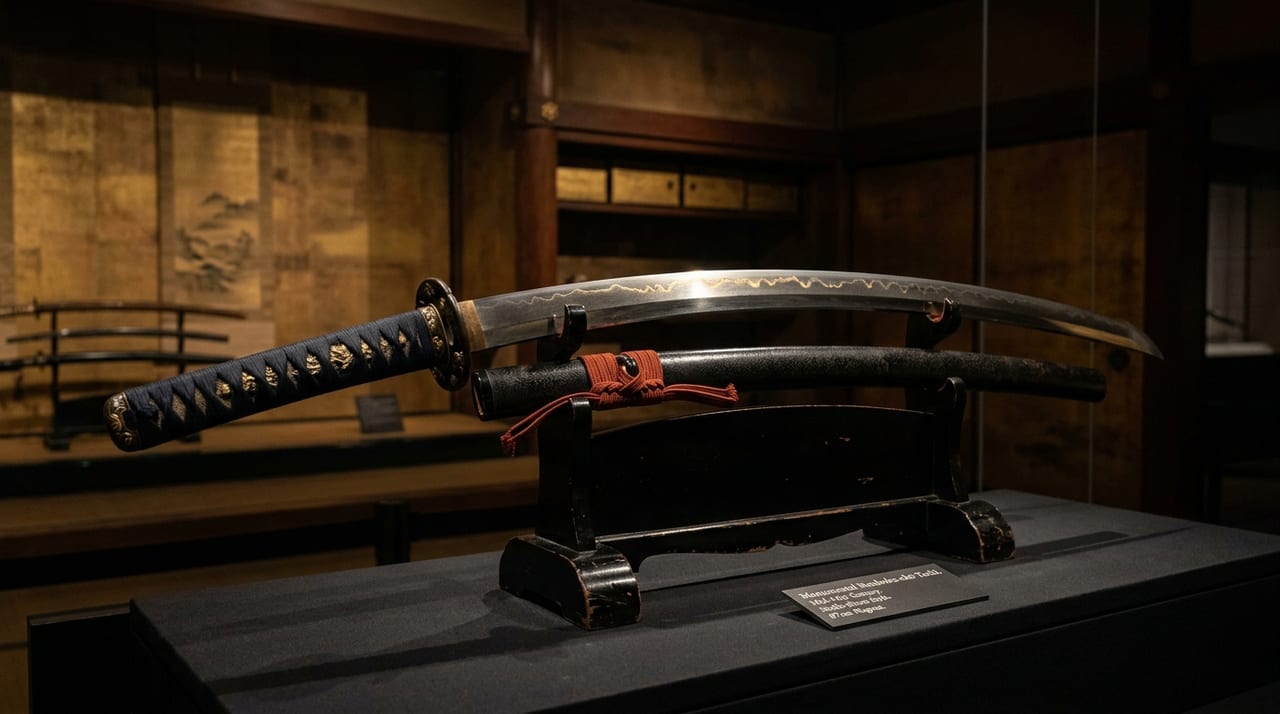
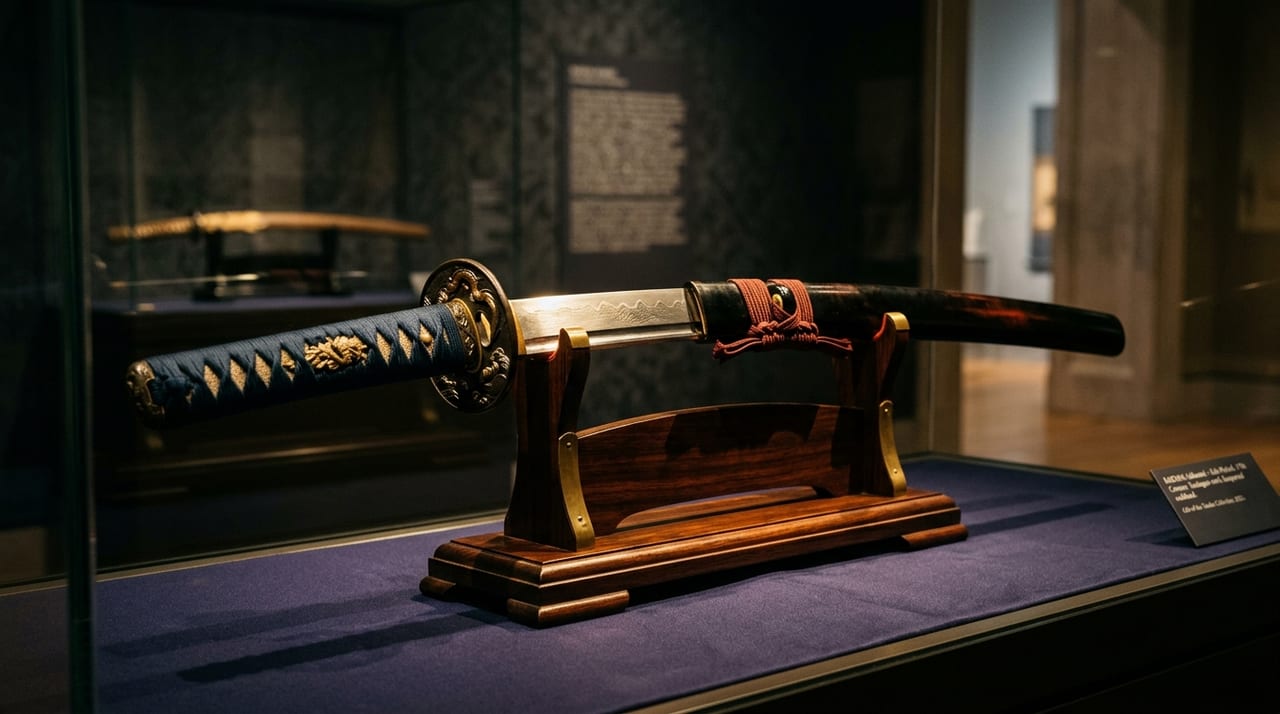
While clearing the belongings of a deceased family member, a nihontō may turn up in a closet or storehouse. For heirs, swords are an unfamiliar type of asset, and it is not uncommon to hear concerns such as "I don't know how to handle it" or "I'm worried about breaking the law." In practice, if a registration certificate (firearms and swords registration certificate) accompanies the sword, possession is lawful, and the sword can be inherited, managed, and sold without issue provided the appropriate procedures are followed. This article explains the inheritance process in concrete steps.
The First Thing to Check: Whether a Registration Certificate Exists
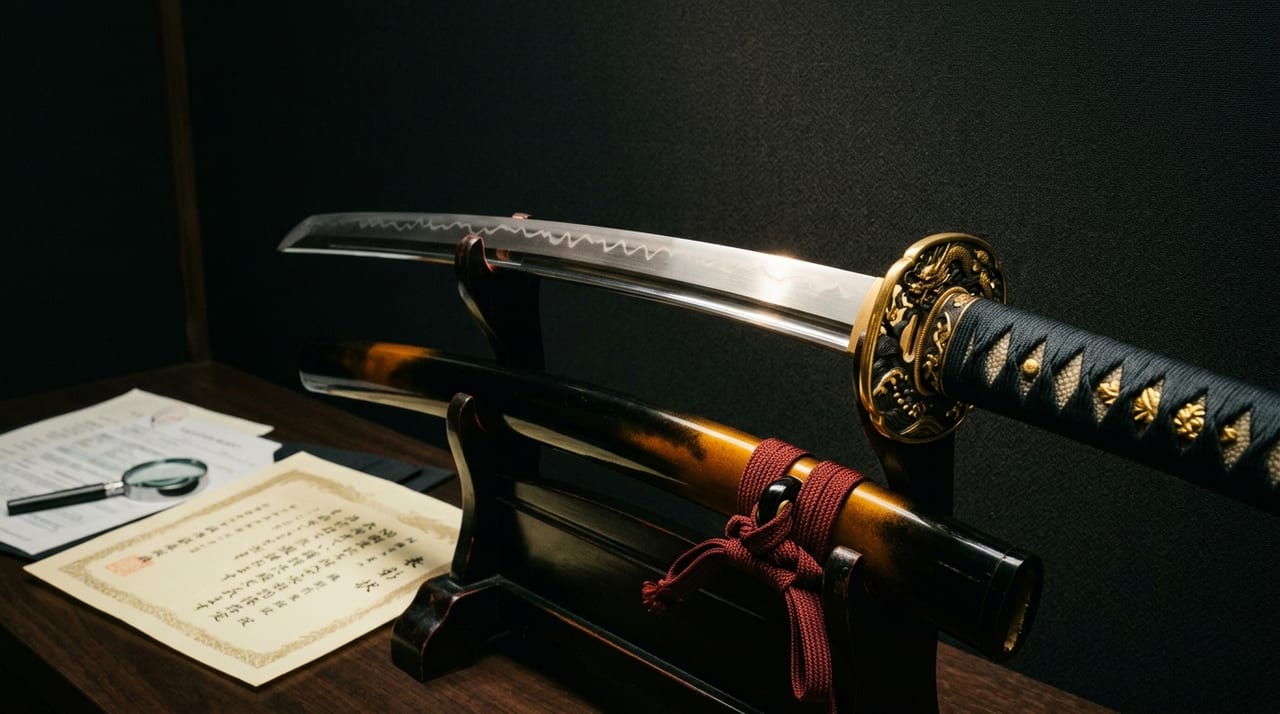
To possess a nihontō lawfully, a firearms and swords registration certificate (hereafter "registration certificate") issued by the Board of Education of the relevant prefecture is required. A registration certificate is issued for each individual sword and records information such as nagasa, sori, the number of mekugi holes, and the shape of the blade.
When a sword turns up among a deceased person's belongings, the first step is to check whether a registration certificate is present with the sword. The appropriate response differs depending on whether a certificate is found.
If a registration certificate is present: The sword was lawfully possessed, and the heir may continue to possess it as-is. However, there is an obligation to "notify within 20 days" (described below).
If no registration certificate is present: If the sword is registered and only the certificate cannot be found, confirm with the Board of Education of the prefecture where it was registered that the registration is still on record, report the loss, and have the certificate reissued (Article 15, Paragraph 2; Tokyo Metropolitan Board of Education, "Procedures for Reissuing a Registration Certificate"). A sword whose registration is unknown or cannot be confirmed is not eligible for reissuance, and the Act for Controlling the Possession of Firearms or Swords and Other Such Weapons (Jūtōhō) requires the finder to notify the nearest police station without delay (Article 23, Act for Controlling the Possession of Firearms or Swords and Other Such Weapons (Jūtōhō) (e-Gov Law Search)). After receiving a certificate of discovery notification from the police, the sword can be legally possessed once it has been registered by the registration examination board of the prefectural Board of Education. For swords that cannot be registered (e.g., a broken blade), guidance on disposal will be provided.
Notification Procedure by the Heir (The 20-Day Rule)
Under the Act for Controlling the Possession of Firearms or Swords and Other Such Weapons (Jūtōhō), when a sword with a registration certificate is acquired by inheritance, the heir is required to notify the Board of Education of the prefecture that issued the registration certificate within 20 days (Article 17, Act for Controlling the Possession of Firearms or Swords and Other Such Weapons (Jūtōhō) (e-Gov Law Search)). No police notification or new application for a possession permit is required; this is solely a reporting procedure directed to the Board of Education.
Documents and information typically required for the notification:
- Registration certificate (original)
- Documents establishing the person as heir (family register certificate, etc.)
- Name, address, and date of death of the previous possessor (the deceased)
The Board of Education counter will provide the form for a change-of-owner notification. This notification does not rewrite the registration certificate itself (the possessor's name is not recorded on the certificate); it functions as a "report for identifying the new possessor." After completing the procedure, the heir may possess the sword lawfully.
When the Registration Certificate Is Lost or Cannot Be Found
When the registration certificate is not at hand, proceed in the following order.
- Contact the Board of Education: The registration record is held by the Board of Education of the prefecture where the sword was registered (which is not necessarily where the previous possessor lived), so ask that Board of Education whether the registration is still on record. If the registration can be confirmed, the registration certificate is reissued after an in-person inspection of the sword at a registration examination session. The Tokyo Metropolitan Board of Education explains that a person who has filed a notification such as a change of owner, or a bereaved family member, can have the registration searched by giving the registration number or the previous owner's address and name by telephone (Tokyo Metropolitan Board of Education, "Procedures for Reissuing a Registration Certificate").
- File a discovery notification with the police: If the registration cannot be confirmed, submit a "Firearms and Swords Discovery Notification" at the nearest police station and receive a certificate of discovery notification. After that, the sword will proceed through the registration examination by the registration examination board of the prefectural Board of Education (as an unregistered item).
- If registration is not possible: If the sword has lost its shape as a sword due to rust or breakage, follow the guidance of the police and carry out disposal or deactivation.
Options After Inheritance: Storage, Sale, and Donation
After completing the procedures, there are primarily three options.
Continued storage: If you choose to continue storing the sword at home as an heirloom passed down from a previous generation, proper environmental management is required. Swords are sensitive to changes in temperature and humidity, and rust forms easily in high-humidity environments. Store the sword in a dedicated sword bag or sword box and apply oil regularly.
Sale through a sword dealer or auction: If you wish to convert the value of the inherited sword into cash, having it appraised by a sword dealer or listing it in a specialized sword auction are common approaches. When choosing a trustworthy sword dealer, membership in NBTHK or the National Sword Dealers' Cooperative Association can serve as a useful indicator.
Donation to a museum or shrine: In the case of a sword of jūyō bunkazai caliber, or if you wish to honor the wishes of the deceased and preserve it as a cultural property, donation to a local museum, art museum, or shrine is also an option. Before donating, it is advisable to consult the receiving institution and have the sword evaluated as a cultural property.
Inheritance Tax Valuation and the Asset Value of Swords
When declaring a nihontō as part of an estate, the valuation method is based on "actual transaction prices" or "expert opinion valuations," as with general works of art. Reference the prices of similar items traded on the market, and if necessary, request an appraisal from a specialized sword authentication institution.
Swords designated as jūyō bunkazai or jūyō bijutsuhin are inherited while retaining their designation, but their assessed value may be high. It is important to consult a tax accountant at an early stage and file an appropriate declaration.
What Not to Do When Inheriting a Sword: Common Mistakes
The following is a summary of mistakes that tend to occur when inheriting swords. All of them arise from well-meaning misconceptions, but they can lead to legal risks or damage to asset value, so care should be taken.
Failing to notify and leaving it as-is: The most common mistake is forgetting to file the change-of-owner notification, reassured by the presence of a registration certificate. Notifying the Board of Education of the prefecture that issued the registration certificate within 20 days is a legal obligation (failure to do so is punishable under Article 32 by imprisonment of up to one year or a fine of up to 300,000 yen, Act for Controlling the Possession of Firearms or Swords and Other Such Weapons (Jūtōhō) (e-Gov Law Search)), and "having a registration certificate means nothing needs to be done" is not the case.
Disposing of it without authorization: It is strictly prohibited to put the sword out with non-burnable garbage on the grounds that "it's rusty and doesn't seem to have any value." Regardless of whether the sword is registered, the disposal of swords must be carried out through the proper procedures after consulting the police.
Performing maintenance without expertise: Actions such as removing rust with sandpaper or metal polish, or sharpening with a whetstone intended for cutting tools, greatly diminish the artistic value of the sword. Restoring a rusty sword is the work of a professional togishi, and the correct approach at the inheritance stage is to apply oil and store the sword in its current condition, then seek expert judgment at the time of appraisal.
Mismatching registration certificates with swords: When multiple swords are found, each registration certificate corresponds to one individual sword. Compare the nagasa, sori, and number of mekugi holes recorded on the registration certificate with the actual sword, and confirm which registration certificate belongs to which sword before proceeding with the procedures. If a registration certificate remains that cannot be matched, consult the issuing Board of Education.
Passing the sword on as a keepsake without filing a notification: Even when transferring a sword among relatives, the recipient is required to submit a change-of-owner notification. Note that "it's a family transaction, so it's not required" is not the case.
Summary: First, Notify the Prefectural Board of Education Within 20 Days
When a nihontō turns up among the belongings of the deceased, there is no need to panic, but submitting a change-of-owner notification to the prefectural Board of Education named on the registration certificate within 20 days is the most important step (if the registration certificate cannot be found, it is reissued if the registration can be confirmed; for a sword whose registration cannot be confirmed, filing a discovery notification at the nearest police station comes first). Once the notification has been filed, subsequent decisions regarding storage, sale, or donation can be made without haste. When uncertain about how to handle an inherited sword, consulting a local sword dealer or the prefectural Board of Education is recommended.