Attending and Hosting a Tōken Haikenkai: The Etiquette and Practicalities of a Private Sword Appreciation Gathering
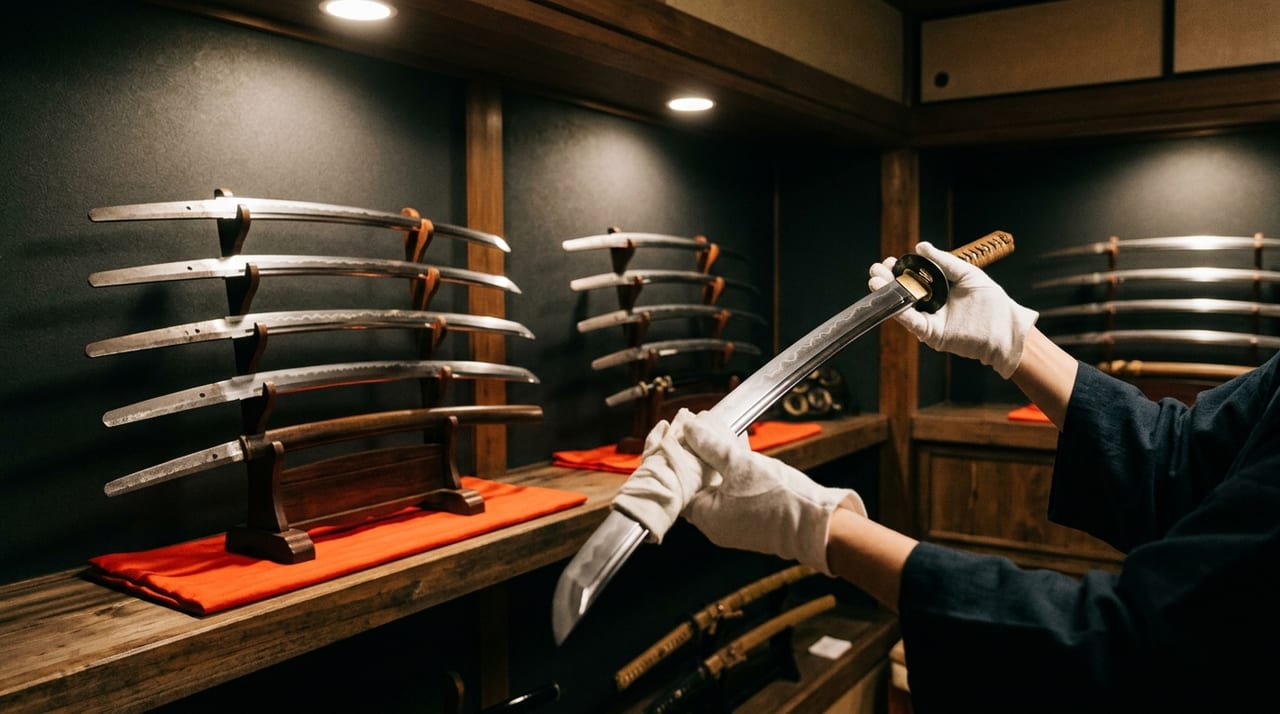 * Image is for illustrative purposes only.
Table of Contents
What Is a Tōken Haikenkai?
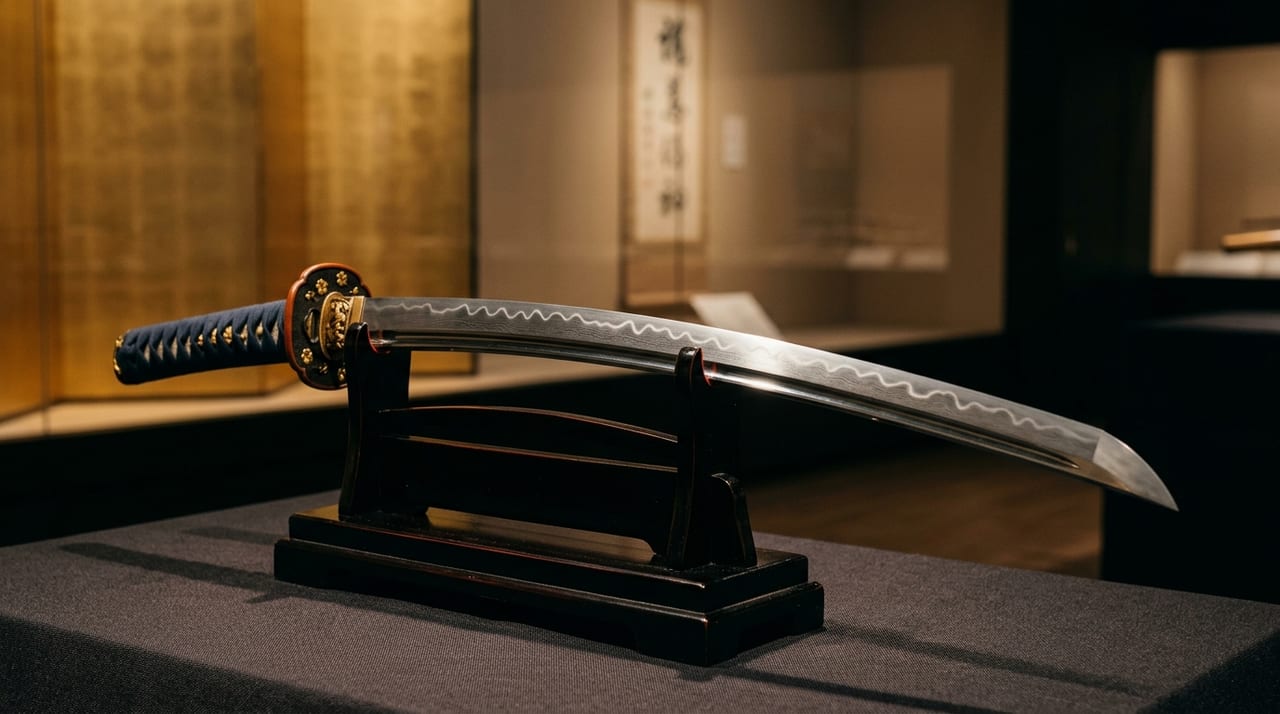
A tōken haikenkai is a gathering in which enthusiasts of Japanese swords meet privately, each bringing their own swords to show and share, for the purpose of appreciation and the exchange of views. Unlike the public appreciation events organized by sword dealers or preservation societies, most haikenkai are small gatherings that presuppose a close relationship among participants.
The typical gathering numbers anywhere from a few people to around fifteen. Each participant brings one or a few swords, and they take turns examining them while discussing school, period, hamon, and jigane. It is a place where respect for the sword is shared regardless of differences in knowledge and experience, and it offers a valuable opportunity for newcomers to learn directly from more seasoned enthusiasts.
Basic Etiquette to Know Before Attending
Before attending a haikenkai, one should become familiar with a few points of basic etiquette.
First is the manner of haiken. When receiving a sword, always accept it with both hands and examine it with the edge facing upward (ha-age). While examining the blade, do not touch the body of the sword with bare hands; instead, use a cloth or handkerchief to avoid transferring perspiration or skin oils. When finished, return the sword using the same manner.
Second, one must exercise care when commenting on flaws or the condition of a sword. Direct remarks such as "this hamon has a flaw" or "the condition is poor" can wound the owner's feelings. It is proper etiquette to speak of virtues in a gathering for appreciation; concerns are, by convention, communicated privately on a separate occasion.
Also, always obtain permission from the host and the sword's owner before taking photographs at a haikenkai. Since mei and provenance may contain personal information, one should be especially cautious about posting to social media.
Common Mistakes at a First Gathering
When one is new to haikenkai, it is easy to inadvertently violate the etiquette of the gathering. Here are some common examples.
- Pointing the sword at another person. When passing or examining a sword, always be mindful that the kissaki and edge do not face other participants.
- Touching the blade with bare hands. Fingerprints can become the starting point for rust in a short time. If you accidentally touch the blade, the honest course of action is to say so openly and have the sword properly cleaned.
- Becoming absorbed in conversation while holding a sword and making gestures. When a sword is in hand, focus on examination; leave conversation for after the sword is set down.
- Asking another person what they paid for their sword. It is safest to avoid the topic of price unless the owner brings it up first.
- Monopolizing a single sword for too long. Examine it for a reasonable time and then pass it on to the next person.
All of these are easily avoided once one is aware of them. At a first gathering, simply saying at the outset "I am not yet familiar with the etiquette; please point out any mistakes" will go a long way toward putting everyone at ease.
What to Bring and How to Prepare
Here is what to keep in mind when preparing to bring a sword to a gathering. Bring the sword in a shirasaya or koshirae saya, and use a sword bag or sword box for transport. When bringing more than one sword, wrap each individually to prevent contact and scratching.
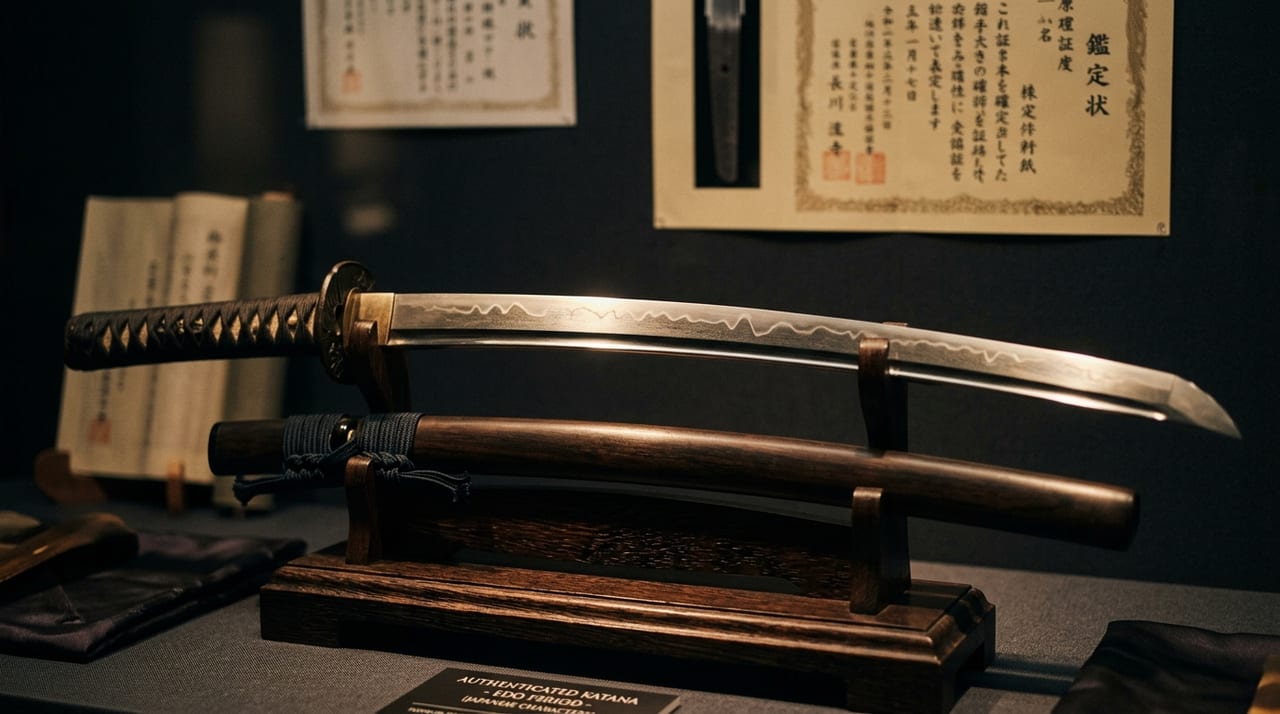
Always carry the registration certificate (jūhō tōken rui tōroku-shō) with the sword. Transporting a sword without the registration certificate may give rise to legal problems. When transporting the sword, also take care in how it is stored during travel; avoid leaving it unattended in a vehicle for extended periods.
At a haikenkai, one is often called upon to introduce one's sword verbally. Preparing in advance a summary of the sword's provenance, the tōkō's name (if known), its dimensions, and the characteristics of its hamon will make for smoother conversation.
How to Host a Haikenkai
When taking on the role of host, selecting the venue and organizing the day's proceedings are of paramount importance.
The venue must offer sufficient space for the number of participants and must be equipped with adequate lighting. The angle and quality of light are crucial for appreciating Japanese swords; incandescent lighting or natural sunlight, both closer to natural light than fluorescent lamps, bring out the activities of the hamon and jigane more vividly. The positions of windows and lighting spots should be checked in advance.
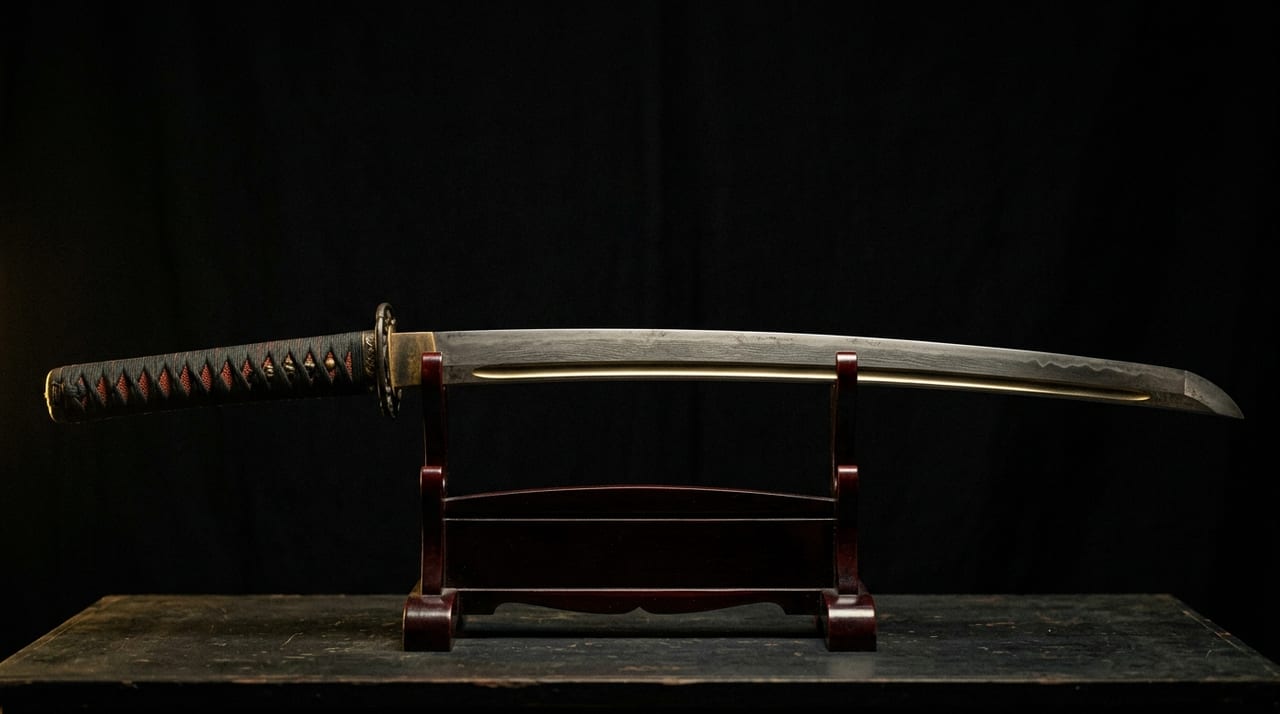
Prepare sword stands (katana-dai or katana-oki) sufficient for the number of participants. Lay cloth to prevent swords from resting directly on the floor or table, and arrange conditions so that swords can be placed safely with their edges facing in a uniform direction. It is also reassuring to prepare cloth for first aid in case of cuts.
For the day's proceedings, there are two formats: one in which each participant introduces their sword in turn, and one in which all swords are laid out for everyone to view freely. The former suits smaller groups; the latter suits larger ones.
A Sample Flow for the Day
Having a sense of how proceedings unfold makes it much easier, whether as a participant or a host. Here is one example.
After the opening remarks, the host shares the venue's ground rules — whether photography is permitted, where the cleaning tools are kept, when breaks will be taken, and so on. Participants then introduce their swords in turn, passing each one around for haiken. Introductions should briefly cover the attributed tōkō, the period, and the circumstances of acquisition; detailed observation and discussion are best carried out while actually examining the sword. Once everyone has finished their haiken, impressions are exchanged and plans for the next gathering are discussed before the group disperses.
One thing that must always be done at the close of the gathering is a final check of one's belongings. Each person should verify that their own sword, registration certificate, sword bag, and cleaning tools are all accounted for. Where many swords are gathered in one place, preventing mix-ups is the shared responsibility of both host and participants.
The Role of Haikenkai in Preserving Sword Culture
The haikenkai has a distinctive value unlike that of official appraisal events. A gathering where "sincere interest in swords" is the fundamental criterion for participation, more than titles or credentials, creates the soil in which collectors grow and knowledge deepens.
The culture of Japanese sword appreciation has taken root across the country through the accumulation of such small gatherings, and its transmission to the next generation continues. Participating in a haikenkai is not only a way to deepen one's knowledge of swords; it is also the first step toward becoming a living bearer of this culture.
Even those who have developed an interest in swords through an online marketplace may find opportunities to attend a haikenkai by inquiring with a local sword enthusiast group or preservation society.