Akira Kurosawa's Films and Nihontō — The Reality of Sword Staging in Seven Samurai and Sanjuro
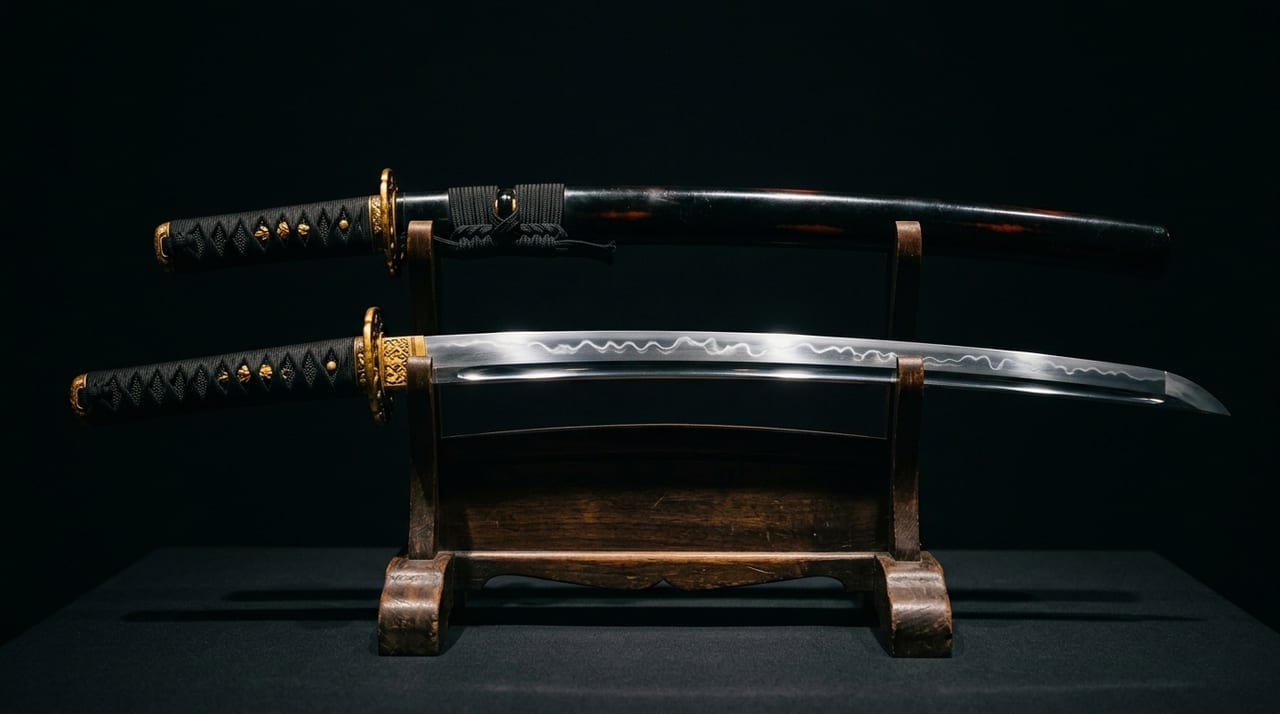 * Image is for illustrative purposes only.
Table of Contents
The Visual Language of the Sword That Kurosawa Cinema Pioneered
"Seven Samurai," released in 1954, is a pioneering work that placed the nihontō at the heart of cinematic art. Director Kurosawa Akira combined camera work, lighting, and sound to embody the weight and tension that swords carry on screen. The moment a blade sends muddy water flying in the rain-drenched duel scene, the arc traced by the blade tip as it cuts through the air — these images transcended mere depictions of combat and communicated the beauty and function of the nihontō to the world.
In filmmaking of that era, both real nihontō (shinken) and replica swords were used. Kurosawa is said to have insisted on accuracy in sword-handling form, enlisting kenjutsu practitioners and sword craftsmen as technical advisors. His obsession with such details — the motion of an actor drawing a blade, the angle of the edge, the management of the center of gravity — became the source of the realism that dwells in his images.
The Aesthetics of the Draw in "Sanjuro"
"Sanjuro," released in 1962, is enshrined in film history for its final scene's "fountain of blood." The single stroke delivered by Sanjūrō, played by Mifune Toshirō, is a staging that cinematically elevated the iai technique of nukiuchi.
Nukiuchi is the technique of performing the draw from the saya and the cutting stroke simultaneously, forming the very foundation of iaidō. Kurosawa translated the tension of this technique — "the outcome is decided the instant the blade clears the saya" — into the grammar of cinema. The single moment following a long interval of stillness: this structure of "emptiness and explosion" resonates with the essential aesthetics of the nihontō.
In actual iaidō, nukiuchi training only truly enters the body after thousands upon tens of thousands of repetitions. The depth embodied in a single scene of the film is also what audiences unconsciously perceive as its "authenticity."
The Standing of the Sword in "Yojimbo" — The Meaning of How It Is Worn
In "Yojimbo," released in 1961, the way the protagonist Kuwabatake Sanjūrō wears his sword at his hip is striking. In period films, the convention of thrusting an uchigatana through the obi is standard, but the angle and height of the wear, and the choice of blade length, function as a visual language conveying a character's social standing and personality.
Wearing the sword high makes it easier to draw and gives a martial impression. Wearing it low projects a composed, settled dignity. Kurosawa deliberately incorporated such details into his staging. The protagonist of "Yojimbo"'s air of "ready to draw at any moment" is a crystallization of tension expressed through costume and the manner in which the sword is worn alone.
Tate and Kenjutsu — The Technique of Cinematic Abbreviation
The tate (sword choreography) of period films is not actual kenjutsu itself, but a physical expression reconstructed to communicate to an audience. Movements that would be too fast to follow in a real sword exchange are deliberately made "visible" through pauses and variation in tempo. Kurosawa's tate continues to be cited to this day because the blend of realism and formal beauty is perfectly calibrated. The profession dedicated to creating tate is covered in Tateshi: The Profession — How Sword Action in Period Dramas Is Made.
In the large-scale battles of "Seven Samurai," rain and mud weigh down movements, appealing to the audience's physical sense of the impact of each stroke. The duel in "Sanjuro," by contrast, strips movement to the bare minimum and maximizes tension through the length of the stillness. These are diametrically opposed approaches, yet both are united by the philosophy that "a nihontō is not something to be swung carelessly."
Koshirae and Consideration for Historical Accuracy
One reason Kurosawa's films are so highly regarded is the care taken with historical accuracy. For works set in the Edo period, efforts were made to faithfully reproduce the koshirae of the time. The method of tsuka wrapping, the design of the tsuba, the texture of the lacquer on the saya — the reproduction of these tōsōgu was realized through collaboration between the art director and sword craftsmen.
That said, a film is above all an artistic expression, and theatrical exaggeration is naturally included. Imposing koshirae that look striking on screen are sometimes chosen over the subdued, restrained quality of actual Edo-period swords. In terms of historical accuracy, the deepening of verification in later television period dramas is also interesting, and a comparison can be made in Taiga Drama and Nihontō Historical Verification — The Evolution of Sword Culture and Historical Research Spread by NHK Period Dramas. For viewers who have an eye for nihontō appreciation, there is an added pleasure in enjoying these "cinematic liberties" while reading the gap between the film and historical reality.
Global Reach — The Interest in Swords That Kurosawa's Work Brought
"Seven Samurai" was remade by director John Sturges as "The Magnificent Seven" (1960), reinterpreting the story of the nihontō as a Hollywood Western. "Yojimbo" influenced Sergio Leone's "A Fistful of Dollars" (1964). In this way, the "aesthetics of the nihontō" conveyed through Kurosawa's films became inscribed in the history of world cinema.
The philosophy of the sword conveyed through the moving image — "pouring maximum intent into minimum motion" — functions as a universal aesthetic that resonates with people regardless of cultural background.
From Film to the Real Thing — A Perspective for Appreciation
If Kurosawa's films have sparked an interest in real nihontō, keeping the following points in mind will deepen appreciation by one level.
- Sugata: The arc of a draw that leaves an impression in film is produced by the sori of the blade. When looking at a real sword, take in the whole sugata while imagining the depth of the sori and the position of the center of gravity.
- Hamon: The hamon, which appears on screen only as a reflection of light, is the true protagonist of real-world appreciation. Vary the angle of the lighting and take your time tracing the scenery of its irregular patterns and activity.
- Koshirae: Recalling the koshirae from the film, compare the method of tsuka wrapping, the design of the tsuba, and the texture of the saya lacquer; you will also see how faithfully the art direction of period dramas adheres to historical research.
- Weight: The "heaviness" an actor's bearing conveys is also performance. A real sword has a balance that can only be understood when held in the hand, and the meaning of the bearing can be understood through the body.
When browsing nihontō in an online catalog, recalling scenes from Kurosawa's films as you appreciate the koshirae and hamon of each sword will make you newly aware of a three-dimensional beauty that cinema could never fully capture.