Tsuba Care and Rust Prevention: Practical Material-Specific Maintenance for Iron Tsuba, Shakudō Tsuba, and Shibuichi Tsuba
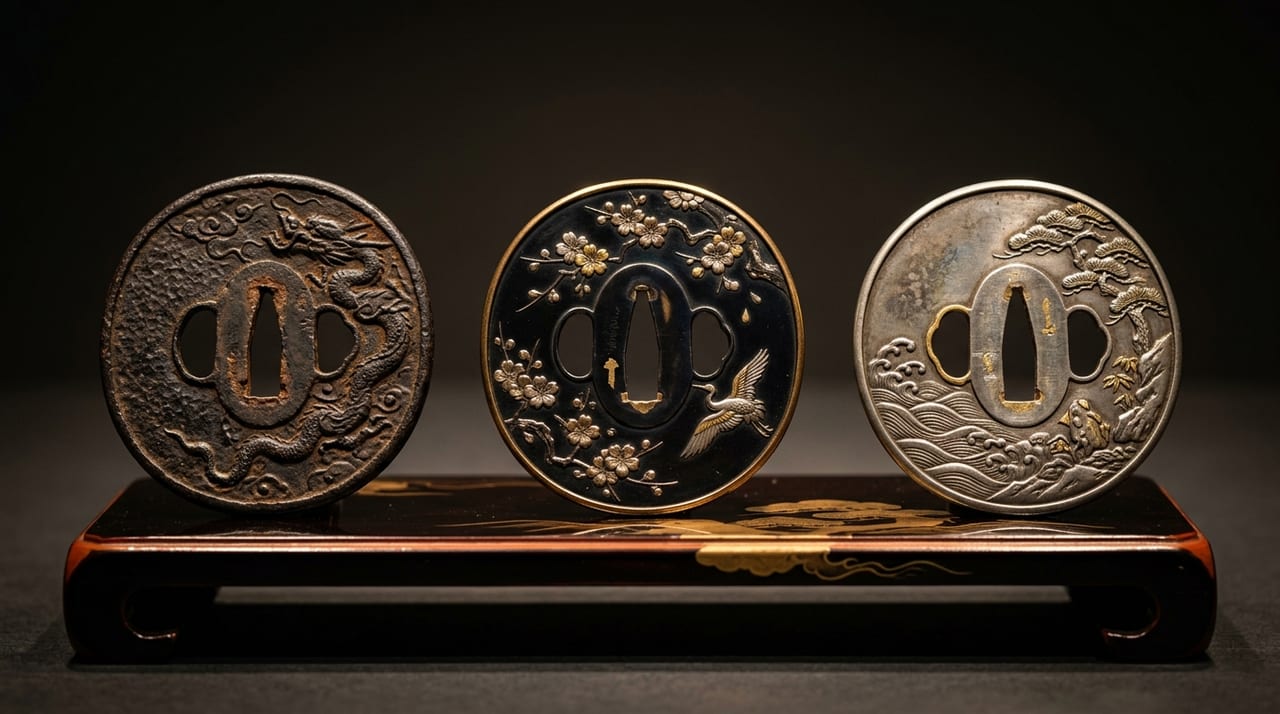 * Image is for illustrative purposes only.
Table of Contents
Material Differences in Tsuba and Their Deterioration Risks
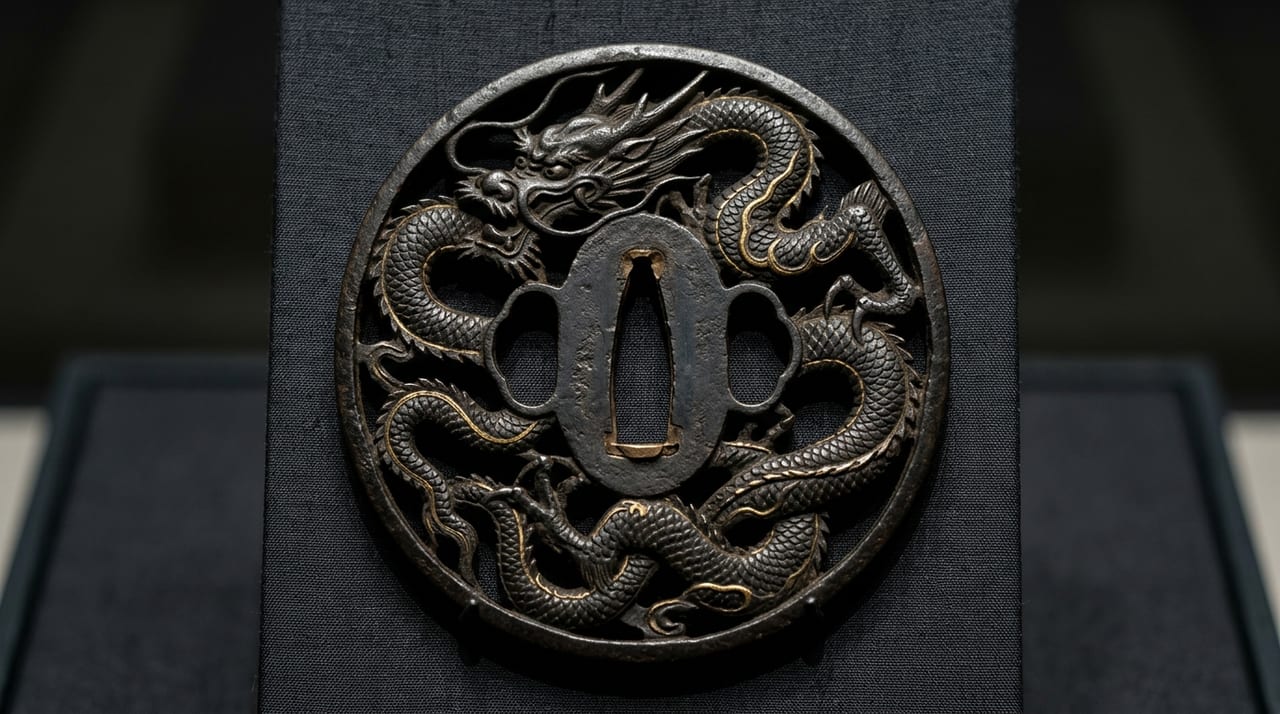
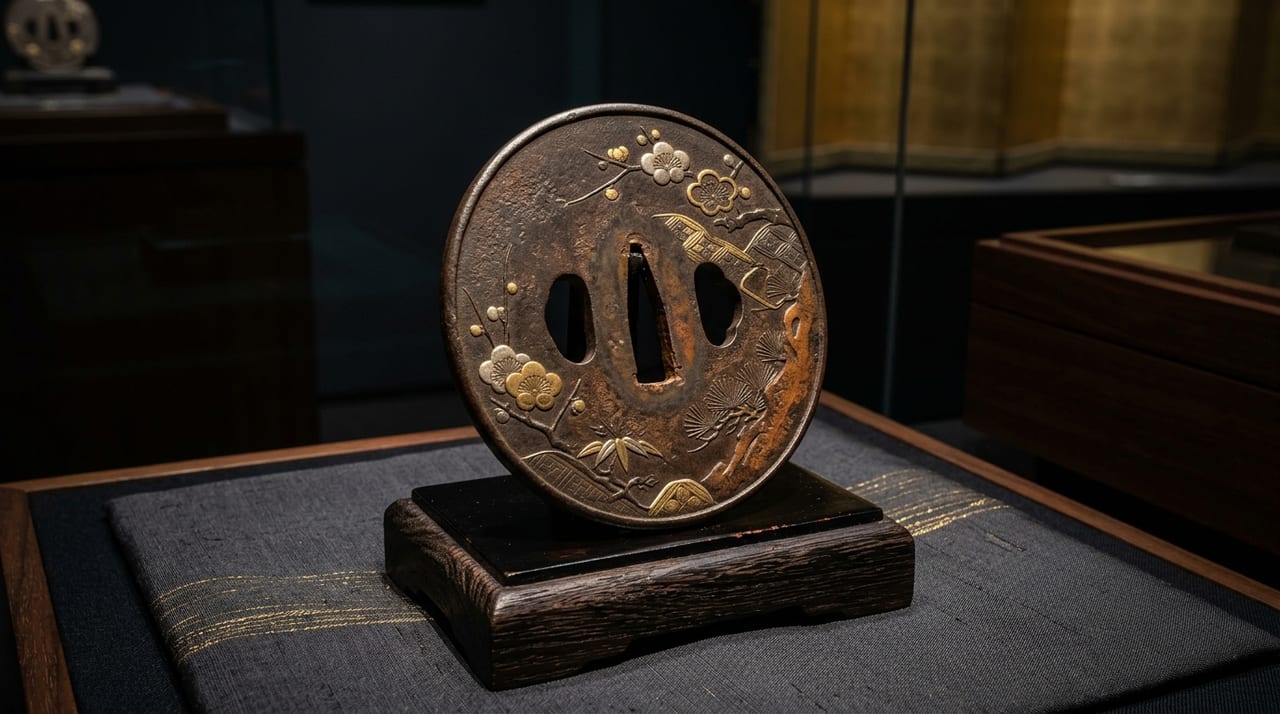
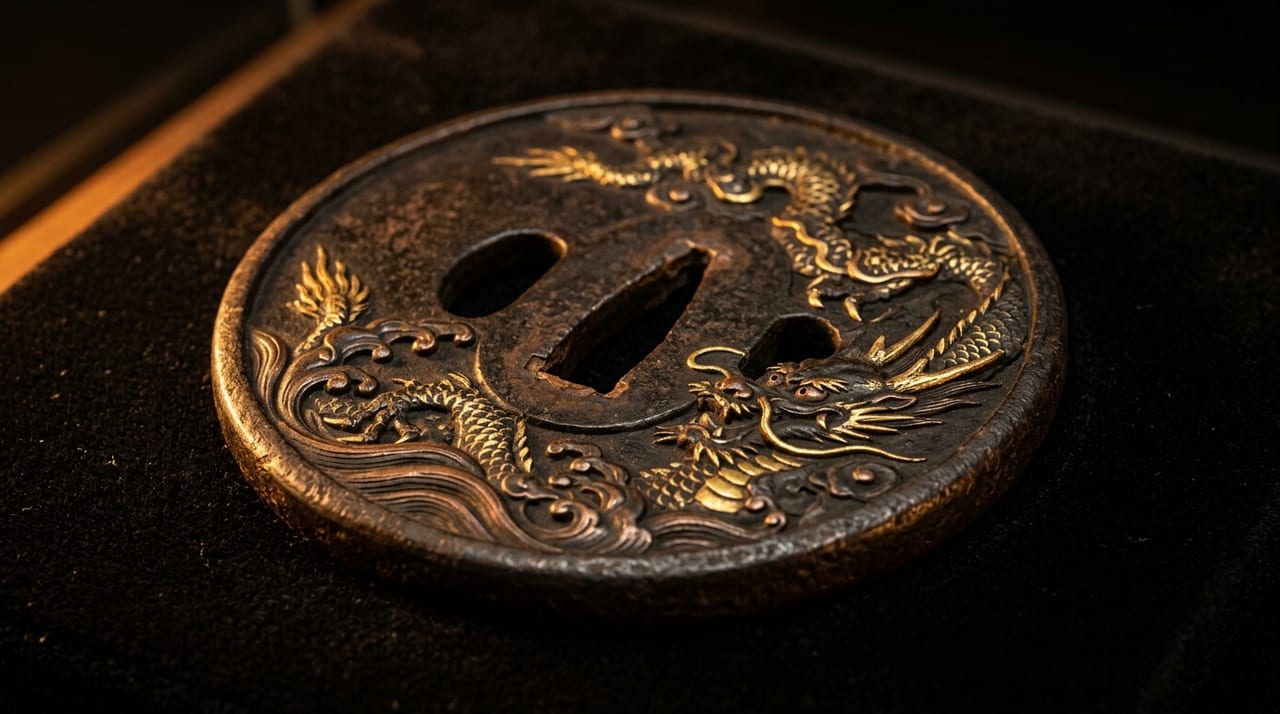
The tsuba (hand guard), which forms the core of tōsōgu (sword fittings), exhibits different deterioration characteristics depending on its material, and each requires maintenance suited to its properties. The three main materials are iron, shakudō, and shibuichi, which may also be combined with gold, silver, or various alloys.
Neglecting proper care leads to different problems for each type: iron tsuba develop red rust (corrosion); shakudō tsuba suffer damage to the black surface patina; and shibuichi tsuba experience the advance of rokushō (verdigris). All of these diminish the tsuba's value as a work of art and incur substantial restoration costs. Understanding the fundamentals of care is a responsibility that collectors must take seriously.
Iron Tsuba Maintenance: Managing Rust
The primary challenge with iron tsuba is preventing red rust (corrosion). The dark "aged patina" or "black rust" seen on old iron tsuba results from a stable oxide layer that has formed on the surface, which itself functions as a protective coating. The problem is the red rust (Fe₂O₃) that penetrates through and advances beyond this black rust layer.
Tsubaki oil (camellia oil) is traditionally used for iron tsuba maintenance. Apply a small amount of tsubaki oil to a cotton cloth and spread it thinly and evenly before wiping the surface. Using too much oil attracts dust and is counterproductive; the goal is to maintain an extremely thin oil film.
Storage conditions should aim for 50–60% humidity, avoiding sudden temperature changes. Particularly during the rainy season or the high-humidity conditions of summer, aim to perform maintenance once a month. If rust develops, it can be carefully wiped away with a cotton cloth, but for deep red rust, it is strongly recommended to consult a specialist togishi (polisher) or tsuba-shi. Amateurs who attempt polishing risk scraping away the aged patina and diminishing the tsuba's value.
Shakudō Tsuba Maintenance: Protecting the Black Patina
Shakudō is an alloy of copper with a few percent of gold, given a deep black surface (karasu-kin-iro) through sulfide treatment. This black patina is the heart of the tsuba's artistic value, and protecting it is the paramount concern.
For shakudō tsuba care, the use of oil is almost forbidden. When tsubaki oil or mineral oil penetrates the patina, it tends to disrupt the uniformity of the black coloration, causing mottling. Basic maintenance consists solely of dry-wiping with a soft cotton cloth. If fingerprint oils adhere, lightly wipe with a damp cloth, then finish with a dry wipe.
Shakudō is sensitive to acidic environments. Since the patina degrades when directly contacted by the weak acid of hand perspiration, avoid touching it with bare hands during handling — always use white gloves or a clean cotton cloth as an intermediary. Ideal storage is a paulownia box or a box with washi-lined dividers; avoid direct contact with acidic paper such as ordinary cardboard.
Shibuichi Tsuba Maintenance: Dealing with Rokushō
Shibuichi is an alloy of copper mixed with approximately one-quarter silver (the actual range is about 20–60%, and the shade from black to silver-gray can be adjusted through the coloring method), characterized by its grayish gin-nezumi-iro (silver-gray color). Because copper is its primary component, rokushō (copper carbonate hydroxide, a blue-green corrosion) tends to develop in high-humidity environments.
For shibuichi tsuba, applying tsubaki oil to form a protective film is effective. Applying an extremely thin coat of oil and then dry-wiping helps prevent moisture penetration. If rokushō develops and is still at an early superficial stage, it may sometimes be possible to remove it carefully with the tip of a bamboo skewer; however, forcing the removal will damage the base metal, so for advanced rokushō, prioritize consulting a kinko-shi (metalworker).
On shibuichi tsuba with zōgan (inlay) of gold, silver, or other dissimilar metals, electrochemical corrosion between dissimilar metals (galvanic corrosion) can sometimes occur. If abnormal corrosion is observed around the inlay, seek the advice of a specialist.
Maintenance to Avoid: Pitfalls That Damage Value
Well-intentioned maintenance not infrequently ends up diminishing the value of a tsuba. The representative pitfalls are as follows.
- Abrasive cloths or metal polishes: These scrape away the aged patina and black patina, causing decisive and irreversible loss of value as a work of art. Commercially available metal polishes are intended to bring out the shine of modern metals and are incompatible with the surface treatments of antique metalwork.
- Washing with water or detergent: Moisture becomes trapped in the gaps of openwork carving or zōgan, accelerating corrosion instead. Returning the tsuba to its box with insufficient drying is the worst possible combination.
- Forcible removal of red rust: This grinds away the jigane along with the rust, permanently destroying the surface character.
- Price tags, temporary-hold tape, or adhesive: The adhesive components attack the base metal and patina; these must never be used.
When in doubt, "do nothing" is often the correct answer. Maintaining the current state is the fundamental principle, and decisive action should be entrusted to specialists.
Checks to Perform Immediately After Acquisition
When a tsuba is newly acquired, begin by recording its condition. Examine both surfaces in bright light, confirm the presence or absence of rust, rokushō, loosened zōgan, or cracks, and document everything with photographs. Next, gently brush away any adhering dust with a soft brush, identify the material, and apply the light material-specific care described above. If you are not confident in identifying the material, it is safest to defer oiling and limit yourself to dry-wiping. Keeping an initial record makes it easier to notice changes during subsequent routine inspections.
Common Points: Storage Environment and Regular Inspection
Regardless of material, the following are important points common to the storage of all tsuba.
The basic requirement for the storage location is indoors, away from direct sunlight. Ultraviolet light from fluorescent lamps is also a cause of long-term discoloration, so a UV-protective case is preferable. Storing in a paulownia sword box or wrapped in washi serves the dual purpose of moderate humidity regulation and cushioning.
For the timing of regular inspections, developing the habit of checking condition at the change of each season (March, June, September, December) helps with early detection of problems. Hold the tsuba up to the light to observe changes in the surface, and if anything is amiss, perform maintenance or consult a specialist.
A tsuba that has been given proper care can maintain its beauty for hundreds of years. The time a collector spends attending to a tsuba also cultivates a deep understanding of Japan's metalworking culture.