Taiga Dramas and Japanese Sword Historical Accuracy — How NHK Period Dramas Spread Sword Culture and the Evolution of Historical Verification
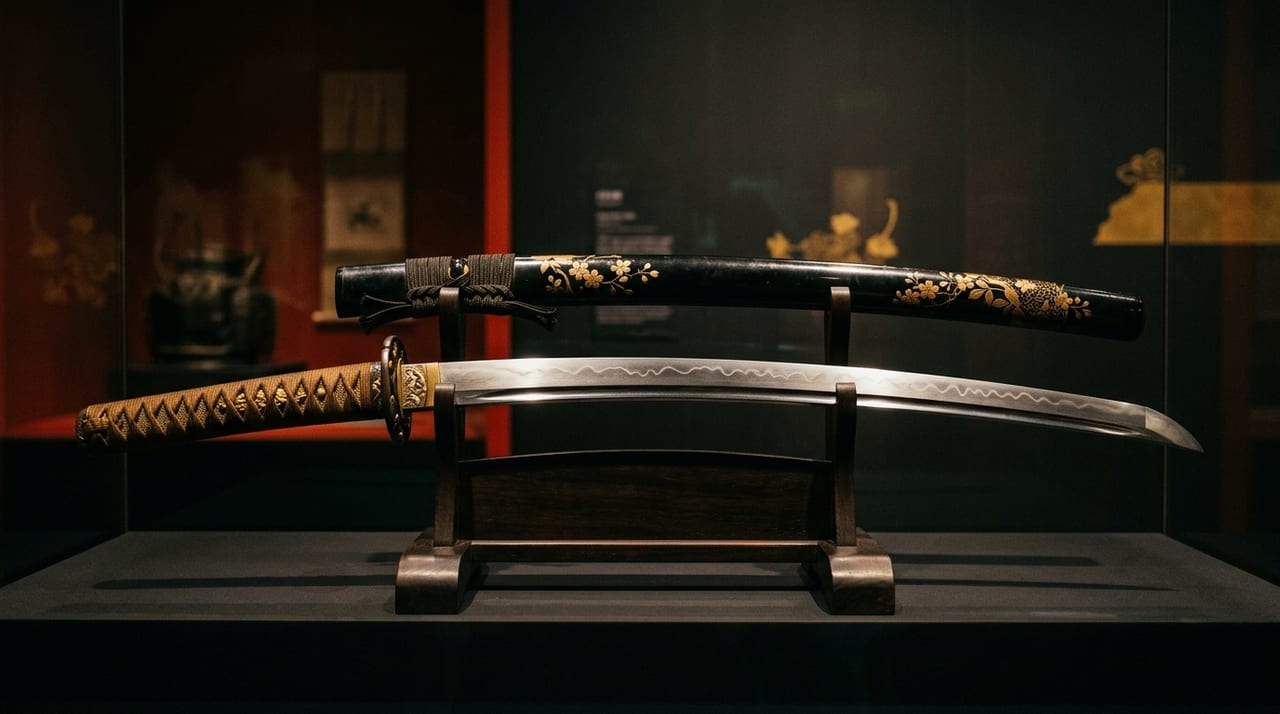 * Image is for illustrative purposes only.
Table of Contents
The Special Relationship Between Taiga Dramas and Japanese Swords
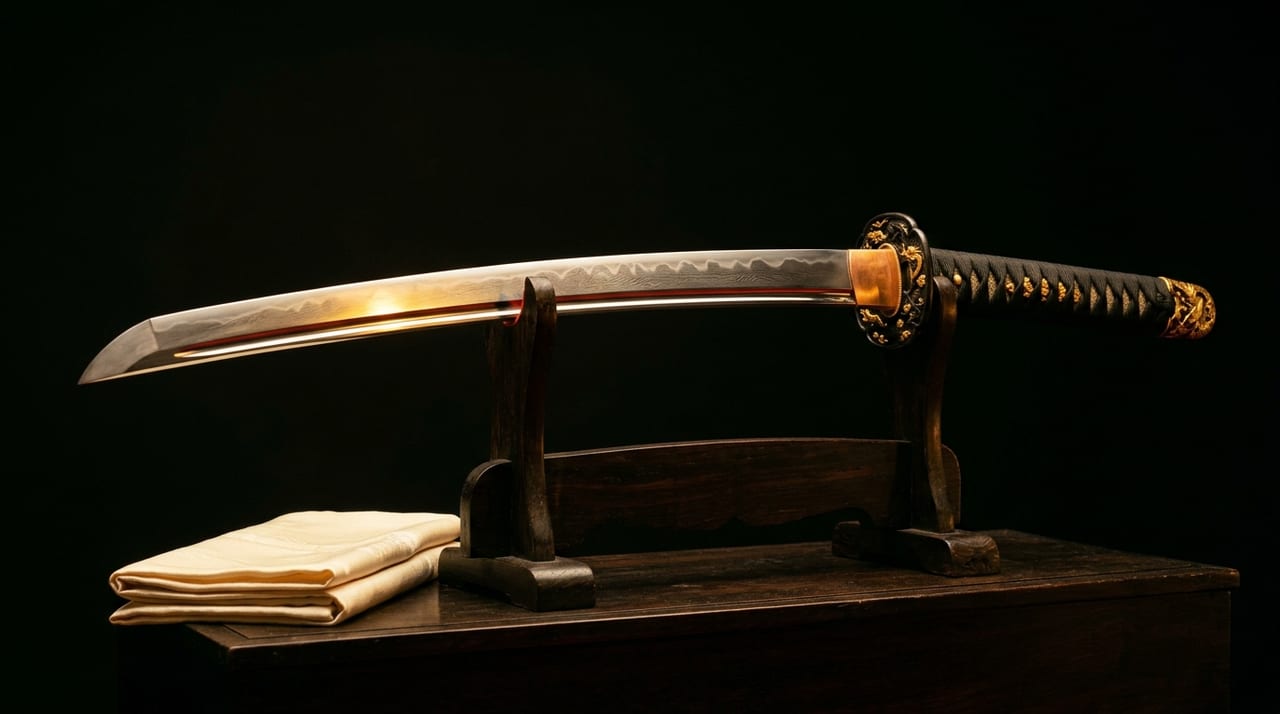
NHK's annually broadcast taiga dramas command the largest production budgets and viewership of any Japanese period drama. In taiga dramas depicting historical warlords, swordsmen, and samurai society, the nihontō is an indispensable prop and sometimes becomes the central symbol of the narrative itself.
The influence of taiga dramas extends to sword culture as well. Every year brings familiar phenomena: inquiries about swords associated with particular warlords spike in broadcast years, and visitors increase at sword museums and shrines and temples connected with specific swords. "Kirin ga Kuru" (broadcast in 2020, with Akechi Mitsuhide as protagonist) heightened interest in famous swords linked to Nobunaga and Mitsuhide, while "Dō suru Ieyasu" (broadcast in 2023) put the spotlight on swords associated with Tokugawa Ieyasu.
Sword Historical Supervision in Recent Taiga Dramas
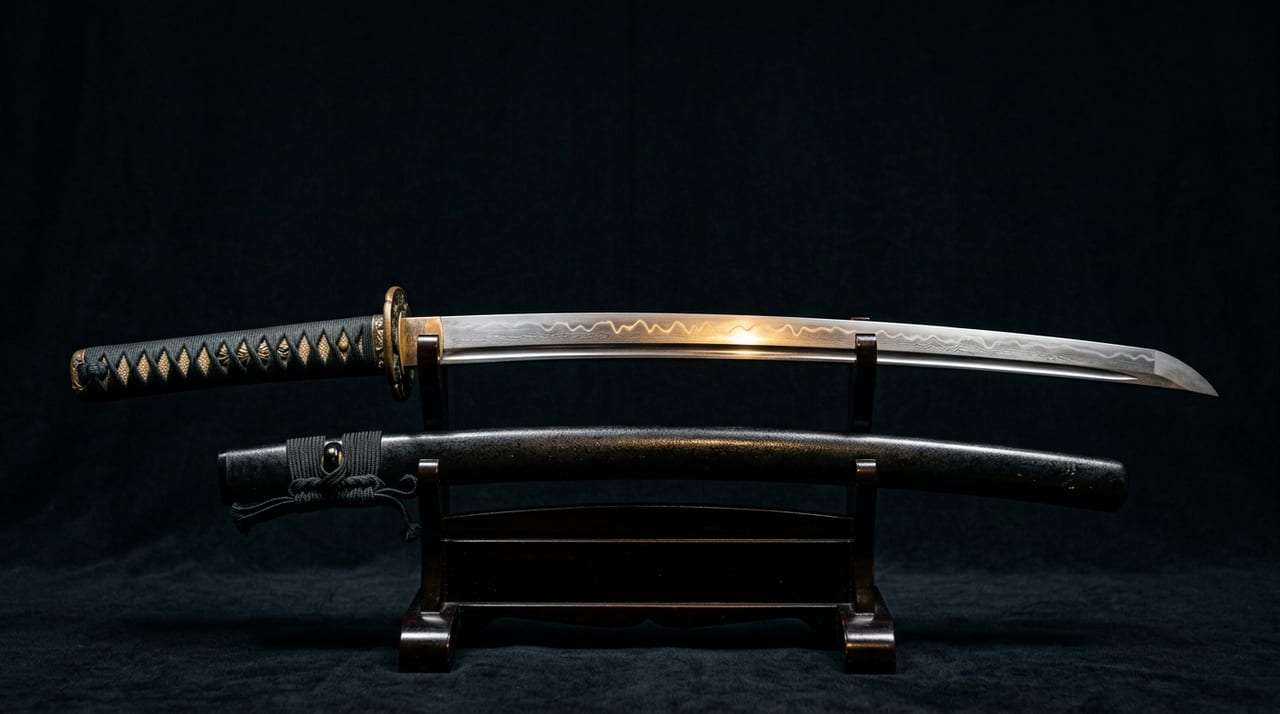
In recent taiga dramas, specialist historical supervisors are increasingly involved in production, and the accuracy of sword depictions has improved. Earlier period dramas often used modern reproduction swords or Shōwa-era iai swords, but in recent years greater care is taken with the tōsōgu (sword fittings) appropriate to each era — the style of the koshirae (mounting), the lacquering of the saya (scabbard), the shape of the tsuba (hand guard), and so on.
For example, works set in the Sengoku period depict the manner of wearing the "koshi-gatana" and the uchigatana of that era, while works set in the early Edo period recreate the samurai custom of carrying "daishō" — two swords worn together. The accumulation of such details deepens viewers' understanding of "how swords differed from one period to the next."
"Kirin ga Kuru" and the Swords of Nobunaga and Mitsuhide
"Kirin ga Kuru" was the 2020 taiga drama with Akechi Mitsuhide as its protagonist. With Oda Nobunaga and Akechi Mitsuhide — two of the most representative figures of the Sengoku period — as major characters, it was a work with strong ties to sword culture.
During the broadcast period, museums and archives across the country reported increases in inquiries and visits relating to Heshikiri Hasebe — the kokuhō (National Treasure) sword associated with Nobunaga, held at the Fukuoka City Museum — as well as swords said to be associated with Mitsuhide. This is a textbook example of the taiga drama's cultural influence: a fictional drama generating the motivation to "see the real thing."
"Kamakura-dono no 13-nin" and the Sword Culture of the Samurai
"Kamakura-dono no 13-nin," broadcast in 2022, was set during the Genpei War and the early Kamakura shogunate — an era that corresponds in sword history to the "early kotō period." The nihontō of this era was dominated by the tachi, a long sword worn suspended from the hip for use on horseback. The drama recreated the manner of wearing the tachi (the "hai-tachi" style, with the blade facing downward) and the military equipment of the time (wearing armor combined with bow and arrow), giving viewers the opportunity to recognize that "even nihontō differed entirely in form and use from one era to the next."
The Role Taiga Dramas Play in Spreading Nihontō Culture
The contribution taiga dramas make to spreading nihontō culture can be summarized in three points.
- First, they visually convey the connection between historical context and swords. By linking swords to specific people and narratives rather than textbook explanations, viewers naturally learn "which swords were used in which era."
- Second, they draw visitors to related sites and actual swords. The increase in visits to sword-related facilities in the regions featured in a drama also contributes to local cultural vitality. The phenomenon of local shrines, temples, and museums connected with swords experiencing a "taiga drama effect" repeats itself every year.
- Third, they create new interest among diverse age groups and genders. Because taiga dramas are watched across generations, they can attract interest from outside the traditional sword enthusiast community. It is not uncommon for female viewers and younger generations to develop their first genuine interest in sword culture through a drama.
Between Fiction and Historical Fact
A taiga drama is ultimately entertainment, and dramatic exaggeration and divergence from historical fact are unavoidable. In sword depictions as well, the demands of action choreography sometimes result in movements that differ from actual iai and sword techniques. Nevertheless, it is certain that viewers who develop an interest in nihontō through a drama do go on to visit actual sword museums or pick up specialist books as their next step.
Fiction serves as an "entry point," opening the door to genuine nihontō culture — and taiga dramas continue to fulfill that role.
The Present State of Taiga Drama Supervision — The Role and Limits of Specialists
In today's taiga dramas, historical supervisors (historians, folklorists, and others) participate in the production team to oversee costumes, weapons, language, and more. Regarding swords as well, the koshirae (mounting) styles appropriate to each era and the characteristics of swords recorded as having been owned by specific individuals are sometimes consulted.
However, because of production necessities as drama (ensuring safety in action scenes, how things appear under lighting, ease of handling for actors, and so on), depictions that cannot be called historically accurate often remain. This might be called the inevitable condition of period drama, but many viewers take a positive view of it as "the pleasure of discovering the differences between historical fact and dramatic presentation." In step with taiga drama broadcasts, sword specialist journals and books increasingly feature special editions on "the sword supervision in the drama," and combining those resources deepens the richness of the viewing experience.