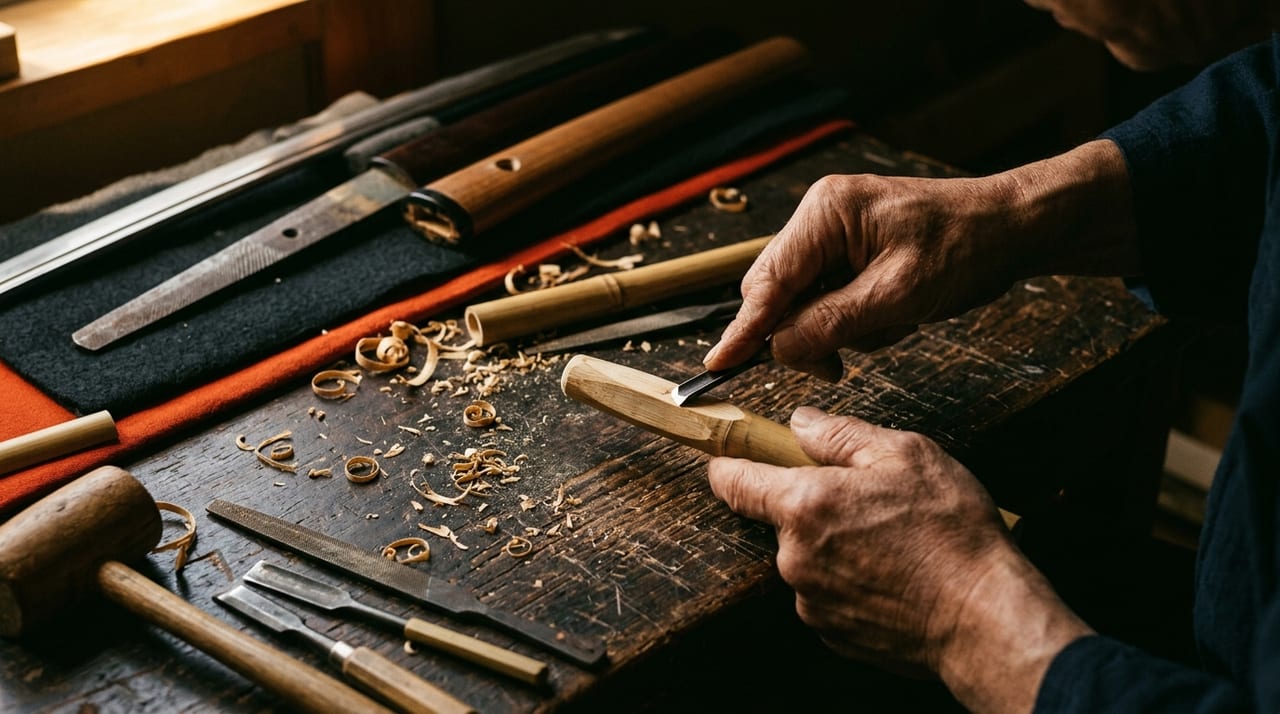
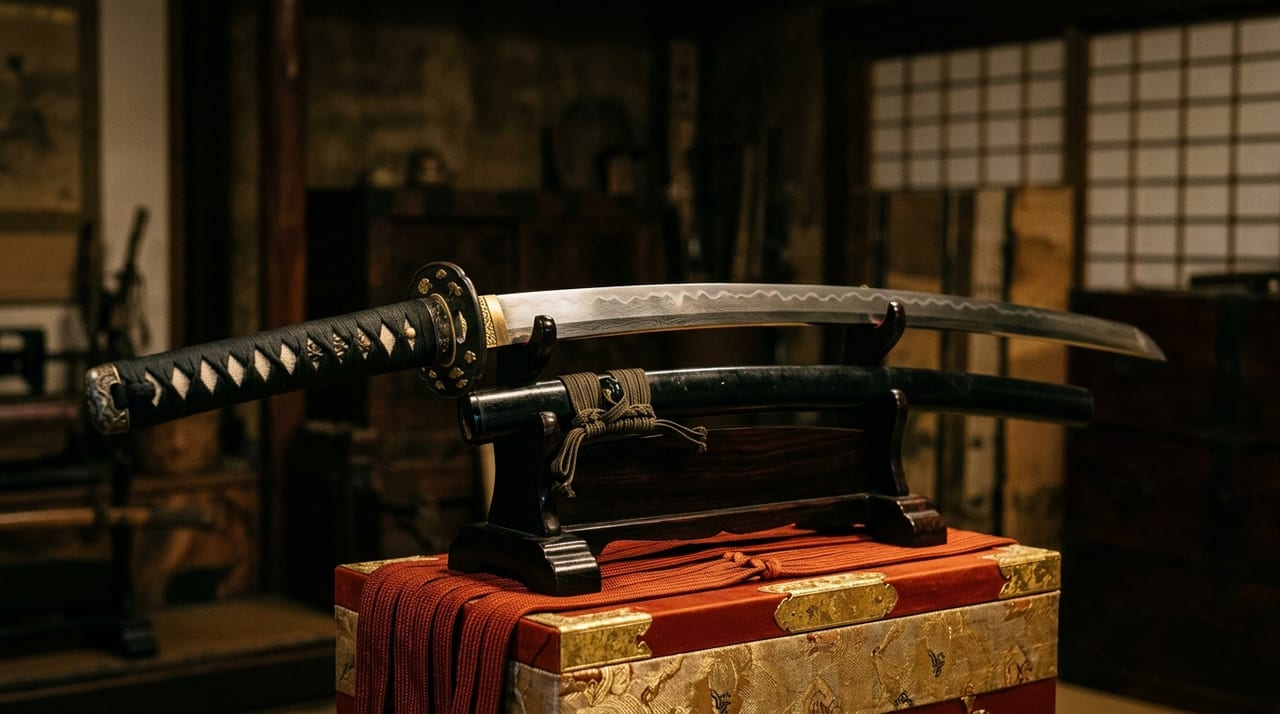
Sendai's Sword Culture — The City of Trees and Japanese Blades
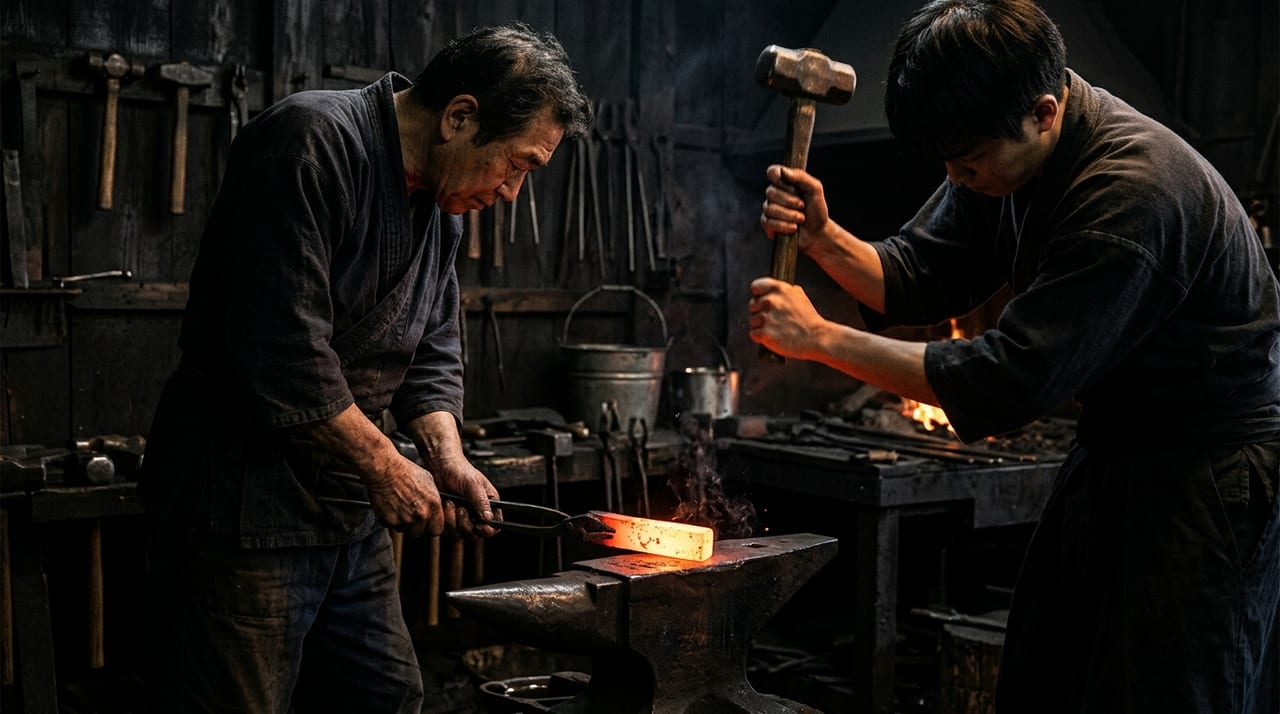 * Image is for illustrative purposes only.
Table of Contents
Sword Culture Nurtured by Sendai, the City of the One-Eyed Dragon
Sendai, the largest castle town in the Tohoku region, stands in contrast to its gentle epithet "City of the Forest" as a mecca of swords that still harbors the fierce spirit of the Sengoku period. The legacy of the Date clan's 620,000 koku domain transcends architecture and design, continuing to shine even today in the realms of forging and polishing. This article explores Sendai's sword culture through three main axes:
- Warlords and Celebrated Blades
- Retained Swordsmiths
- Contemporary Appreciation Culture
Masamune Date and Shokudaikiri Mitsutada—A Warlord Who Pursued Martial Power and Beauty Simultaneously
When discussing Sendai's sword culture, the presence of Masamune Date (1567–1636), the first lord of the Sendai domain, is indispensable. As his epithet "the One-Eyed Dragon" suggests, Masamune was not merely a fierce warrior on the battlefield but also possessed exceptional discernment as a connoisseur of swords.
Among the celebrated blades in Masamune's collection, none stands out more than the Shokudaikiri Mitsutada. It is a tachi by Mitsutada, a swordsmith representative of Bizen, and its name derives from the legend that one night Masamune, enraged by his retainer's impertinence, severed a candlestick stand in two along with it. While historical verification is difficult, the legend persists through the overlapping of Mitsutada's blade sharpness and Masamune's audacious personality.
The Shokudaikiri Mitsutada is currently housed in the Tokugawa Museum in Ibaraki Prefecture. Thanks to its appearance in the sword game "Touken Ranbu," it is widely known among younger generations and radiates an overwhelming presence as a "celebrated blade with ties to Sendai." The fact that Masamune actively collected masterworks from renowned craftsmen throughout the land further emphasizes his rare status as a warlord who appreciated the sword both as a weapon and as art.
The Kunikane School—The Lineage of Retained Swordsmiths Nurtured by the Sendai Domain
Another pillar of Sendai sword culture is the school of swordsmiths bearing the name Kunikane. As retained swordsmiths who continued forging under the Date clan's patronage from the Keicho era (1596–1615) onward, their works possess a unique beauty bearing the imprint of the Tohoku region's natural character.
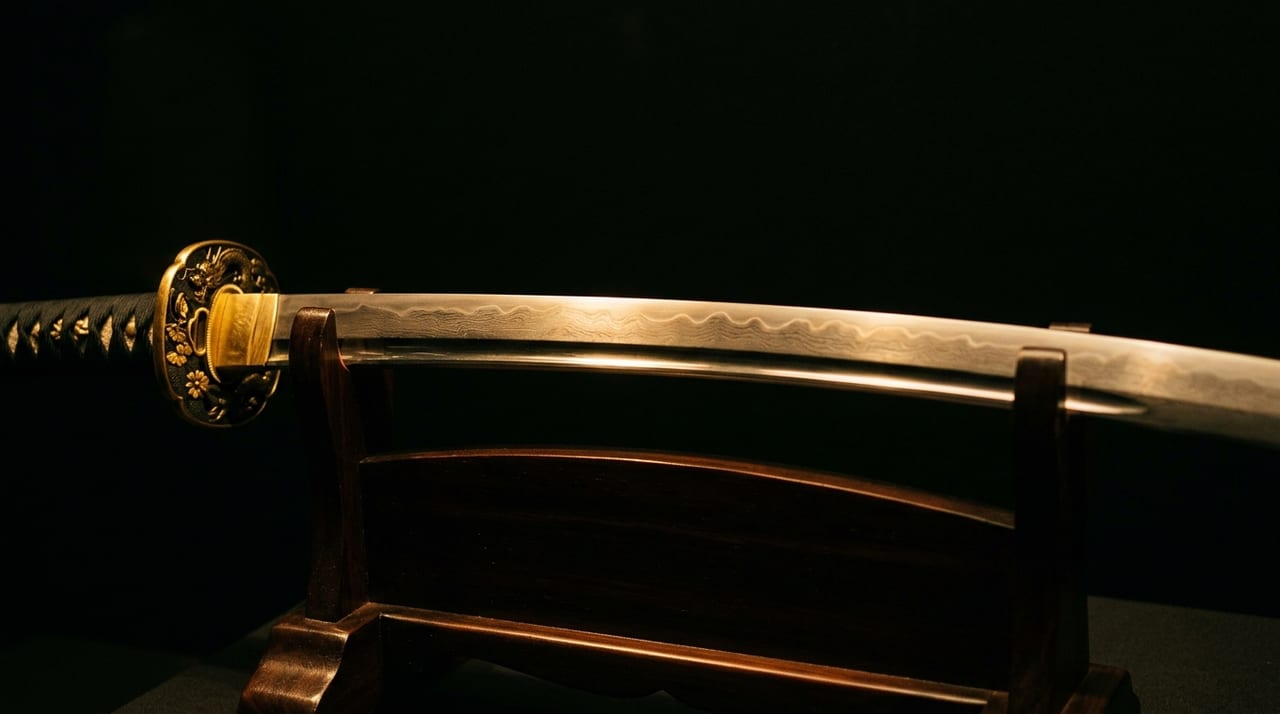
The greatest characteristic of Kunikane blades lies in the expression of their jigane. The clear complexion of evenly aligned masame grain captivates viewers with its depth, changing expression with the angle of light. The hamon is founded on notare, adorned with fine nie, embodying certain technique within dignified restraint rather than ornament. The essence of Kunikane blades lies in their simultaneous achievement of functional beauty as practical samurai swords and artistic refinement worthy of connoisseurship.
Particularly noteworthy is the regionalism of the Kunikane school. The short summers and harsh winters of Tohoku, combined with the iron sand of the Ou region and high-quality charcoal—these natural conditions, working in concert with the swordsmiths' techniques, are said to have produced an iron quality unique to Sendai. The jigane of Kunikane blades, possessed of a northern quietude distinct from both the brightness of Bizen blades and the roughness of Soshu blades, may be said to crystallize an aesthetic unique to Sendai's sword culture.
The works of Kunikane, whose name was passed down through second and third generations while serving as the core of the Sendai domain's sword culture throughout the Edo period, maintain stable valuations in the contemporary sword market, with well-preserved blades often commanding prices in the millions of yen or more.
The Sendai City Museum—A "Mecca of Swords" Preserving the Date Legacy
Located in Kawachi, Aoba Ward, Sendai, the Sendai City Museum is one of the foremost historical museums of the Tohoku region, systematically housing and displaying cultural properties of the Date clan and Sendai domain—a facility truly worthy of being called a mecca for sword enthusiasts.
Multiple swords transmitted through the Date family are held in the collection, and precious masterworks are displayed in special and thematic exhibitions. The appeal lies in the fact that swords are displayed alongside armor and clan standards, allowing viewers to appreciate blades within the broader context of Sengoku and Edo samurai culture. When viewing multiple works of the Kunikane school side by side, one can intuitively grasp the generational variations in hamon and jigane, deepening one's appreciation of the profound nature of sword connoisseurship. Lectures and gallery talks are held regularly, allowing both beginners and enthusiasts to enjoy the museum according to their level of interest.
Fundamental Knowledge for Sword Appreciation—Reading Sendai's Blades More Deeply
To enjoy Sendai's swords more fully, it is important to grasp the fundamental perspectives of appreciation.
| Aspect | Description |
|---|---|
| Curvature (sugata) | The balance of the depth, position, and length of the curve eloquently speaks to the era and purpose of the blade's creation. Tachi made for mounted combat tend to have deep curvature, while uchigatana designed for foot combat tend to have shallower curves. |
| Hamon | The pattern created by hardening most directly reveals the swordsmith's individuality and technique. The notare common in Kunikane is considered to have a gentle, wave-like appearance with dignity, possessing a unique character distinct from suguha, choji, or gunome patterns. The granular luster appearing near the hamon boundary is called nie, while the misty radiance is called nioi. In Kunikane blades, a state of finely distributed, uniform nie called "nioi-guchi shimatta" is frequently observed, which serves as the source of their dignified impression. |
| Jigane | The grain pattern produced by folded forging creates variations such as itame, masame, and ayasugi grain depending on origin and school. Observing at different angles of light reveals a new face each time, transforming the viewing into an intellectual engagement with the dialogue between the craftsman's skill and the material. |
Contemporary Sword Culture in Sendai—What the City of the Forest Preserves and Passes Down
Sendai's sword culture, rich with historical depth, continues to pulse vibrantly in the present day.
The "impact of the real thing," which photographs and videos can never convey—the beauty of the moment when a blade drawn from its shirasaya catches light, its jigane gleaming and hamon emerging—strikes the heart of contemporary viewers, undiminished across centuries. Through the experience of holding a blade, one can feel the weight balance firsthand and discover the true joy of multi-sensory appreciation that transcends visual examination alone, engaging touch and proprioception.
Sendai, where the Date family's legacy, the technique of the Kunikane school, well-equipped museum facilities, and contemporary appreciation culture converge, stands as an important hub of Japanese sword culture. If you have the opportunity to visit the Tohoku region, I encourage you to visit the Sendai City Museum. The beauty of the swords nurtured by the City of the Forest will surely inscribe a profound emotion upon your heart.