Women and the Japanese Sword — The Changing Bearers of Sword Culture
 * Image is for illustrative purposes only.
Table of Contents
Women of the Warrior Class and the Sword — A History of Self-Defense and Refinement
The Japanese sword brings to mind the phrase "the soul of the samurai" and has long been regarded as a male domain. Yet when we trace history carefully, women's relationship with the sword is far from shallow. Indeed, the presence of women is deeply inscribed at the very roots of sword culture.
In warrior-class society, the blade most commonly carried by women was the tantō known as the futokoro-gatana (breast dagger). Blade lengths typically ranged from three to nine sun (approximately 9–27 cm), and the dagger was wrapped in a fukusa and concealed in the sash or breast fold of the garment. It carried not only a practical purpose for self-defense but also symbolic meaning as a pledge of chastity. It was also a blade of resolve, intended to allow a woman to take her own life if captured by the enemy.
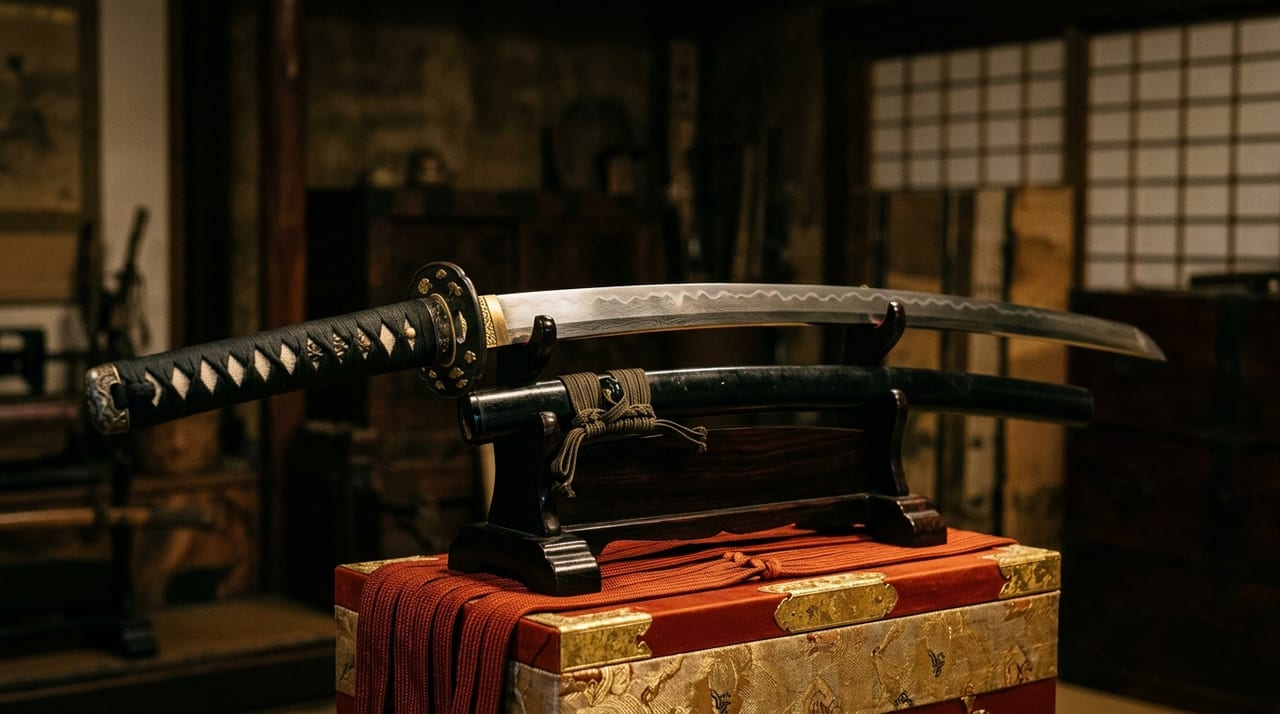
The custom of including a futokoro-gatana among a bride's trousseau became widely established during the Edo period, and for a daughter of a warrior household the sword was a furnishing that demonstrated her dignity as a woman. Though the blade itself was modest in size, the koshirae (mounting) was often adorned with makie lacquerwork and raden mother-of-pearl inlay, earning high regard from the perspective of sword art. Many fine futokoro-gatana made to order for women survive today in museum collections.
Tomoe Gozen and the Women Warriors — Women Who Stood on the Battlefield Sword in Hand
Throughout history, no small number of women took up a blade and went to war. The most celebrated among them is Tomoe Gozen, who served Minamoto no Yoshinaka (Kiso Yoshinaka). A woman warrior of the late Heian period, she is described in The Tale of the Heike as follows: "Her complexion was fair, her hair long, and her countenance truly outstanding. … Taking up bow and blade, she was a warrior worth a thousand, ready to face any demon or god."
At the Battle of Awazu in 1184, after witnessing Yoshinaka's final moments, Tomoe Gozen is said to have taken the head of the enemy commander Onda Hachirō Moreshige before fleeing to the eastern provinces. Her martial valor was passed down among later generations of martial artists, and she became an emblematic figure lending legitimacy to the practice of naginata and tachi by women.
During the Sengoku period, the practice of naginata known as "women's naginata" spread among daughters of warrior households. The naginata, with its longer reach than a sword and its ability to compensate for differences in physical stature, was considered suited to women — another strand in the deep connection between women and bladed weapons. In modern classical martial arts as well, naginatadō retains a large following as a women's discipline.
Touken Ranbu and the Birth of "Tōken Joshi"
The greatest shift in contemporary sword culture was brought about by the browser game Touken Ranbu -ONLINE- (commonly known as "Tōranbu"), which launched its service in 2015. This game, in which players raise personified Japanese swords called "tōken danshi," recorded explosive popularity centered primarily on female players in their teens through thirties.
Its impact extended far beyond a mere gaming craze. Visitor numbers at sword museums and shrines and temples across the country surged, and the composition of the traditional visitor base — dominated by middle-aged and older men — changed dramatically. At the Japanese Sword Museum in Ryōgoku, Tokyo, the number of female visitors increased sharply, as players known as saniwa sought information about real swords in online catalogues and came to the museum to encounter the actual objects.
Special exhibitions displaying blades such as Heshikiri Hasebe and Mikazuki Munechika — swords at the level of kokuhō (National Treasure) and jūyō bunkazai (Important Cultural Property) — sold out on the day tickets went on sale. Inspired by interest in the real swords that served as models for game characters, female fans began to study specialist knowledge on their own: methods of appraisal, the character of jigane (the base steel), the varieties of hamon (temper line), and more.
The term "tōken joshi" may sound somewhat light, but the knowledge and passion these women bring are genuine, and their contribution to broadening the reach of Japanese sword culture is immeasurable.
The Rise of Female Tōshō and Togishi — New Hands Carrying On a Traditional Craft
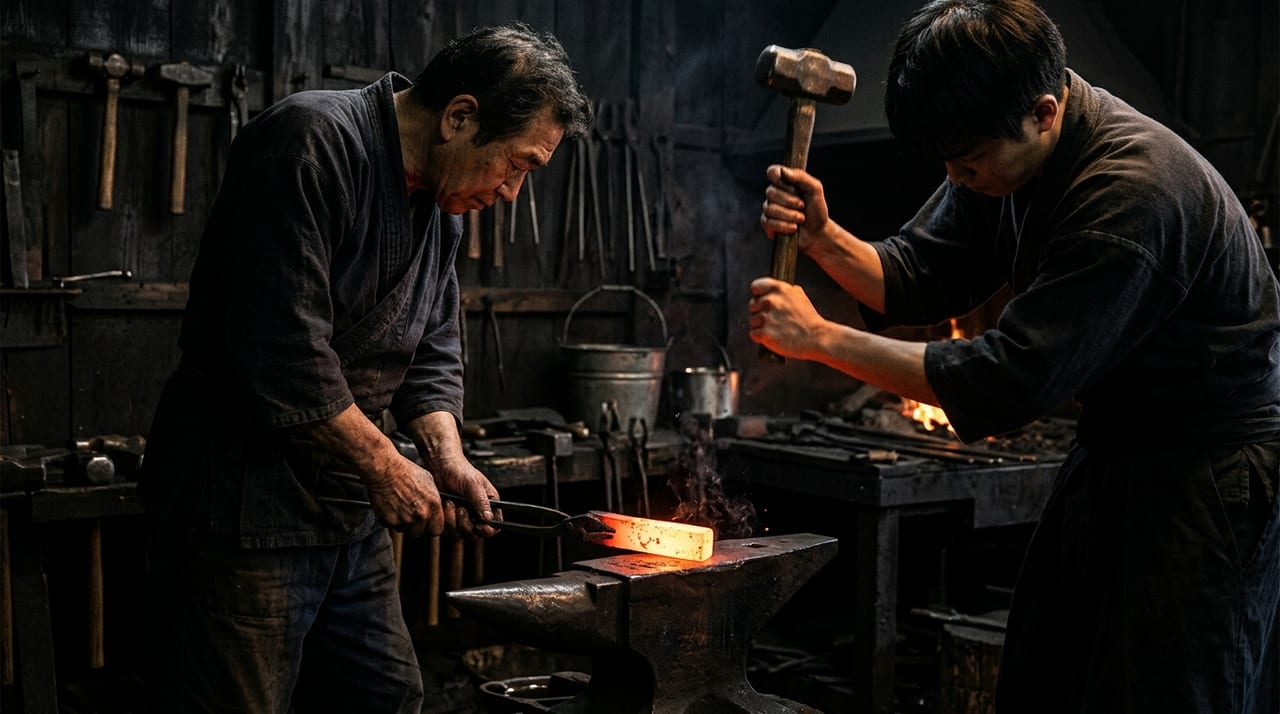
There was a time when it was said that "women cannot forge swords." Sword-forging has a ritual dimension, and the custom of forbidding women from entering the sword workshop (tanaba) persisted for a long time. Since the Shōwa era, however, that barrier has gradually begun to break down.
Today, women are counted among officially registered tōshō (swordsmiths) recognized by the Agency for Cultural Affairs. Most female tōshō undergo rigorous apprenticeship under a master and go through the following processes before becoming fully qualified:
- Tanren (forging) using tamahagane
- Orikaeshi tanren (folding)
- Hizukuri (fire-forging)
- Tsuchioki (applying the clay coating)
- Yaki-ire (quenching)
Every one of these processes includes physically demanding work.
Women are also making their mark in the field of togishi (polishers). The togi (polishing) of a sword is divided into multiple stages, and it is delicate work that ultimately draws out the beauty of the hamon (temper line) and the jihada (grain pattern of the steel):
- Nugui
- Jitogi
- Hazuya
It is said to demand sensitivity and patience more than physical strength, and the number of female togishi is steadily increasing.
The presence of such female craftswomen brings fresh perspectives and vitality to the world of traditional craftsmanship, which has a tendency toward insularity.
The World of Appreciation and Collecting, and Female Collectors
Women are increasingly entering the world of sword appreciation and collecting. At appraisal meetings organized by the NBTHK (Society for the Preservation of Japanese Art Swords), female judges and female participants have grown in number in recent years, and female appraisers with specialist knowledge of swords are emerging as well.
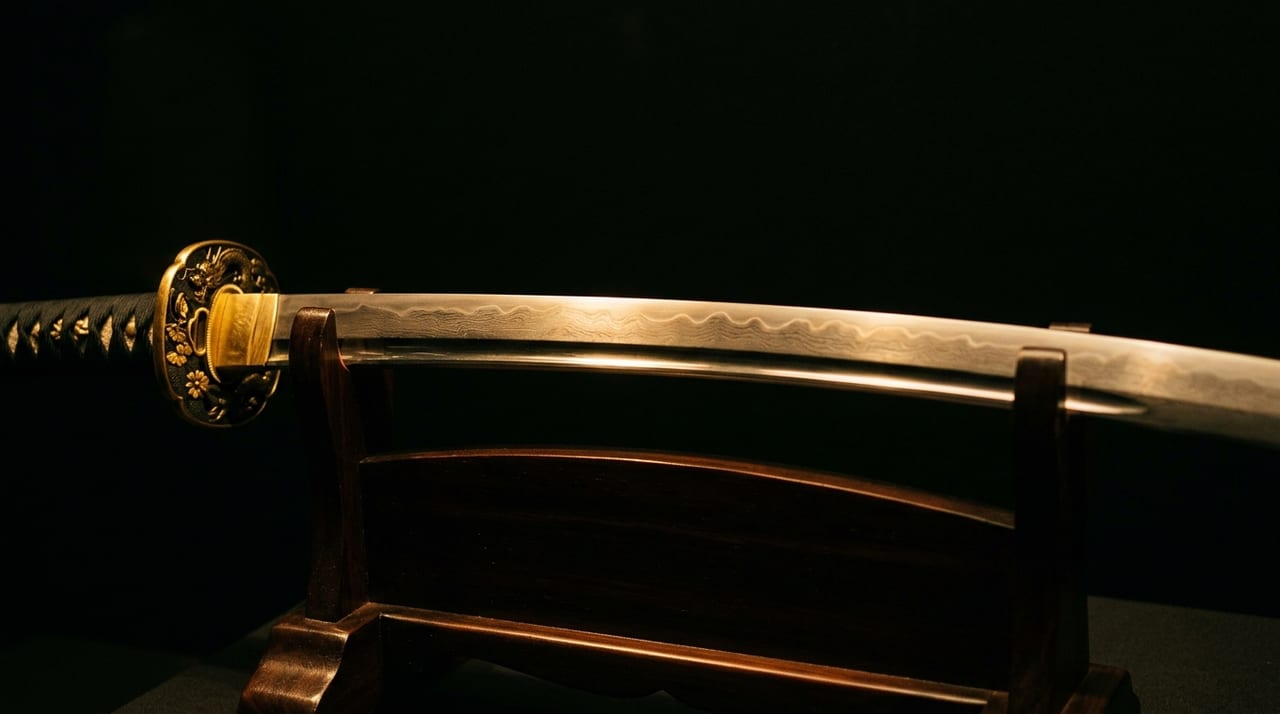
When discussing the beauty of a sword, specialists frequently highlight three elements: jihada, hamon, and sugata (overall form).
| Element | Description |
|---|---|
| jihada | The surface grain of the iron produced through tanren (forging), with patterns including itame, mokume, masame, ayasugi, and others |
| hamon | The pattern created on the blade body through yaki-ire (quenching), which varies by school and tōkō (swordsmith): suguha, notare, chōji, gunome, and others |
| sugata | The overall form of the entire sword; the depth of the sori (curvature) and the shape of the tip reflect the period and intended use |
Female enthusiasts who collect and appreciate swords with a deep understanding of these aesthetic elements are no longer a minority. Female influencers who share the appeal of swords through social media and YouTube have also appeared, playing a part in passing the culture on to the next generation.
The Changing Bearers — The Future of Sword Culture
Japanese sword culture has long been spoken of as "belonging to men," but in reality women have always been part of it. Women of warrior households who carried a futokoro-gatana for self-defense; women warriors who rode into battle; young women who awakened to the history of swords through Touken Ranbu; and female tōshō who continue to work tamahagane to this day — in every era, in every form, women have faced the sword on their own terms.
The craft of Japanese sword-making has been designated a jūyō mukei bunkazai (Important Intangible Cultural Property) by the state, and its protection and transmission are considered an urgent matter. As the aging of tōshō and a shortage of successors become serious challenges, the entry of women as new bearers of the tradition carries enormous significance for preserving that heritage. The future of sword culture is entrusted to the hands of all those — regardless of gender — who have been captivated by the sword.