Japanese Sword Terminology Quiz — Test Your Knowledge
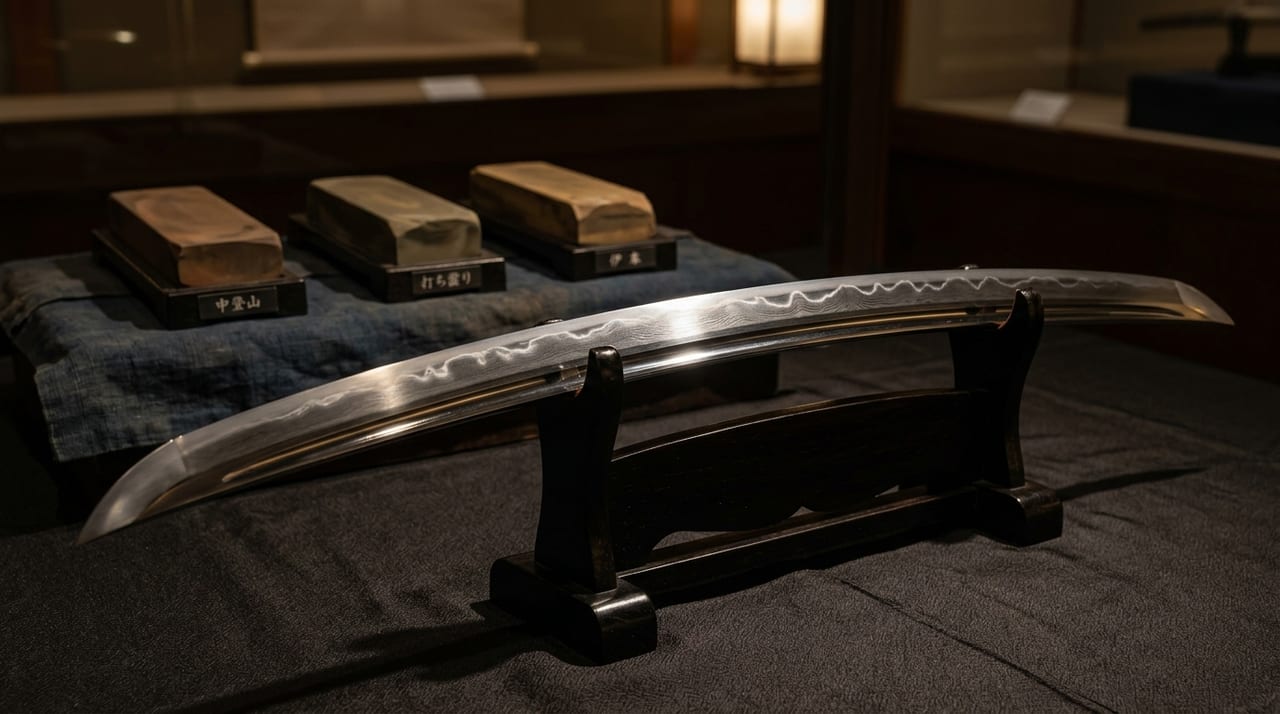 * Image is for illustrative purposes only.
Table of Contents
A deep appreciation of Japanese swords demands an understanding of their specialized terminology. When phrases such as "the hamon is beautiful" or "the jigane has clarity" come naturally to your lips, the world of sword appreciation opens up considerably. This article presents the knowledge needed to appreciate Japanese swords in quiz format, divided into three levels: beginner, intermediate, and advanced. How many questions can you answer?
Beginner Level: Starting with the Basic Terminology
Those who are picking up a sword for the first time, or who are at the stage of "just looking" at exhibitions, should start here.
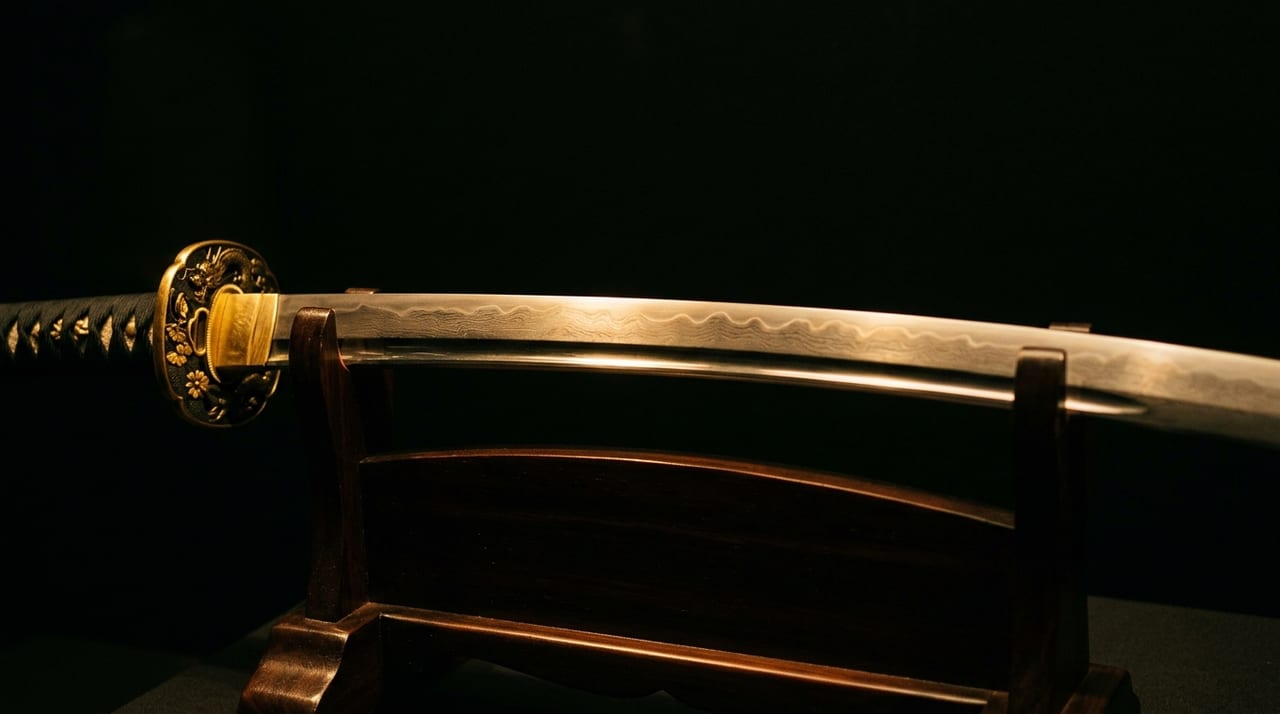
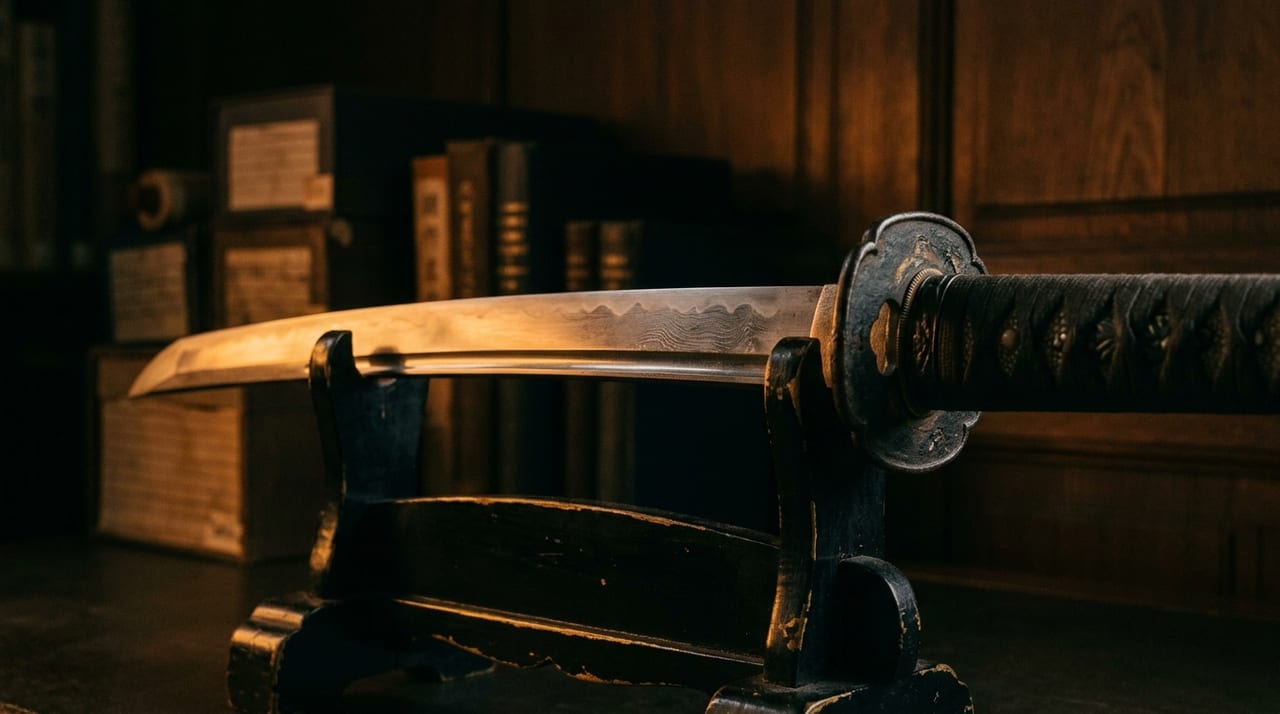
Q1. What is the hamon (temper line)? It is the pattern that appears at the boundary between the edge and the jigane during yaki-ire (quenching). Its shapes are varied — suguha, notare, chōji, gunome, and more — and it strongly reflects the individuality of the tōkō and the characteristics of their school. It is one of the most important elements in the appraisal of Japanese swords.
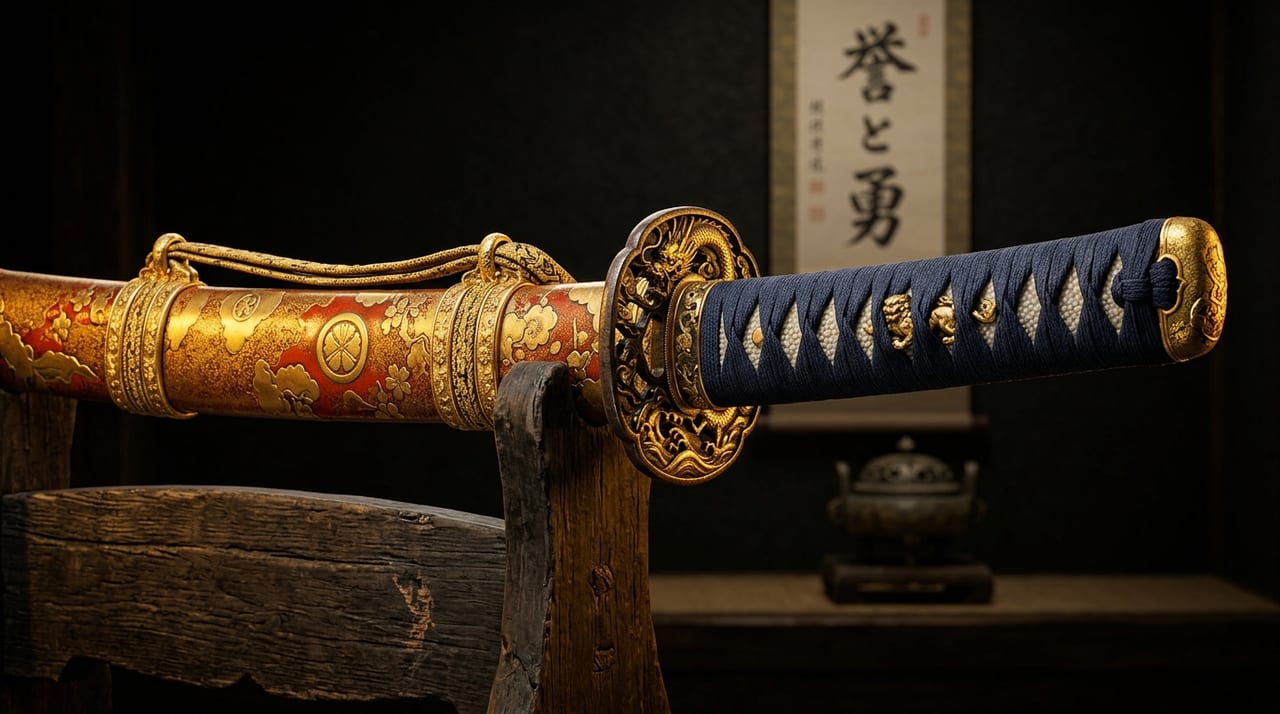
Q2. What is the tsuba (hand guard)? It is the hand guard positioned between the tsuka (hilt) and the blade. Originally a practical piece of protective equipment, it developed from the Edo period onward as a craft item adorned with openwork carving and inlay, following its own distinctive path. The materials range widely — iron tsuba, metalwork tsuba, and more — and tsuba are collected as objects in their own right.
Q3. What is the shirasaya (plain storage scabbard)? It is a simple saya (scabbard) of unvarnished plain wood used for storing the blade. Intended for humidity control and blade protection, it is called "the sword's everyday wear" among sword enthusiasts. It is distinct from the koshirae (mounting) used for display or carrying, and the shirasaya is considered optimal for long-term storage.
Intermediate Level: Terminology That Tests the Discerning Eye
This level is for those who have attended sword exhibitions or have read introductory books on the subject.
Q4. What is the difference between nie and nioi? Both are martensite particles that form the hamon, but they differ in the size of their grains. Those that can be seen individually with the naked eye are called nie, and those too fine to distinguish individually — appearing instead like a mist — are called nioi. A sword with strong nie has a wild, powerful quality, while a sword with deep nioi conveys a delicate and refined impression. Sōshū-den is known for nie, and Bizen-den for nioi, as their representative characteristics.
Q5. What is utsuri? It is a band-like phenomenon that appears white within the jigane, a sight unique to swords of Bizen-den (Okayama Prefecture). There are various types — midare-utsuri, bō-utsuri, kata-utsuri — and the way it appears in harmony with the hamon is considered one of the great attractions of Bizen work. Whether the utsuri appears clearly is also an important criterion in appraisal.
Q6. Can you name all of the Gokaden (five traditions)? The five great production centers of Japanese swords, known as the Gokaden (five traditions), are Yamato-den, Yamashiro-den, Bizen-den, Sōshū-den, and Mino-den. Each has its own regional jigane, hamon, and form, and each produced many celebrated tōkō. Yamato is characterized by an archaic suguha; Yamashiro by elegant gunome and chōji; Bizen by midare-utsuri and chōji-midare; Sōshū by ō-midare and heavy nie; and Mino by togariba.
Advanced Level: Questions for the True Sword Connoisseur
This level is for advanced enthusiasts who have studied sword literature in depth and have participated in appraisal meetings and evaluation events.
Q7. Can you name five or more of the Masamune Jūtetsu? This refers to the ten tōkō said to have studied under Okazaki Masamune, the celebrated master of the late Kamakura period (Sōshū-den). Those most commonly named include Gō Yoshihiro, Hasebe Kunishige, Kaneshige, Kanemitsu, and Samonji. The composition of the Jūtetsu varies by source, and the fact that multiple theories exist is itself considered part of the knowledge.
Q8. What are the period boundaries between kotō, shintō, and shinshintō? They are broadly classified as follows.
- kotō: prior to Keichō (1596)
- shintō: Keichō through Meiwa (1764)
- shinshintō: from Meiwa onward through the early Meiji period
Kotō are prized for the complexity of their jigane and the beauty of their sori; shintō for their well-ordered form; and shinshintō for their return to classical styles. Some researchers use a four-part classification by adding gendaitō.
Q9. Can you list the NBTHK appraisal grades in order from highest to lowest? The NBTHK (Society for the Preservation of Japanese Art Swords) appraisal grades are the following four levels.
- Tokubetsu Jūyō Tōken
- Jūyō Tōken
- Tokubetsu Hozon Tōken
- Hozon Tōken
They are commonly known as "tokujū, jūyō, tokuho, hozon." Swords designated as Tokubetsu Jūyō Tōken receive the highest market evaluation and have a major influence on sale prices.
Bonus Section: Appreciation Etiquette Worth Knowing
Knowledge of terminology is merely a "tool" for seeing a sword more deeply. When you hold a sword at an exhibition, first observe the overall sugata — the degree of sori, the thickness of the kasane (blade thickness), and the shape of the kissaki (point) — at your own pace. Then shift your gaze to the hada of the jigane, and then to the hamon, and you will sense the skill the tōkō poured into it and the spirit of the age.
When removing the shirasaya, always keep the edge facing upward and take care not to touch the blade with bare hands. Skin oils cause rust. After appreciation, the standard practice is to wipe the blade carefully with hōshōgami and apply a thin coat of chōji-yu before storing.
Conclusion: The True Pleasure of Sword Appreciation Is Continued Learning
The world of Japanese swords does not end with memorizing terminology. Even with the same "chōji hamon," the bold chōji of Fukuoka Ichimonji and the orderly chōji of Moromitsu have entirely different qualities. The deeper your knowledge grows, the more you see what you could not see before — that is the true pleasure of Japanese sword appreciation.
Build your understanding step by step from the beginner terminology, and aim to become a connoisseur who can answer the advanced questions with ease. The world of swords always has new discoveries in store — for those just beginning to learn, and for those who have engaged with it for many years.