The Historical Development of Iai — From Hayashizaki Jinsuke Shigenobu to Modern Iaidō: The System of Drawing Techniques and Their Influence on Sword Culture
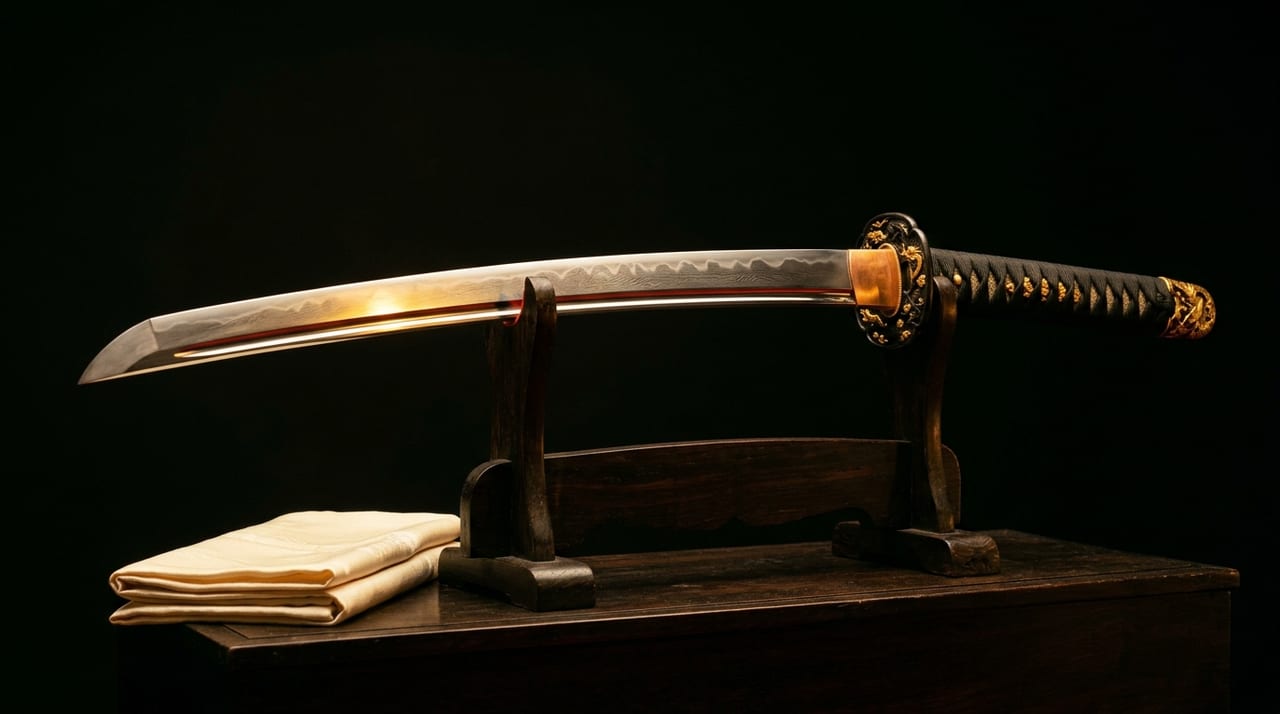 * Image is for illustrative purposes only.
Table of Contents
What is Iai — The Essence of the Sword-Drawing Martial Art
Iai is a martial art that systematizes the technique of swiftly drawing a sword from its saya (scabbard) and subduing an opponent. It is not merely "the technique of drawing a sword quickly" but encompasses within its continuous sequence of drawing, striking, zanshin, and nōtō a meaning of both mental and physical tanren (forging).
Multiple theories exist regarding the etymology of "iai," but the most common interpretation is that it derives from "iru" — meaning being in a seated state, or the state of "being present, being at the ready" — combined with the meaning of "awaseru (to meet, to respond)." For samurai of the Edo period, iai was both a practical technique for dealing with unexpected confrontations indoors or while seated, and a form of mental cultivation. Deeply connected as well to the philosophy of "fubatsu no rittō" — the principle of subduing without drawing — iai is also a physical practice of bushidō philosophy.
Hayashizaki Jinsuke Shigenobu — The Founder of Iai
Widely known as the founder of iai is Hayashizaki Jinsuke Shigenobu, who was active in the latter half of the 16th century. He is said to have had ties to the Hayashizaki Shrine (now the Hayashizaki Iai Shrine, in Murayama City, Yamagata Prefecture) in Dewa Province (present-day Yamagata Prefecture), and legend has it that he prayed to the gods and underwent training in the art of sword-drawing after vowing to avenge his father's death.
The "Shinmusō Hayashizaki-ryū" founded by Shigenobu later spread primarily through the Kanto and Tohoku regions, giving rise to many sub-schools. Among the particularly important lineages are the following.
- Tamiya-ryū
- Sekiguchi-ryū
- Musō Jikiden Eishin-ryū
- Musō Shinden-ryū
These schools were transmitted to samurai of various domains, each developing their own unique kata and principles. It is said that the Hayashizaki lineage has developed into more than 70 schools by the present day.
Development in the Edo Period — From Actual Combat to Kata Practice
Following the end of the Sengoku period and the establishment of the Edo Shogunate (1603), Japanese society transitioned to an era of stable peace. With the loss of opportunities for actual combat, martial arts transformed into spaces for the preservation and transmission of techniques through kata practice (katageiko) and for mental cultivation. Within this current, iai, too, strengthened its aspect as "samurai etiquette and spiritual tanren (forging)" rather than as a practical fighting art.
From the mid-Edo period onward, iai schools spread throughout the country, and practice was conducted in the dojos of various domains. During this period, many kata were systematized and came to be recorded in the densho (transmission documents) of each school. In martial arts, kata are not mere movement manuals but rather condensations of the experience, wisdom, and philosophy of one's predecessors, transmitted from master to student together with oral teachings as "living cultural heritage." Iai practice honed, alongside sword-handling skills, the qualities of courtesy, kiai, concentration, and the ability to read the atmosphere of a situation.
The Meiji and Taisho Periods — Modernization of Martial Arts and the Transformation of Iai
Following the Meiji Restoration (1868), the Sword Abolishment Edict (Haitōrei) (1876) prohibited samurai from carrying swords, and iai lost its practical background. However, within a movement to preserve martial arts as culture and physical education, iai was redefined as a complement to kendo and as spiritual cultivation, surviving as a modern budō.
In the Taisho period, discussions began on the unification and systematization of various schools, laying the groundwork for the formation of cross-school organizations. During this period, efforts were also made to establish "standard kata" that would become the prototype of modern iaidō, and initiatives toward the social popularization of iaidō began.
Modern Iaidō — Coexistence of All Japan Kendo Federation Iai and Koryū
After the war, the All Japan Kendo Federation (Zen Nippon Kendo Renmei) established the "Zen Nippon Kendo Renmei Iai" (seitei iai) in 1969 (Shōwa 44), setting forms common throughout the country. This seitei iai is a common program that can be learned regardless of school, and is also used in dan rank examinations.
At the same time, the koryū (classical school) iai of Musō Jikiden Eishin-ryū, Musō Shinden-ryū, Tamiya-ryū, Sekiguchi-ryū, and others has been handed down to the present day, and it is common for practitioners to train in both seitei iai and koryū. The iai practitioner population in Japan is said to number in the tens of thousands, and enthusiasts are also increasing overseas, particularly in Europe, North America, and Australia.
The Relationship Between Iai and Japanese Sword Culture
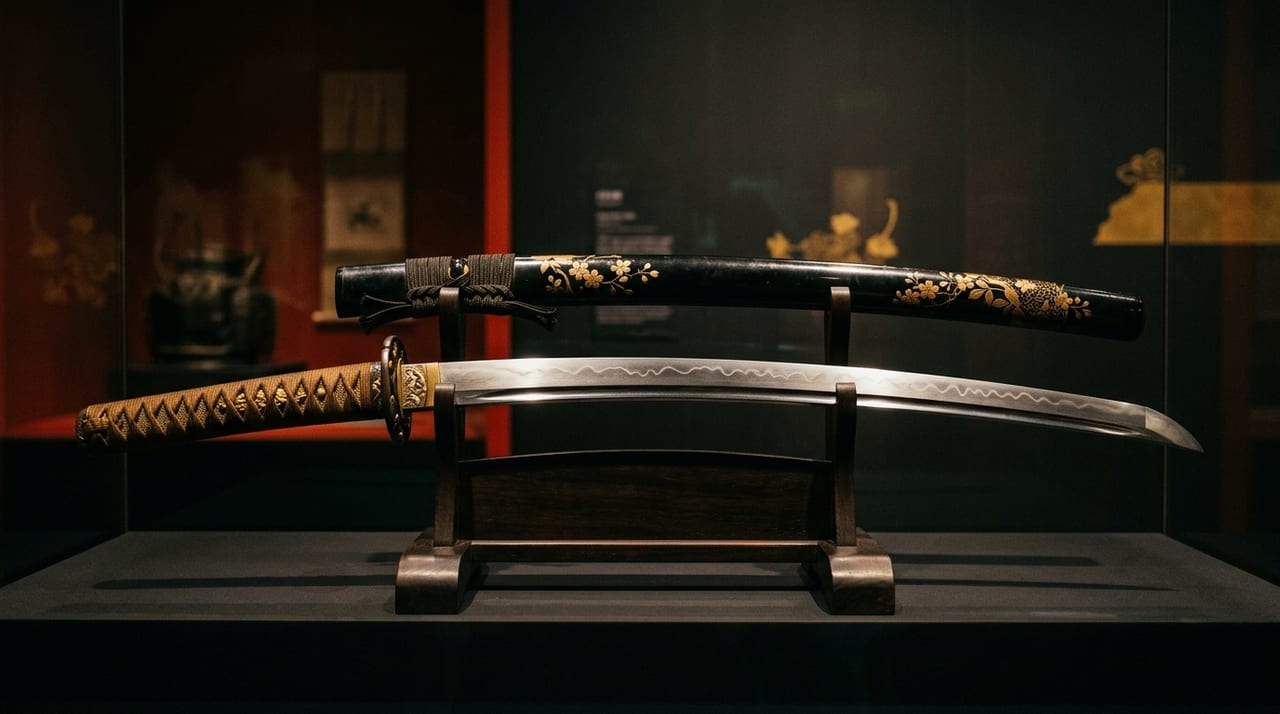
In the modern era, iaidō is one of the most important "living points of contact" with Japanese sword culture. Practice employs actual swords (either iai swords or shinken), and practitioners learn through physical experience the function and names of the various parts of a sword's fittings — saya (scabbard), tsuka (hilt), mekugi, koiguchi, and others. Iai practitioners naturally develop a deepening interest in swords, and for many it becomes an entry point into collecting.
Enthusiasts who have learned the basics of storing, maintaining, and handling Japanese swords through iaidō can evaluate both the practical handling feel and artistic value when selecting swords at sword markets or online catalogs. Cases of those who have entered the world of iai going on to start Japanese sword collections as their next step continue to increase even today.
The swords used in iaidō practice are divided into "iai swords (replica swords)" and shinken. Beginners start with replica swords for safety, but as their rank advances, the transition to shinken is often encouraged. Practice with shinken carries tension and a sense of responsibility, and serves as an occasion for cultivating deep respect for and understanding of swords. By experiencing firsthand the balance of a sword's weight, center of gravity, and sori (curvature), one's understanding of both the structural and functional beauty of the Japanese sword deepens dramatically.