Hadori and Nugui — The Final Finishing Steps Performed by the Togishi and the Secrets of Polishing That Bring Out the Hamon
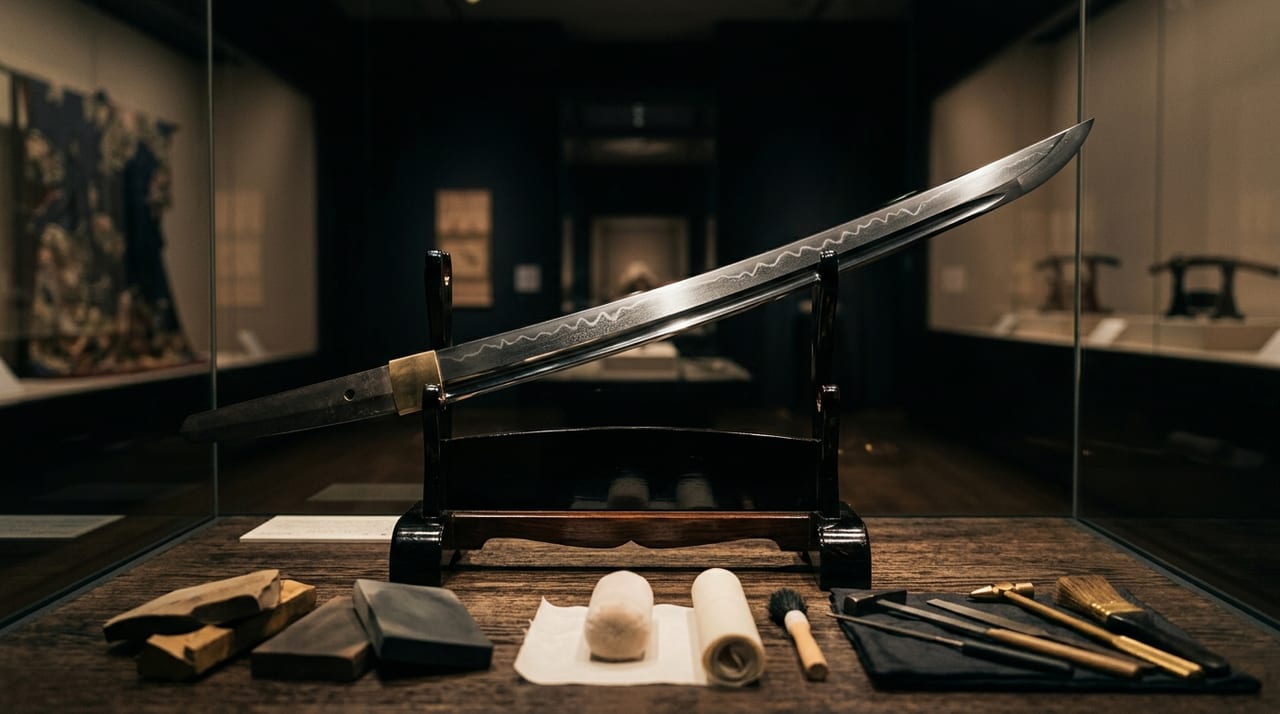 * Image is for illustrative purposes only.
Table of Contents
Overview of the Polishing Process and the Place of "Finish Polishing"
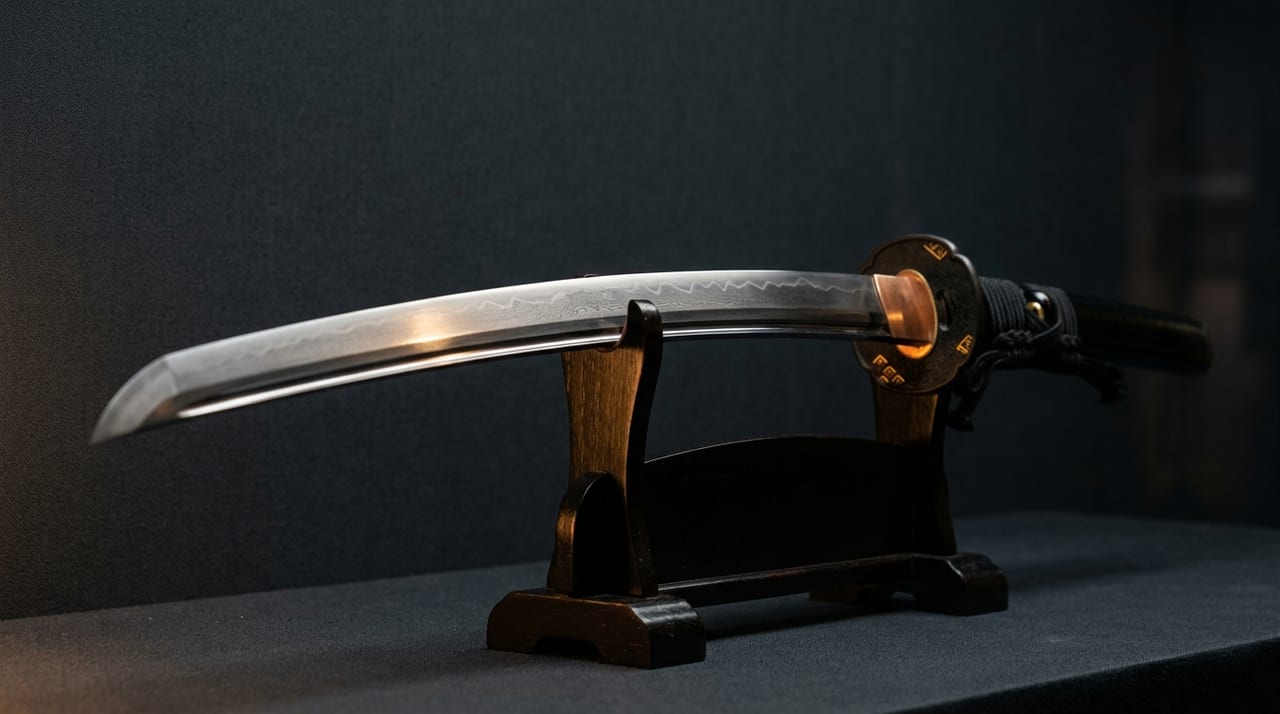
Togi (polishing) of a Japanese sword is not a mere act of "sharpening a blade" but an artistic and technical undertaking that draws out the sword's true nature. The togishi (polisher) progressively moves to finer whetstones, erasing scratches, and ultimately applies a finish that displays the jigane (steel of the blade surface) texture and the hamon (temper line) to their greatest beauty.
The polishing process is broadly divided into three stages: "aratori" (rough polishing), "nakatogi" (intermediate polishing), and "shiagetogi" (finish polishing).
- Aratori: Correction of the shape and removal of major scratches
- Nakatogi: Homogenization of the surface
- Shiagetogi: Work that brings brilliance to the jigane surface and maximizes the contrast of the hamon
The techniques of "hadori" and "nugui" play the central roles in this finishing stage.
The Technique of Hadori
Hadori is a technique used in the final stage of finish polishing, in which thin slices of a special whetstone called uchigumori-do (also known as "finger stones") are affixed to the fingertips, and the blade zone (from the cutting edge to the hamon) is polished in fine detail.
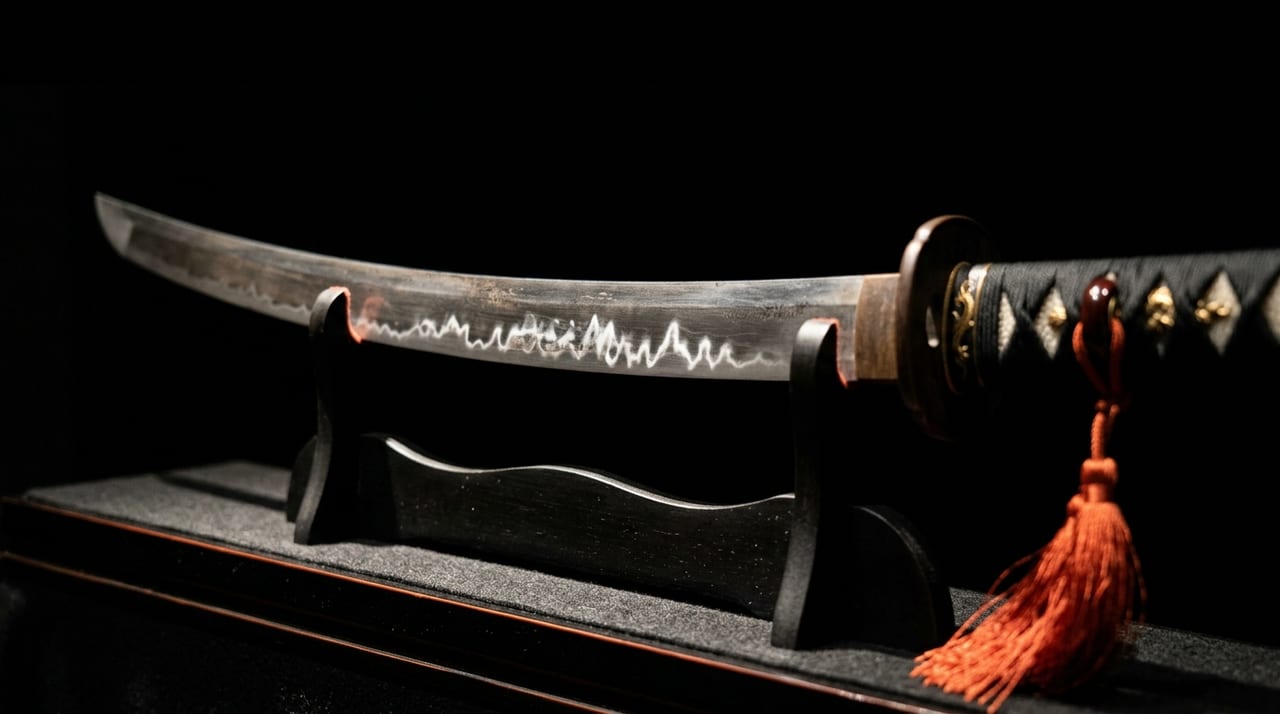
Uchigumori-do is a natural whetstone quarried in the Kyoto region (areas such as Kameoka City and the Keihoku district), with extremely fine particles that polish while imparting a white, clouded appearance to the metal surface. This "white haze" forms the visual foundation that makes the hamon stand out. The nie (granular white light) and nioi (misty, soft light) of the hamon emerge visually for the first time through the manner in which the stone is applied and the degree of pressure used during the hadori stage.
Hadori is applied from the hamachi toward the kissaki (point), along the line of the hamon, with an extremely delicate touch. Too much pressure causes the hamon to "disappear," while too little leaves the boundary with the jigane blurred. Experienced togishi draw on years of practice to adjust the distribution of finger pressure according to each tōkō's style, period, and the characteristics of the jigane. In works with complex jigane such as kotō (old swords), decades of experience are reflected in each individual stroke of hadori.
The Role of Nugui
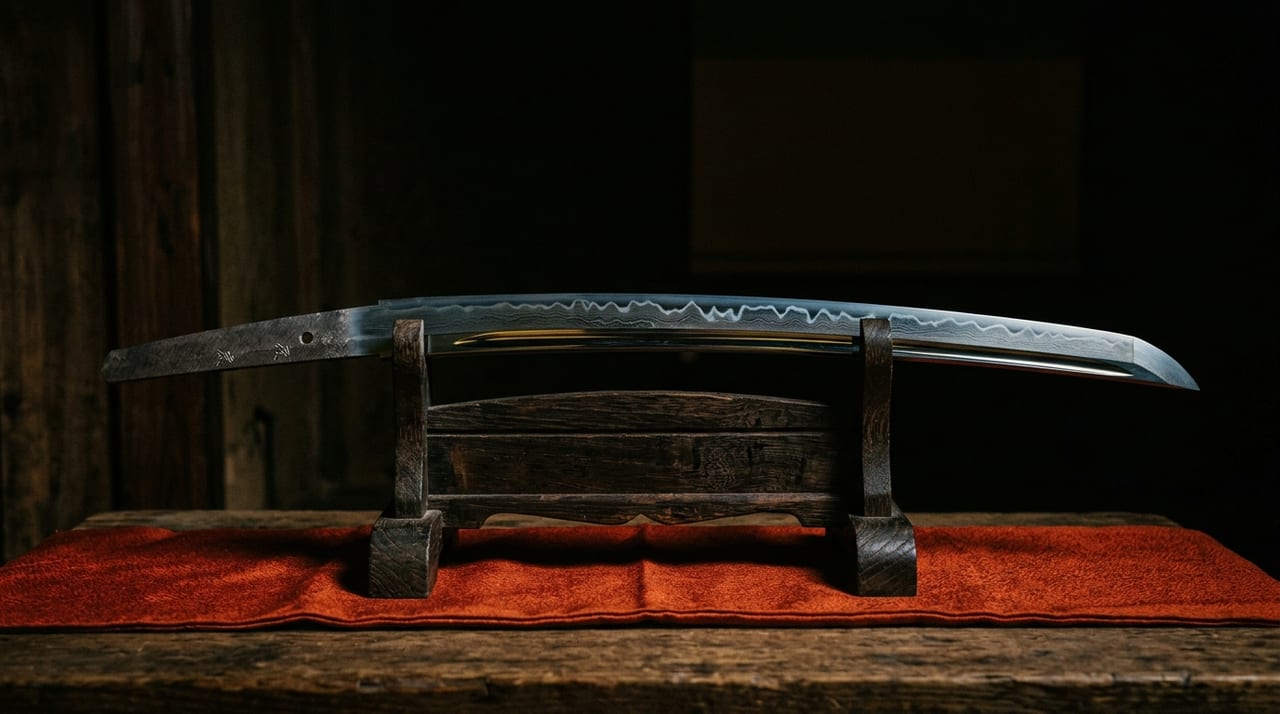
Nugui is a finishing polish element on a par with hadori, and is the process that brings the "ji" (body) areas outside the hamon zone — the shinogi-ji and hira-ji — into order. By applying a thin coat of toinoko (polishing powder) and sword oil to nugui-gami (special Japanese paper) and wiping the jigane portions of the blade in fine, repeated strokes in a single direction, the jigane grain pattern (itame, masame, mokume, and others) rises to the surface and a pattern called chikei appears.
Nugui gives the jigane a distinctive white luster (also related to utsuri), creating a strong contrast with the hamon. For complex hamon such as Bizen-den's chōji-midare and Sōshū-den's hitatsura, the skill of nugui has a considerable bearing on the quality of the final result. Nugui and hadori are complementary techniques, and neither alone can achieve the highest finish.
Whetstone Selection and Difficulty of Procurement
One of the serious problems facing today's togishi is the sharp decline in the output of natural whetstones, including uchigumori-do. In the northern Kyoto areas that are prime sources of high-quality uchigumori-do, the volume quarried decreases year by year, and obtaining good-quality stones depends heavily on personal connections among togishi and on auction events (whetstone markets).
Development of artificial whetstones as substitutes for natural stones has advanced, but it is said that the "depth" and "soft finish" produced by the slight unevenness in grain size peculiar to natural stones are difficult to replicate with artificial ones. Fine pieces of uchigumori-do used in the highest-level art polishing can exceed several hundred thousand yen in price, and this has become a business challenge for togishi. Some togishi inherit old whetstones across multiple generations, and the stones themselves are sometimes treated as an intangible asset.
Differences Between Art Polishing and Practical Polishing
There are two kinds of polishing: "bijutsu-togi" (art polishing) and "jitsuyō-togi" (practical polishing).
- Bijutsu-togi: The highest-level finish, performed with appraisal inspections by NBTHK (Society for the Preservation of Japanese Art Swords) and similar bodies in mind, repeating hadori and nugui many times to draw out the beauty of the jigane and the variation of the hamon to the fullest. The work on a single sword can take from several weeks to more than a month.
- Jitsuyō-togi: Polishing for swords used in iaidō and kenjutsu training, prioritizing sharpness and durability without spending as much time as bijutsu-togi. A certain standard of polishing skill is nevertheless required, and submitting a prized sword with a kanteisho (appraisal certificate) for jitsuyō-togi tends to be avoided, as it may diminish the sword's artistic value.
Training Togishi and Passing Down the Craft
The techniques of hadori and nugui are a quintessential craft learned by watching, and no systematized textbooks or manuals exist. It is said that only after more than ten years of apprenticeship under a master can one work independently, and today the number of togishi is limited. The specialists in full-scale bijutsu-togi, said to number only a few dozen nationwide, are indispensable to the preservation of Japanese sword culture.
The training of togishi, like that of tōshō (swordsmiths), is an object of national support and backing from the Agency for Cultural Affairs, and is also linked to the certification system for traditional craftspeople. The shortage of successors is as serious in the world of togishi as elsewhere, and when a single outstanding togishi closes their practice, the direct impact on that region's Japanese sword culture is significant. Togishi who can perform hadori and nugui to a high standard are people the entire industry should support, both to preserve the value of the swords held in collectors' collections and to sustain the craft as a whole.