Major Annual Events and Exhibition Sales for Japanese Swords — A National Calendar of Sword Markets and Distribution Events, with Tips for Participation
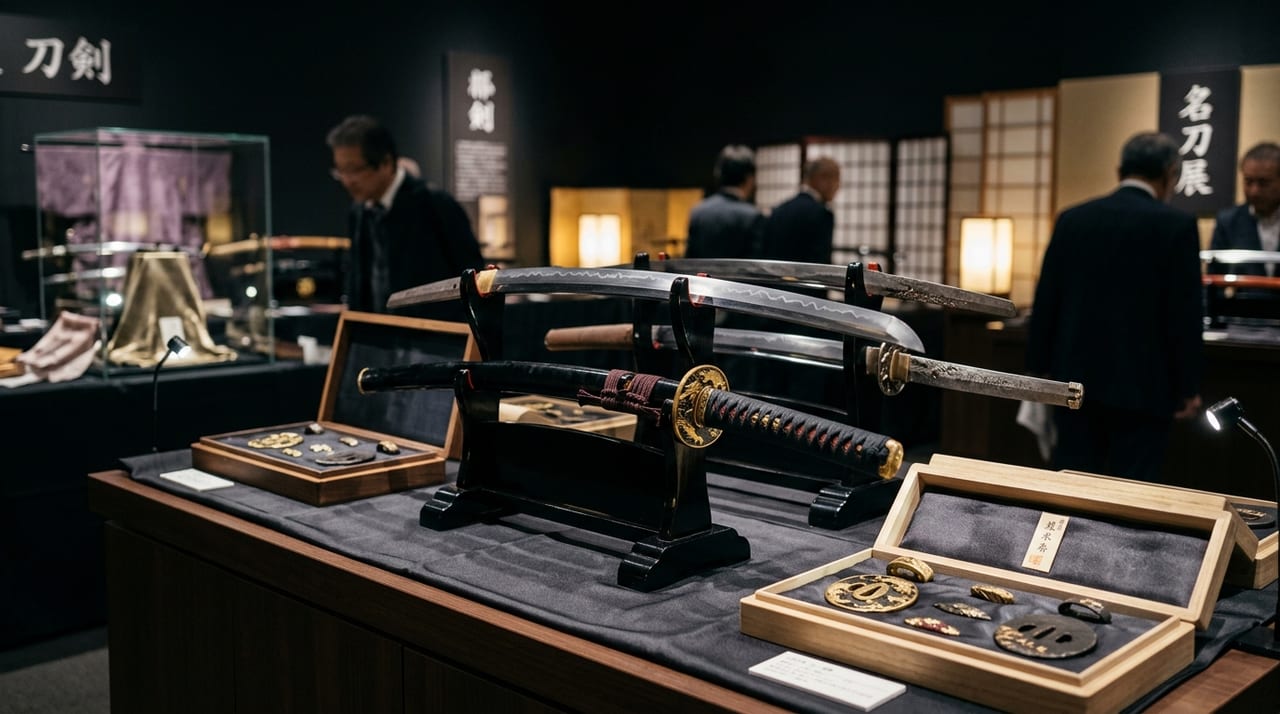 * Image is for illustrative purposes only.
Table of Contents
Types and Significance of Japanese Sword Events
Events related to Japanese swords can be broadly classified into four types.
- Exhibition sales
- Appraisal meetings and evaluation shows
- Sword markets
- Special exhibitions at museums and art museums
For collectors and enthusiasts, these events are not merely places to purchase and appreciate swords; they are also precious opportunities to interact directly with craftspeople such as tōkō, togishi, and tōsōgu craftspeople, as well as sword dealers and fellow enthusiasts.
Even in today's world where online transactions have become widespread, the value of attending events where one can handle actual swords and examine the jigane, hamon, and nakago under natural light or artificial illumination remains high. For those looking to purchase a sword for the first time in particular, examining actual swords at events is the best opportunity to develop one's discernment. At the same time, through face-to-face interaction with sword dealers, one can develop a feel for market prices and trends in items offered — practical knowledge that cannot be gained from online information alone.
Spring Events (March–May)
Spring is the time when the season for sword events begins. Many events are held in conjunction with dedicatory ceremonies at shrines and temples across the country, timed to coincide with the cherry blossom season.
NBTHK (Society for the Preservation of Japanese Art Swords) authentication sessions are held multiple times a year at locations throughout the country. The spring authentication — grading sessions for Hozon Tōken, Tokubetsu Hozon Tōken, and other ranks — is one of the industry's important events, and swords that pass authentication undergo a significant change in their subsequent market value. When collectors submit their holdings for authentication, it is necessary to check the application documents and the condition of the sword in advance, as the state of polish has a major effect on the authentication result.
Sword markets in the Kyoto and Kansai area are concentrated in spring and autumn, and are characterized by a high proportion of lots specializing in tōsōgu and koshirae, as befits the ancient capital. At antiques-fair-style events held around May, where Kyoto sword dealers gather, booths of well-known sword dealers may be found lined up.
Summer Events (June–August)
Summer highlights include large-scale sword-related events and dedicatory ceremonies for swords at shrines held in conjunction with summer festivals across the country.
In Niigata and Sanjo City and similar locations, sword-related events are held in conjunction with the bladed-tools industry, and programs featuring demonstrations by active tōshō and kaji experience sessions are also popular. Participants ranging from beginners to experienced collectors can take part, and these events are a precious opportunity to observe the sword-making process up close.
This is also the season with the highest number of collectors visiting Japan from abroad, and demand for sword dealers who can communicate in English and for interpreter services rises. Major sword dealers in Tokyo and Osaka frequently build up their stock ahead of the busy summer season, and the number of dealers able to handle inquiries in foreign languages is increasing.
Autumn Events (September–November)
In the sword industry, autumn is the busiest season of the year. This is the period when sword markets, distribution events, and exhibition sales are most concentrated, and large-scale events are held across the country.
In autumn, when exhibition sales are held in major cities including Osaka, Kyoto, and Tokyo, both the number of lots offered and the number of visitors reach their annual peak. Sword dealers from across the country set up booths, and the events are characterized by a wide selection ranging from tachi and uchigatana to tantō, wakizashi, and tōsōgu. Price ranges vary widely as well, from introductory items at tens of thousands of yen to masterpieces at tens of millions of yen, making these events enjoyable for everyone from beginners to advanced collectors.
The sword market held in Tokyo is the largest event in the Kanto region, and features many lots of newly made swords, kotō, and swords accompanied by a kanteisho. It is sometimes held at the same time as an NBTHK authentication session, bringing together people from across the industry. It also functions as a venue for the exchange of information among collectors and for direct conversation with tōkō.
Winter Events (December–February)
Around the year-end and New Year period, individual sword dealers sometimes hold small-scale events billed as "New Year sales" or "year-end special sales." Shrine events for the New Year (such as the public display of dedicatory swords) are also held at various locations. During the first-shrine-visit season in particular, special public displays of dedicatory swords held in shrine precincts are sometimes organized, offering the opportunity to see renowned swords that are normally not open to the public.
February has comparatively few events, but auction houses catering to sword collectors continue to hold regular sessions, and the number of lots offered in combination with online formats has been increasing throughout the year. This period is also said to be the buying season, when sword dealers build up their stock for the next season.
Practical Advice for Attending Events
When attending an event for the first time, it is recommended to focus first on simply "observing." When viewing actual swords at a dealer's booth, keep the following points of etiquette in mind.
- Always ask permission before handling a sword.
- Confirm the correct way to hold a sword (supporting it with both hands, edge facing up) in advance.
- Do not put a sword down in silence; always say a word of thanks.
Since some events allow price negotiation while others have fixed prices, it is a good idea to check in advance. Building a long-term relationship with a trustworthy sword dealer is the most direct path to acquiring quality swords. Whether an NBTHK membership card or kanteisho is present serves as an indicator of reliability. By combining in-person viewing with online information gathering, one's understanding of Japanese sword collecting deepens.
The latest information on each event can be found on the official websites of NBTHK and individual sword dealers, and is also shared in communities of sword enthusiasts (via social media, sword specialty magazines, and so on).