Moroha-zukuri — The Distinctive Double-Edged Construction Form of the Nihontō and Period Examples
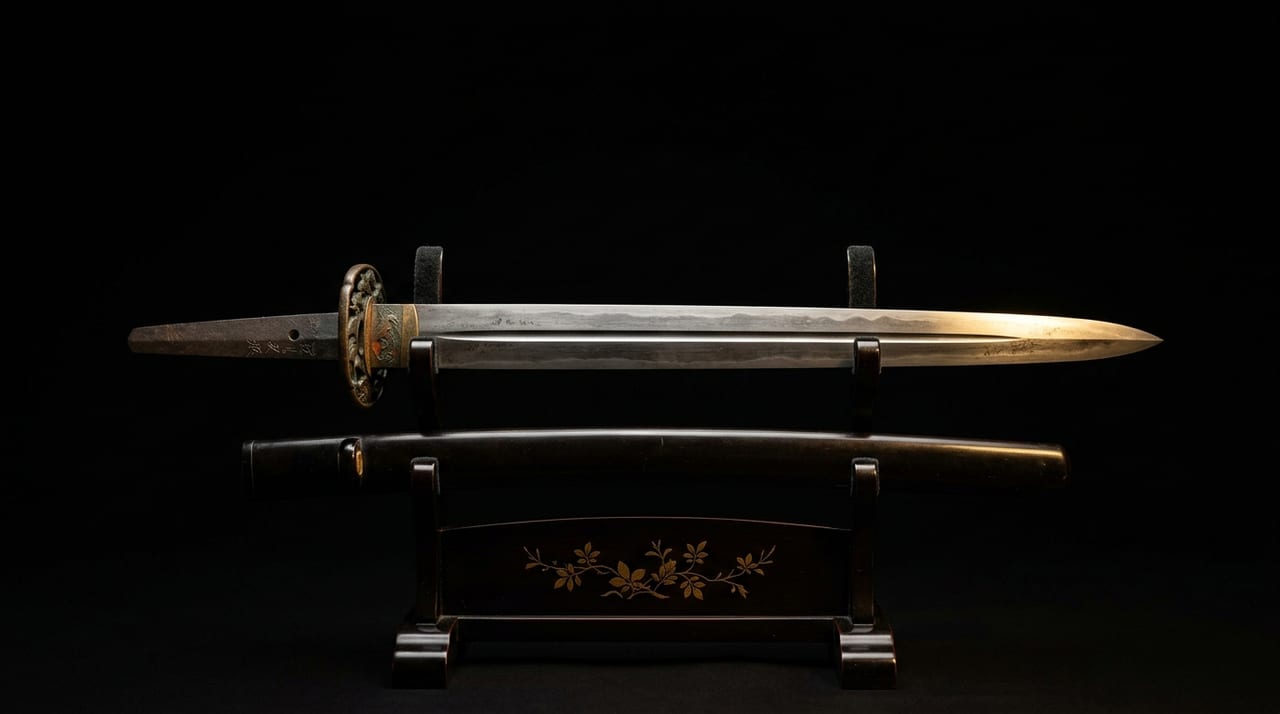 * Image is for illustrative purposes only.
Table of Contents
What Is Moroha-zukuri?
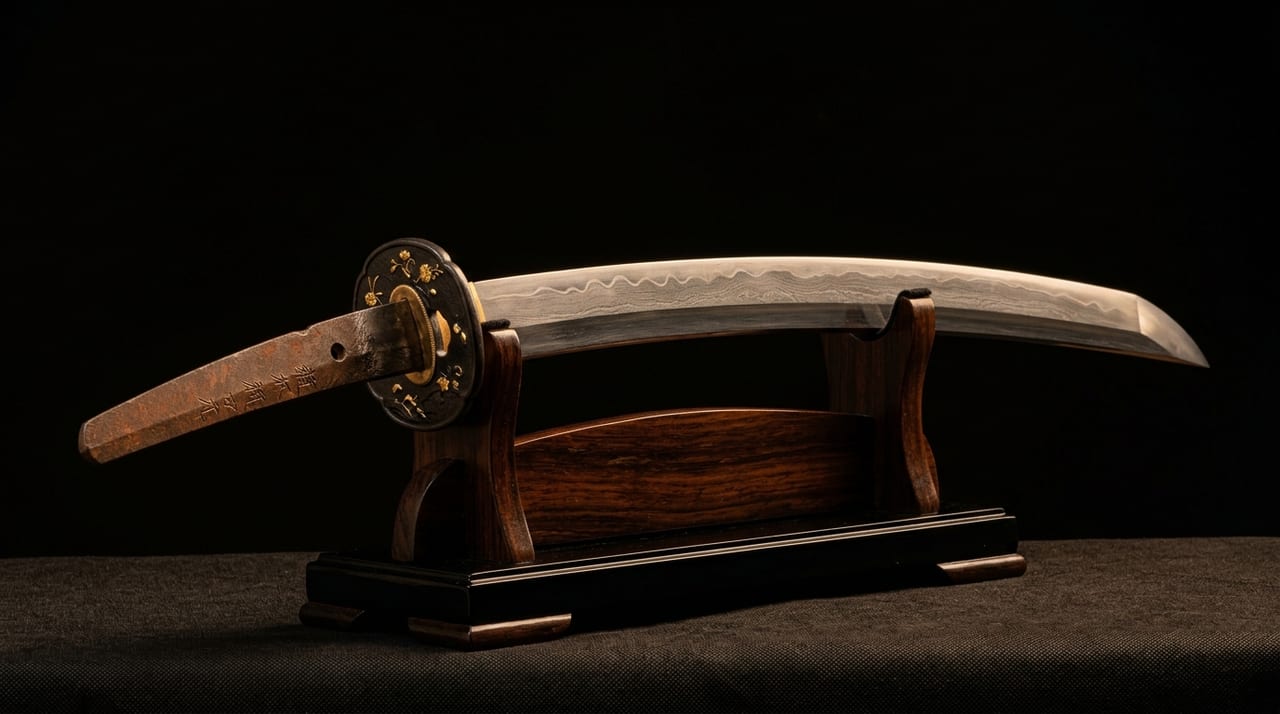
The tsukuri-komi (construction form) of nihontō is classified by the cross-sectional shape of the blade and the manner in which the edge is applied. The great majority of nihontō are based on a single-edged structure in which the edge is applied only to the omote (front) face; moroha-zukuri, however, is an exceptionally distinctive form in which the blade carries cutting edges on both faces.
Structurally, the mune (back of the blade) area is thinned so that both faces function as edges. Unlike ordinary shinogi-zukuri or hira-zukuri, the mune side frequently carries a hamon (temper line) as well, and the blade as a whole has a narrow, sharp diamond-shaped cross-section. Its origins can be traced to the ken (double-edged sword) of the pre-Heian period, and it appears in the contexts of ceremony, Shinto ritual, and weaponry alike.
Ancient Double-Edged Swords — From the Ken to the Warabite-tō
The oldest examples of double-edged swords in Japan go back to the ken brought over from the continent during the Yayoi and Kofun periods. The ken of this era carried strong ritual and magical significance and were prized in a context separate from battlefield use. In the early Nara and Heian periods, double-edged ken were held in the Shōsōin repository and occupied a special position within court sword culture.
In the Tōhoku region, a distinctive sword known as the warabite-tō developed. It is known for its tip curling like a fern frond, but both double-edged and single-edged examples exist in its bladed portion. This sword, said to have been used by the Emishi who faced the ritsuryo state following Sakanoue no Tamuramaro's campaign against the Emishi (801), is also an important transitional form when considering the shift toward the curved blade characteristic of later nihontō.
Examples of Moroha-zukuri from the Kamakura and Nanbokuchō Periods
As nihontō developed rapidly from the late Heian through the Kamakura period, moroha-zukuri fell outside the mainstream, yet some tōkō (swordsmiths) continued to produce it for specialized purposes. Moroha-zukuri from the Kamakura period onward appears mainly in the form of tantō and ken, and such pieces have often been handed down as shrine offerings or treasured possessions of warrior households.
During the Nanbokuchō period (14th century), amid a trend toward larger and more imposing swords, records remain of large moroha-zukuri blades close in form to the ken being produced. Surviving examples are few, however, and those designated as kokuhō (National Treasure) or jūyō bunkazai (Important Cultural Property) are limited in number. Perhaps because moroha-zukuri swords were more often intended for ritual offering than for actual combat use, many have survived in relatively good condition.
The Relationship Between Shinto Ritual and the Double-Edged Blade
Moroha-zukuri appears with particular frequency among goshin-tō offered at shrines. In Shinto, the sword is used as a symbol of misogi and harae, and there is an aspect in which double-edged swords were preferred for their symbolic meaning of "dispelling impurity from both sides."
The Kusanagi-no-Tsurugi, regarded as one of the Three Imperial Regalia, is also situated in the lineage of the ancient double-edged ken. Among the shintai and sacred treasures preserved at shrines and grand shrines, some include double-edged swords, most of which are not open to the public.
Even today, swords used in Shinto ceremonies include double-edged forms, and among the ken-shaped swords used as katashiro in igushi and kagura, double-edged examples are not few.
Position in Tsukuri-komi Classification and the Difficulties of Forging
In the classification of nihontō tsukuri-komi, moroha-zukuri is also written using a different set of characters with the same reading. In the context of sword research, it is treated as a form separate from single-edged blade types (tachi, uchigatana, wakizashi, tantō) and is frequently classified under the "ken" category.
The following types exist with regard to how the hamon is applied.
- Those in which a hamon is applied to both faces
- Those in which the hamon on one face is omitted
In full moroha-zukuri, yaki-ire (quenching) is carried out on both faces, but this is technically extremely demanding and is a process that tests the skill of the tōkō (swordsmith). The hagane (steel) on one face is liable to be affected by the heat of yaki-ire on the opposite face, and temperature control and management of the cooling process are required to a degree beyond that of ordinary single-edged swords.
Because moroha-zukuri requires tsuchidori (the clay applied before yaki-ire) to be applied to both faces, specialized skill in the uniformity of the clay's thickness and the manner of its application is demanded. There are also the following differences in yaki-ire technique, with individual workshops employing their own methods.
- Tōkō who use a "one face at a time" method, quenching one face before quenching the other
- Tōkō who attempt to quench both faces at once
Appreciation and Collecting — The Market Value of Moroha-zukuri
At sword markets and fine-art auctions, pre-Edo moroha-zukuri antique swords occasionally come up for sale, and there is steady demand owing to their rarity and the distinctiveness of their form. From a collector's perspective, the axes of evaluation are the beauty of a construction form different from the mainstream and the sword's deep connection to Shinto and Buddhism.
In appraisal, the following points become important evaluation criteria.
- The quality and uniformity of the hamon on both faces
- The beauty of the shinogi (ridge line) ridge
- The shape of the nakago (tang) and the presence or absence of a mei (signature)
In NBTHK (Society for the Preservation of Japanese Art Swords) examinations, moroha-zukuri swords are subject to the standard review process, and applications for the hozon, tokubetsu hozon, jūyō, and tokubetsu jūyō rankings are all possible.
Even today's tōshō (swordsmiths) may forge moroha-zukuri ken as commissioned works or as dedicatory swords. In contemporary sword production, approval must be obtained for each sword crafted as a work of artistic value — ken included — (Article 18-2, Act for Controlling the Possession of Firearms or Swords and Other Such Weapons (Jūtōhō) (e-Gov Law Search)). As a bridge connecting the sword culture "before the nihontō" with "the establishment of the nihontō," moroha-zukuri remains an important subject of study for both specialists and enthusiasts in understanding the diversity of nihontō construction forms.