Kenjutsu Schools and the Japanese Sword: How Tradition Shaped Weapon Choice and Training
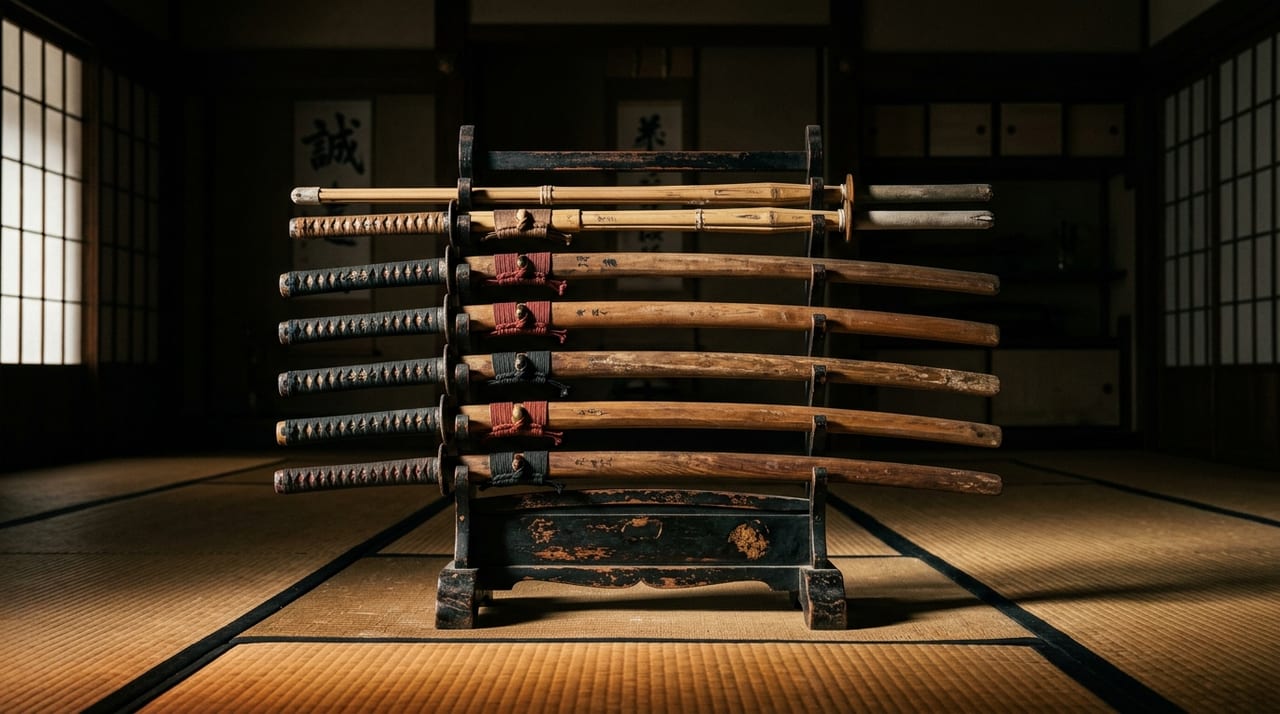 * Image is for illustrative purposes only.
Table of Contents
During the Edo period, hundreds of kenjutsu schools (and some say more) existed throughout Japan. Although they all used the same weapon—the Japanese sword—each school placed emphasis on different stances, distances, and approaches to the sword itself. This article examines the relationship between kenjutsu schools and Japanese swords from the perspective of the characteristics and training systems of representative schools.
What Are Kenjutsu Schools?
A kenjutsu school is a tradition of martial art that systematizes combat techniques with swords and transmits them from master to student. During the Sengoku period, it developed as a technique that determined life and death in actual combat. However, as the Edo period began and peace lasted for a long time, kendo became not only a technique for actual combat but also increasingly characterized as a means of spiritual cultivation and personal refinement. Each school transmitted its own kata and established progressive stages of training such as catalogs, licenses, and full transmission, creating systems to systematically inherit techniques and knowledge.
The lines of schools established throughout the Edo period were diverse, and representative examples alone include Itto-ryu, Shinkage-ryu, Shinto Munen-ryu, Kyōshin Meichi-ryu, Jigen-ryu, Tennen Rishin-ryu, and Niten'ichi-ryu. These schools differed not only in their technical systems but also possessed their own distinctive character in their training methods and how they handled their weapons.
Innovation in Training Systems—The Introduction of Bamboo Swords and Protective Gear
A crucial development in the history of kenjutsu schools was the establishment of training methods using bamboo swords and protective gear. In the mid-Edo period, Naganuma Shirōzaemon of Jikishin Kage-ryu is said to have refined protective equipment such as masks and gloves and developed training methods for practitioners to actually strike each other with bamboo swords. In the same period, Nakanishi Chūzō of Nakanishi-ha Itto-ryu, a branch of Itto-ryu, also refined similar training methods and actively incorporated sparring practice with bamboo swords.
This innovation greatly changed the nature of kendo. Until then, kendo training centered on kata practice using wooden swords, and actual sparring was limited because it was dangerous. However, with the introduction of bamboo swords and protective equipment, it became possible to engage in near-realistic sparring at relatively safe distances, and inter-school competitions became common. This training system also became the foundation for modern kendo.
Among the dojos that flourished in Edo during the late Edo period, the following three dojos are particularly known as the 'three great dojos of Edo.'
- Genbukan—A dojo of Hokushin Itto-ryu established by Chiba Shūsaku. It is characterized by rational and clear teaching methods and is part of the lineage of the Chiba family, from which many patriots including Sakamoto Ryōma studied
- Renpeikan—A dojo of Shinto Munen-ryu established by Saitō Yakurō. Known for its practical spirit, it produced many disciples among late-Edo patriots
- Shigakukan—A dojo of Kyōshin Meichi-ryu established by Momonoi Shunzō. Known for its spirit that valued the beauty of technique and logical principles
How Different Schools Approached the Sword
Different schools showed different approaches to the Japanese sword itself and different characteristics in the wooden and bamboo swords used in training. Jigen-ryu, transmitted in Satsuma, was characterized by the philosophy of putting all one's power into the first strike—a one-hit, one-kill technique. As symbolized by the phrase 'a second strike is unnecessary,' it is said to have placed emphasis on cultivating overwhelming striking power through continuous practice of striking standing trees with wooden swords. Yakumaru Jiken-ryu, which derived from Jigen-ryu, also spread widely among the lower samurai class of Satsuma and was known for its fierce, combat-oriented sword techniques.
Tennen Rishin-ryu, studied by Kondō Isami and Hijikata Toshizō, was traditionally characterized by a rough spirit aimed at field matches and actual combat rather than dojo fencing, and is known as a school that practiced with thicker and heavier wooden swords compared to other schools. It is thought that the character of such schools gained renewed attention as opportunities to actually wield swords increased during the turbulent late-Edo period.
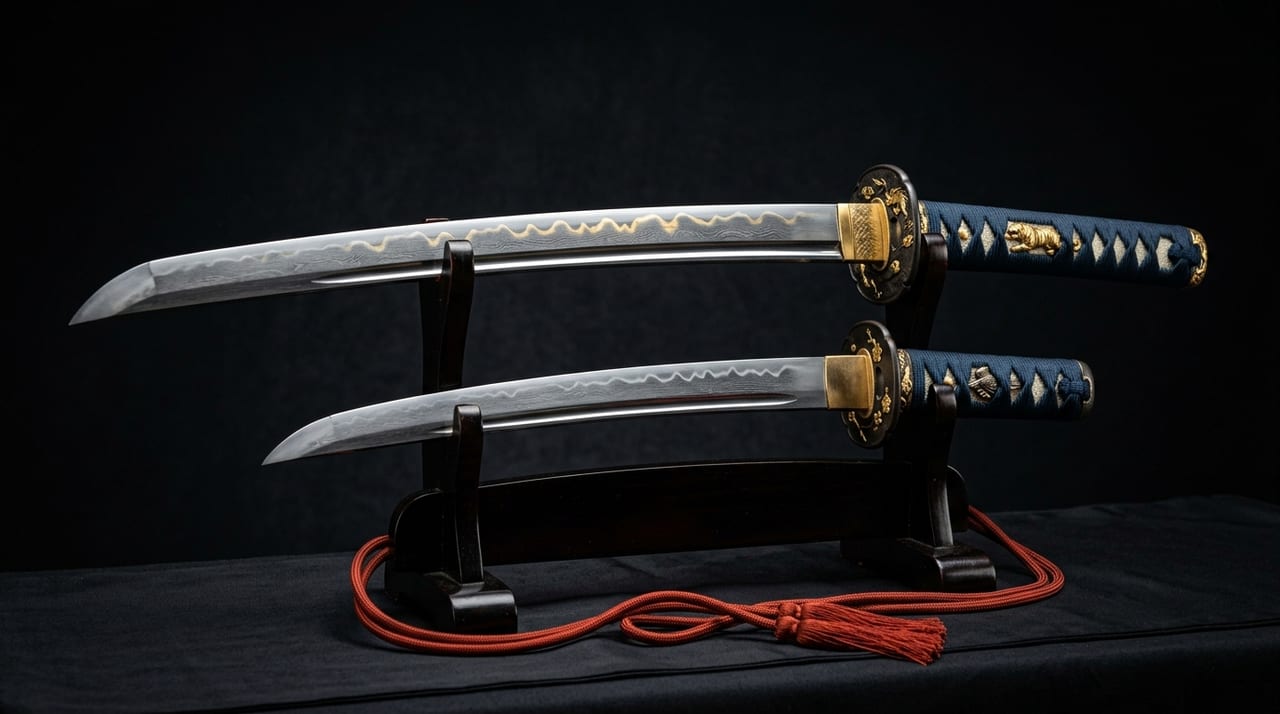
On the other hand, Niten'ichi-ryu, said to have been established by swordmaster Miyamoto Musashi, was characterized by the technique of using two swords—a tachi and a wakizashi—simultaneously. This technique of manipulating two swords of different lengths simultaneously required weight distribution and grip suited to single-handed operation, and is thought to have demanded an approach to the sword different from other Itto-ryu schools. Furthermore, Yagyu Shinkage-ryu, which served as instructor to the Tokugawa shogun, was characterized by training that valued logical principles and spirituality over killing, under the philosophy of 'life-giving sword,' and centered on kata practice using swords of standard length. Shinkage-ryu, the source of Yagyu Shinkage-ryu, was founded by the Sengoku-period strategist Kamiizumi Nobutsuna, and its techniques were transmitted to the Yagyu family, which gained the position of instructor to the Edo shogunate. This exemplifies how kenjutsu schools were deeply connected to the order of samurai society.
School Individuality as Seen in Training Equipment
Real swords used in actual combat and wooden and bamboo swords used in daily training require different characteristics. The individuality of each school was clearly reflected in the differences in training equipment.
- The length, weight, and flexibility of bamboo swords were refined uniquely for each school, and differences in preference according to school lineage remained even in later kendo
- The thickness and weight of wooden swords also differed among schools, and schools that emphasized practical striking power tended to use thicker and heavier wooden swords
- Schools that valued kata practice used wooden swords with dimensions and weight distribution close to real swords to pursue precision in logical principles
- As inter-school competitions spread, bamboo sword standards underwent some standardization, but the kata practice unique to each school remained largely unchanged until the end of the Edo period
In this way, the differences among kenjutsu schools were reflected not only in differences in kata but also in the nature of the weapons used in training and in the approach to actual combat swords itself.
Transmission to Modern Times
Many schools declined during the Meiji period under the Sword Abolition Act and the tendency to prohibit martial arts, but some schools have been transmitted to the present day with changes in form. The training system using bamboo swords and protective equipment became the foundation of modern kendo and developed into kendo as school physical education and sport. Meanwhile, schools that transmit the forms of traditional kendo to the present day remain in various locations, and continue to pass on the techniques and spirituality of the Edo period and beyond to future generations through kata practice using real swords and training swords.
The fact that such diverse schools and training systems have been cultivated around a single weapon—the Japanese sword—is testimony to how the Japanese sword was long revered not merely as a weapon but as a bearer of spiritual culture.