The Teradaya Incident (1866) and Swords: The Reality of Blades in the Attack on Sakamoto Ryoma
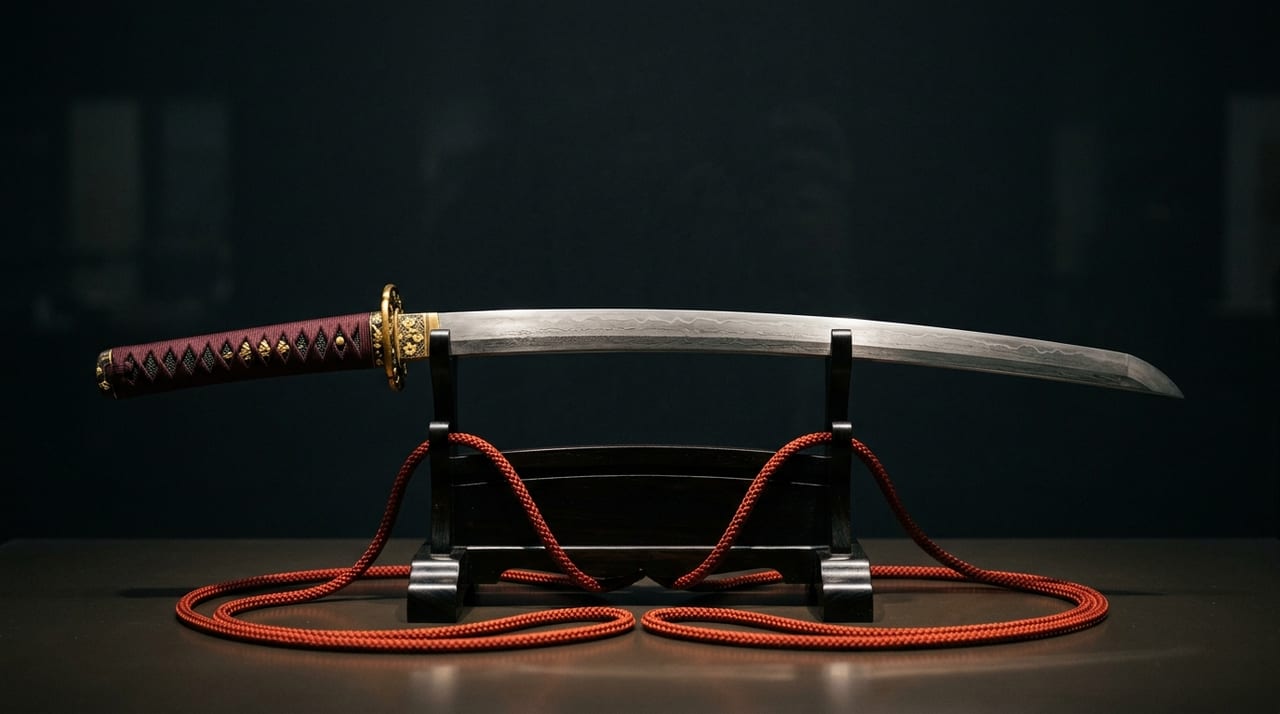 * Image is for illustrative purposes only.
Table of Contents
In the deep of night on the 23rd day of the 1st month of Keiō 2 (March 9, 1866), an incident occurred in which Sakamoto Ryoma was attacked by constables under the Fushimi Bugyo at the inn Teradaya in Fushimi, Kyoto. Known as the Teradaya Incident or the Teradaya Disaster, Ryoma fought back with a pistol and barely managed to escape, yet the record of this night remains as a precious clue that concretely conveys what weapons the bakumatsu activists actually carried and how they fought.
Background and Course of Events
Events bearing the name Teradaya occurred twice in the bakumatsu period and are easily confused. At Teradaya in 1862, an incident occurred in which radical faction samurai of the Satsuma clan were pacified by their fellow clansmen, or effectively purged; this one is often distinguished by being called the Teradaya Disturbance. The incident of 1866 that we take up this time is a separate attack in which Sakamoto Ryoma was the target.
The incident occurred precisely two days after the Satsuma-Choshu Alliance, which Ryoma rushed about as intermediary to establish, was concluded at the Satsuma clan residence in Kyoto. Ryoma was lodging at Teradaya in Fushimi. Staying with him was Miyoshi Shinzō, a samurai of the Chofu clan, a branch of the Choshu clan, known as a person skilled in spear technique. O-Ryu, who was later to become Ryoma's wife and who was working under the innkeeper Otose, was attending to his personal needs. The Fushimi Bugyo, which had been investigating Ryoma's movements beforehand, dispatched a group of constables numbering in the dozens to Teradaya in the dead of night and secretly surrounded the inn, which stood by the river.
The Reality of Ryoma and Miyoshi Shinzō's Defense with Swords and Pistols
It is said that O-Ryu was the first to notice the disturbance. The anecdote that she, while bathing, heard a sound downstairs and ran up to the second floor naked to alert Ryoma and Shinzō of the danger is widely known. Against the constables who rushed in, what Ryoma took in hand was not a sword but a Smith & Wesson pistol that he had obtained. Though sustaining deep wounds to the fingers of both hands in close-range combat, Ryoma continued firing to open a way out. At the same time, Shinzō took up his spear and fought vigorously, protecting Ryoma while buying time for their escape. The essentials of the defense on this night are summarized in the following two points.
- Ryoma's weapon was not a sword but a breech-loading repeating pistol, with which he fought back by firing despite being wounded
- Miyoshi Shinzō's weapon was a spear, with which he traded blows with the constables while assisting Ryoma's escape
Ryoma's beloved sword is known to be attributed to the maker Mutsu no Kami Yoshiyuki, and as a work of a swordsmith associated with the Tosa clan, it is presently held in the collection of the Kyoto National Museum. However, in the one night at Teradaya, the primary weapons of defense were the pistol and spear, and the sword did not play a decisive role. The Smith & Wesson pistol that Ryoma carried is said to have been a gift from Takasugi Shinsaku, a Choshu samurai, and is also known as an example of imported pistols that circulated among activists in western Japan after the opening of the country. The fact that the sword, which had been regarded as the soul of the warrior, yielded its starring role to a new-type repeating pistol in this scene vividly demonstrates the nature of armament in the transitional period of the bakumatsu. Wounded with deep wounds, Ryoma eluded the pursuit of the constables by hiding in a lumber shed in Fushimi, and later barely escaped the ordeal by seeking protection at a nearby Satsuma clan residence in Fushimi.
The Historical Context of Bakumatsu Activists' Sword Bearing and Armament
Many bakumatsu activists were in the unstable position of ronin who had abandoned their clans, and not a few lacked the formal right to carry swords under the original samurai code. Nonetheless, it was customary for activists to wear a katana and wakizashi at the waist, and it is said that there was a tendency to prefer slender blades close to the standard length of around 2 shaku 3 sun, emphasizing mobility. The prioritization of ease of carrying in consideration of long-distance travel on foot and melees, and the emphasis on utility over decorativeness, can also be pointed out as characteristics of swords in this period. On the other hand, it was also a period when Western-style pistols that had flowed in via Yokohama and Nagasaki after the opening of the ports were rapidly spreading among activists operating in the Kyoto-Osaka region. The Teradaya Incident is an example of this, and can be positioned as a scene symbolizing a turning point in bakumatsu sword history, when traditional weapons such as swords and new-style imported weapons such as pistols coexisted at the same site. It is also said that the constables attempted suppression not only with their traditional tools like jitte and sasumata but also by drawing their swords, and we cannot overlook the point that the scene was one in which traditional arresting tools and swords were intermingled.
The Incident's Influence and Transmission to Posterity
Ryoma, who had escaped death by a hair's breadth, is said to have later traveled to the hot springs in the mountains of Kirishima in Kagoshima with O-Ryu, who became his wife at the urging of Saigo Takamori, and this journey is sometimes spoken of as Japan's first honeymoon. The Teradaya Incident strengthened the bond between Ryoma and the Satsuma clan and became one of the factors that heightened Ryoma's presence in the political situation that would soon move toward the return of power to the throne. Behind the response of the Satsuma clan residence in Fushimi that protected Ryoma is said to be the intention of the samurai Saigo Takamori, and Ryoma was subsequently sent to Kagoshima via Osaka on a Satsuma clan steamship. The extant building of Teradaya is said to have been rebuilt after being destroyed in the Battle of Toba-Fushimi, and today many people visit it as a historic site in Fushimi.
Ironically, about one year and ten months after this incident in which Ryoma's life was saved by a pistol, he was attacked by assassins at Omiya in Kyoto on the 15th day of the 11th month of Keiō 3 (December 10, 1867), and fell to a sword strike. At Teradaya, a pistol protected Ryoma in place of a sword, while at Omiya a sword took Ryoma's life. This contrast tells of how, in the bakumatsu era when the center of gravity of armament was shifting from swords to modern weapons, the sword nonetheless continued to be a weapon that determined life and death to the very end. From the perspective of swords, the Teradaya Incident is remembered as a case that transmitted the turning point of armament in the bakumatsu era, when the sword, the symbol of the warrior, stepped down from its starring role in actual combat, and pistols and spears played scenes determining life and death.