The Mimawarigumi and Swords — The Duties of the Kyoto Mimawarigumi and the Circumstances of Their Sword-Bearing (The Connection to the Assassination of Sakamoto Ryōma)
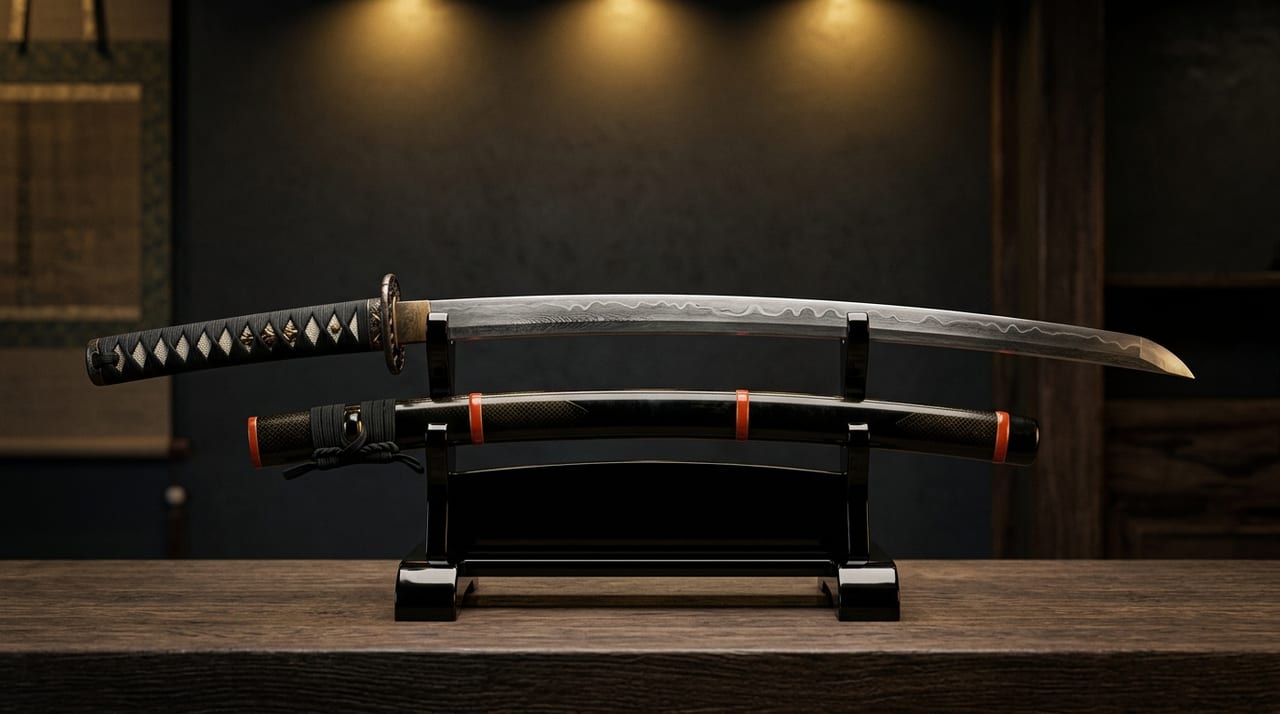 * Image is for illustrative purposes only.
Table of Contents
The Founding of the Mimawarigumi — The Cornerstone of Order That the Shogunate Demanded of Its Direct Retainers
In Genji 1 (1864), the Edo shogunate established the Mimawarigumi as a new institution responsible for maintaining public order within Kyoto. The year before, in Bunkyū 3 (1863), the Mibu Rōshigumi (later the Shinsengumi), formed for the purpose of controlling rōshi, had already been organized; however, the shogunate had a separate need for a regular security force composed of hatamoto and gokenin of more certain samurai status. As the situation in Kyoto grew increasingly tense, it was urgent to establish an active force of direct retainers who could embody the prestige of the shogunate.
The practical command of the Mimawarigumi is said to have been held by Sasaki Tadasaburō, who served as a group commander of the Kyoto Mimawarigumi. During the brief period spanning Genji through Keio, the Mimawarigumi operated with the primary duties of guarding Kyoto and monitoring and suppressing the sonnō jōi faction, endeavoring to maintain the shogunate's public order in an age of turmoil.
Differences from the Shinsengumi — The Official Basis for Status and the Right to Bear Swords
The Mimawarigumi and the Shinsengumi are both known as organizations engaged in maintaining public order in Bakumatsu Kyoto, yet there was a fundamental difference in character between the two. The main points of distinction may be summarized as follows.
- Mimawarigumi: Composed of hatamoto and gokenin, direct retainers of the Tokugawa family. The right to bear swords was an official qualification rooted in their status, and their standing as a formal organ of the shogunate was clearly established.
- Shinsengumi: A rōshi organization in which many members, including Kondō Isami and Hijikata Toshizō, did not come from samurai backgrounds. They obtained an official standing under the nominal custody of the Aizu domain. Many members are said to have newly purchased or borrowed shintō or shinshintō blades to carry.
This difference in status is thought to have been reflected not only in the positioning of each organization but also in the provenance of the swords their members carried. Members of the Mimawarigumi, who came from hatamoto and gokenin backgrounds, were likely to have carried swords inherited across generations as ancestral heirlooms or blades bestowed upon them by their lords as gifts. The bearing of swords went beyond a mere function as weapons and served as a symbol of family lineage and samurai standing, making the provenance of a sword inseparable from the status of its bearer.
The State of Swords in the Keio Period — An Era Where Combat and Formality Intersected
The Genji and Keio periods in which the Mimawarigumi was active coincided with a time when the shinshintō that had spread since the late Edo period was widely in use. Uchigatana of this era were generally characterized by a style with a wide mihaba, conscious of practicality, and swords suited to urban patrols and close-quarters combat were in demand. The tōkō of Kyoto responded to vigorous demand against the backdrop of the unrest, and there were many opportunities for loyalists and samurai to have new swords made or to purchase them.
At the same time, new-style weapons such as pistols were rapidly spreading even among the sonnō jōi and loyalist factions, and while swords retained their dominant standing as primary combat weapons, a diversification of arms was underway. It is well known that Sakamoto Ryōma himself carried a pistol for self-defense, and it is said that on the night of the Ōmiya Incident he attempted to reach for his pistol but was unable to do so in time. The period of the Mimawarigumi's activity embodied exactly the transitional state in which swords, while remaining symbols of their bearers' status and standing, were shifting toward being carried alongside a variety of other weapons in actual combat.
The Ōmiya Incident — The Shadow of the Mimawarigumi over the Assassination of Sakamoto Ryōma
On the 15th day of the 11th month of Keio 3 (1867), Sakamoto Ryōma and Nakaoka Shintarō were attacked by unknown assailants at the Ōmiya in Kawaramachi, Kyoto; Ryōma died on the spot, and Nakaoka also died several days later. This "Ōmiya Incident" has been passed down to the present day as one of the most renowned assassination events in Bakumatsu history.
In the immediate aftermath of the incident, the view that it was the work of the Shinsengumi spread widely, but the situation changed dramatically after the Meiji Restoration. Imai Noburō, a member of the Mimawarigumi, made a statement admitting that he had personally taken part in the attack. This testimony led to the theory of Mimawarigumi involvement gaining credibility, and Sasaki Tadasaburō's name was raised as the mastermind. However, there remain unclear points in Imai's statement, and discrepancies with other testimonies have also been pointed out. Sasaki Tadasaburō, named as the mastermind, is said to have been wounded in the Battle of Toba-Fushimi, which occurred in Keio 4 (1868), the year after the incident, and to have died shortly thereafter; thus, the details of the incident were never spoken from his own lips.
Unresolved Mysteries and Present-Day Assessment
Regarding the Mimawarigumi's involvement in the Ōmiya Incident, the following points remain subjects of debate today.
- The credibility of Imai Noburō's testimony —— The content of the testimony changed over time, and questions have been raised about its consistency.
- The crime scene on the night of the incident —— Confusion arose at an early stage regarding the ownership of the saya found at the scene, and the records of the on-site investigation also remain fragmentary.
- Chain of command —— It is not clear whether Sasaki Tadasaburō acted on his own judgment or whether the intentions of the upper levels of the shogunate lay behind his actions.
- Relations with the Shinsengumi —— The theory that the two organizations cooperated in some form remains persistent among researchers.
Current historical document research has not yet arrived at a definitive answer to these questions. The multifaceted uncertainty of the incident continues to generate room for various interpretations in historical novels and visual works of later generations, and it remains an important unresolved question in Bakumatsu history, drawing the interest of both researchers and history enthusiasts alike.
The Dissolution of the Mimawarigumi and Its Place in Sword History
After the Battle of Toba-Fushimi in Keio 4 (1868) and the withdrawal of the former shogunate forces, the Mimawarigumi also concluded its role and was dissolved. Its period of activity spanned only a few short years, from Genji 1 through Keio 4, and compared to the Shinsengumi, it has had fewer opportunities to be taken up in later creative works. Nevertheless, the fact that the Mimawarigumi embodied the system of formal public order maintained to the last by the hatamoto and gokenin — direct retainers of the Tokugawa family — and that this organization is inextricably linked to the assassination of Sakamoto Ryōma, one of the greatest mysteries in Bakumatsu history, is a fact that cannot be ignored in Bakumatsu historiography.
The swords carried by the members of the Mimawarigumi are also, in a sense, historical witnesses that convey the true image of the samurai who lived through an age of turmoil. Historical documents that would allow us to identify individual tōkō names and provenances are scarce, but the character of the Bakumatsu shinshintō — combining both practicality and formality — overlaps in many ways with the character of the Mimawarigumi as an organization composed of hatamoto and gokenin. As the samurai order that the shogunate had built up over many years was in the process of dissolution, swords too remained present as witnesses at each turning point of the age.