The Shikkake School: Lineage and Style of a Swordsmith Group Among the Five Yamato Schools
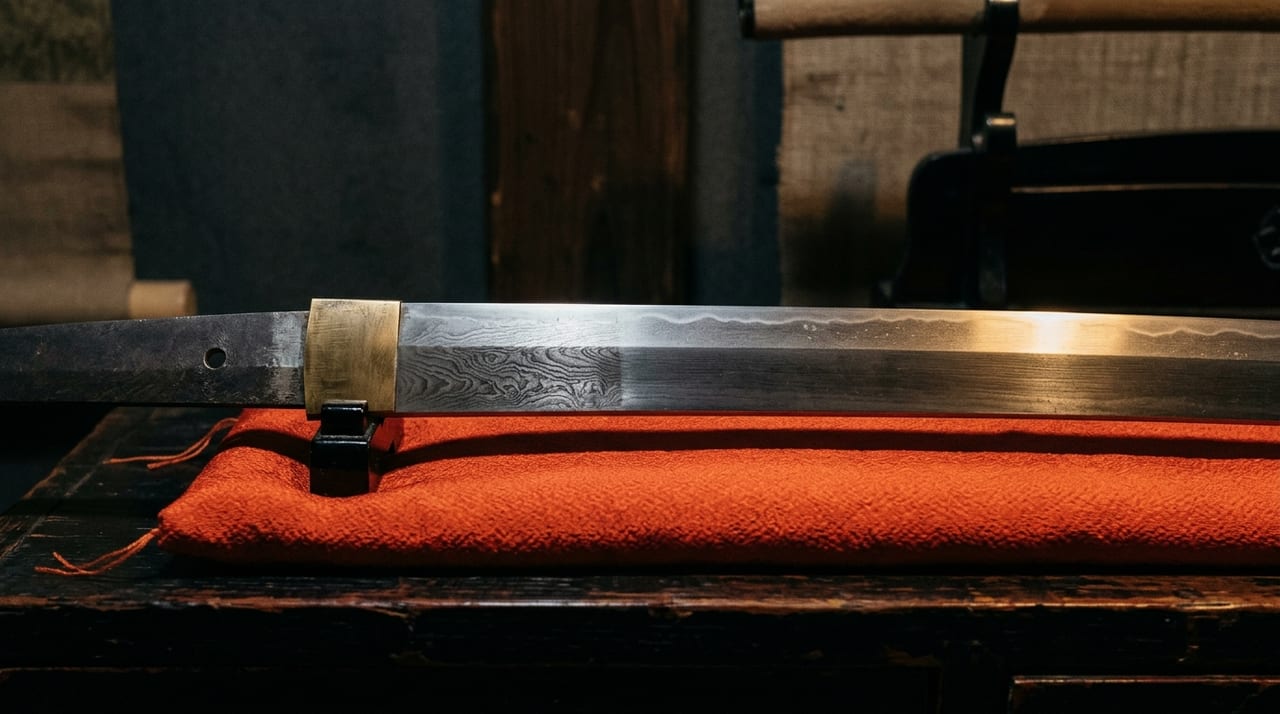 * Image is for illustrative purposes only.
Table of Contents
The Tōdai-ji Toponym That Became a School Name—Origins and Historical Background of the Shikkake School
The Shikkake School was one of the Yamato Five Schools that arose in Yamato Province (present-day Nara Prefecture). The Yamato Five Schools is a collective term for five groups of sword makers: the Senjuin School, Taima School, Tegai School, Hōshō School, and Shikkake School, all of which developed while being deeply connected to the religious institutions and shrines of Nanto. The name Shikkake School is said to derive from a place name "Shikkake" that reportedly existed behind Tōdai-ji Temple, suggesting that the school's base was established in this location.
Nara was a religious center with a concentration of major temples and shrines, including Kōfuku-ji, Tōdai-ji, and Kasuga Taisha. The major temples of Nanto in the medieval period maintained large numbers of warrior monks, and this created a constant demand for swords to maintain their armaments. Behind the development of the distinctive Yamato tradition were the special demand created by these religious institutions and the geographical conditions that allowed sword-making groups to concentrate in the area. At that time, Yamato was in an era when the religious authorities of Nanto controlled vast estates backed by their own military forces, and sword makers refined their techniques under the patronage of temples. The Shikkake School was a group of sword makers that took shape as a school within this environment.
From Norihiro to Norinage—The Sword Makers Who Established a School
While Norihiro is said to be the founder of the school, it was his legitimate son Norinage who established the distinctive style and engraved the name "Shikkake School" in sword history. Norinage is known to have surviving works bearing dates from the late Kamakura period through the Nanbokuchō period, and the transmission of multiple dated works itself suggests that the Shikkake School was a workshop with an organized production system.
Although the lineage is said to have continued after Norinage, most works transmitted to later generations are known by his name, and effectively he became the representative figure of the school. The period from the late Kamakura through the Nanbokuchō era was a time of rapid change in warrior society, when both the demand for and appearance of swords underwent significant transformation. Amid the demand for grand and imposing ōdachi in this era, the Shikkake School continued to produce swords capable of withstanding actual combat while preserving the techniques of the Yamato tradition.
The Shikkake School Among the Yamato Five Schools—The Individuality of Each
While all the Yamato Five Schools shared the common foundation of the Yamato tradition, each developed its own character through differing connections with religious institutions and distinctive expression in the jigane. The characteristics of each school can be roughly summarized as follows.
- Senjuin School: Said to be the oldest of the Yamato Five Schools, with a history dating back from the late Heian period to the early Kamakura period
- Taima School: Had deep ties with Taima-ji Temple and was based in southern Yamato
- Tegai School: Had its base near the Tegai Gate of Tōdai-ji Temple and was characterized by masame forging
- Hōshō School: Said to be distinctive among Yamato tradition schools for its masame skin
- Shikkake School: While located near Tōdai-ji, it possessed a distinctive jigane expression incorporating mokume different from the Tegai School
The Shikkake School, while based near Tōdai-ji, developed distinctive variations in jigane different from those of the Tegai School. The fact that multiple schools developed distinct characters while basing themselves in close proximity symbolizes the diversity contained within the single Yamato tradition. The process by which subtle differences in location led to differences in style, even while developing in the same Nanto environment, can be said to be a fascinating phenomenon when considering the technical formation of medieval sword-making groups.
"Shikkake Skin" and Blade Pattern—The Individuality of Forging Style
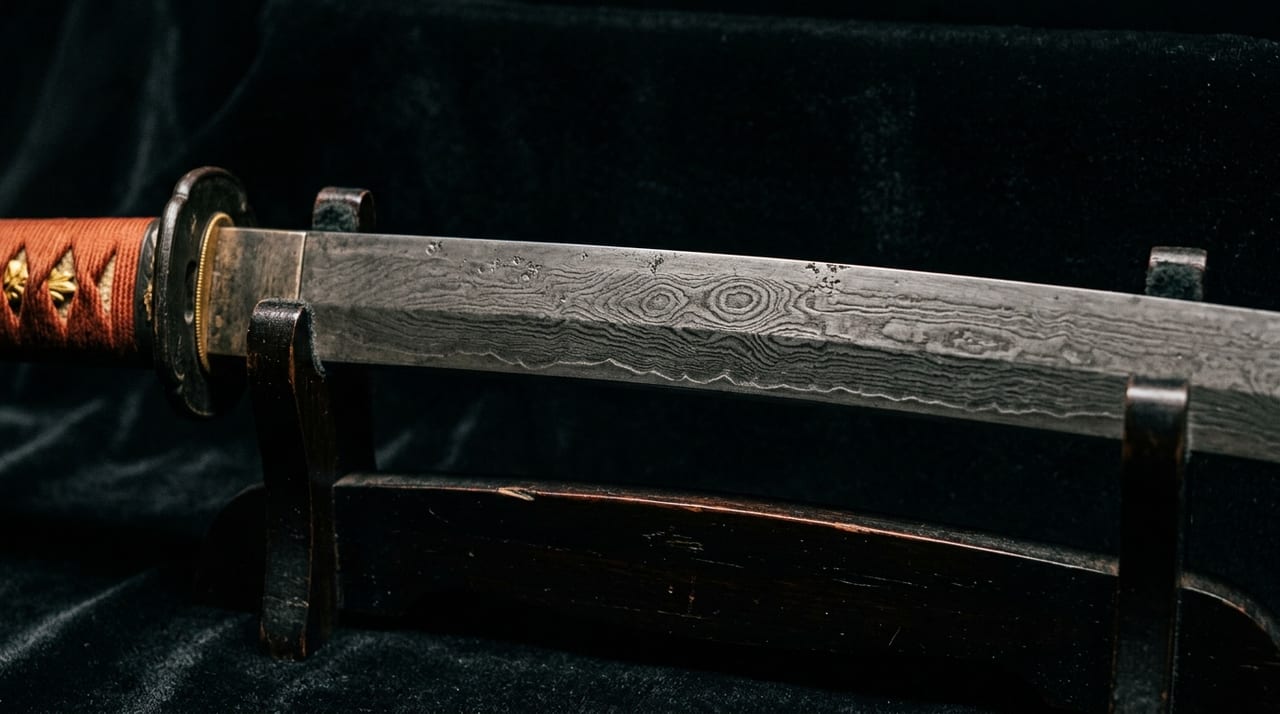
The jigane of the Shikkake School displays a distinctive variation called "Shikkake skin." Building on the masame-based forging common to the Yamato tradition, it is characterized by a composition in which mokume flows into itame, with the surface changing from mokume skin near the spine to masame skin near the edge depending on location. This characteristic of maintaining non-monotonic variation in the jigane has been valued in authentication as one way to distinguish the Shikkake School from other Yamato-tradition sword makers.
The hamon features suguha as its basis, with works showing ko-gunome intermixed. Some works include tobiaki, and within the solid and robust style characteristic of the Yamato tradition, varied expression remains evident. The grand shinogi-zukuri shape, thick kasane, and sturdy construction meet the requirements of a practical combat blade for warrior monks, while the jigane and hamon together create a realm of sophisticated craftsmanship.
Norinage's Surviving Works and Cultural Property Designation
One of Norinage's representative works, a tachi, is designated as an Important Cultural Property and is housed in the Kurokawa Institute of Ancient Cultures in Nishinomiya City, Hyōgo Prefecture. It is known as an example showing a grand appearance characteristic of Yamato works, with high sori and wide shinogi. Its hamon, featuring suguha as the base with ko-gunome intermixed and reportedly showing tobiaki, well represents the style of the Shikkake School.
The survival of dated works has important significance for empirically understanding the active period of the sword maker. Among sword makers of the koto period, many whose active periods are difficult to determine, Norinage's existence—with multiple dated works transmitted—serves as a reference point for confirming the activity of the Shikkake School. The very fact that such works have been preserved to the present day can itself be said to attest to the high technical level of the school.
An Embodiment of the Diversity of the Yamato Tradition
Among the Five Transmission lineages of Japanese swords—Yamato, Yamashiro, Bizen, Sōshū, and Mino—the Yamato tradition is positioned as one of the oldest. The Yamato Five Schools, standing together as bearers of the Yamato tradition, demonstrate how a single transmission lineage can differentiate into diverse individual styles. The Shikkake School was a school that introduced its own distinctive variation within the Yamato tradition's common character of sturdy simplicity through its jigane expression combining masame and mokume.
While not as well-known as the Yamashiro or Bizen traditions, the fact that schools like the Shikkake School, nurtured in local religious centers, supported the stylistic diversity of Japanese swords from below cannot be overlooked. In having lived through the period from the late Kamakura through the Nanbokuchō era—a time when the appearance of Japanese swords underwent dramatic change—and in having left multiple dated works, the Shikkake School remains an indispensable school in recounting the history of the Yamato tradition.
TOUKENZA's online catalog features swords from various schools and periods, including the Yamato tradition. By appreciating and comparing the distinctive characters of the Yamato Five Schools, including the Shikkake School, one should be able to more vividly perceive the depth of the Five Transmissions and the technical differences each school possesses.