Taima School — One of the Yamato Five Schools, the Austere Style Passed Down by the Tōkō Group Associated with Taima-dera
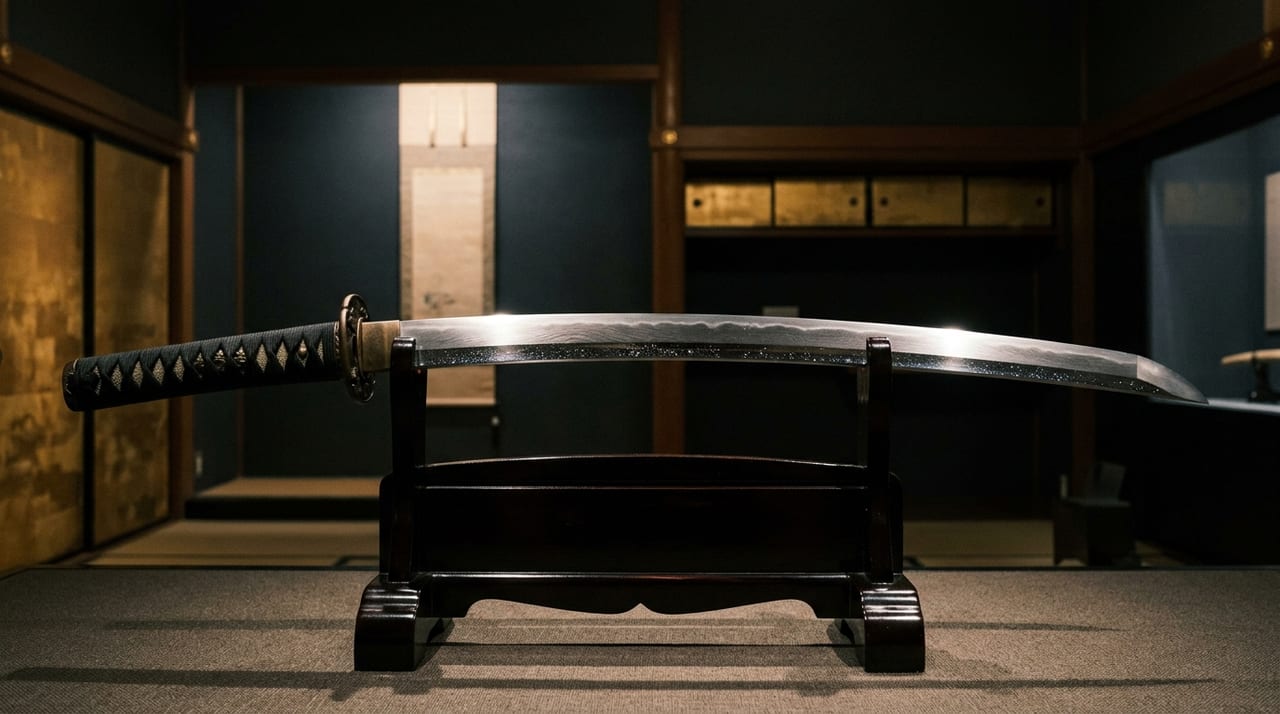 * Image is for illustrative purposes only.
Table of Contents
One of the Yamato Five Schools
The Taima School (taimahai / tōmahai) is a group of tōkō who were active in Yamato Province (present-day Nara Prefecture), and is counted as one of the "Yamato Five Schools" alongside the Senjuin School, the Shikkake School, the Tegai School, and the Hōshō School. True to the Yamato tōkō's close ties with temples, the Taima School too is said to have been associated with Taima-dera.
Yamato was an ancient center of Buddhist culture, and sword production flourished there against a backdrop of demand from warrior monks and similar patrons. Each of the Yamato Five Schools has its own individuality, while all share a tradition of sturdy, unpretentious workmanship.
The Taima School is said to have flourished from the late Kamakura period through the Nanbokuchō period. The manner of Yamato tōkō said to have forged swords in front of temple gates is a distinctly Yamato characteristic that sets them apart from swordsmith groups in other provinces who thrived in castle towns or trading towns.
The Beauty of Masame Jigane and Suguha
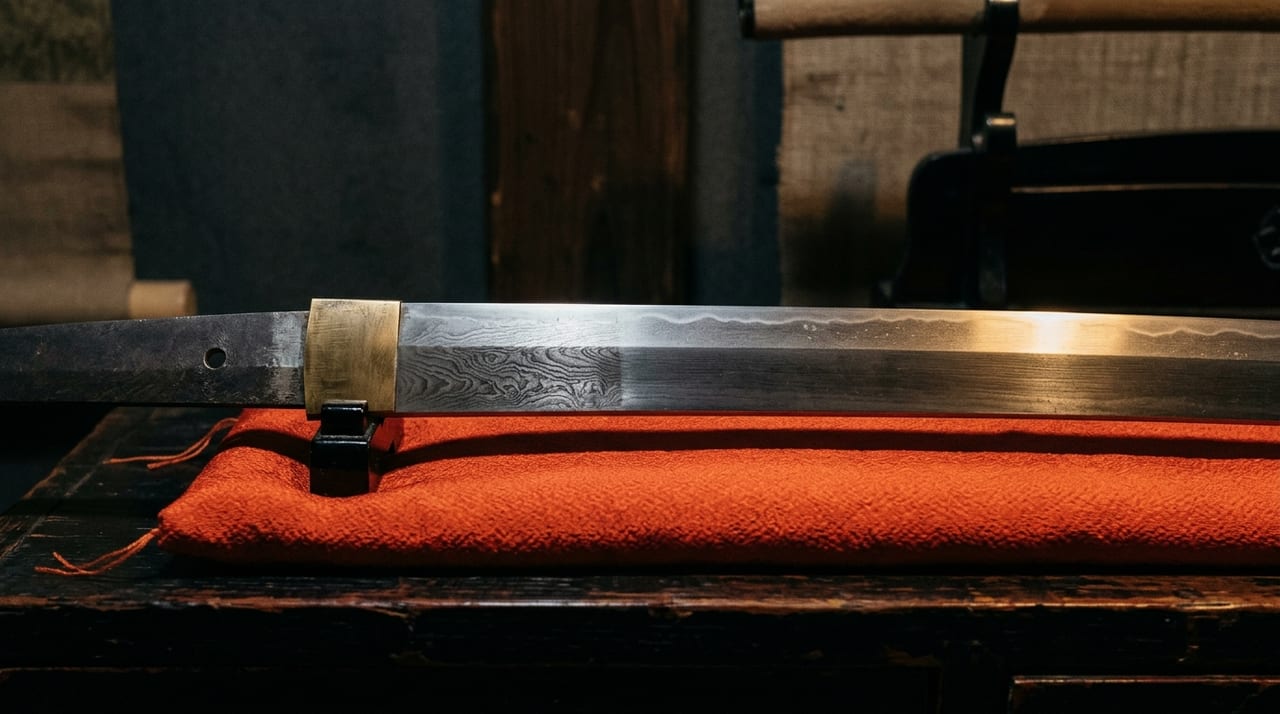
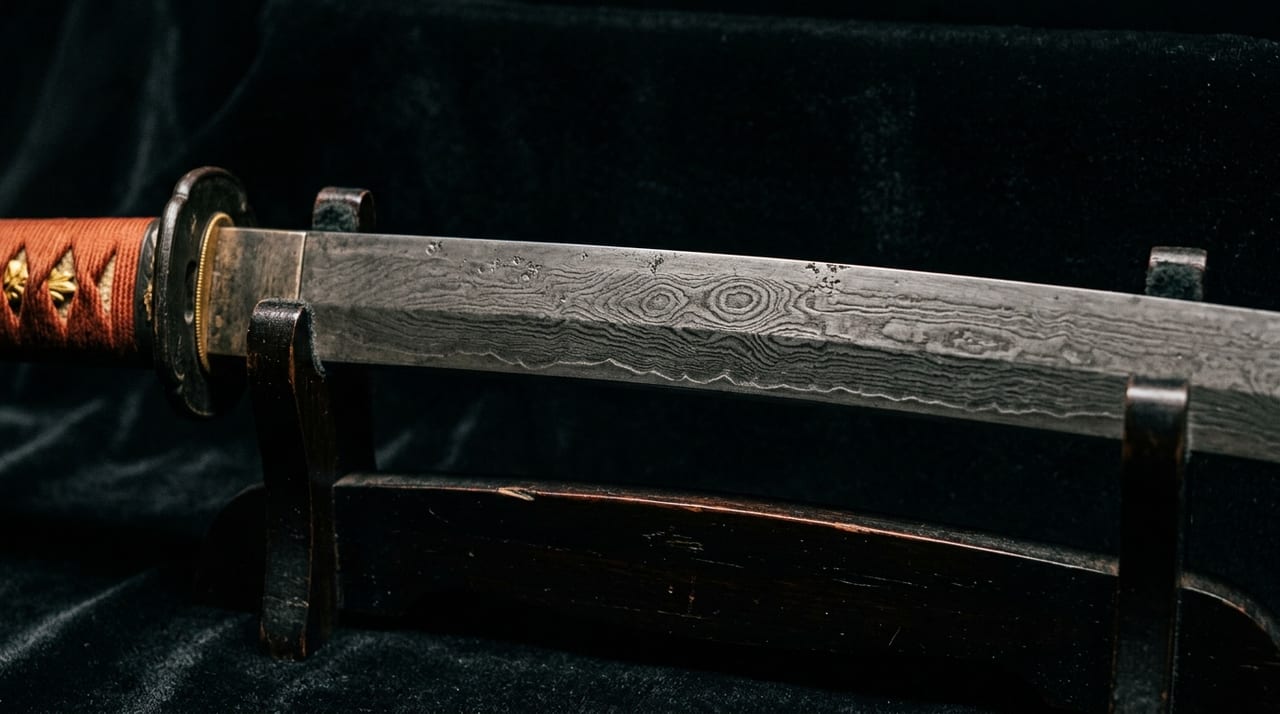
The Taima School's style is said to be characterized by jigane with a masame tendency common to Yamato-den, and a hamon (temper line) based on suguha. The jigane shows flowing masame, and the hamon is known to combine suguha with activities typical of Yamato-mono such as ko-midare, nijūba, and uchinoke.
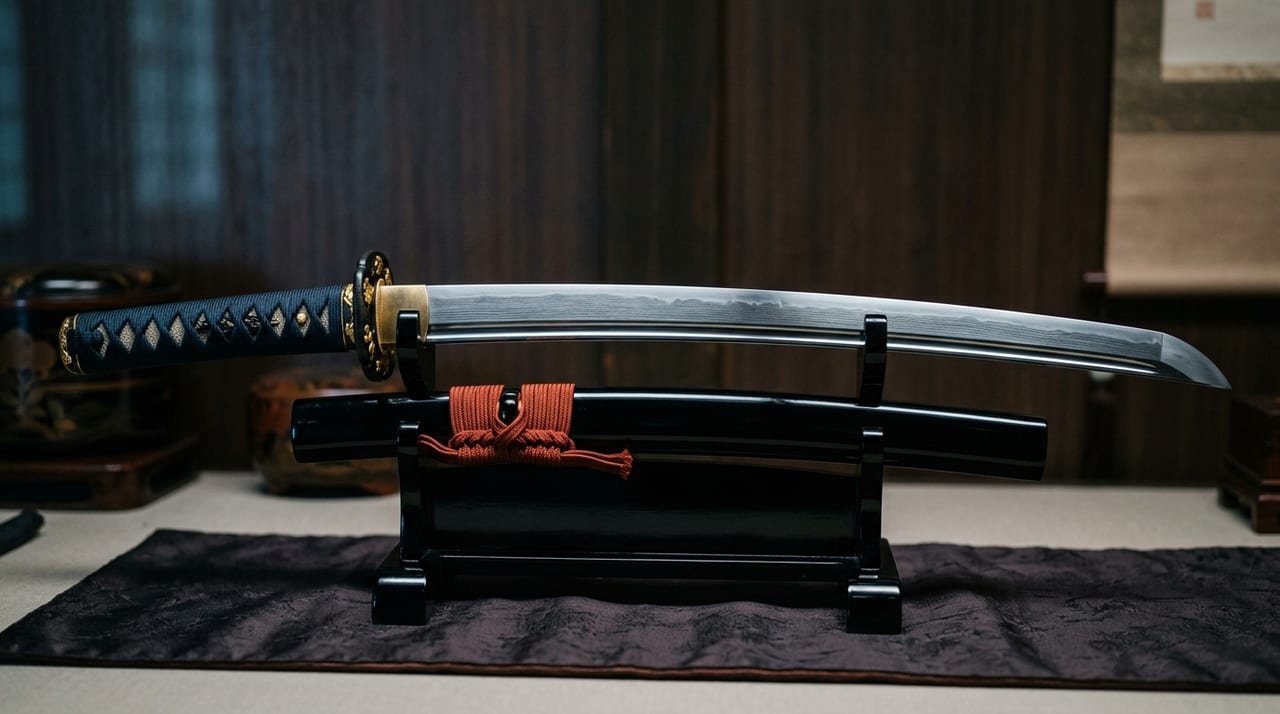
The style, which prizes the quiet harmony of jigane and hamon over showiness, conveys a subdued beauty unique to Yamato-den. Among works attributed to the Taima School, tachi have been passed down that exhibit this austere quality.
Focusing on the Beauty of Nie
The beauty of nie (visible martensite crystals) is often cited as a highlight of Taima School work. Nie refers to the sparkling steel particles visible at the edge and within the hamon; grains large enough to be identified by the naked eye are called nie, while those that blur like a fine mist are called nioi (fine martensite mist). Works of the Taima School are praised for abundant nie and a bright, clear hamon edge. The richness of activity in the jigane and hamon is considered the hallmark of the Taima School.
The basic way to appreciate a sword with nie work is to slowly vary the angle at which you hold it to the light, searching for the sparkle of nie granules along the hamon edge and the streaky or flowing activities that radiate from it into the body of the hamon.
Highlights of the Bōshi and Construction
The hamon in the point of the blade is called the bōshi (temper line in the point). Yamato-mono are said to often have a bōshi that does not turn back at the tip but instead becomes yakizume, and this is considered one of the focal points of appraisal. A high shinogi (ridge line) and wide shinogi area are also considered features common to Yamato-mono. Viewing these together with the masame flowing across the shinogi surface allows one to comprehensively confirm the qualities of Yamato-den.
Position within the Yamato Five Schools
All of the Yamato Five Schools share a common foundation of masame jigane and suguha tendency, yet they show subtle differences in the compactness of the jigane grain, the activities within the hamon, and the manner of nie. The Taima School is sometimes described as showing a relatively nie-rich style among them.
The names of all five schools are said to derive from temples or place names in Nara; for example, the Tegai School is said to take its name from having resided near the Tegai-mon gate of Tōdai-ji. The Tegai School is also discussed in a related column. Tracing these origins alone gives one a sense of how deeply Yamato sword culture was bound up with temples and shrines. Comparing the five schools brings into view the diversity that lives within the great tradition of Yamato-den.
Appreciation Points
When appreciating Yamato-mono such as those of the Taima School, it is worthwhile to look carefully at the flow of the masame jigane and the fine activities mingled within the suguha. Even a work that appears plain at first glance will, on closer inspection, reveal subtle details such as nijūba and hotsure lurking within, and savoring that depth is one of the pleasures of appreciating Yamato-den.
A pitfall in appreciation is assuming that "suguha means monotony" and giving the piece only a glance. The value of Yamato-mono lies not in the showiness of the hamon but in the clarity of the jigane and hamon and the density of their activities. By taking time to view from different angles, there are always scenes that become visible for the first time.
Clues for Distinguishing from Other Den
Contrasting with other den is also useful for understanding Yamato-mono. For example, Bizen-den is known for its flamboyant midare-ba, and Sōshū-den for its richly varied hamon with strong nie; in both cases the variation in the hamon takes center stage in appreciation. Yamato-den, by contrast, is a den that uses suguha as its base and shows itself through the masame jigane and the activities along the hamon edge. Bearing in mind that the individuality of Yamato-den resides in the texture of the jigane and hamon rather than in the shape of the hamon itself will help one develop a settled way of viewing Yamato-mono, including those of the Taima School.
Steps for Deepening Your Learning
If you are learning about Yamato-den through the Taima School as an entry point, the following order is recommended.
- First, grasp the names of the Yamato Five Schools and the common features they share: masame jigane, suguha tendency, and high shinogi.
- Next, compare multiple examples of Yamato-mono in catalogues or photographs, paying attention to differences in the strength of nie and the activities within the hamon.
- When the opportunity arises, view actual blades and confirm for yourself the texture of the jigane and the clarity of the hamon edge that photographs cannot convey.
By alternating between knowledge and direct observation, one gradually comes to appreciate the depth of Yamato-den, which is described as "austere."
Those interested in the styles of the Taima School and the Yamato Five Schools may view and purchase the listed works online. Please feel free to send any questions via the inquiry form.