Shōbu-zukuri — The Form and Eras of a Blade Construction in Which the Shinogi Ridge Runs to the Kissaki Without a Yokote
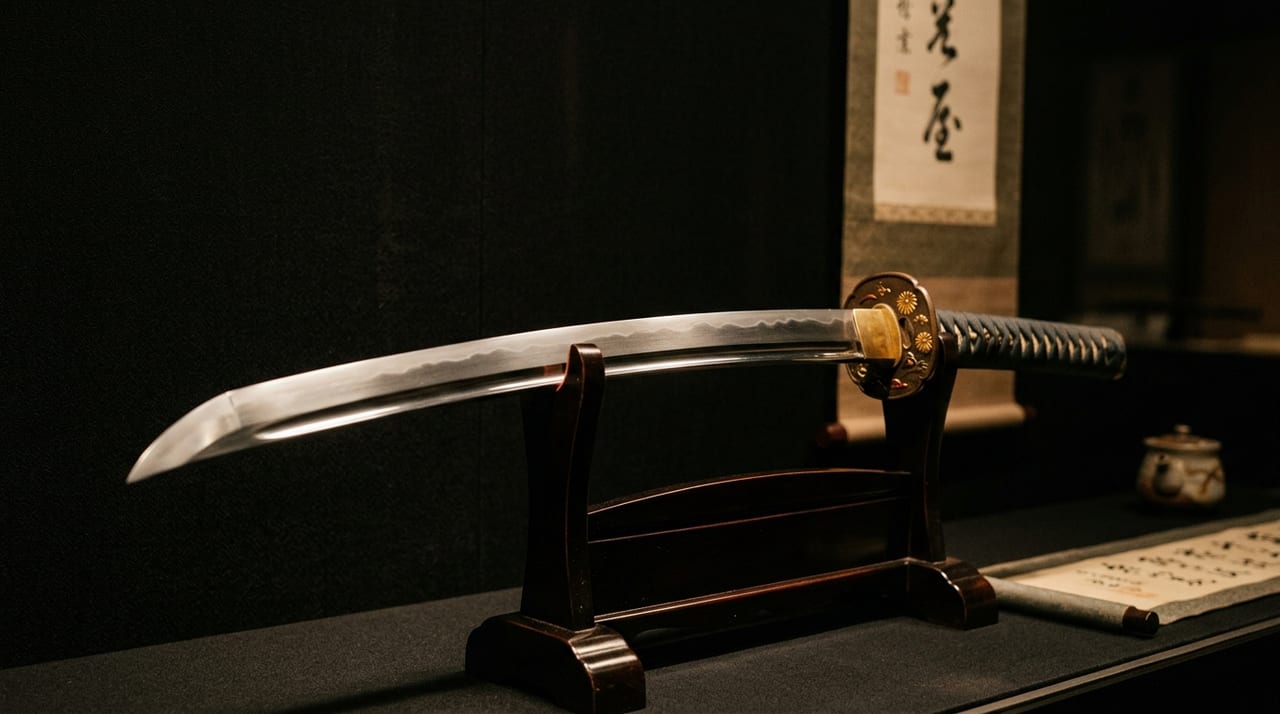 * Image is for illustrative purposes only.
Table of Contents
The "tsukurikomi" (blade construction) of a Japanese sword refers to the three-dimensional structure as seen from the side and in cross-section. Beyond the basic forms such as shinogi-zukuri, hira-zukuri, and kiribazukuri, a number of variant forms evolved in response to different periods and uses. Among these, shōbu-zukuri — despite the elegance of its name — is known as a construction favored by connoisseurs that is difficult to distinguish.
Morphological Characteristics of Shōbu-zukuri
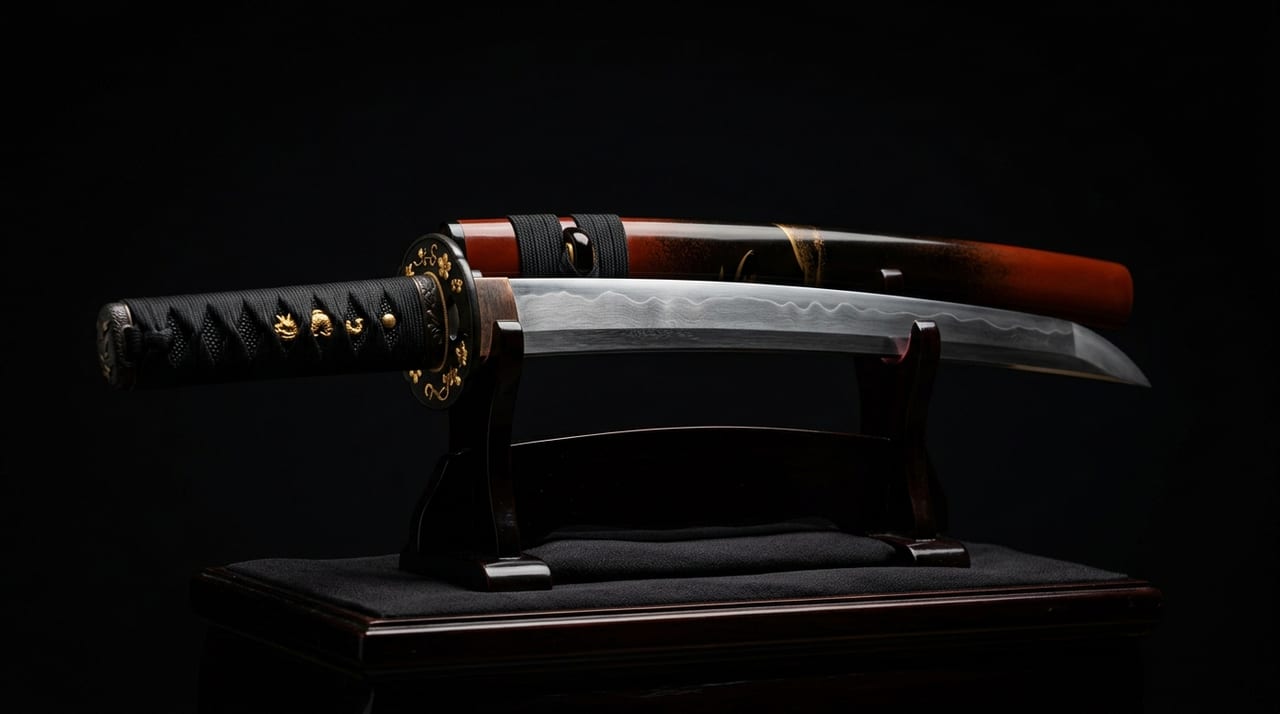
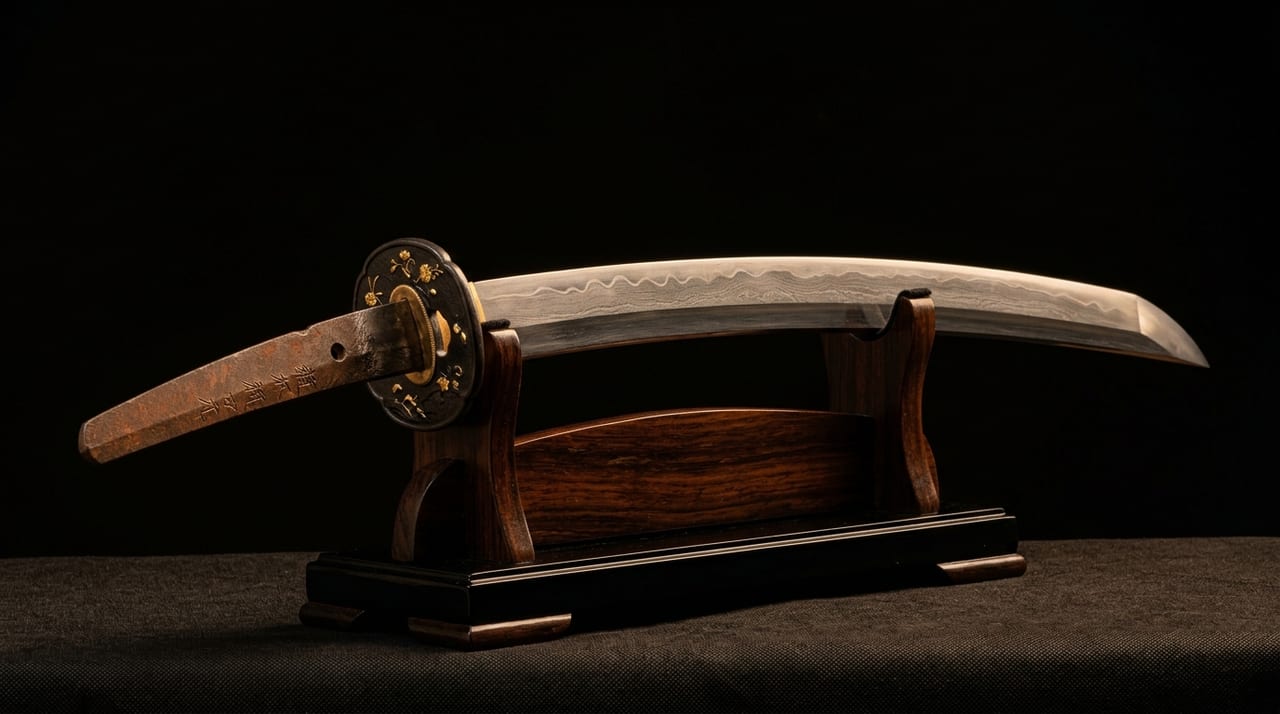
The defining characteristic of shōbu-zukuri is the absence of the yokotesuji (yokote line). In an ordinary shinogi-zukuri blade, a line called the yokote is drawn at the boundary between the kissaki and the body of the blade, beyond which the ko-shinogi and bōshi are formed. By contrast, shōbu-zukuri has no yokote; the shinogi ridge runs in a straight line all the way to the tip of the kissaki. This silhouette — resembling the slender, elongated leaf of the iris — gives the construction its name.
Because there is no yokote, the kissaki and body of the blade form a continuous, unified curve, giving the whole an impression of slenderness and elegance. Since it is a shinogi-zukuri blade yet lacks the visual demarcation of the bōshi, those unaccustomed to observation will find it difficult to distinguish from ordinary shinogi-zukuri.
Differences from Shinogi-zukuri and Unokubi-zukuri
In terms of cross-sectional structure, shōbu-zukuri belongs to the shinogi-zukuri category: it shares the basic form in which a ridge line called the shinogi runs between the blade edge and the mune. The difference comes down to a single point — whether or not there is a yokote. The most practical method of identification is simply: if there is a yokote, it is ordinary shinogi-zukuri; if there is none, it is shōbu-zukuri.
A form easily confused with shōbu-zukuri is unokubi-zukuri. Unokubi-zukuri is a construction in which part of the material on the mune side is cut away to create a constriction resembling the neck of a cormorant, and in this case the change in mune thickness is the key distinguishing feature. Where shōbu-zukuri is identified by "a smooth profile lacking a yokote," unokubi-zukuri is identified by "undulation in the mune." It is worth noting that the axis of observation differs between the two.
Sorting Out Other Variant Constructions
Once one understands shōbu-zukuri, arranging it alongside other variant constructions helps the knowledge take hold.
- Kanmuri-otoshi-zukuri: A construction in which the material on the mune side of approximately the upper half of the blade is shaved thin, seen in tantō and similar swords. It is a concept close to unokubi-zukuri, but differs in how and over what range the material is cut away.
- Morohazukuri: A tantō construction in which a cutting edge is also added to the mune side near the tip, seen in works of the Muromachi period.
- Osoraku-zukuri: A distinctive form in which the kissaki is taken so large that it occupies the greater part of the blade.
Viewing all of these as "variants derived from the basic forms of shinogi-zukuri and hira-zukuri" makes it easier to build an overall picture of blade construction. Variant constructions are few in number, which is precisely why the ability to grasp their meaning accurately when encountered in a product description or kanteisho makes a difference in one's level of understanding.
Periods in Which It Appears and Tendencies Among Known Examples
Shōbu-zukuri is said to appear, albeit rarely, in uchigatana and wakizashi by Bizen kaji and Mino kaji from the middle to late Muromachi period. In terms of numbers it is far from common, and within a landscape dominated overwhelmingly by shinogi-zukuri and hira-zukuri, it is positioned as a construction that appeared as an exceptional and decorative choice.
Why it appeared in this period is not settled by any consensus view, but it is thought to have been one of the design ingenuities intended to introduce variety into the blade's silhouette in an era when sword production had become mass-scale. Because it is difficult to speak definitively about verified provenance or the proper names of designated pieces, understanding of the construction form itself is as far as we go here.
Distinguishing It from Polish Wear — An Easy Pitfall for Misidentification
One thing to watch for in actual appreciation is that shinogi-zukuri blades exist in which years of polishing have caused the yokote to become shallow, making them look at first glance like shōbu-zukuri. The yokote is a line that the togishi reestablishes with each togi, and in blades that have undergone heavy polish wear or repeated re-polishing, the line may have become indistinct.
Where a genuine shōbu-zukuri is designed from the outset without a yokote, a blade in which the yokote has begun to disappear through polish wear will often retain an unnaturalness in the traces of the ko-shinogi and in the volume around the kissaki. When in doubt, it is best to take a comprehensive view — looking at the shape of the bōshi kaeri, whether the width of the shinogi-ji continues naturally to the tip, and how the fukura curves. For merchandise shown in photographs, the first step is to examine the enlarged image of the kissaki area and check whether the yokote is present and the quality of the line.
A Glossary of Terms Useful for Observation
| Term | Meaning |
|---|---|
| Yokotesuji | The line that divides the kissaki from the body of the blade |
| Ko-shinogi | The portion of the shinogi ridge that extends beyond the yokote |
| Fukura | The curve drawn by the blade-edge side of the kissaki. A full, rounded one is described as "fukura tsuku"; a thin one with little spring is described as "fukura kareru" |
| Bōshi | The hamon (temper line) that appears in the kissaki section |
| Shinogi-ji | The flat surface between the shinogi ridge and the mune |
By mastering these basic terms, one becomes able to read accurately the text of sales pages and the entries in kanteisho, and one's precision in identifying blade construction will naturally improve. Learning through repeated reference between terminology and actual photographs is the most efficient approach.
Observation Points in Appreciation
When appreciating or identifying shōbu-zukuri, the first thing to check is whether a yokote line is present near the kissaki. If no line can be found and the shinogi ridge continues smoothly to the tip, the likelihood of shōbu-zukuri is high. Checking also whether the overall mihaba (blade width) is slender and describes a gentle curve serves as a supplementary clue.
Blade construction is a fundamental observation item alongside sori (curvature) and kissaki when reading the silhouette of a blade. Learning even one variant form such as shōbu-zukuri will deepen one's eye for a sword's silhouette by one level. This site lists swords currently offered for sale in its online catalogue with photographs, and it can be used as a starting point for visually comparing differences in blade construction.