Sasumata, Tsukubō, and Sodegarami: Edo-Era Arrest Tools and Their Relationship to Swords
 * Image is for illustrative purposes only.
Table of Contents
The Concept of the Three Tools
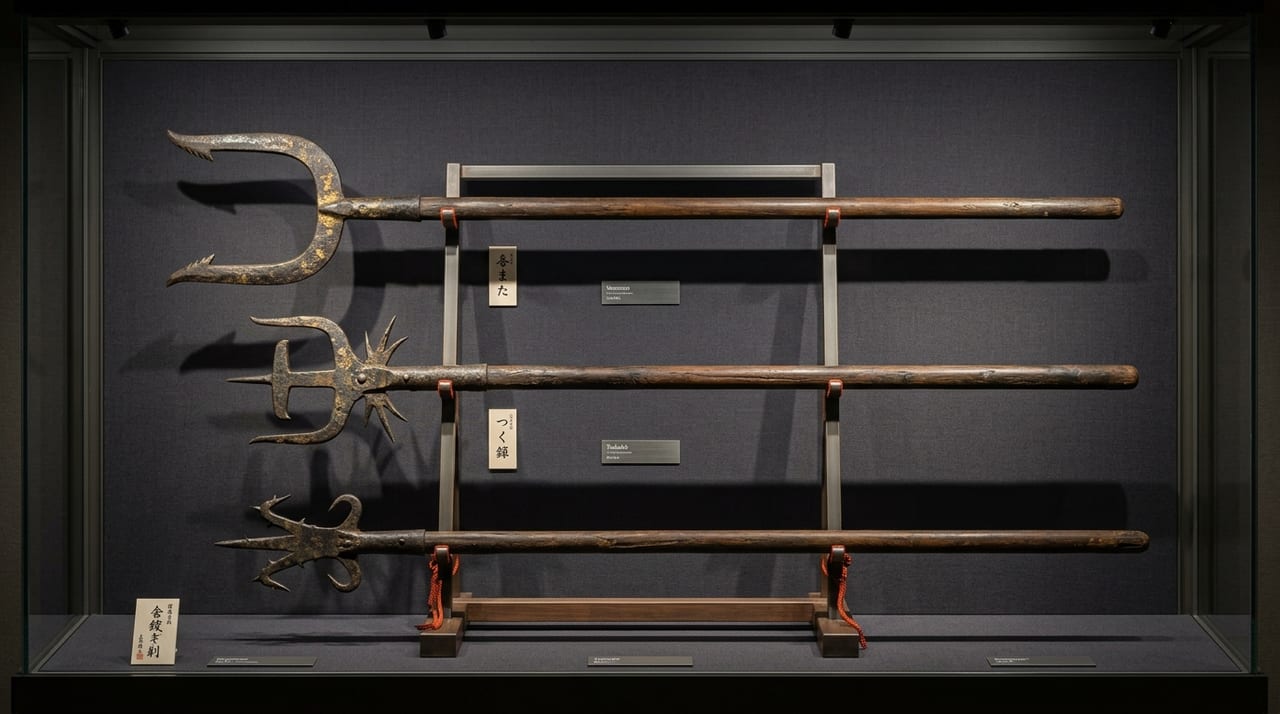
During the Edo period, three types of long-handled restraint tools—sashimata, tsukubo, and sodegurami—were kept in the town magistrate's offices and guard stations. These were collectively called the "three tools" and were used when capturing criminals and violent offenders. A notable feature is that even against opponents carrying swords, the aim was to subdue them with as little bloodshed as possible. Under Edo shogunate rule, even criminals were not to be killed indiscriminately; instead, the basic practice was to capture them alive, interrogate them, and then bring them to trial. The three tools developed as implements for this purpose.
- sashimata: Equipped with a U-shaped metal head at the tip, used to pinch an opponent's neck, arms, or clothing to restrict movement
- tsukubo: A staff with spine-like protrusions at the tip, used to thrust an opponent away and prevent them from approaching
- sodegurami: Metal fittings set with spine-like hooks, used to entangle an opponent's sleeves or sash and pull them down
All had a similar structure with a metal head attached to a long shaft, designed to maintain a distance at which they could not be matched with bare hands or short weapons, while allowing the operator to subdue the opponent. In town magistrate's offices and gatehouse areas of daimyo residences, the three tools were hung as a complete set, ready to be deployed at a moment's notice. The very act of displaying these restraint tools prominently had meaning; they served a deterrent role, daily demonstrating to criminals and violent offenders that "resistance will not go unscathed."
Structure and Use of the Sashimata
Among the three tools, sashimata was particularly well-known. The tip of the staff opened into a U or V shape, with metal fittings set with spines on the inside. This open part would be pressed against an opponent's neck, arms, or clothing to pinch and immobilize them, then pressed against a wall or the ground to restrict movement. Since it had no blade and restrained the opponent's body itself with metal fittings, it had the advantage of being able to stop their movement without inflicting deep wounds. By using the sashimata simultaneously, multiple people could subdue an opponent that one person alone could not hold down. The reason it is still installed as a crime prevention device in schools, police boxes, and public facilities today is that its structural advantage of being able to immobilize a suspicious person without causing injury is still appreciated. The fact that both its name and form have been passed down virtually unchanged since the Edo period speaks to the high degree of perfection of this tool.
Tsukubo and Sodegurami—Pressing and Entangling
The tsukubo was a tool with spine-like protrusions arrayed at the end of a staff, used to thrust an opponent away, maintain distance, and restrict movement. Even when an opponent had a drawn sword, the practical advantage was the ability to prevent them from approaching by exploiting the staff's length from outside their effective range. Since it pressed with multiple spines rather than a cutting edge, it too was unlikely to inflict deep wounds.
The sodegurami, on the other hand, had a head with hook-shaped metal fittings set with spines, used to catch and entangle an opponent's sleeves, sash, hair, and the like. If sashimata is a tool for "pressing down," and tsukubo is a tool for "thrusting away," then sodegurami can be said to be a tool for "catching and taking away freedom." Each of the three had different roles, and by using them in coordination with multiple people, they created a systematic means of responding to opponents carrying swords. In actual arrests, it is thought that the three tools were used in stages: first using the tsukubo to maintain distance and prevent approach, then seizing an opportunity to press down with the sashimata, and finally using the sodegurami to take away freedom.
Relationship with the Jutte and Sword Culture
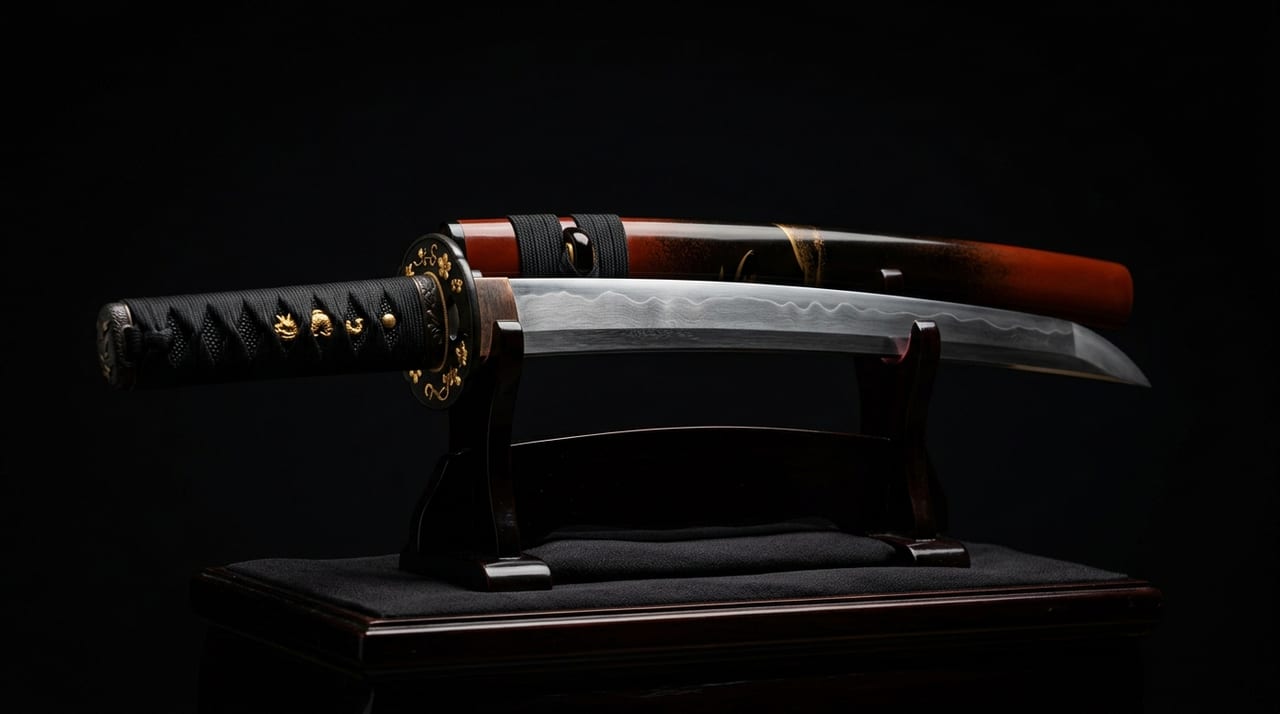
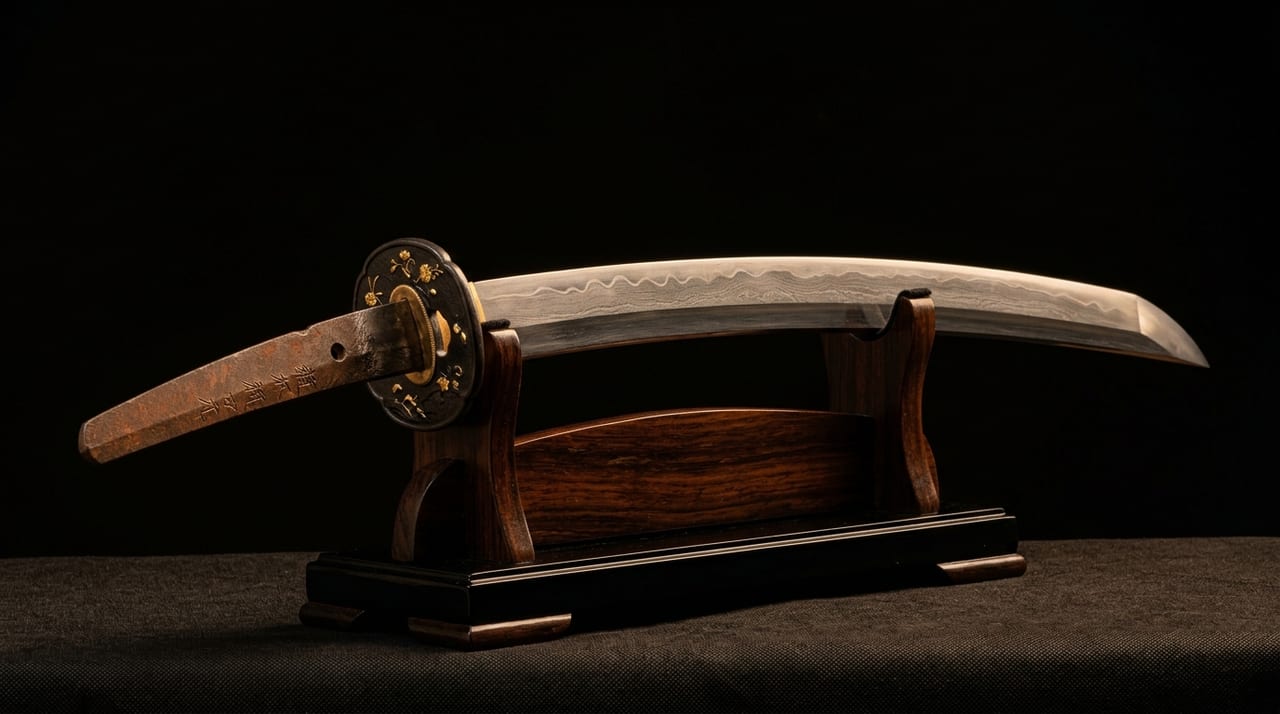
The jutte, carried by doshin and okabikki, was a short iron staff with a hook, known as a personal defense and restraint tool that could parry an opponent's sword or strike them. While jutte-jutsu was a technique for an individual to counter a sword at close range, the three tools were implements of group tactics that maintained distance through long shafts and were used in coordination by multiple people. Edo-period law enforcement was expected to deal with sword-bearing samurai and ronin, and it is believed that the jutte and three tools were used together, sharing roles as implements for restraining targets without causing harm. A coordinated approach in which a doshin controlled an opponent's sword with the jutte while closing distance, and subordinates subdued the opponent with the three tools during that opening, can easily be envisioned as a method of arrest at that time.
The Edo Approach to Arrest: "Capture Alive"
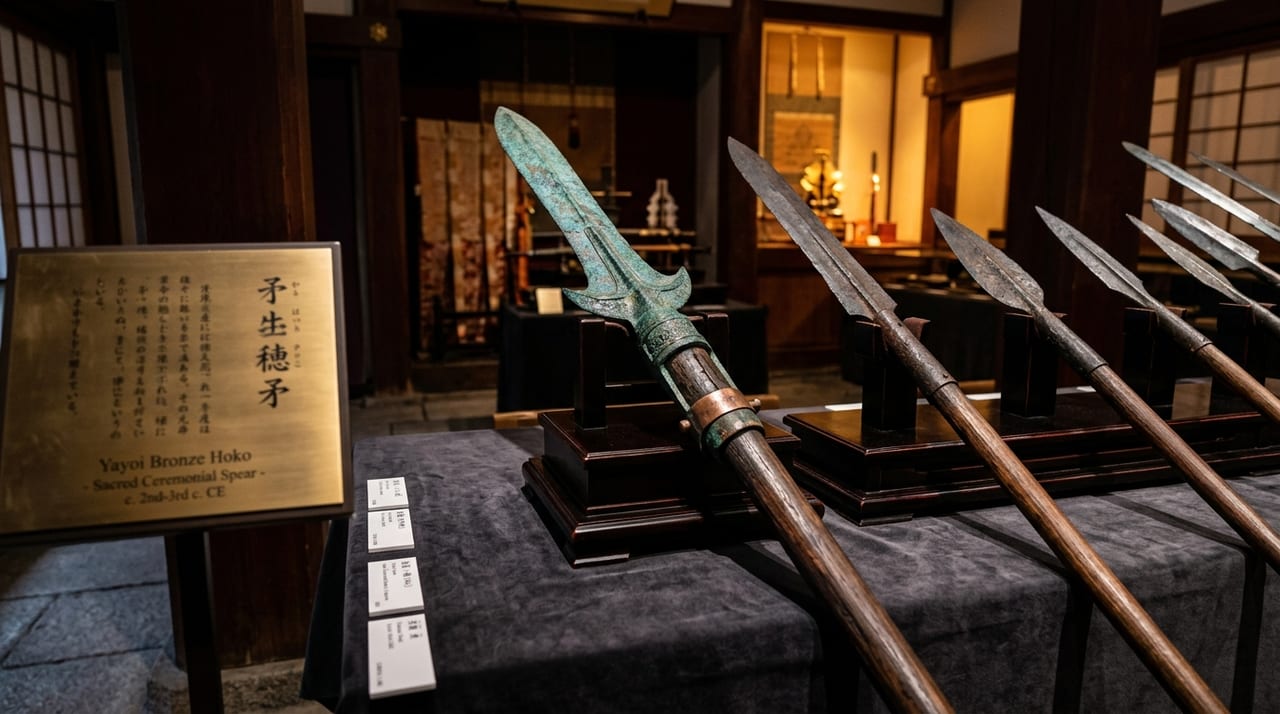
Behind this array of tools lay an Edo-period philosophy of arrest: to capture even criminals alive whenever possible, interrogate them, and bring them before the courts. The three tools embodied this philosophy precisely; even against opponents carrying swords with high lethality, they were designed to secure them unharmed through tool innovation and coordination among multiple people. Today, actual examples of the three tools, including the sashimata, can be seen in museums and archives throughout Japan, displayed as materials conveying the realities of law enforcement in the Edo period. Looking at the tools and equipment used to counter swords, in light of the high lethality of the sword itself, one can clearly see how Edo as a city accumulated practical innovations in maintaining order. Those interested in the history and cultural background of swords themselves are invited to view actual swords in TOUKENZA's online catalog for additional reference.