What Is Kanmuriotoshi-zukuri?—— The Blade Construction of Tantō with a Pared Mune and the Lineage of Yamato-den
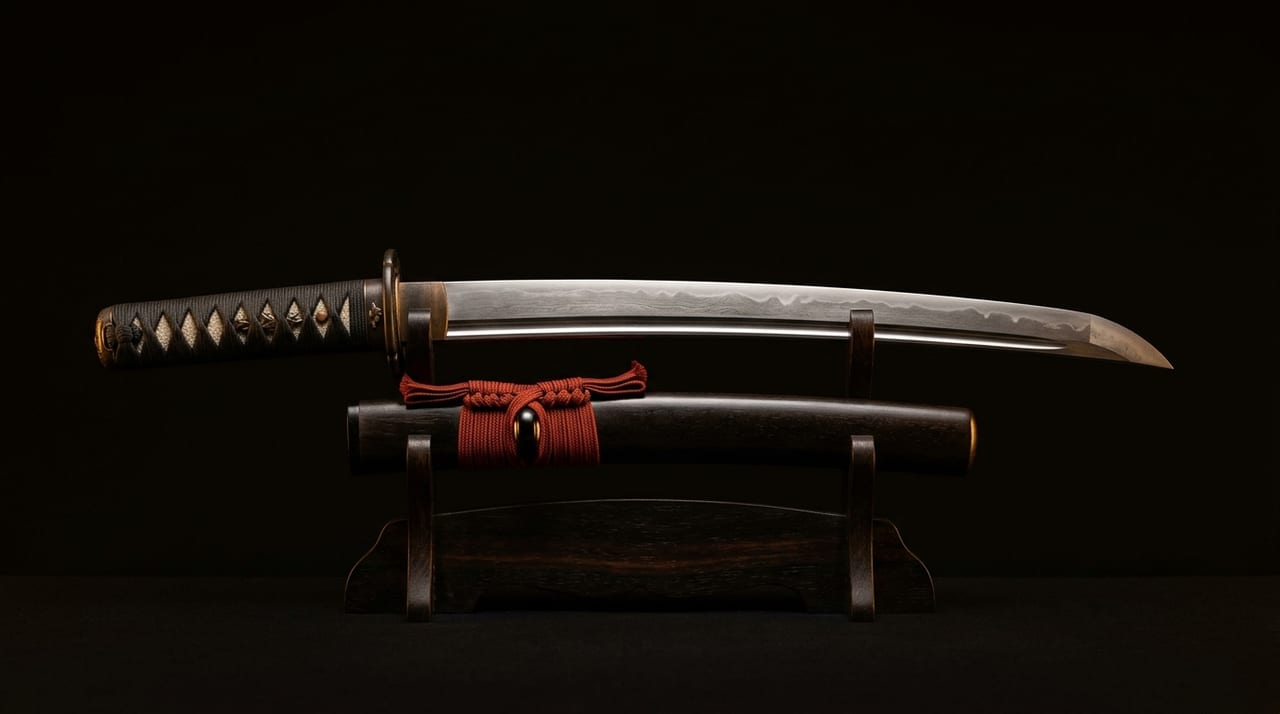 * Image is for illustrative purposes only.
Table of Contents
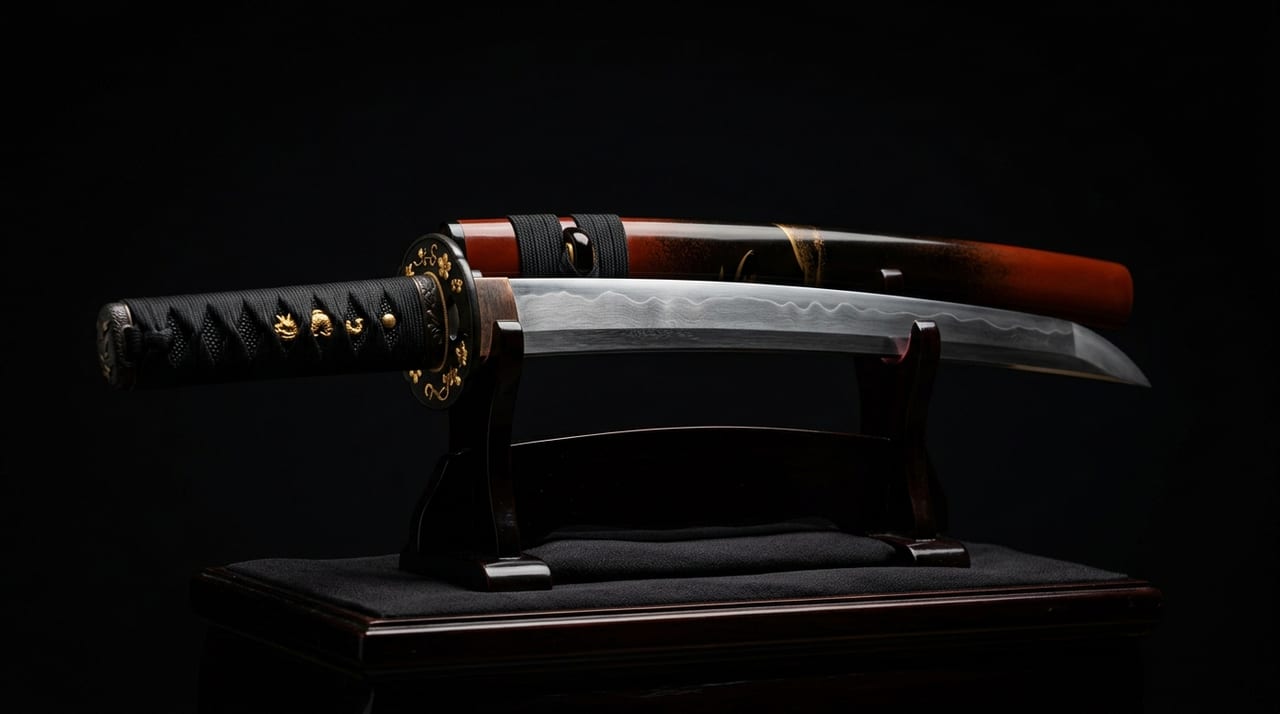
Japanese sword tsukurikomi includes several variations created by intentionally paring away material on the cutting-edge side or the mune side of the blade. Kanmuriotoshi-zukuri is one such variation, known as a connoisseur's tsukurikomi seen mainly in tantō. The name comes from the appearance of the upper portion of the blade, where the mune side has been pared away — likened to a crown (kanmuri) that has fallen (otoshi) away.
The Form of Kanmuriotoshi-zukuri
Kanmuriotoshi-zukuri is a tsukurikomi in which the material on the mune side in the upper half of the blade is pared away, raising the shinogi in the upper half. The mune itself extends to the tip, but because the kasane of the mune side in the upper half is reduced, the mune side becomes progressively thinner toward the tip. This paring gives the area near the kissaki a taut, sharp appearance, which is the defining characteristic.
Whereas hira-zukuri and shinogi-zukuri maintain a consistent cross-sectional profile throughout the blade, kanmuriotoshi-zukuri changes its cross-sectional character between the upper and lower halves. The lower half is close to an ordinary tsukurikomi, while in the upper half the mune material is reduced — a two-stage structure.
Why It Is Common in Tantō
Kanmuriotoshi-zukuri is found almost exclusively in tantō. The tantō is designed primarily for thrusting and close-quarters use, requiring sharpness at the tip and ease of handling. Paring the mune side makes the tip lighter and sharper, well suited to thrusting movements. The short blade also makes it easier to apply the labor-intensive technique of altering the tsukurikomi only in the upper half.
The basic absence of this tsukurikomi in the longer tachi and uchigatana is thought to be because, as the blade lengthens, the mune material gains structural significance, and paring it carelessly increases the risk of breakage. It can be said that kanmuriotoshi-zukuri is a form of construction that is only viable in the tantō format.
Its Relationship with Yamato-den
Kanmuriotoshi-zukuri is said to be found frequently among kaji of the kotō-period Yamato-den school. Yamato-den is an old tradition of sword-making centered on the Nara region, known for its deep ties with temples and shrines and its straightforward, function-oriented style. That this practical, pared tsukurikomi was favored by Yamato-den kaji is not inconsistent with that style.
However, caution is warranted in definitively citing a specific tōkō or designated work as a representative example of kanmuriotoshi-zukuri. It is prudent to understand it as a tendency of a school and period, and to defer to the mei and appraisal record for individual pieces.
Differences from Unokubi-zukuri
Kanmuriotoshi-zukuri is often compared to unokubi-zukuri. The two differ in the area pared and the nature of the cross-sectional change.
| Tsukurikomi | Area Pared | Cross-sectional Change |
|---|---|---|
| Kanmuriotoshi-zukuri | Mune-side material | Thins the upper half, continuing to the tip in the same manner |
| Unokubi-zukuri | Shinogi-ji (side surface) | Narrows the mihaba and kasane in the middle of the blade, then regains thickness toward the kissaki |
"Whether the shinogi-ji is constricted to narrow the center and then widens again at the kissaki, or the mune is pared and remains thin all the way to the tip" is the distinguishing criterion between the two.
The Pitfall of Confusing It with Naginata-naoshi
One point to note when identifying kanmuriotoshi-zukuri is the risk of confusing it with naginata-naoshi. Naginata-naoshi refers to pieces in which the blade of a naginata has been subjected to suriage and re-fitted as a tantō or wakizashi; because the original naginata blade already has a pared appearance on the mune side, the finished piece can look very similar to kanmuriotoshi-zukuri or unokubi-zukuri.
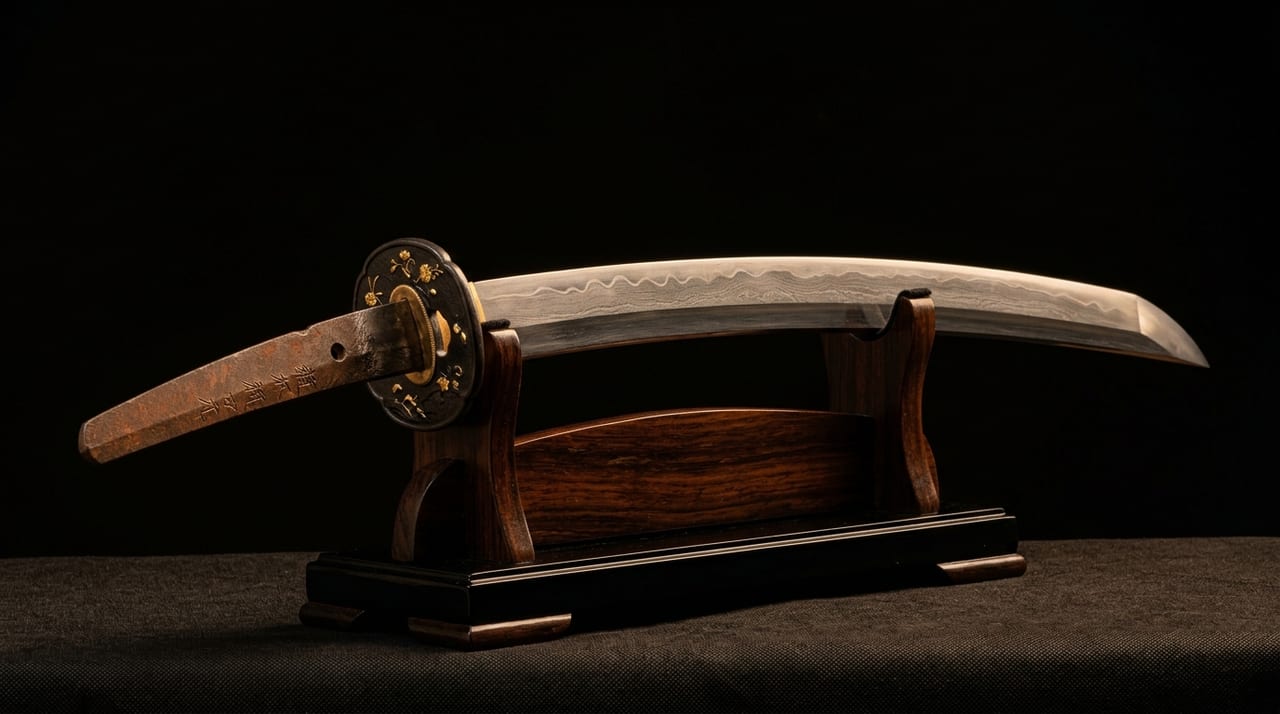
The key clue distinguishing the two is whether the shape was "made that way from the start or resulted from later modification." Kanmuriotoshi-zukuri is a tsukurikomi forged as an ubu tantō from the outset, and there is nothing unnatural about the nakago finish or the placement of the mei. Naginata-naoshi, on the other hand, often shows the following traces:
- Traces of suriage remain on the nakago
- Remnants of the hi characteristic of naginata are visible on the blade
- The bōshi (temper line in the point) has changed due to the modification
It is important not to make a hasty judgment based on the paring of the mune alone, but to examine the whole piece including the nakago, hi, and bōshi.
A Brief Glossary of Terms
The basic terms that come up when discussing kanmuriotoshi-zukuri are also worth knowing.
- Mune: the back of the blade, opposite the cutting edge
- Shinogi: the ridge line running between the cutting edge and the mune
- Kasane: the thickness of the blade
- Upper half / lower half: terms referring to the kissaki side and the nakago side when the blade is divided in half
Kanmuriotoshi-zukuri can be rephrased as a tsukurikomi that reduces the kasane of the mune side in the upper half, making the shinogi appear relatively high by comparison. Once you have command of the terminology, each line in a catalogue or product description becomes a concrete shape in your mind.
Observation Checkpoints
When examining kanmuriotoshi-zukuri on an actual piece or in images, the following sequence helps organize your observations.
- First, view the blade from the side and trace where on the upper half the mune line begins to drop. If it is kanmuriotoshi-zukuri, the material on the mune side is pared away roughly from the midpoint onward, and while the blade narrows toward the tip, the mune itself continues through to the kissaki.
- Next, be mindful of the cross-sectional change. The key question is whether the lower half retains substantial material while the mune side thins in the upper half — a two-stage structure.
- Then examine the area near the kissaki. Confirm whether the mune regains thickness toward the tip as in unokubi-zukuri, or whether it remains thin all the way to the tip; this allows you to distinguish between the two similar forms.
- Finally, check the nakago and confirm whether it is ubu and whether there are no traces of suriage or modification; this makes it easier to distinguish from naginata-naoshi.
Such observation is possible at a glance precisely because the tantō is a compact form, making it an excellent exercise for deepening one's understanding of tsukurikomi.
Familiarity with tsukurikomi variations such as kanmuriotoshi-zukuri adds a three-dimensional quality to one's observation of tantō.