What Is Katakiriha-zukuri — The Structure and Appeal of an Asymmetric Tsukurikomi with a Kiriha on One Side Only
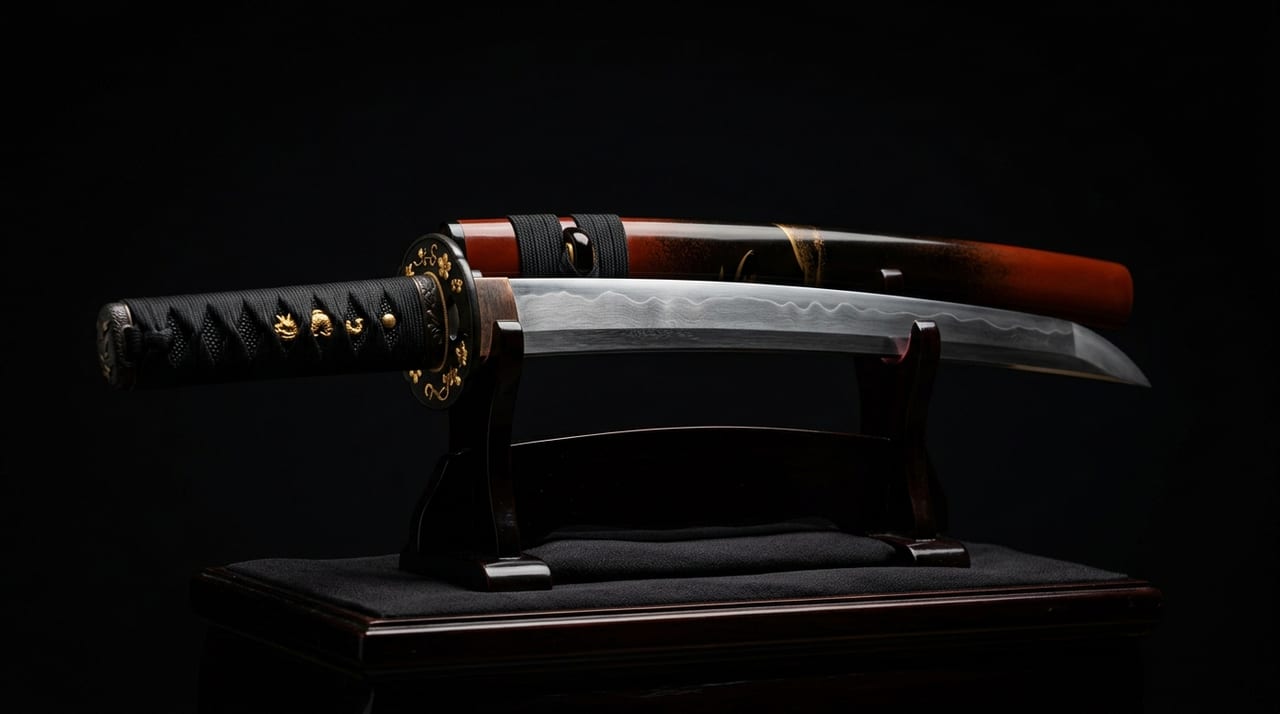
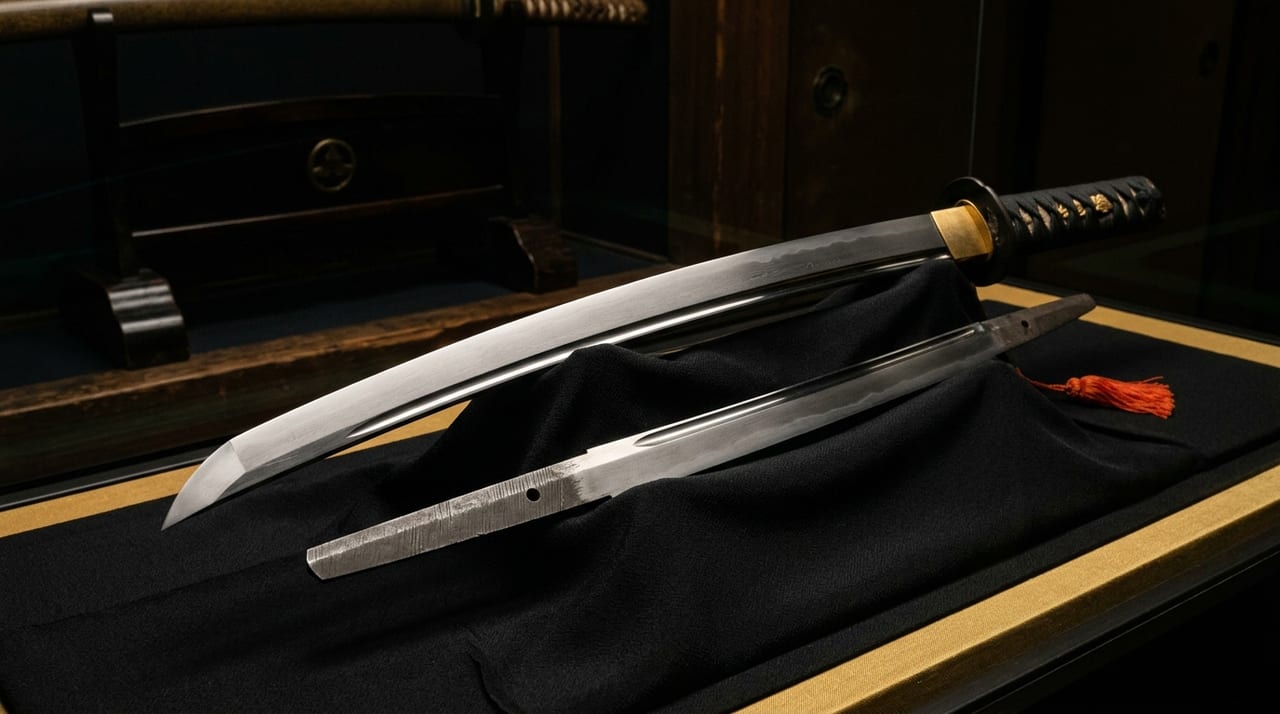 * Image is for illustrative purposes only.
Table of Contents
The tsukurikomi of Japanese swords is fundamentally bilaterally symmetrical. In shinogi-zukuri, the shinogi runs along both sides; in hira-zukuri, both sides are flat with no shinogi. Yet there exist blades whose tsukurikomi differs between the front and back — these are known as katakiriha-zukuri.
Structure of Katakiriha-zukuri
Katakiriha-zukuri is a tsukurikomi in which one side of the blade is hira-zukuri (or shinogi-zukuri) and the other side is kiriha-zukuri. Kiriha-zukuri is a tsukurikomi in which the shinogi is placed close to the edge side to create a step, resulting in a distinctive cross-section in which the area between the edge and the shinogi is one level lower. Applying this kiriha construction to one side only is what constitutes katakiriha-zukuri.
Normally, one of the sashiomote and sashiura sides becomes the kiriha side, though rare examples also exist in which the sashiomote side is the kiriha. In any case, the essence of this tsukurikomi lies in the asymmetry of the differing cross-sectional configurations between the two sides. When held and turned from one side to the other, a completely different appearance is revealed — which is one of its great attractions.
Why Asymmetric?
It is thought that the origins of katakiriha-zukuri lie in both functional and aesthetic considerations. Kiriha-zukuri makes it easier to maintain a sharp edge angle, and by applying the kiriha to one side, a single blade can combine the smoothness of hira-zukuri with the sharpness of kiriha-zukuri.
There is also the aspect that changing the character between the two sides was itself valued as an aesthetic variation in sword design. Particularly from the shintō period onward, in an atmosphere that prized decorative elaboration and individuality, such intricate tsukurikomi were favored. It is best understood as a form whose value lies in the ingenuity of the tsukurikomi itself, rather than in attributing it to a specific tōkō or designated piece.
Points for Observation and Identification
To identify katakiriha-zukuri, it is essential to examine both sides of the blade. Judging the tsukurikomi from one side alone risks misidentification as hira-zukuri or shinogi-zukuri. Even if the front is flat, if a step close to the edge (the kiriha) appears when the reverse side is turned, it is katakiriha-zukuri.
Kiriha-zukuri itself is identified by the step where the area between the edge and the shinogi is shaved down and lowered. Holding the blade to the light and tracing the position of the ridge line — if the shinogi is displaced far toward the edge side, one can judge that side to be kiriha-zukuri. The defining characteristic of katakiriha-zukuri is that this appears on one side only.
Comparison with Other Unusual Tsukurikomi
When understanding katakiriha-zukuri, arranging it alongside other unusual tsukurikomi helps prevent confusion in identification. Representative examples include kanmuriotooshi-zukuri, unokubi-zukuri, shōbu-zukuri, and osoraku-zukuri.
| Tsukurikomi | Characteristics |
|---|---|
| Kanmuriotooshi-zukuri | A tsukurikomi in which the upper half of the blade near the mune is shaved thin; seen in tantō and naginata-naoshi works |
| Unokubi-zukuri | The flesh on the mune side is scooped out like a cormorant's neck; said to be a form designed with lightness and thrusting penetration in mind |
| Shōbu-zukuri | Though shinogi-zukuri in form, it lacks a yokote and has a slender silhouette reminiscent of an iris leaf |
| Osoraku-zukuri | A distinctive form in which the kissaki is remarkably long and the yokote descends close to the fukura |
All of these retain the same configuration on both sides — that is, bilateral symmetry is maintained — which is the decisive difference from katakiriha-zukuri. Remembering that a change in the cross-sectional configuration itself when turned from front to back is a property unique to katakiriha-zukuri helps keep the distinctions clear.
Why It Is More Common in Shorter Works
Katakiriha-zukuri tends to appear more frequently in shorter works such as tantō and wakizashi than in longer swords. This is thought to be because the cross-sectional configuration more readily influences the overall impression of a shorter blade, making an inventive tsukurikomi directly impactful on appearance. It is also thought that, since the visible side of a tantō or wakizashi is largely fixed when worn at the hip, the idea of differentiating the design between the visible and hidden sides was a natural fit.
Checklist for Purchase and Appreciation
When actually considering a katakiriha-zukuri work, the following points should be checked.
- Continuity of the ridge line on the kiriha side — Whether the shinogi ridge line (the ridge line of the step) on the kiriha side runs consistently from the hilt to the monouchi. On a blade that has undergone repeated togi, the ridge line may become indistinct and the step blurred. The more firmly the ridge line stands, the easier it is to judge the blade as being in good condition.
- Difference in the appearance of jigane — Bear in mind that jigane appears differently on the flat side and the kiriha side. Because the way togi is applied differs on the kiriha side, even the same blade may give a different impression of the surface grain texture and overall pattern. This is not a defect but rather a point of interest unique to this tsukurikomi.
- Confirming images of both sides — When evaluating from photographs, always check images of both sides. With only a single-side image, it is impossible even to determine whether the work is katakiriha-zukuri at all. Even in oshigata and illustrated catalogues, it is standard practice to show both sides together for katakiriha works.
- Condition of horimono — If horimono is applied to the flat side, its condition should also be examined. In katakiriha-zukuri, a wide smooth surface is secured, making it well suited as a ground for horimono such as bonji and gomabashi; there are works in which the horimono and tsukurikomi form a unified design. The depth of the carved lines and the sharpness of their ridges also serve as clues to gauge the degree of wear from togi.
The Interest of Reading Tsukurikomi
Katakiriha-zukuri is not a common tsukurikomi, but in the way the blade's appearance changes from side to side, it offers insight into the depth of blade observation. Tsukurikomi is a fundamental element of observation alongside sori and kissaki, and once the assumption that symmetry is the norm has been set aside, understanding becomes swift when one encounters an atypical form.
This site lists swords offered for sale in an online catalogue with images from multiple angles. It can serve as a starting point for comparing the asymmetry of tsukurikomi through images.