Unokubizukuri — The blade construction that constricts the mune in tantō and wakizashi, and the styles of the Kamakura and Nanbokuchō periods
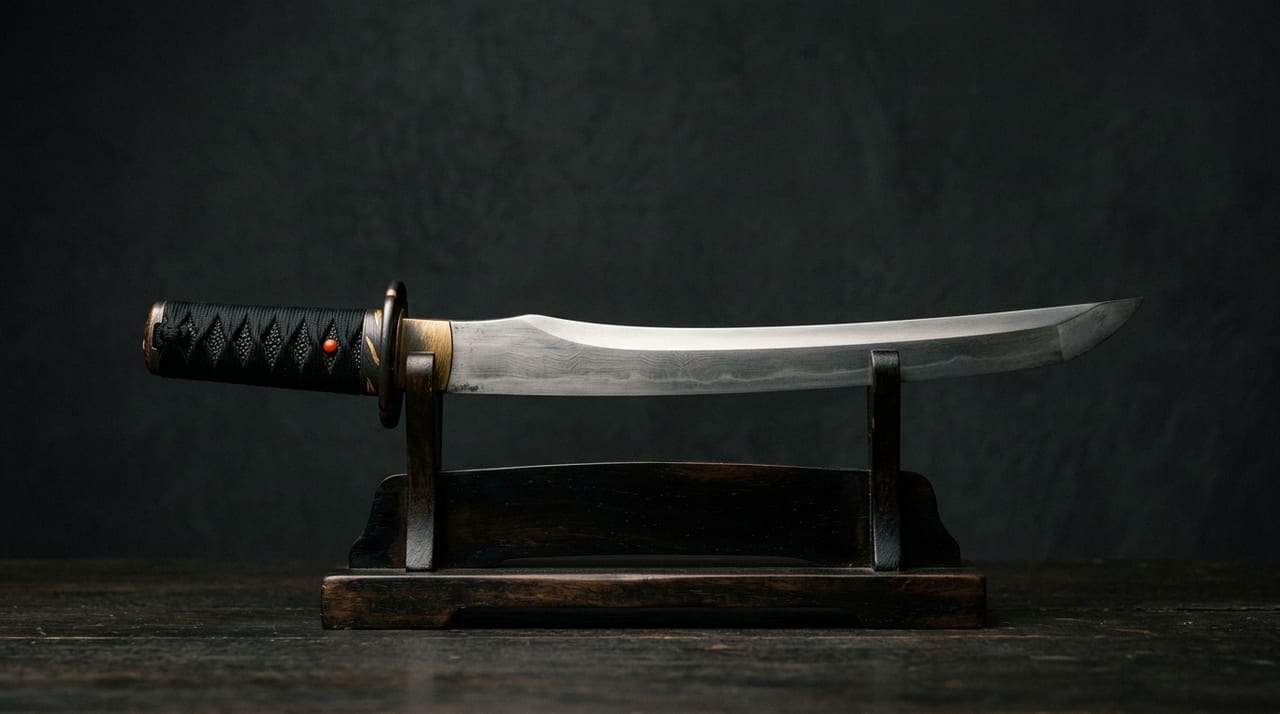 * Image is for illustrative purposes only.
Table of Contents
Among the various blade constructions of the Japanese sword, one known by a particularly distinctive name is unokubizukuri. The name derives from the slender, elongated neck of the cormorant, a water bird, and the distinctive constriction visible when viewing the blade from the mune side is the defining feature of this construction.
The Form of Unokubizukuri
Unokubizukuri is a blade construction in which the shinogi-ji on the mune side is shaved away at the midpoint of the blade, causing the mune to narrow into a constriction. Specifically, the kissaki area and the lower half of the mune are left thick, while the shinogi-ji between them is scooped away. This causes the mune-side outline to narrow at the midpoint and swell again near the tip — a contour that evokes the neck of a cormorant.
Viewed from the mune side, the shinogi in the upper half stands high while the area near the mune becomes thin, but as one approaches the kissaki the shinogi-ji regains its thickness. This two-stage change — thinning out and then recovering — is the key to identifying unokubizukuri. The mune itself continues through to the tip.
Period and Blade Forms
Unokubizukuri is said to appear frequently in tantō and wakizashi dating from the Kamakura period through the Nanbokuchō period. This era was a time when many masterpiece tantō were produced, and blade styles were elaborated with considerable variation and ingenuity. Shaving down the mune side lightens and sharpens the tip, increasing its suitability for thrusting, while the material removed gives the blade's profile a distinctive character. It is a construction in which practicality and aesthetics are intertwined.
The concentration of this construction in tantō and wakizashi rather than longer swords is thought to be because the shorter blade reduces structural concerns when the mune is shaved, and because elaborate constructions are more readily executed on shorter blades.
Distinguishing from Kanmuriotoshizukuri
Unokubizukuri is easily confused with kanmuriotoshizukuri. Both share the feature of shaving down material on the mune side, but they differ decisively in what happens near the kissaki. In kanmuriotoshizukuri, the mune that thins in the upper half continues thin all the way to the tip. In unokubizukuri, the mune, which has narrowed into a constriction, becomes thick again near the kissaki.
The procedure for telling them apart is therefore to first confirm whether there is a section where the mune has been shaved thin, and then to follow whether that thinness continues to the tip or recovers partway along. If the thickness returns toward the tip, it is unokubizukuri; if it stays thin all the way through, it is kanmuriotoshizukuri — this is a practical rule of thumb.
Fundamentals of Blade Construction — Principal Types and Their Place
To understand unokubizukuri, it helps to have a broad picture of blade construction (tsukurikomi) as a whole. Tsukurikomi refers to the cross-sectional structure and shaping style of the blade; the principal types are as follows.
- Shinogi-zukuri — the most standard blade construction, with the shinogi ridge running along the side of the blade; the great majority of tachi and uchigatana fall into this category
- Hira-zukuri — a flat construction with neither a shinogi ridge nor a yokote; the most common form for tantō
- Shōbuzukuri — similar to shinogi-zukuri but without a yokote, its shape evoking a leaf of iris; seen in wakizashi and the like
- Kanmuriotoshizukuri — a construction in which material is shaved from the upper mune side and remains thin all the way to the tip
- Unokubizukuri — the subject of this article, in which the mune side is constricted at the midpoint and thickness is recovered near the kissaki
The world of tantō and wakizashi is particularly rich in variation of blade construction, and even blades of identical dimensions can make a completely different impression depending on the construction alone. Rather than simply memorizing the names of constructions, one can begin to read the tōkō's intentions by considering why each form was chosen — whether for weight reduction, thrusting performance, or aesthetic effect.
Terminology — Shinogi-ji, Kasane, and Fukura
Grasping a few basic terms makes it possible to follow descriptions of blade construction. Shinogi-ji is the surface between the shinogi ridge and the mune; kasane is the thickness of the blade; fukura refers to the curvature of the cutting edge at the kissaki. When descriptions of unokubizukuri say "shaving the shinogi-ji," this means scooping away the surface between the shinogi ridge and the mune so as to thin the kasane in that section. Changes in kasane are difficult to detect in photographs taken from the front, which is why viewing from the mune side or at an angle is necessary.
Checkpoints When Examining the Actual Blade or Images
When examining a tantō or wakizashi in unokubizukuri, the following points should be checked in order.
- The mune-side line — the position where the constriction begins and ends, and whether the thickness returns before the kissaki
- Symmetry of the shaving — whether the shaving on both sides is finished symmetrically
- Soundness of the kasane — since this construction inherently thins the mune, blades that have undergone repeated togi may have a kasane that is excessively worn down
- Consistency with period — since this construction is common in the Kamakura through Nanbokuchō periods, check the kanteisho to confirm that the kiwame (the attribution judgment in appraisal) and the blade's appearance are consistent
When considering a purchase online, check whether images from the mune side and lateral angles are available; if not, it is advisable to inquire via the contact form.
A Guide to Appreciation
Unokubizukuri is a construction that teaches the importance of observing the blade from directly above and from the mune side. While one's eye tends to go to the hamon and jigane, the three-dimensional information of the mune's contours is also full of clues for reading the blade's form.