Types and Forms of Hi (Grooves) on Sword Blades — A Classification of Bōhi, Futasujihi, Koshibi, Kakinagashi, and Key Points of Interest
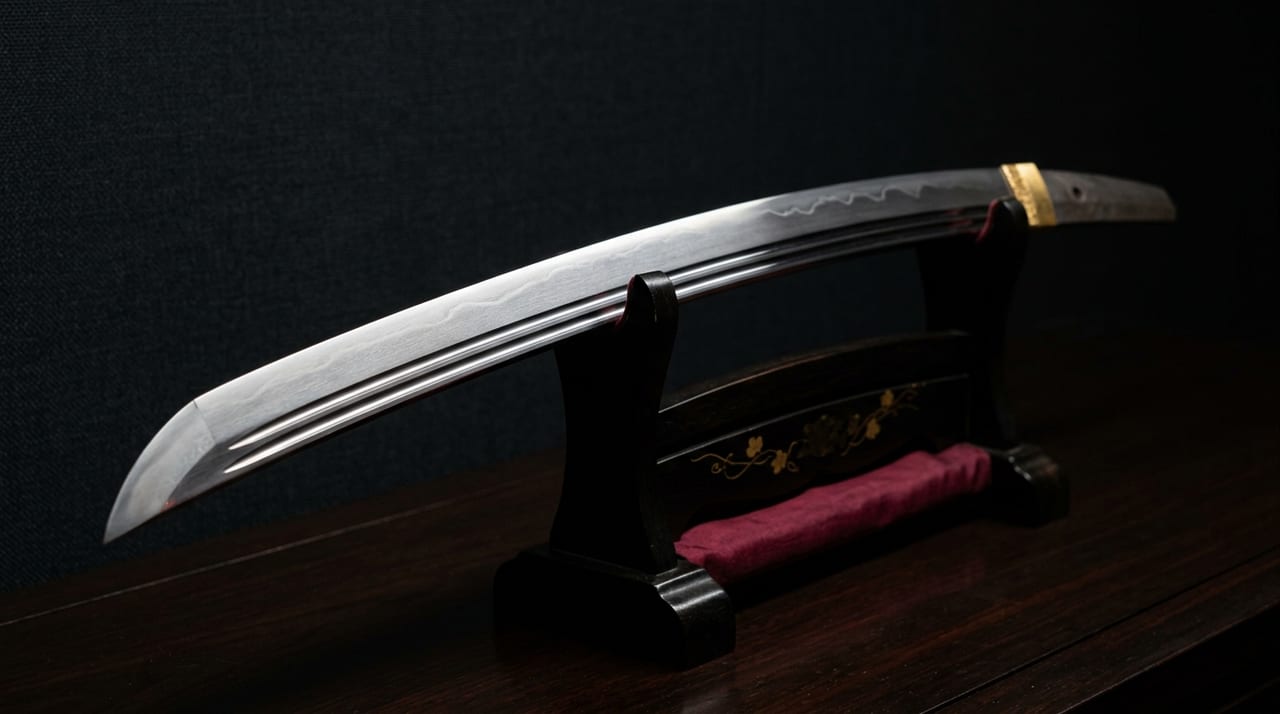 * Image is for illustrative purposes only.
Table of Contents
Japanese swords feature not only the hamon and jigane — visual highlights inherent to the steel itself — but also decorations carved by human hands into the blade. The most commonly seen of these is the groove known as hi. Hi is not mere ornament; it is incorporated as an important structural element within the blade's form and is classified into numerous types according to its shape.
The Function and Basics of Hi
Hi is a long, narrow groove carved along the shinogi-ji and similar areas of the blade. It is often described as "a groove for weight reduction," but that is not its only purpose; the formal significance of giving definition to the overall silhouette and adding variety to the blade's character is equally great. Carving the hi changes the weight distribution and affects the feel of the sword when swung.
Hi are classified in detail by their number, position, length, and the treatment of the hijiri (groove terminus). The principal forms are listed below.
Principal Types by Shape
- Bōhi: The most common hi, consisting of a single groove running along the blade. The clean, single groove gives the blade a direct, forceful quality. For most people, bōhi is the first type of hi that comes to mind.
- Futasujihi: Two narrow grooves of equal width carved in parallel. The paired style is said by some to evoke the gomabashi carried by Fudō Myōō, and may carry religious connotations.
- Koshibi: A short hi carved only in the lower portion (koshi, or base area) of the blade. Rather than running the full length, it is used to give a sense of definition near the base of the blade.
Beyond these, numerous variants exist depending on region, period, and the preference of individual tōkō, including shōbuhi and tsurehi.
Soebi and Horimono within Hi
A soebi is a narrow additional groove carved alongside a bōhi. The contrast between the wide groove and the narrow one creates a rhythmic quality in the blade's appearance. The naginatahi, seen on blades that have been converted from naginata, typically features a short groove carved near the tip accompanied by a soebi — a detail that serves as a notable observation speaking to the blade's provenance. Furthermore, hi are not always carved alone; they may be combined with the technique of placing horimono such as Sanskrit characters or suken within the groove itself, and hi and blade carvings have a close relationship. Horimono as such belong to a separate classification from hi, but the practice of inscribing faith and prayer into the blade forms a continuum with the religious connotations of hi such as the gomabashi imagery of the futasujihi.
The Pitfall of "Atobi" (Later-Added Grooves)
One important thing to know when observing hi is the distinction between grooves carved from the time of manufacture (ubu hi) and those carved in later ages (atobi). Atobi are said to be carved in some cases to make a worn-down blade appear lighter, or to conceal forging flaws and damage — a point that warrants particular attention when considering a purchase. Points of reference for judgment include the following:
- Whether the position and depth of the hi are naturally proportioned to the overall form of the blade
- Whether the condition of the jigane within the hi is consistent with the rest of the blade
- Whether there is no contradiction in the chronological relationship with suriage
Definitive judgment is not easy, and when in doubt it is prudent to consult the opinion of a trusted sword dealer or appraisal organization.
Notes on Hi during Maintenance
A blade with hi requires a little extra care during maintenance. Oil tends to accumulate in the groove, and if wiping is incomplete, the oil may deteriorate and become a cause of rust. When using uchiko or wiping cloths, confirm that the interior of the hi is wiped as evenly as the flat area of the blade. In addition, the edges of the hi are an area where the sharpness of definition changes with togi; whether the hi has become shallow over years of repeated togi, or whether the lines of the edges have blurred, is a factor in assessing the condition of the blade.
Differences Based on Hijiri Treatment
Hi are also classified by the way in which the hijiri (terminus of the groove) is finished.
- Kakinagashi: The hi is carved so as to flow partway into the nakago, tapering and fading out without a clearly defined terminus.
- Kakitōshi: The hi is carved so as to run through to the end of the nakago.
Whether the hijiri is stopped with a round finish or a square finish is also observed as a characteristic of particular tōkō or periods.
These terminus treatments may reflect the individual hand of the craftsman who carved them or the conventions of a particular school, and they are details that should not be overlooked in appreciation.
Points of Observation in Appreciation
When examining hi, it is helpful to observe in the following order:
- First, confirm the number and position — whether it is a bōhi or futasujihi, and whether it runs the full length of the blade or only near the base.
- Next, turn attention to the hijiri and trace whether it fades and disappears or runs through to the nakago.
- Further, whether the hi is carved cleanly and evenly, and whether the depth and width are consistent, are also factors in judging the quality of the work.
When observing hi in photographs, images taken from an angle are better for discerning the depth of the groove and the sharpness of the edges. It is difficult to read the precision of the carving from a straight-on image alone, and viewing images from multiple angles is recommended. It should also be noted that the presence or absence of hi is not uniform even among works by the same tōkō, as it varies according to commission and intended use; the absence of hi does not indicate lower quality. What matters is harmony with the overall form and the quality of the carving.
Hi is the most familiar element of sword blade carving and has a major influence on the impression of the blade. This site presents listed swords in an online catalogue with images of the blades, which can serve as a starting point for comparing the presence, type, and form of hi visually.