The Shape and Use of Ōdachi and Nodachi——The History of Giant Swords That Flourished from the Nanbokuchō to the Muromachi Period, and Surviving Examples
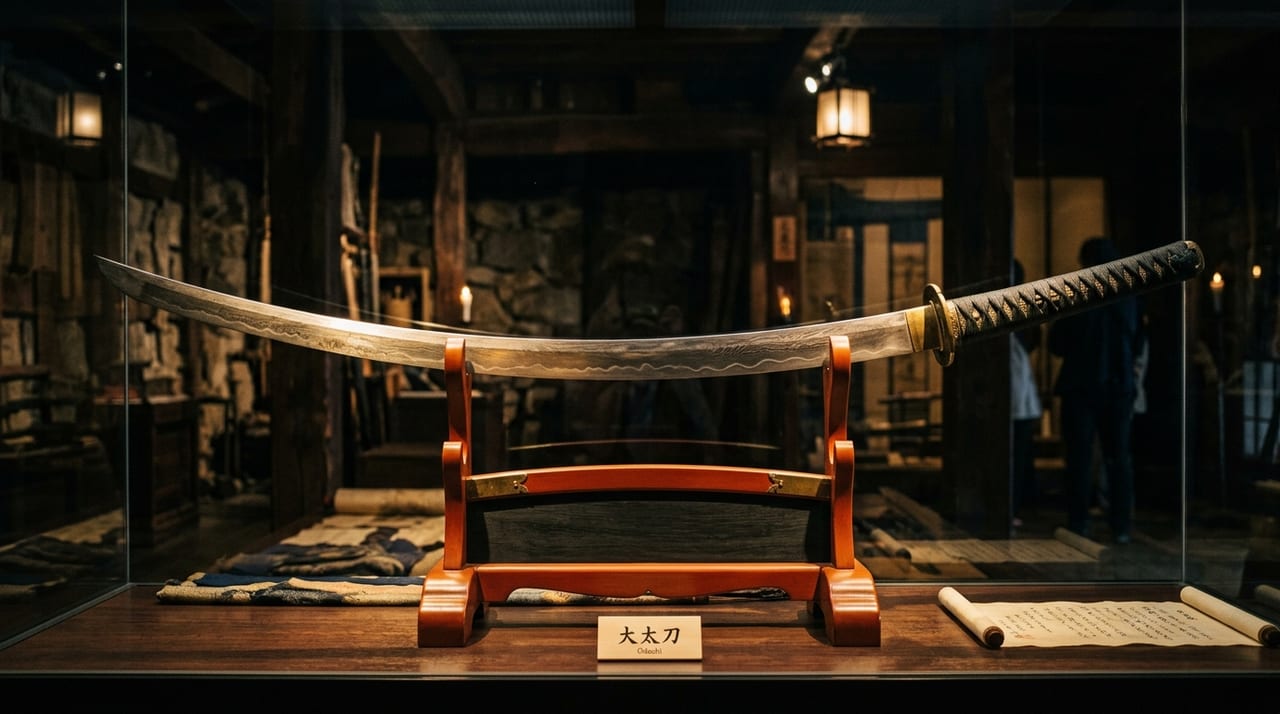 * Image is for illustrative purposes only.
Table of Contents
What Are Ōdachi and Nodachi?
In Japanese sword classification, blades with a nagasa (blade length) of approximately 90 cm (approximately 3 shaku) or more are generally called ōdachi or nodachi. Some examples have a nagasa exceeding 150 cm and an overall length surpassing 2 meters, making them a particularly striking genre among Japanese swords.
"Ōdachi" and "nodachi" are often not strictly distinguished, but if anything, ōdachi may refer to large swords made for dedication to shrines or for ceremonial use, while nodachi carries a nuance of referring to large practical swords actually used in field battles. In modern sword research, the two are often treated as nearly synonymous.
The Historical Background That Gave Rise to the Ōdachi——The Nanbokuchō Turmoil
The period when ōdachi were most prolifically produced was the Nanbokuchō period (1336–1392). The Nanbokuchō conflict was an era in which the Southern Court and the Northern Court fought continuously across the country for an extended period, and combat was transitioning from individual mounted engagements (kumiuchi, mounted-warrior duels) to organized infantry warfare. During this period, the following characteristic changes appeared in swords:
- Extension of nagasa: Large numbers of swords exceeding the length of ordinary tachi (nagasa of approximately 2 to 2.5 shaku) were produced
- Deepening of sori: There was a tendency for sori to deepen as blades grew larger
- Robust jigane: Sturdiness capable of withstanding prolonged combat was required
Swords from the era in which Kusunoki Masashige, Ashikaga Takauji, and others were active include many ōdachi bearing these Nanbokuchō-period characteristics.
Methods of Use on the Battlefield
There are various theories regarding how ōdachi were used in battle. The principal uses passed down are as follows.
Katsugigiri (shoulder-carry cut): Because the blade was too long to wear at the hip, the sword was carried over the shoulder during movement and wielded with both hands in combat. It is also said to have been used in a naginata-like capacity to sweep through densely packed enemy infantry formations.
Use on horseback: There is also a tradition of mounted warriors using the long blade to cut down enemies below them. However, actual use required considerable physical strength and skill, and it is thought to have been limited to exceptional users.
Dedication and ceremonial use: Extra-large examples with a nagasa exceeding 150 cm — too large for actual combat — are believed to have been made from the outset as votive swords dedicated to shrines and temples, or as offerings for prayers of victory. Many of the notable surviving ōdachi fall into this category.
Notable Surviving Ōdachi
Miike Tenta Mitsuyo Nagasa approximately 65–66 cm (held by the Maeda Ikutokukai). This tachi is attributed to the late Heian to early Kamakura period tōkō Tenta Mitsuyo, and is known as Ōtenta, one of the Tenka Goken. Although shorter than the ōdachi definition (nagasa of approximately 90 cm or more), it is highly regarded as a masterwork conveying the vigorous character of earlier styles through its robust jigane and deep sori.
Ōdachi by Osafune Kanemitsu of Bizen The Nanbokuchō-period Bizen tōkō Kanemitsu is known for having produced many ōdachi, and multiple examples with a nagasa exceeding 1 meter have been dedicated to various shrines. Kanemitsu's ōdachi are noted for their full-bodied form and striking ōnie activity as highlights.
Votive Swords at Ōyamazumi Jinja Ōyamazumi Jinja in Imabari City, Ehime Prefecture, holds approximately 40 percent of all kokuhō (National Treasure) and jūyō bunkazai (Important Cultural Property) armor and other military equipment in Japan, and houses a large collection of Nanbokuchō-period ōdachi and nodachi. Many were passed down as treasures of the shrine, dedicated by warriors as offerings for prayers of victory. The shrine's treasure hall is one of the foremost facilities in Japan where large swords can be viewed in person.
Votive Swords at Isonokami Jingū Isonokami Jingū in Nara Prefecture holds a large number of swords dedicated from ancient through medieval times, including large tachi. Known as a treasury of ancient swords, it is also a repository of swords of unusual form, including the Nanatsusaya-no-Tachi.
"Suriage" and the Transformation of Ōdachi
From the Sengoku period onward, many of the ōdachi made during the Nanbokuchō period were reworked into standard-sized uchigatana or tachi through suriage (shortening). Suriage is the process of cutting down the nakago side of the blade to reduce the overall length, adapting it to a more practical, portable size. For this reason, ōdachi that retain their original form are now rare, and ōdachi with ubu nakago before suriage are highly regarded both academically and in the market.
Points to Appreciate in an Ōdachi
When appreciating ōdachi, the following points are worth noting.
- Nagasa and overall balance: Observe how the depth of sori and the thickness of kasane are designed relative to the nagasa
- Uniformity of jigane: The technical difficulty of forging a large blade uniformly is high; works with less unevenness in the jigane are more highly regarded
- Continuity of hamon: Verify whether the hamon flows with a consistent rhythm along the full length of the blade
- Condition of the nakago: Confirm whether suriage has been performed or whether it is ubu. If ubu, the preservation of the mei (signature) is often also good
As of 2026, opportunities to view ōdachi in person are limited, but Ōyamazumi Jinja, Isonokami Jingū, the Tokyo National Museum, and other institutions regularly display the large swords in their collections. The overwhelming presence created by a massive blade — something that cannot be experienced except in person — is one aspect of the appeal of Japanese swords that only the real thing conveys.