Structure and Uses of the Zanba-tō — Differences from Nodachi and Ōdachi, and How They Were Actually Used on the Battlefield
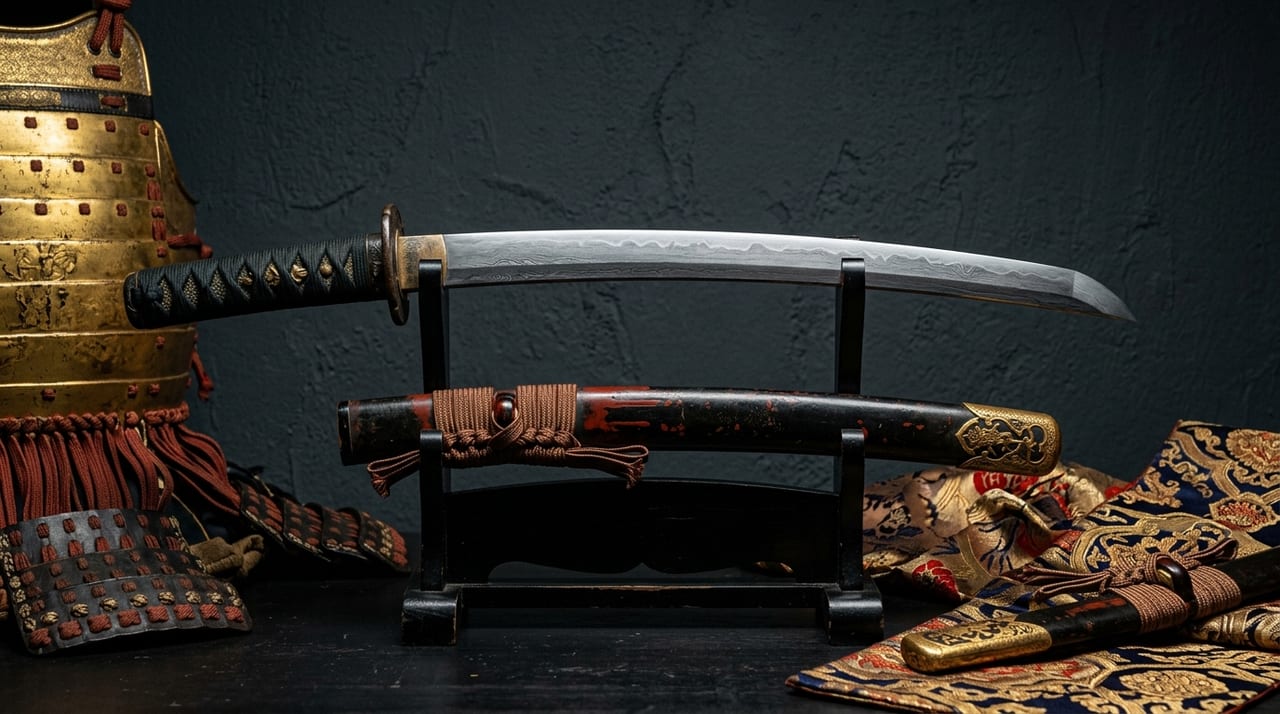 * Image is for illustrative purposes only.
Table of Contents
What Kind of Sword Is the Zanba-tō?
The zanba-tō is said to have been made to "cut down horses" — as its name suggests — making it an extremely large type of sword. However, looking at the historical reality, this name is used in multiple senses, and there is no fixed definition pointing to a single type of sword. In Japan it is most commonly used as a general term for swords with a longer-than-normal nagasa and great cutting power.
It is a separate concept from the Chinese weapon of the same name (in Chinese: zhanmadao or zhanmajian), and the Japanese zanba-tō appears mainly in classical literature, war tales, and later martial-arts treatises. Among surviving artifacts and cultural properties it is difficult to distinguish from nodachi and ōdachi, and scholars often classify the same piece differently.
Against this background, even if one looks for a strict academic definition of the word "zanba-tō," it becomes clear that what each source points to shifts subtly from document to document. For the reader it is practical to understand "zanba-tō" not as a proper noun pointing to a specific single sword, but as one of the names applied to large, long swords. For those who appreciate and collect swords, rather than the name, it is important to take the approach of checking individual elements: nagasa, sori, mei, and condition.
Differences from Nodachi and Ōdachi
To understand the concept of the zanba-tō it is first necessary to sort out the differences between nodachi and ōdachi.
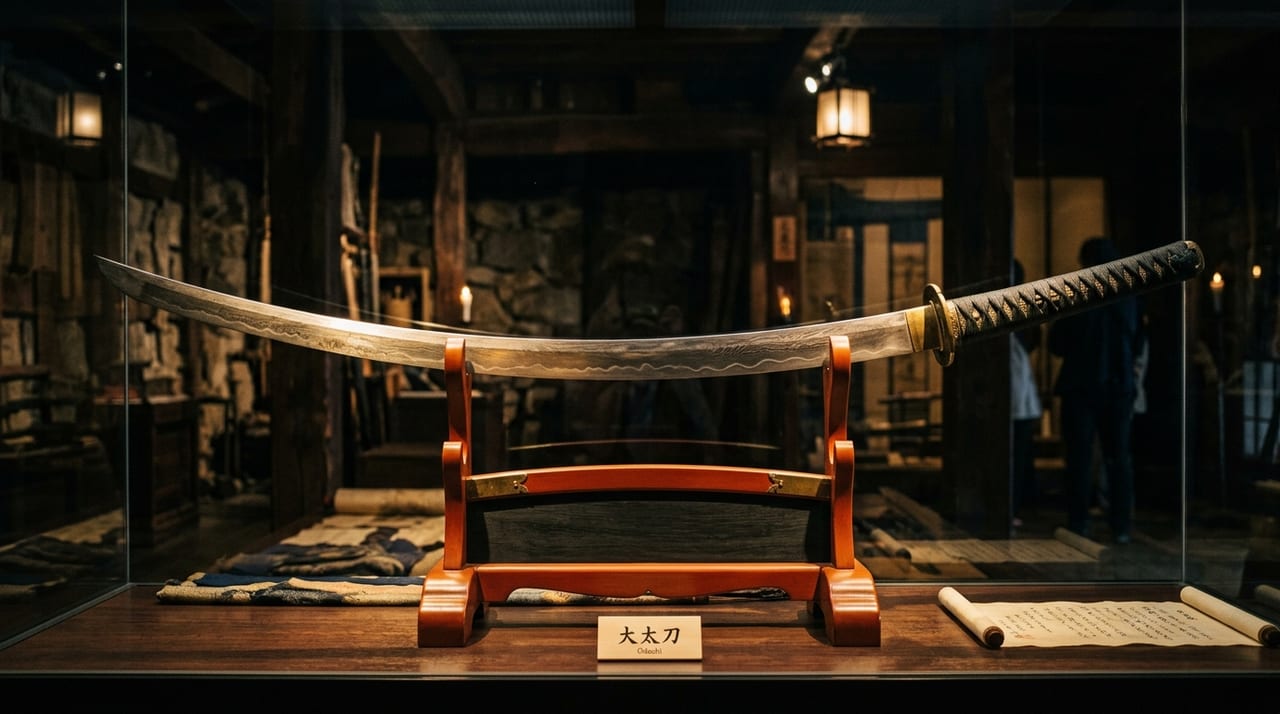
Ōdachi refers to tachi with a nagasa of 90 cm or more (3 shaku or more), most of which were made as votive offerings to shrines and temples or for ceremonial purposes. Most surviving ōdachi are "votive ōdachi" and were not intended for actual combat use. Weights exceeding 5 kg are not unusual, making it difficult for an ordinary person to wield them freely with one hand.
Nodachi refers, among the ōdachi, to those that were actually used (or could be used) on the battlefield. They are described as being carried on the back to battle and used in a manner similar to pole weapons to sweep down enemies. The nagasa is often around 60–90 cm — not as extreme as the ōdachi — but far longer than the ordinary uchigatana or tachi.
The zanba-tō is often used as a further enlarged and specialized variant of the nodachi, or in a form almost synonymous with it. It is generally described in terms of a sword large and heavy enough to sever a horse's legs or body with a single blow.
Variation in the names also shifts according to the period of production, the region, and the nature of the source. Even the same sword can be called "tachi" in the records of the shrine where it was dedicated, "nodachi" in later war tales, and "zanba-tō" in even later popular literature. For this reason, rather than judging the character of a sword by its name alone, it is advisable to check the actual dimensions, form, and provenance records together.
Structural Characteristics
The following structural characteristics are common to the zanba-tō, nodachi, and ōdachi.
- The nagasa (blade length) far exceeds that of an ordinary tachi (roughly 60–75 cm). A nagasa of 90 cm or more is the standard for an ōdachi, but many pieces considered to have served as nodachi in practice have nagasa in the range of around 70–90 cm. A long nagasa provides a greater "reach" — the ability to strike the opponent from farther away — but also brings increased weight and reduced maneuverability.
- The sori (curvature) tends to be shallower than that of an ordinary tachi. A shallower sori is considered easier to handle when swinging a long blade down from horseback than a deep sori. On the other hand, when the sword is intended for use on foot (kachi), the shape of the sori affects practicality.
- The tsuka (hilt) length is also longer than that of an ordinary sword, and gripping it with both hands is assumed. It is also said that in some cases it was mounted on a long handle of 3 shaku (approximately 90 cm) or more and used like a naginata.
In addition, the kasane (blade thickness) and mihaba (blade width) also tend to be made more robustly the larger the sword. Since the balance between the length of a large blade and its susceptibility to breaking is a challenge, it is thought that the forging process also demanded higher skill than for an ordinary tachi. Looking at surviving ōdachi and nodachi as well, not a few of them show a construction that takes into account not only length but also the overall balance of the form and the distribution of weight.
How They Were Actually Used on the Battlefield
What is known about how the zanba-tō and nodachi were used on the battlefield involves an intermingling of descriptions found in historical sources and later legend, making it difficult to establish the reality.
In documentary descriptions, there are many scenes in which foot warriors carrying nodachi played an active role in battles during the Nanbokuchō period (the 14th century). The Nanbokuchō period in particular was an era in which the weight of infantry formations increased, and it is thought that the tactic of cutting down multiple enemies with a long sword was effective.
Regarding their use against horses, taking the battle style of the time into account, it is assumed that attacking horses in group combat was the primary purpose rather than countering mounted warriors in one-on-one combat. The tactic described is to cut a horse's legs and bring down the mounted warrior, then finish him off in close grappling. However, reliably severing a horse's legs required considerable skill and physical strength, and this was not a weapon that ordinary soldiers could easily use.
Furthermore, large swords are thought to have functioned not only as individual weapons but also as tools of intimidation and display. There is a view that merely standing on the battlefield holding aloft a long blade itself exerted psychological pressure on the enemy, and it is possible that visual impact was valued as well as the effectiveness of an actual cutting blow. As the era advanced and firearms and collective tactics developed, the battlefield role of such large swords is said to have gradually diminished.
Relationship to Surviving Swords
Most of the large swords currently in the collections of museums and shrines and temples have the character of "votive tachi," and in the great majority of cases no evidence of actual combat use has been confirmed. On the other hand, nodachi showing blade nicks and signs of use do exist, confirming that practical battlefield use was not entirely absent.
Notable examples include the large votive sword collections held by the Bizen Tōken Hakubutsukan in Okayama Prefecture and at various shrines across the country. Some ōdachi have been designated as kokuhō (National Treasures) or jūyō bunkazai (Important Cultural Properties), attesting to the high level of kaji technique of the time.
These large swords are said to have served not only as proof of the technical capabilities of their era of production, but also as a demonstration of the patron's power and faith. Forging a great long blade and completing it successfully required advanced technique and many processes, which in itself enhanced its value as a votive offering. When viewing surviving examples, by looking not only at sheer size but also at the balance of the form, the condition of the jigane, and the history of preservation, the intentions and background behind the sword's creation come into clearer relief.
The Modern Perception of the Zanba-tō
Today the name "zanba-tō" has come to be widely used in popular culture such as games, novels, and films. It is often circulated linked to the image of a fantastical giant sword, and there is an aspect in which an image far removed from the historical reality has become established.
Among sword enthusiasts and researchers, it is considered important to distinguish between the history of actual ōdachi and nodachi and the modern "zanba-tō" image. In order to accurately evaluate the historical and artistic value of large swords as cultural properties, carefully cross-referencing documentary and material sources remains indispensable.
Points to Note When Viewing a Sword Called a "Zanba-tō"
Among pieces introduced in the market under the name "zanba-tō," some belong to the lineage of historical nodachi and ōdachi, while others were produced as modern decorative or replica swords, and the two are entirely different in character. When considering a purchase or viewing, it is essential not to judge by name alone but to check the form of the blade, the presence or absence of a mei, provenance records, and condition individually.
Old ōdachi and nodachi have often changed from their original appearance through years of storage and polishing, and in many cases their evaluation has been established through appraisal by experts. To determine actual provenance and period of production, it is advisable to check not only the sword itself but also any accompanying kanteisho (appraisal certificates) and provenance materials together.
Points to Note in Storing and Viewing Large Swords
Long swords such as ōdachi and nodachi require considerably more care in handling than ordinary uchigatana and tachi. The greater the length of the blade, the greater the weight, and the saya and sword boxes used for storage also need to be dedicated long-size pieces. Regarding storage conditions, as with other Japanese swords, avoiding humidity fluctuations and performing regular maintenance is said to contribute to maintaining the condition of the blade.
For viewing purposes, securing sufficient space to survey the entire form of a long blade is also a practical point. Whether housed in a tokonoma or a display case, a setting suited to the length of the blade is required, and more care is needed regarding placement and handling than for an ordinary tachi.