Sword Culture in the Ansei and Manen Eras (1854-1861): The Black Ships' Impact on Swordsmiths and the Final Classical Blades
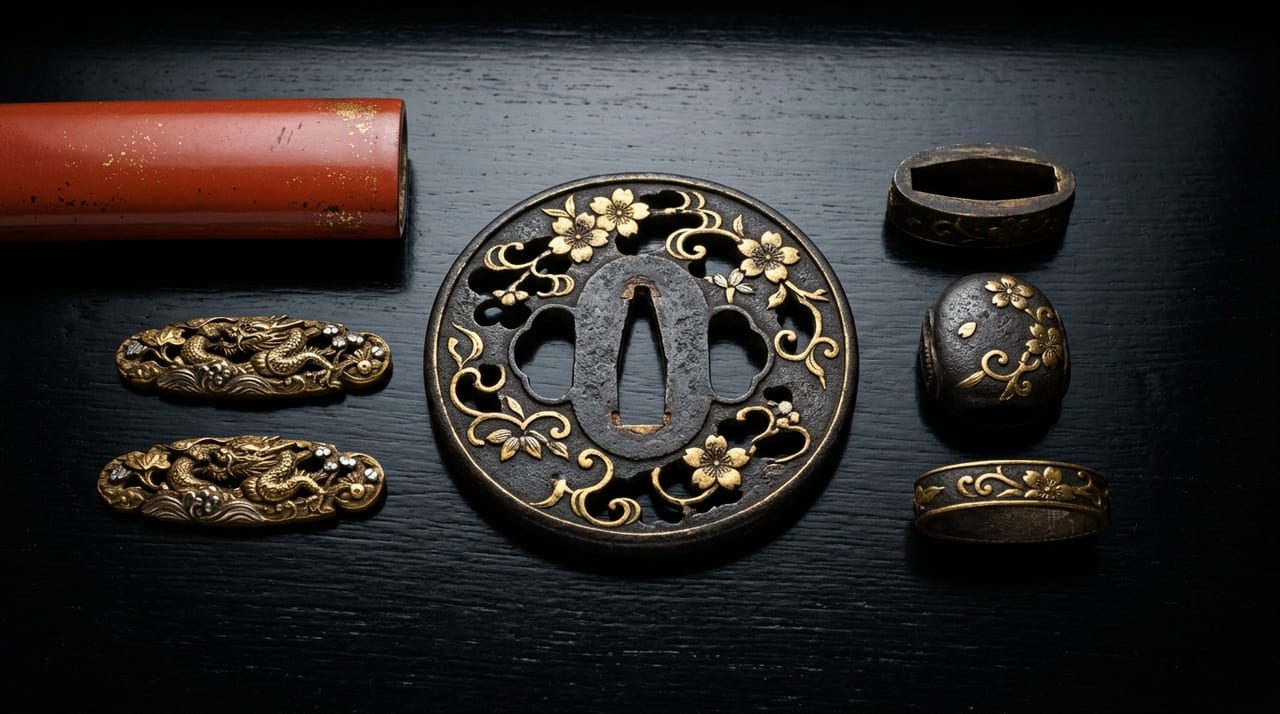 * Image is for illustrative purposes only.
Table of Contents
Black Ships and the Upheaval of the Sword World
Perry's arrival in Kaei 6 (1853) sent shocks through Japanese society as a whole, and the sword industry was no exception. When the Treaty of Amity between Japan and the United States was concluded the following year in 1854, a complex emotion—"the might of the foreigner" and "the helplessness of the Japanese sword"—began to spread through samurai society. Why continue making swords in an age of firearms and cannons?—the question faced by sword makers during the Ansei period was a philosophical inquiry that transcended mere technical discussion.
Nevertheless, or perhaps for that very reason, the period from Ansei through Man'en (1854–1861) became one of the periods of most intensive sword production during the late Edo period. As the momentum of the Sonno Joi movement grew stronger, samurai reinforced their conviction that "the sword is the soul," and demand for high-quality blades surged dramatically.
The reason swords forged during this period remain highly valued today is not merely their high technical standards. The sense of crisis and mission that the sword makers felt is inscribed directly into the expressions of the hamon and jihada, and from the perspective of later generations, these blades can be understood as "crafted objects that captured the spirit of the age." Some readers may wonder "why are swords from this period alone given such special regard," but the answer likely lies in the fact that there were limited periods throughout the late Edo era when external pressure, internal strife, and ideological conflict converged simultaneously.
The Paradoxical Rise of Sword Demand and Sonno Joi Ideology
The ideology of Sonno Joi, aimed at countering foreign pressure, introduced a curious paradox into sword culture. Even as everyone knew that firearms were becoming the dominant military force, the patriots sought the sword as a symbol of "the Japanese spirit (yamato damashii)," and actually wore them as they engaged in political activity and struggle. At the scenes of upheaval during the late Edo period—such as the Ikeda-ya Incident (1864) and the Kinmon Incident—the Japanese sword was always present.
The clientele visiting sword makers also changed during this period. Beyond orders from the samurai and direct retainers of the shogun, voices from loyalist ronin and domain samurai seeking "a sword capable of practical use" grew louder. The Ansei and Man'en periods were precisely a transition when "swords were drawn back from being mere ornaments to being practical weapons once more." It is said that some sword makers, moved by ideological sympathy, provided swords to patriots at special prices or inscribed their signatures with deep emotion.
Moreover, the rise in sword demand during this period was not limited to an increase in demand for weapons. By possessing swords as "proof of ideology," patriots imbued the swords themselves with political significance, and the question of who possessed which sword and how it had been transmitted came to be valued highly. In contemporary sword appreciation and collecting, the provenance and transmission records of Ansei and Man'en period swords are regarded as important evaluation factors alongside the quality of the blades themselves.
Representative Sword Makers of the Ansei Period and Their Styles
Representative sword makers of this period include Koyama Munetsugu, Hosokawa Masayoshi, and the late works of Minamoto Kiyomaro. Minamoto Kiyomaro was a sword maker who reached his prime during the Tenpo to Kaei periods, and his disciples and those influenced by him continued to produce actively into the Ansei period.
Koyama Munetsugu is known for his hamon excelling in the Bizen tradition (choji midare) and his jihada with well-ordered blade edges. Connoisseurs evaluate that Munetsugu's swords made during the Ansei period often display a kind of tense construction, as if reflecting the upheaval of the era. This was also a period when many "practical new swords pursuing strength" were produced by Owari-tradition makers, and sword makers of this period tended to favor durability and practicality over aesthetic appeal.
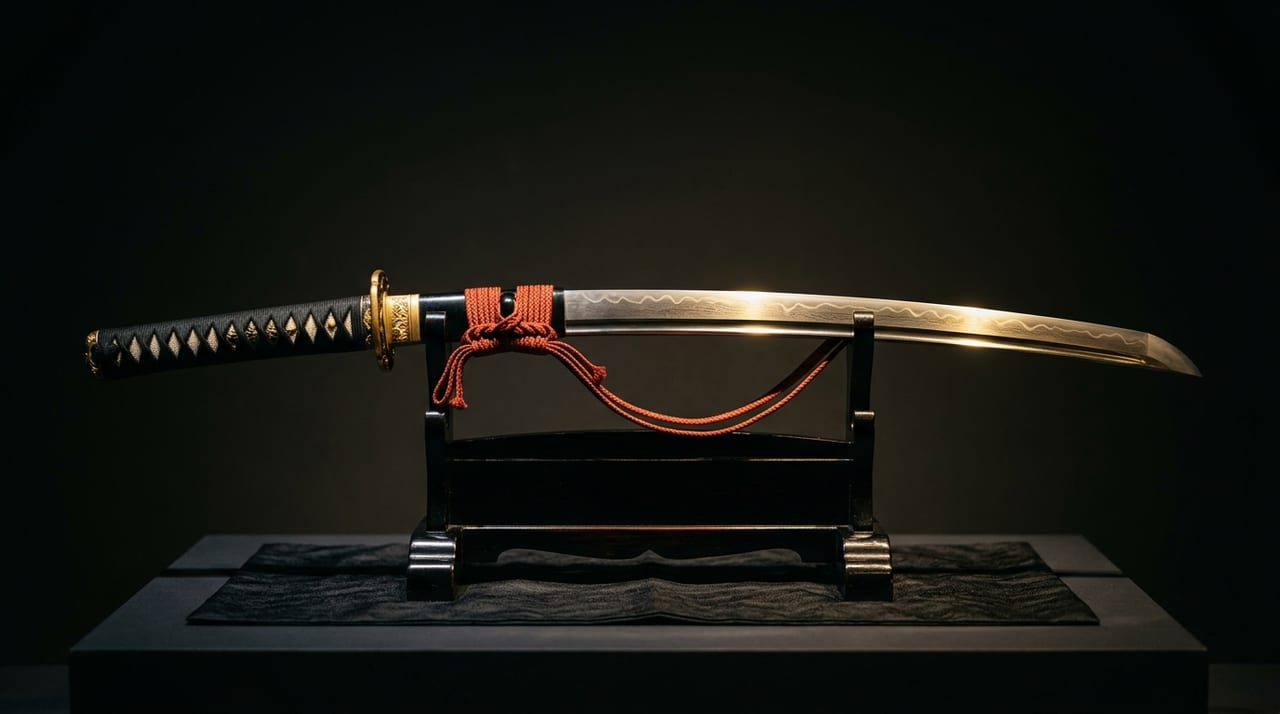
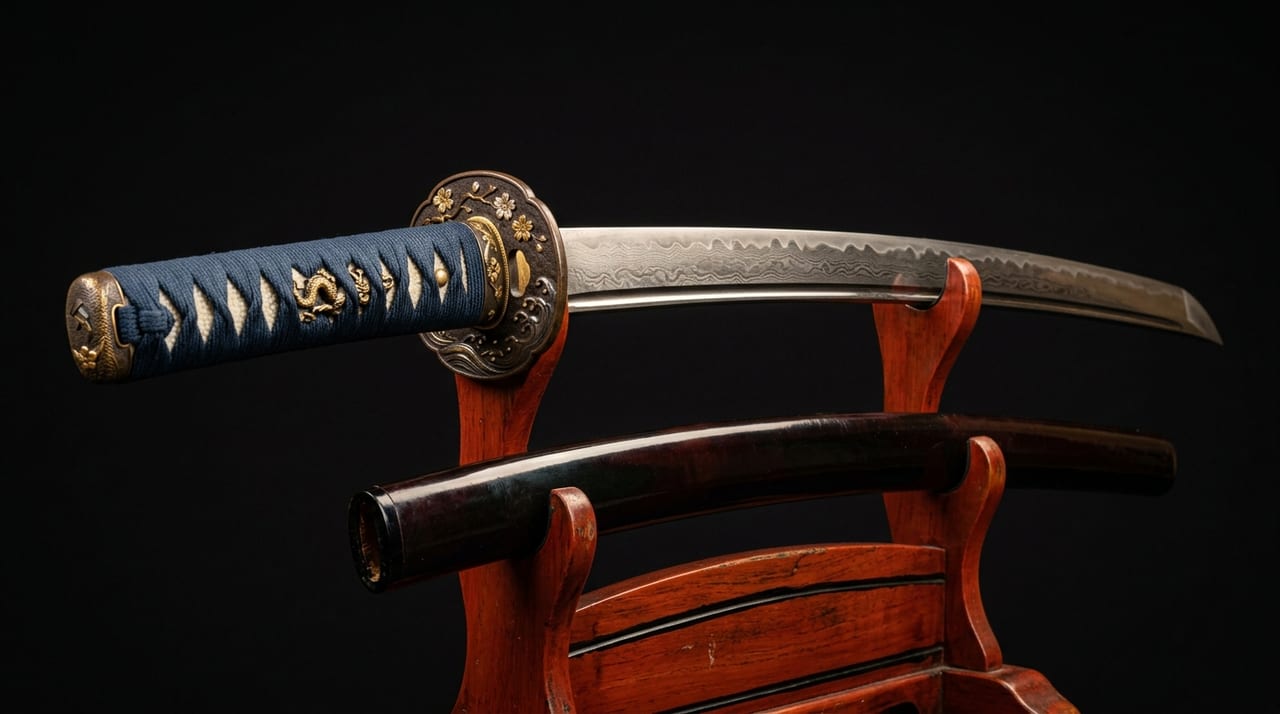
The hamon refers to the pattern on the blade edge created by heat treatment, while jihada refers to the appearance of the steel surface formed by forging, both being aspects where the skill and individuality of the sword maker are most evident. When appreciating Ansei period swords, it is said that beyond observing the hamon and jihada, one can also infer the mental state of the sword maker and the busyness of the workshop from the calligraphic style of the signature inscribed on the nakago. For readers encountering late Edo period swords for the first time, comparing the differences in hamon and jihada will likely serve as a key to understanding the historical context.
Shogunal Sword Policy and Production Environment
Even amid domestic political turmoil as the shogunate responded to external pressure during the Ansei period, control over sword production remained relatively lenient. Orders to official sword makers continued in each domain, and although many craftsmen were affected by the Great Ansei Earthquake (the Ansei Edo Earthquake) in 1855, the forges in Edo, Kyoto, and Osaka were relatively quickly rebuilt.
Tamahagane, the raw material for sword blades, continued to be supplied through tatara steelmaking in the Chugoku region, but records also indicate that during the Ansei period, rising production costs and unstable distribution began to strain the management of some sword makers. This was also a period when differences in work quality began to emerge between sword makers who could secure a stable supply of high-quality tamahagane and those forced to rely on substitute materials.
Tamahagane is Japanese steel made from iron sand through tatara steelmaking and is the fundamental material that determines the quality of the jihada and hamon of Japanese swords. During periods like the Ansei era when the procurement of raw materials and the livelihoods of craftsmen were shaken, differences in managerial ability and personal connections among sword makers tended to be directly reflected in the quality of their work, and even within "Ansei period swords," it is worth noting that there are relatively large individual variations when appreciating or collecting.
Man'en 1 (1860)—The Sakuradamon Incident and the Age of the Sword
The Sakuradamon Incident of Man'en 1 (1860) can be said to be one of the most dramatic sword incidents in Japanese history. This incident, in which the tairō (great elder) Ii Naosuke was assassinated by ronin from Mito and Satsuma, was also one of the last major incidents in which swords functioned as a means of political violence. The swords used in the incident were passed down through the ages, and even among sword makers and dealers, they held a special position as "swords symbolizing the turbulent late Edo period."
After this incident, the social meaning of wearing a sword began to transform. As the authority of the shogunate declined, the sword was torn between the symbolic status of "symbol of the samurai" and the polarized views of "a tool for revolution" or "an outdated relic of the past." Through such incidents, swords came to simultaneously embody both the aspect of "weapons for actually cutting down people" and the aspect of "symbols expressing political will." This duality has become an important perspective when evaluating Ansei and Man'en period swords not merely as antiques but as historical witnesses.
Key Points to Keep in Mind When Appreciating and Collecting Ansei and Man'en Period Swords
Swords bearing the turbulent historical context of the late Edo period easily attract interest due to their historical narrative, but understanding deepens when the following points are confirmed in appreciation and collection:
- The condition of hamon and jihada—The pattern of the blade edge created by heat treatment and the appearance of the steel surface created by forging both reflect both the technical standard at the time of creation and the state of preservation.
- The calligraphic style of the signature and the condition of the nakago—The signature inscribed on the blade serves as a clue to understanding the individuality and creation period of the sword maker.
- Records of provenance (transmission)—Records of who possessed the sword and how it was transmitted serve as material supporting the historical value unique to late Edo period swords.
- Presence or absence of a certificate of authentication from an appraisal organization—A certificate issued by a public appraisal organization is an indispensable reference for confirming authenticity and estimating the period and maker.
- State of preservation—Changes in condition over time, such as rust and polishing history, affect not only appreciative value but also future maintenance approaches.
While these are basic points of confirmation common to Japanese swords in general, not just late Edo period swords, Ansei and Man'en period swords have the particularity that the historical context itself becomes an evaluation factor, making verification of provenance especially important.
The Significance of the Last Classical Swords of the Late Edo Period
Swords made during the Ansei and Man'en periods occupy a special position, also known as "late Edo classical swords." While influenced by the new sword restoration movement of the late Edo period, a unique style was formed that simultaneously absorbed the tension of the turbulent age. These swords have collecting value not merely as crafted objects but as historical witnesses.
In the modern Japanese sword market, masterpiece swords from the Ansei and Man'en periods attract high interest from late Edo period sword collectors. In evaluation as well, assessment criteria may include "the strength of the hamon," "the return to practicality unique to the late Edo period," and "the ideological background of the maker," making these swords of an age that demands multifaceted appreciation beyond simple technical evaluation.