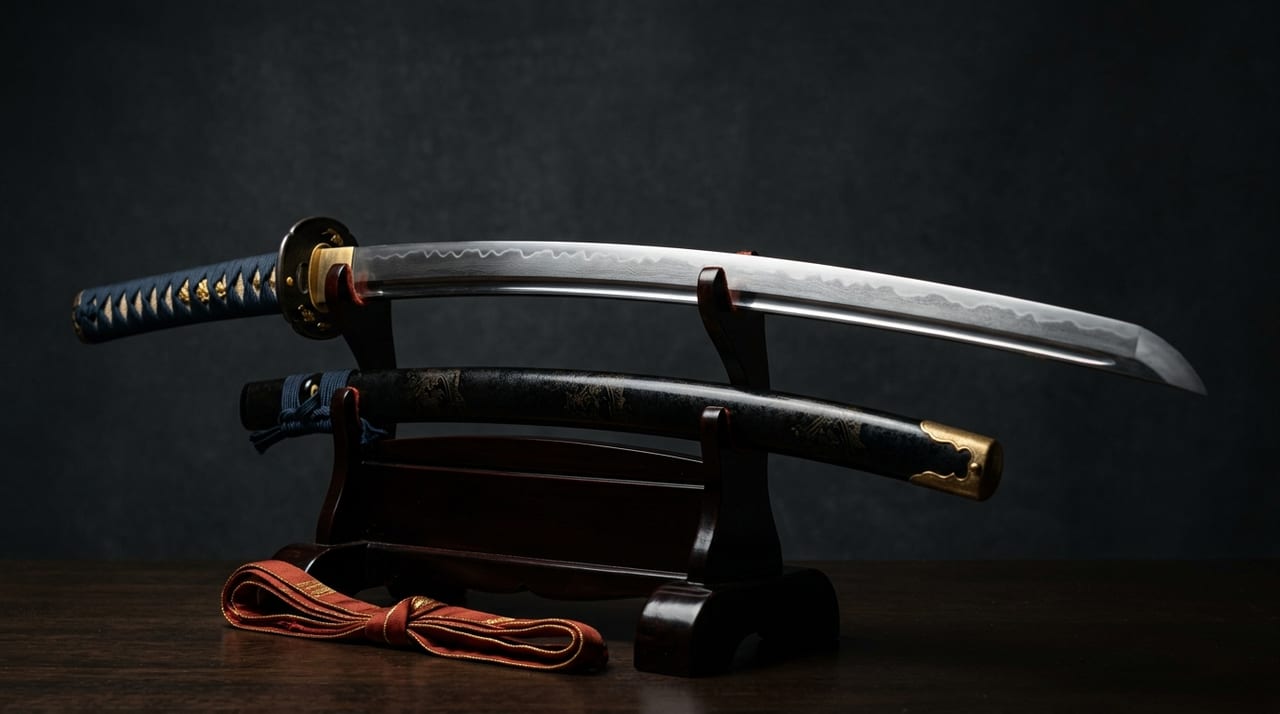
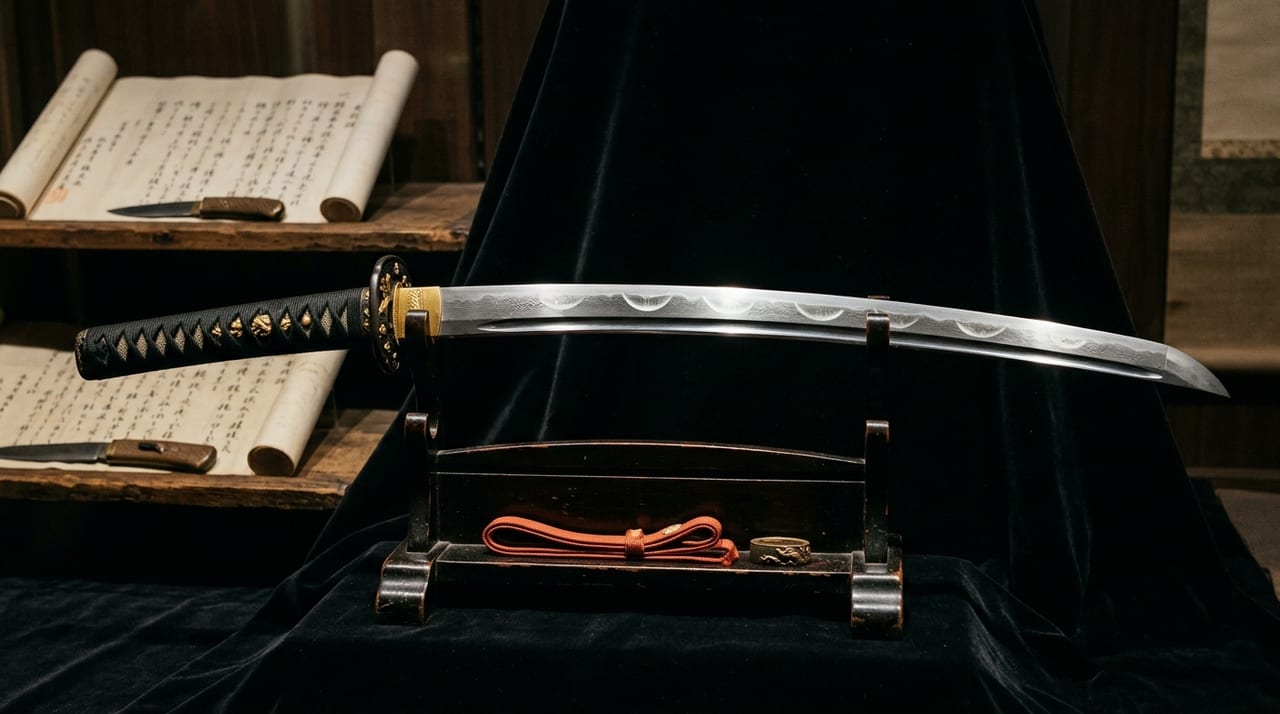
Swords of the Asuka Period and Continental Technology — How Iron Culture Transmitted from the Korean Peninsula and China Transformed Weapons Manufacturing in Wa
 * Image is for illustrative purposes only.
Table of Contents
Iron Culture of the Asuka Period — The Spread of Continental Technology to the Archipelago
The Asuka period (592–710) was an era in which Wa underwent rapid civilizational transformation through active exchange with China and the Korean Peninsula. Alongside cultural elements such as Buddhism, Chinese writing, and Confucianism, the transfer of practical technology also proceeded on a large scale. Among these, the transmission of iron and kaji technology was one of the most consequential technology transfers, with direct implications for weapons manufacturing.
Records of the groups of technicians (continental immigrants) who crossed over from the continent remain in official histories such as the Nihon Shoki and Shoku Nihongi. Craftsman groups known as the Nishigori and the Kanuchibe, who arrived from Baekje, Goguryeo, and Silla between the 5th and 6th centuries, settled primarily in the Kinki region corresponding to present-day Osaka, Nara, and Hyogo, and formed centers of ironware production.
That said, prior to the influx of continental technology, Japan already possessed its own ironworking techniques during the Asuka period. By the Kofun period (3rd–7th centuries), a production system had been established in which iron materials were imported from the continent and processed domestically, yielding weapons, agricultural tools, and implements. However, the technology at this stage did not reach the high standards of the continent, and it is thought that the influx of continental technology during the Asuka period brought about a qualitative leap.
Swords of the Early Asuka Period as Seen Through Kofun Burial Goods
Swords excavated from kofun spanning the late Kofun period (6th century) through the Asuka period show traces of technological change leading to the Japanese sword of later periods.
- Dominance of the chokutō (straight sword): Swords of the Asuka period were fundamentally chokutō, and the form distinctive to the Japanese sword — possessing sori (curvature) — had not yet been established. Blades were single- or double-edged, and the continental style was followed, with the angle between the tsuka (hilt) and blade nearly perfectly straight.
- Gold and silver inlay decoration: Some burial swords feature elaborate decoration with gold and silver inlay applied to the tsuka (hilt) and saya (scabbard). This represents the direct importation of continental weapons-decoration styles, and similarities have been noted with burial swords of the Baekje and Goguryeo royal and aristocratic classes. The gilt-bronze-mounted daitō excavated from the Fujinoki Kofun in Nara Prefecture (second half of the 6th century) is known as a representative example.
- Keitō no tachi and kantō no tachi: As sword forms of the Asuka through Nara periods, there are the keitō no tachi and the kantō no tachi. The keitō no tachi has a tsukagashira (pommel) in a pointed kei shape (jade-tablet shape), while the kantō no tachi has a ring-shaped tsukagashira. Both derive from daitō styles of the Korean Peninsula and China, and were used by the ruling class of Asuka-period Japan.
Kaji Technology from Baekje and Goguryeo Immigrants
In the first half of the 7th century, the Three Kingdoms — Baekje, Goguryeo, and Silla — stood in a tripartite balance on the Korean Peninsula and continued to contest one another in the "Three Kingdoms period." This political instability was the backdrop that drove many technicians and intellectuals to migrate to Japan.
The large-scale arrival of Baekje people accompanying the fall of Baekje (660) is well known in connection with the campaign to rescue Baekje (the Battle of Hakusukinoe, 663). Sword and ironware craftsmen were included in this wave, and they settled primarily in Yamato, Kawachi, and Settsu (present-day Nara, Osaka, and Hyogo).
The same was true of immigrants from Goguryeo (which fell in 668); the place name Koma that survives in present-day Saitama and Kanagawa prefectures indicates the settlement areas of immigrants of Goguryeo descent from this period. Kaji technicians were included in this group and formed the foundations of ancient ironware production in the Kantō region.
Among the technologies brought by immigrant kaji craftsmen, particularly significant was iron-sand smelting technology similar to tatara (traditional smelting). The Japanese archipelago contains abundant sources of iron sand (satetsu) centered on the Chūgoku region, including Izumo, Hōki, and Mimasaka, and it is thought that the combination with continental technology gradually put in place the technological foundations for the later tatara (traditional smelting) and tamahagane.
The Shōsōin and Sword Materials from the Asuka and Nara Periods
The Shōsōin, attached to Tōdaiji in Nara, is known worldwide as a facility housing the imperial treasures of the Nara period (710–794). Among its treasures are swords and weapons from the Asuka through Nara periods, and these constitute precious materials from which the influence of continental technology can be directly observed.
The kurozukuri no tachi, kingin-sō no kara no tachi, and other pieces preserved in the Shōsōin are chokutō forms that strongly reflect the style of Tang (China). The blades have a perfectly straight shape without sori, and the tsuka (hilt) and saya (scabbard) adorned with gold and silver decoration closely resemble the Tang ceremonial sword style. These demonstrate that Japan of the Asuka through Nara periods was actively absorbing continental sword styles.
At the same time, the Shōsōin also includes iron materials from the Korean Peninsula and swords presumed to have been manufactured by craftsmen of immigrant descent, and these are also considered important materials illustrating the improvement in the level of production technology within the archipelago.
From the Asuka Period to the Heian Tachi — The Transition from Straight to Curved Swords
The transition from the chokutō of the Asuka and Nara periods to the curved tachi established in the Heian period is the most important morphological change in the history of the Japanese sword.
There are multiple theories regarding the factors that caused the straight swords of the Asuka period to begin curving in the early Heian period — including the spread of cavalry tactics, the evolution of forging technology, and improvements to the material (tamahagane) — but it is certain that the continental technology absorbed during the Asuka period formed the technological foundation for this change.
As immigrant kaji craftsmen settled in the Japanese archipelago and their techniques fused with those of native craftsmen, a distinctive smelting and forging technology developed. The roughly one hundred years spanning the Nara through early Heian periods represent the transitional phase of this fusion and independent development. The "Japanese sword" style established from the mid-Heian period onward can be described as a product that evolved from its foundation of continental-origin technology under Japan's distinctive climate, materials, and tactical requirements.
Understanding the swords of the Asuka period serves as a starting point for exploring, from the perspective of technological history, the answer to the question: "Why did the Japanese sword take the form it did?"