Jintachi: The Commander's Ceremonial Tachi — Structure, Protocol, and Surviving Masterpieces
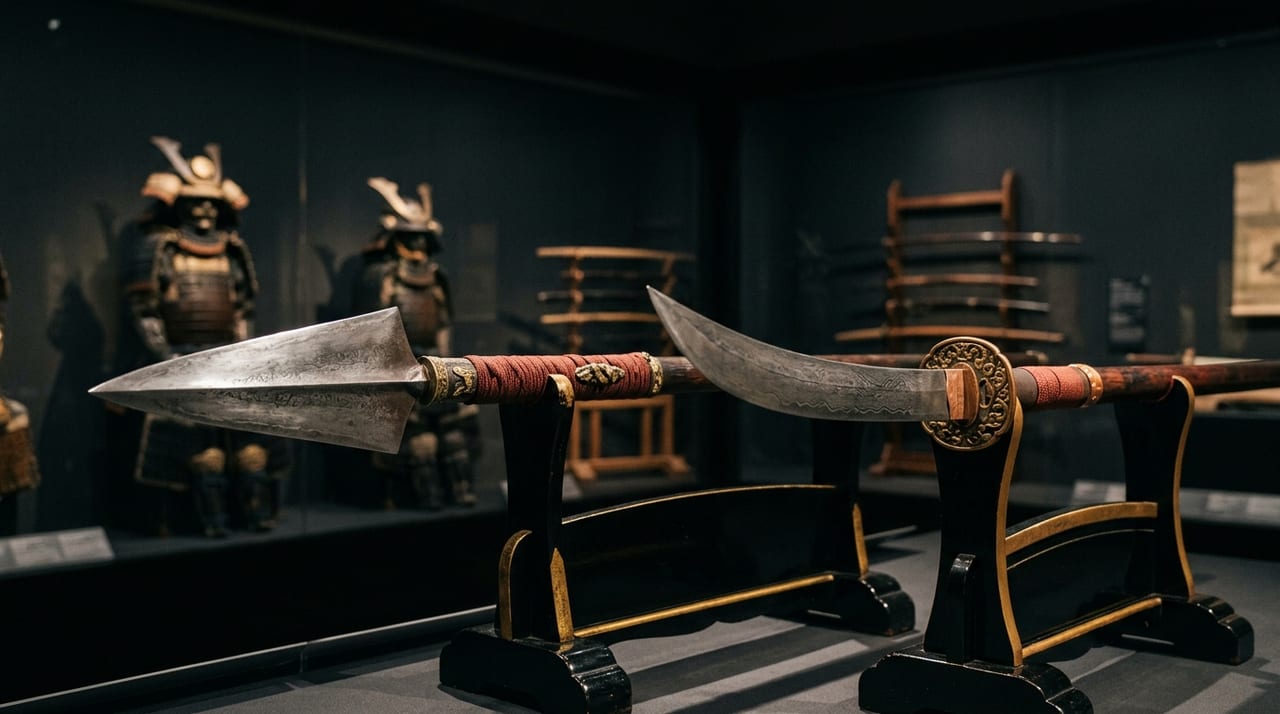 * Image is for illustrative purposes only.
Table of Contents
What is jintachi — the tachi permitted only to generals
Jintachi are formal tachi that daimyo and military commanders wore during deployments and military councils. Unlike everyday katana or ceremonial decorated tachi, jintachi were a special existence embodying "the authority and spirit of generals facing the battlefield."
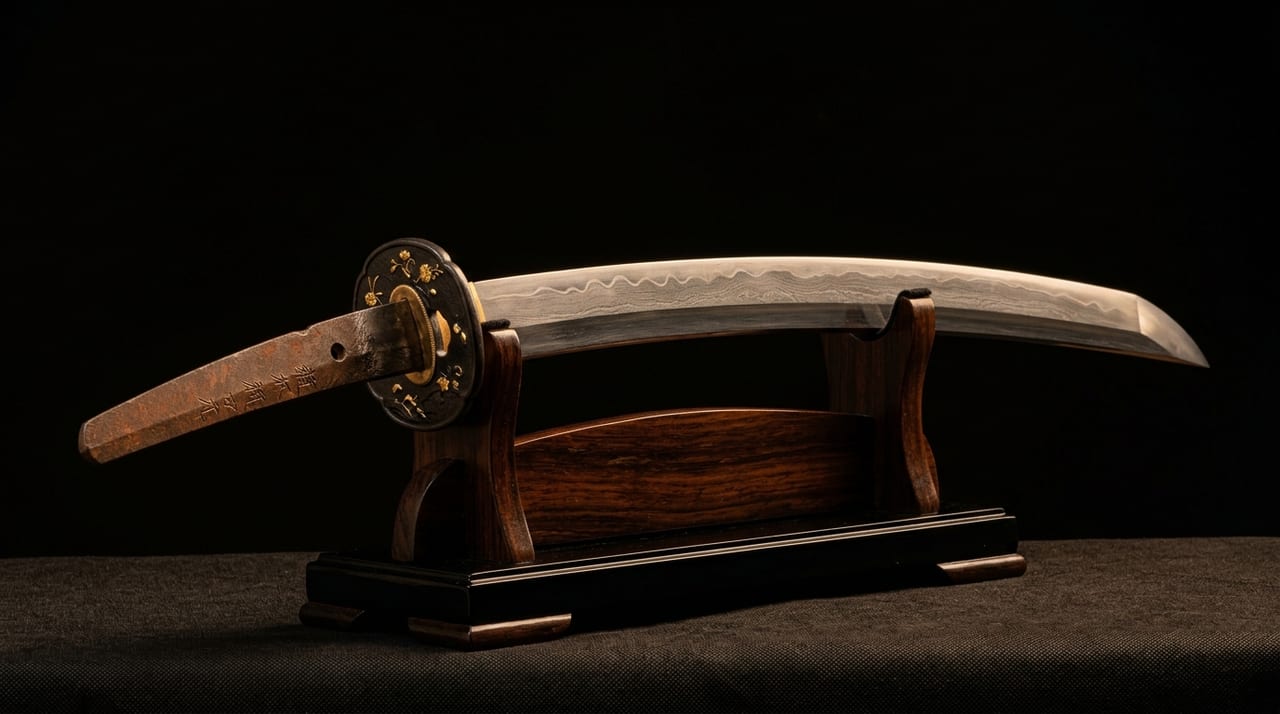
When positioning jintachi as a form of tachi, their greatest characteristic lies in "length and imposing grandeur." The blade length was generally around two and a half shaku (approximately 75 cm) to two and eight-tenths shaku (approximately 85 cm), and the hamon featured imposing, large-scale gunome or ō-midare patterns. The sugata of the blade avoided major re-polishing and was broad and sturdy, with wide motohaba and a well-planted form. All of these were formal choices made to "overwhelm viewers with powerful presence."
The role of jintachi in departure ceremonies
From the Sengoku period through the early Edo period, a series of rituals called "departure ceremonies" existed when military commanders deployed. Jintachi formed the core of these rituals and specifically appeared in scenes such as the following.
- Jintachi conferral (hairyo): There was a practice of daimyo giving jintachi to capable retainers, which served both as the signal to deploy and as proof of trust. Multiple records remain of Toyotomi Hideyoshi conferring jintachi on military commanders during the Korean invasions (Bunroku and Keicho Campaigns), showing that the exchange of jintachi functioned as a form of contractual act.
- Jintachi enshrinement at shrines: Before deployment, military commanders would enshrine jintachi at their tutelary shrines or closely connected shrines to pray for victory, and in some cases would enshrine jintachi again upon triumphant return. That many existing jintachi have been transmitted to the treasure houses of shrines and temples is the result of this enshrinement culture.
Jintachi koshirae — formality and ornamentation
The koshirae of jintachi possesses its own unique style, different from typical uchigatana koshirae or artistic decorated tachi koshirae. The representative characteristics are shown below.
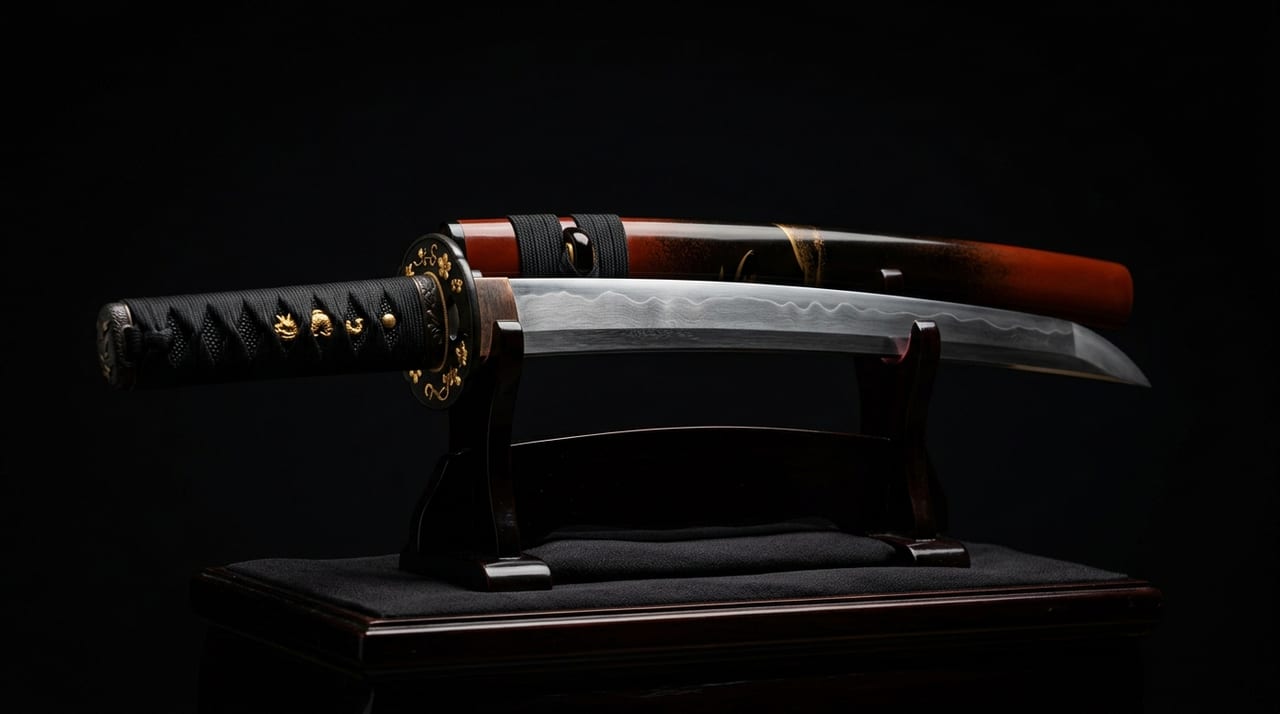
- Saya: The saya of jintachi often featured black lacquer or red lacquer, and exteriors with metal fittings at the koiguchi and kojiri were preferred. In Sengoku-period jintachi, some featured family crests or clan patterns in makie on the saya.
- Tsuka: The tsuka was relatively long and designed for easy two-handed grip. After wrapping samegawa, diamond-pattern hilt wrapping was applied with silk thread or leather thread. Metal fittings (fuchigashira and menuki) were carved with family crests and auspicious designs for long military fortune.
- Hyogo-gusari: Among jintachi, there is a particularly formal style called "hyogo-gusari tachi." This is a form suspended at the waist using a kusari passed through metal rings on the saya, continuing the tradition of formal tachi from the Heian and Kamakura periods. In Sengoku and Edo-period jintachi, designs imitating this hyogo-gusari were sometimes used as expressions of formality.
Outstanding examples of existing jintachi
Throughout Japan, jintachi enshrined by military commanders exist in shrines and museums. Representative examples are listed below.
- Itsukushima Shrine (Hatsukaichi, Hiroshima Prefecture): Including the National Treasure tachi transmitted to have been enshrined by Taira no Kiyomori, multiple jintachi said to have been enshrined by Toyotomi Hideyoshi during the Korean invasions have been transmitted. Jintachi from the Azuchi-Momoyama period of important value exist, conveying to the present day the faith and enshrinement culture of military commanders. Note that the legendary masterwork "Kogarasumaru" is held by the Imperial Household Agency and is not held by Itsukushima Shrine.
- Kasuga Taisha (Nara, Nara Prefecture): Holds numerous tachi and jintachi enshrined by Yamato daimyo and the shogunal house. Known as one of the shrines where tachi enshrinement culture remains most vividly preserved.
- Atsuta Shrine (Nagoya, Aichi Prefecture): Due to enshrining the Kusanagi as its sacred object, it has deep connections to swords, and possesses abundant records of jintachi enshrinement by Sengoku military commanders. It is also the site where Oda Nobunaga is said to have prayed for victory before the Battle of Okehazama, and the enshrined jintachi hold high value as historical materials demonstrating the spiritual anchor of the samurai.
Jintachi in the Edo period — from practical to symbolic
After the establishment of the Tokugawa shogunate, as large-scale internal warfare ceased, jintachi transformed from practical weapons to ritual symbols. The practice of jintachi being displayed in processions during alternate attendance and scenes demonstrating the formality of shoguns and daimyo became established, and "jintachi as symbols" that were not intended to actually be drawn and used began to be created.
From the perspective of forging technique, Edo-period jintachi increasingly came to be evaluated for the luxury of their koshirae and the precision of their design, with the aspects as comprehensive art of sword fittings craftspeople — metalworkers, lacquerers, and makie artists — becoming stronger. Most jintachi created as gifts from the Tokugawa shogunal house and various daimyo houses are today housed in museums and art museums, and their dignity continues to overwhelm modern people.
Jintachi are, among the categories of Japanese swords, the sword form in which "weapon, ritual, and art" are most highly fused, and continue to hold high value in both research and appreciation as embodiments of the essence of samurai culture. In modern times, jintachi transmitted to shrines, temples, and museums remain rare historical treasures through which one can directly sense the spirit of military commanders and the breath of the era, continuing to attract many people without end.