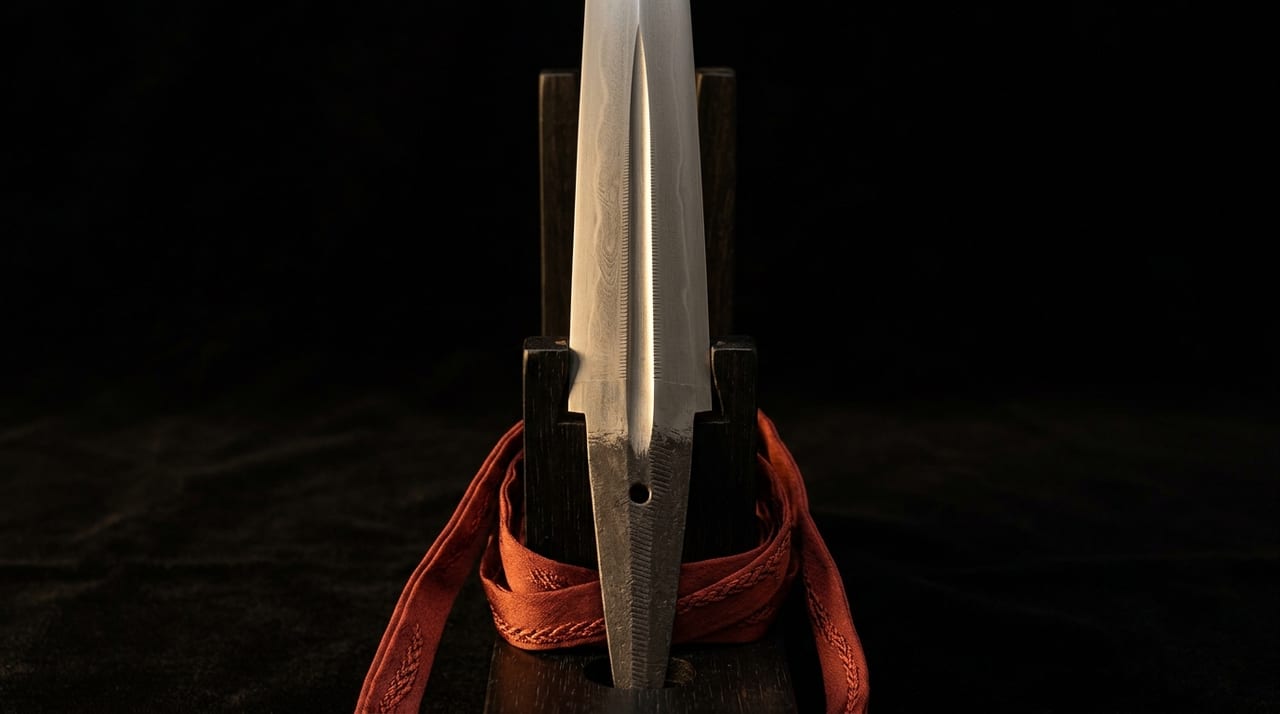
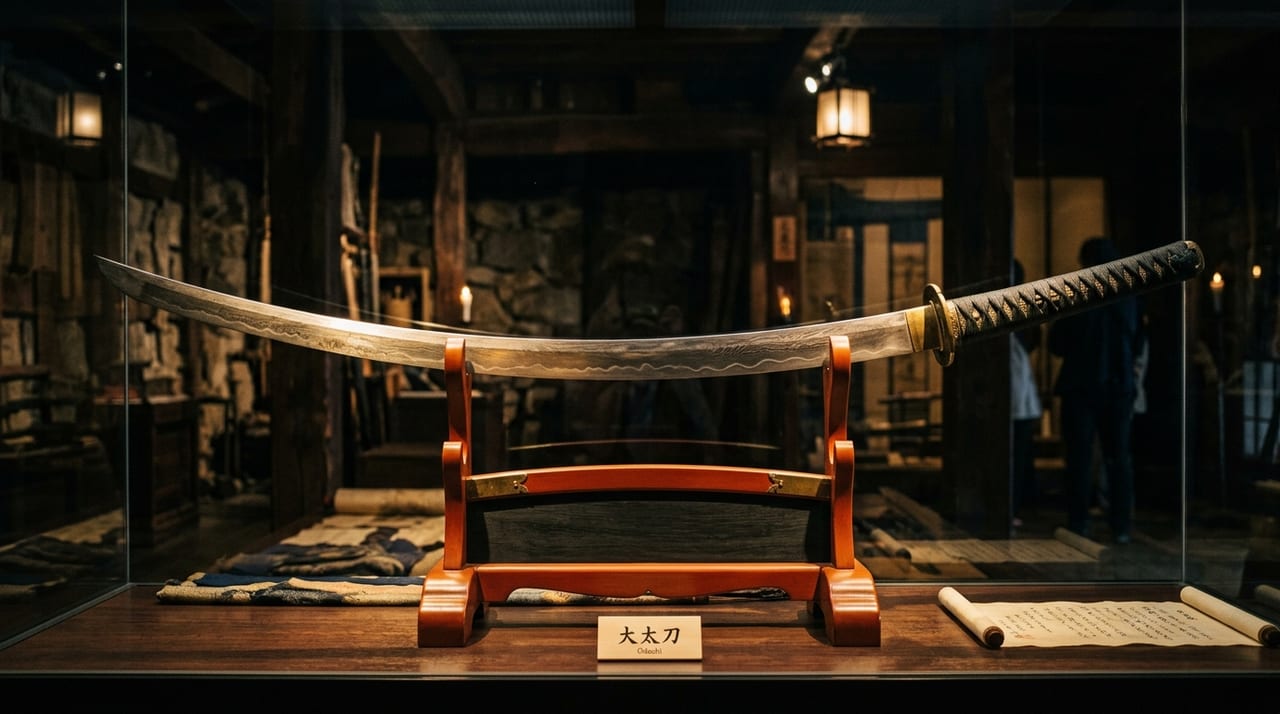
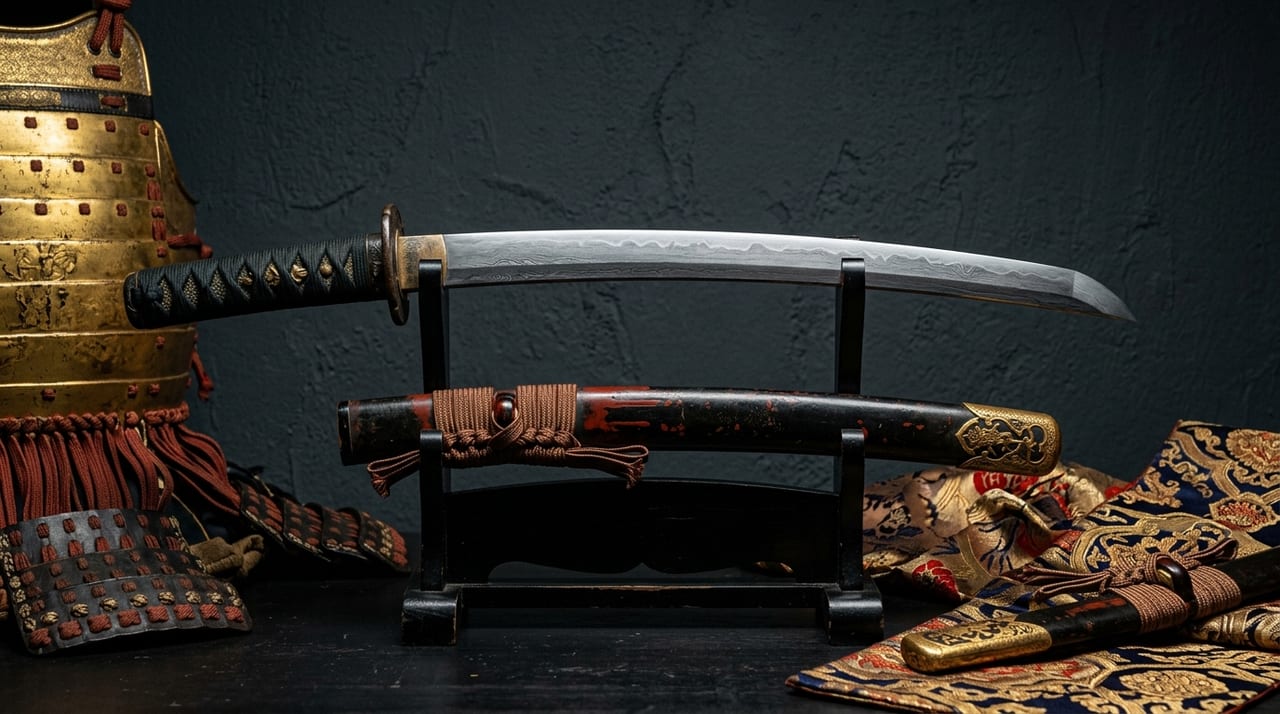
The Long Blade — Classifying Nagamaki, Ookanabo, and Odachi
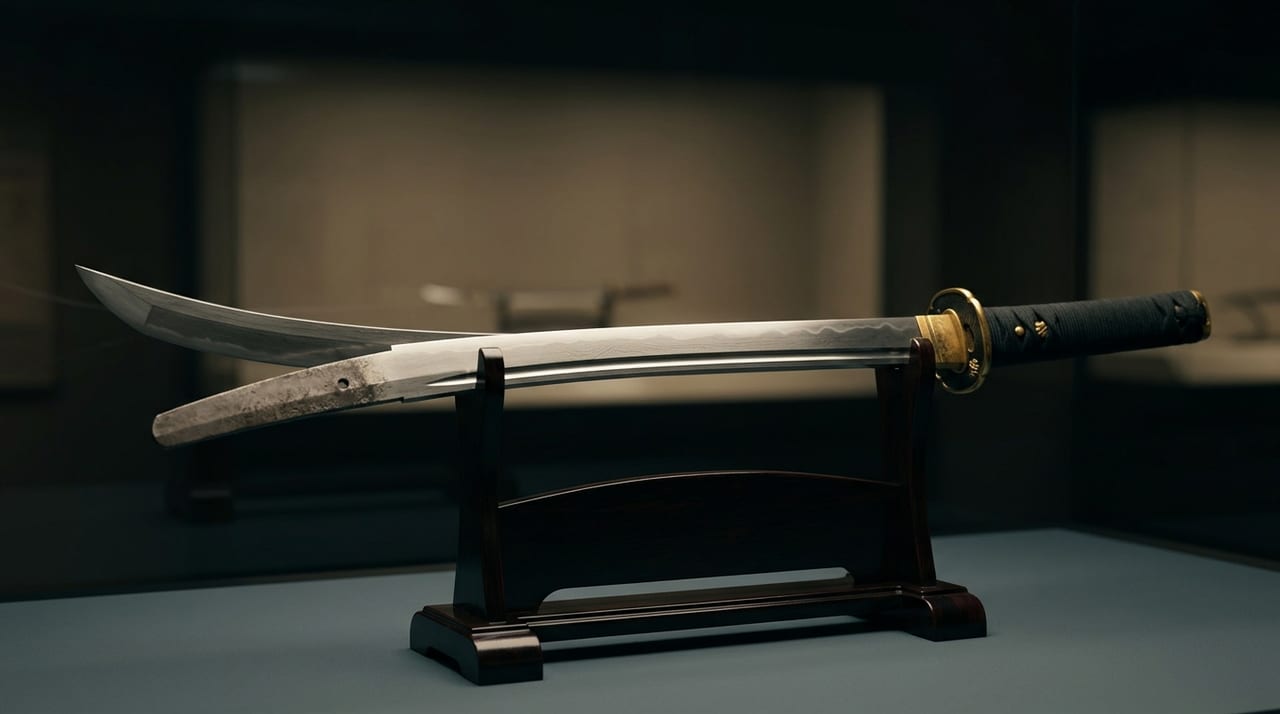 * Image is for illustrative purposes only.
Table of Contents
Large Swords of the Nanboku-cho Period
The Nanboku-cho period (1336–1392) was the era in Japanese sword history when the most diverse forms of large bladed weapons were created. The prolonged internal conflicts and shift toward infantry-based combat generated demand for large piercing and slashing weapons, leading to the establishment of three major forms: nagamaki, ōnaginata, and ōtachi. These forms overlap significantly in their morphology and remain a contested area of classification in modern sword studies.
Definition of Ōtachi (Large Tachi)
Ōtachi is a general term for exceptionally large tachi swords with blade lengths of 3 shaku (approximately 90 cm) or greater. "Nodachi" (野太刀) is an alternative name used when ōtachi were carried and used in actual combat; it is not a superior length category but is treated as equivalent to ōtachi in most modern classifications.
Characteristics:
- Blade length of 3 shaku (approximately 90 cm) or greater. Wielded with both hands or carried across the back during ground combat
- Construction (shinogi-zukuri with waist curvature) following standard tachi design
- Uses: vanguard assault, sweeping motions from horseback, and psychological intimidation
Notable ōtachi:
- Mikazuki Munechika: One of the Five Swords Under Heaven. With a blade length of 80.0 cm, it is housed in the Tokyo National Museum and is said to have been made by Sanjō Munechika, a sword master of the late Heian period
- Doji-giri Yasutsuna: A National Treasure. A late Heian period work of approximately 80 cm blade length, housed in the Tokyo National Museum
Definition and Morphology of Nagamaki
Nagamaki is a long-handled weapon in which the blade and hilt are of relatively equal length, characterized by a blade length of approximately 60–90 cm and hilt length of approximately 60–90 cm.
- The name "nagamaki" is said to derive from the long hilt wrapped with leather, cloth, and other materials extending from the blade section to the hilt
- Regarding its origins, it is thought that the "nakamaki no tachi" (中巻の太刀), a tachi with cord wound around the blade from the center toward the hilt, evolved into the nagamaki, which was designed with a longer hilt from the manufacturing stage onward
- It takes the form of a shinogi-zukuri blade attached to a long hilt, representing an intermediate form between the ōtachi and naginata
- Depictions of nagamaki appear in battle scrolls from the Nanboku-cho and Muromachi periods
Comparison with Ōnaginata
Ōnaginata is a form of naginata with a longer blade than standard naginata (60–90 cm or longer). The main differences from nagamaki are:
| Item | Nagamaki | Ōnaginata |
|---|---|---|
| Blade shape | Shinogi-zukuri (tachi-type) | Naginata-type (distinctive curvature and form) |
| Blade and hilt ratio | Nearly equal | The hilt is often longer than the blade |
| Cross-section | Resembles tachi | Distinctive naginata cross-section |
In actual surviving examples, the morphology of nagamaki and ōnaginata often overlap, making classification frequently difficult. Modern sword studies have been advancing systematic classification through the accumulation of morphological data from transmitted pieces.
Polishing Away and Disposal—Repurposing and Scrapping of Large Swords
From the Nanboku-cho through Muromachi periods, many large swords were repurposed into tachi and katana through "suriage" (shortening by polishing). This was a process of shortening from the tang of the blade to make it more portable and practical to use, often resulting in the loss of the original signature.
Conversely, as the period of warfare came to an end, large swords that became difficult to maintain were preserved through dedication to shrines and temples or burial in the ground. Some dedicated pieces are now housed in shrine treasure halls as National Treasures or Important Cultural Properties, and several large swords from the Nanboku-cho period still exist in the treasure halls of Kasuga Taisha (Nara) and Itsukushima Shrine (Hiroshima). The long blades of ōtachi were difficult to handle in actual combat, and many were dedicated primarily for their psychological intimidation or ritualistic significance.
Classification Debates and Modern Research
The classification criteria for "nagamaki," "ōnaginata," and "nodachi" are not unified even in NBTHK examinations, and individual judgments based on the morphology, provenance, and historical accounts of each surviving piece are typically made.
Recent research has proposed:
- Metrological analysis of blade and hilt dimensions
- The shape of the tang (nakago) and the positioning of the peg holes
- The cross-sectional morphology of the blade construction
an approach that analyzes these three points in combination, with objective systematization of morphological types advancing.
Surviving Examples and Museum Collections
Surviving examples of ōtachi, nagamaki, and ōnaginata are dispersed among shrines and museums throughout Japan. Notable locations include:
- Kasuga Taisha (Nara): Houses numerous large swords from the Nanboku-cho period
- Itsukushima Shrine (Hiroshima): Ancient and large swords dedicated by the Taira clan
- Tokyo National Museum: Large swords designated as National Treasures or Important Cultural Properties
Public exhibitions of these pieces provide excellent opportunities for morphological comparison and appreciation.
Usage of Nagamaki and Its Relationship to the Spear
The nagamaki was used from the Nanboku-cho period through the Muromachi and Sengoku periods, but from the mid-Sengoku period onward, it gradually ceded its prominent role on the battlefield to the long spear (nagayari) as dense formation tactics with long spears became prevalent. The spear, specialized for thrusting and easy to train with, became the standard weapon of ashigaru (foot soldiers), while the nagamaki continued to be employed by certain military commanders and elite warrior guards, given its characteristics as a bladed long-handled weapon.
The fact that the nagamaki's blade is shinogi-zukuri demonstrates a fundamental difference from the naginata. While the naginata is shaped specifically for sweeping (horizontal strikes), the nagamaki has a tachi-type blade capable of both thrusting and cutting, enabling a wider variety of attacks. This versatility is thought to be one reason it maintained a certain user base even in an age dominated by foot soldiers.
Kasuga Taisha's Collection of Long-Handled Weapons
Kasuga Taisha in Nara City, also called the "Treasure House of the Heian Period," possesses numerous swords, armor, and fine arts and crafts, with 354 National Treasures and 2,528 Important Cultural Properties housed and displayed in its National Treasure Hall. The collection includes long-handled weapons including ōtachi and ōnaginata dedicated from the Heian through Nanboku-cho periods, making them invaluable primary sources for understanding the reality of large swords of the era. When studying the morphology and usage of large swords from the Nanboku-cho period, exhibitions at the National Treasure Hall of this shrine represent one of the finest opportunities for viewing.