Are There Double-Edged Japanese Swords? — Moroha-zukuri Types and History: Ken, Double-Edged Wakizashi, Warabite-tō
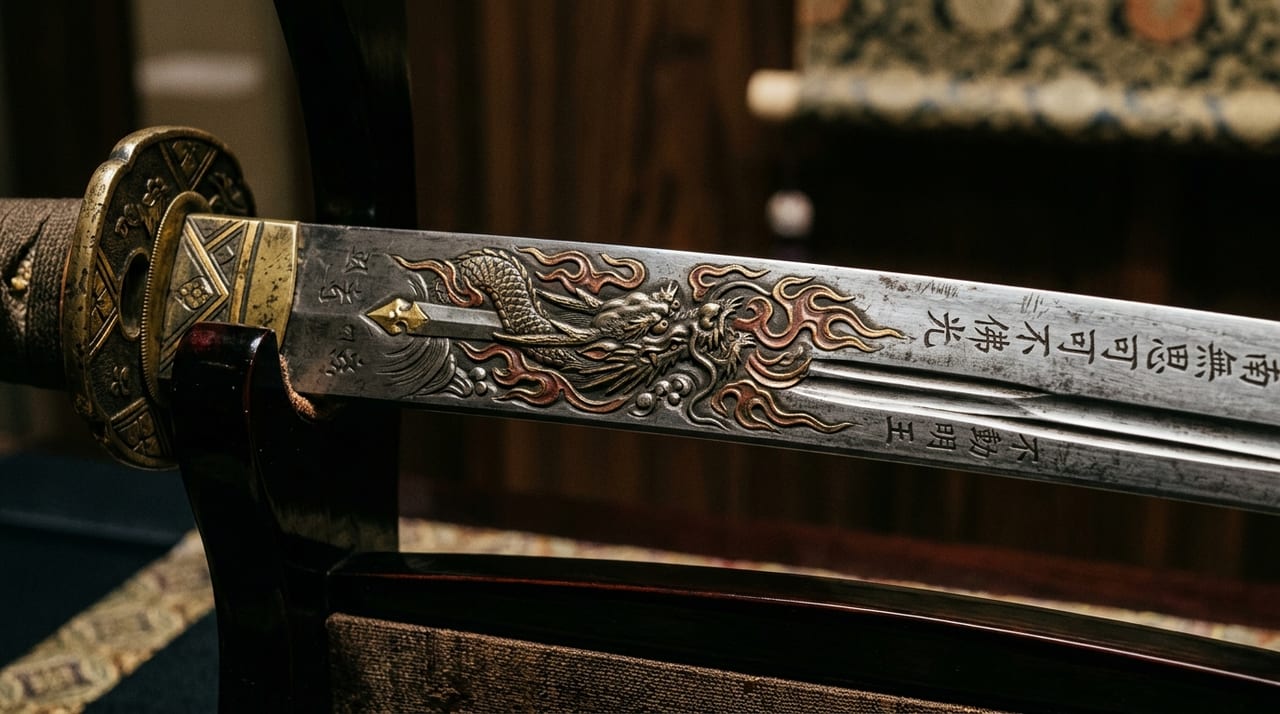 * Image is for illustrative purposes only.
Table of Contents
About Morohazukuri (Double-Bladed Construction)
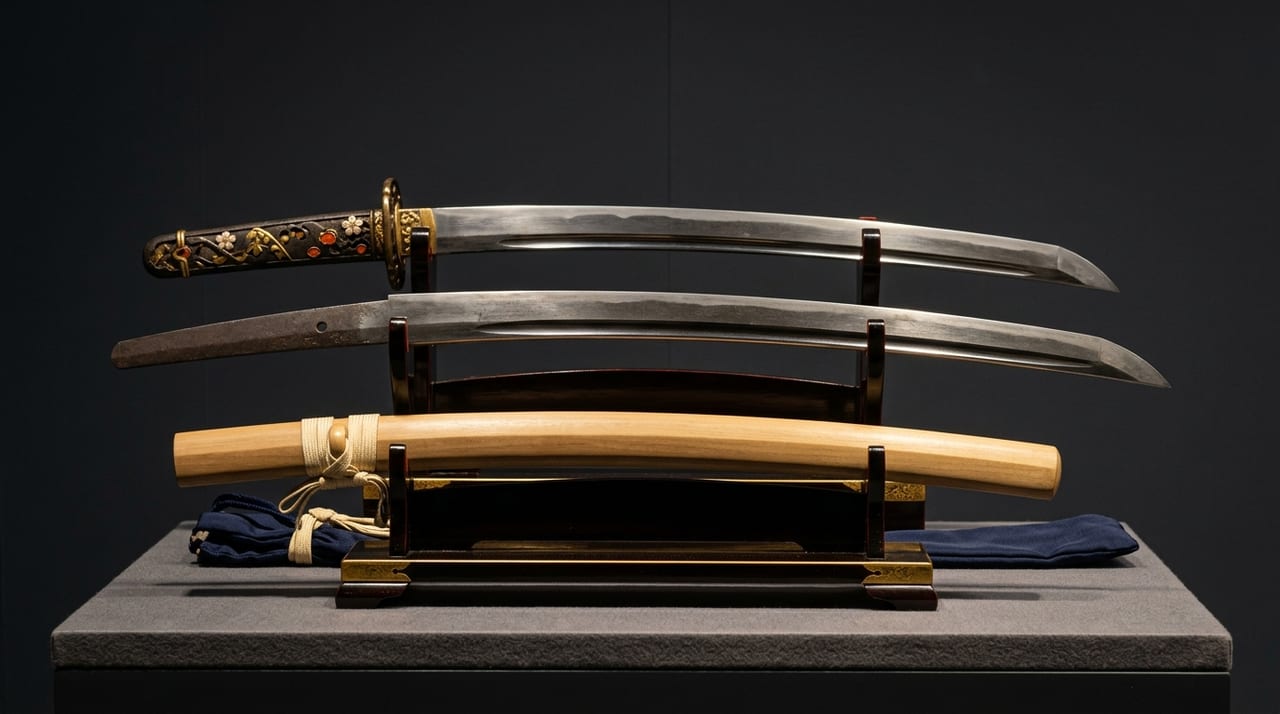
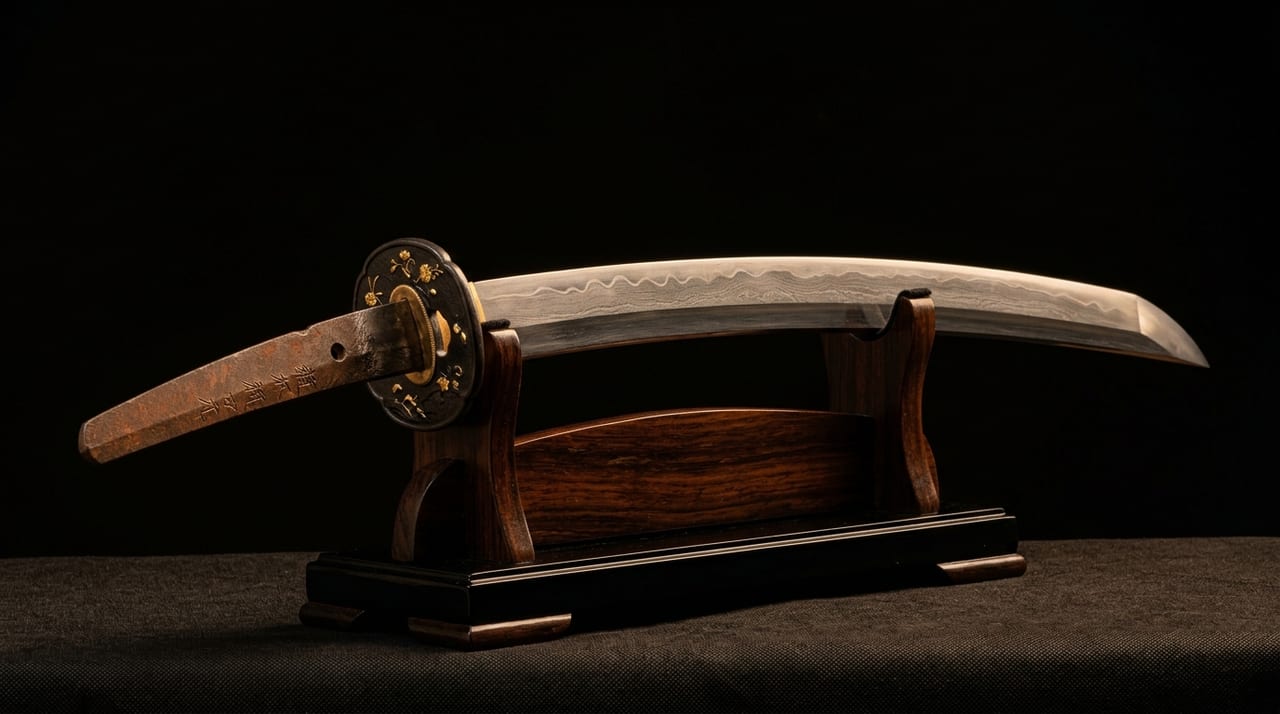
"Morohazuki" refers to a construction style where both sides (front and back) of the blade have edges. In contrast to typical Japanese swords, which are "kataha" (single-edged)—where only one side of the blade has an edge and the opposite side is called the "mune" (spine)—morohazukuri swords have edges on both sides. This style traces back to ancient "ken" (straight double-edged swords) and continues to be made today as shrine offerings, Buddhist implements, and martial arts equipment.
Morohazukuri swords are known to have been produced in large quantities during the Muromachi period, and some examples possess a curve. Because of the double-edged structure, blacksmithing techniques different from those used for single-edged Japanese swords are required, and applying an even tempering to both sides represents high technical difficulty.
The Lineage of Ken
Ken is the collective term for double-edged straight swords and was the mainstream style in Japan before the Nara to early Heian period (8th-9th centuries).
Lineage:
- Ancient ken: A straight-sword form derived from China and the Korean peninsula. Unearthed from Yayoi to Kofun period sites in Japan
- Ken donated to shrines: Ritualistic straight-sword double-edged blades enshrined at shrines. The donated swords at Kasuga Taisha and Kashima Shrine are famous examples
- Kurikara ken: A double-edged straight sword with a dragon coiled around it, held by the Buddhist deity Fudo Myoo. Manufactured as Buddhist implements
In large kofun (burial mounds) from the Kofun period (3rd-7th centuries), double-edged straight swords called "kantotachi" (ring-pommel swords) were buried as symbols of authority. This form, with a ring-shaped metal fitting on the pommel, was common to China and the Korean peninsula and was used throughout East Asia as a burial good for those in power. When the Nara period (8th century) began, as the ritsuryo system was standardized, sword forms became standardized and the single-edged "tachi" became mainstream.
Kissaki Morohazukuri and Kogarasumaru
The most important extant example in the history of morohazukuri is the "Kogarasumaru."
The Kogarasumaru is single-edged with a curve from the base to the middle section, taking the form of a tachi, but becomes double-edged from the kissaki (point) upward toward the upper half of the blade—this unique construction is called "kissaki morohazukuri" or "Kogarasumaru construction." As a transitional form between single-edged tachi and double-edged ken, it represents an extremely rare style in Japanese sword history.
Kogarasumaru specifications:
- Blade length: 62.8cm
- Curve: 1.2cm (curves strongly from the base to the tang)
- Width at base: 3.25cm
- Tang length: 19.9cm
- Attributed maker: Amakuni—a legendary swordsmith from the Nara to early Heian period
- Current holder: Imperial Household Agency (Imperial treasure)
According to legend, it was bestowed during the Heian period by the eight-legged crow (yatagarasu), the divine messenger of Ise Shrine, and passed down through the generations of the Heike clan. It went missing after the Battle of Dan-no-ura (1185), but its safekeeping by the Ise clan was confirmed in Tenmei 5 (1785) during the Edo period. It was presented to Emperor Meiji in Meiji 15 (1882) and has since been preserved by the Imperial Household Agency as an imperial treasure.
The Kogarasumaru is evaluated as one of the most important artifacts in sword history as a "bridge from ancient ken (double-edged straight swords) to Japanese swords (single-edged curved swords)."
Morohazukuri Wakizashi of the Edo Period
During the Edo period, as samurai culture matured, wakizashi with double-edged construction that pursued artistic value were produced.
Characteristics:
- Made for etiquette, ritual, and display rather than practical combat use
- The beauty of the steel quality and blade pattern is central to evaluation
- Some were made-to-order pieces by renowned swordsmiths commissioned by daimyo and hatamoto
Representative swordsmiths of morohazukuri wakizashi:
- Examples made by swordsmiths of the Echizen Yasutsugu lineage
- Morohazukuri works by antiquarian swordsmiths from the late Edo period (Koyama Munetsugu, Minamoto Kiyomaro, etc.) are highly regarded
Evaluation Points for Double-Bladed Construction
- Blade pattern symmetry: Whether the front and back blade patterns are symmetrical or asymmetrical—evaluated from an artistic perspective
- Steel uniformity: The uniformity of the steel grain pattern (jigane) on both sides
- Kissaki (point) shape: The shape of the point—the kissaki shape determines classification as ken, tanto, wakizashi, etc.
- Tang form: Manufacturing period and school lineage are determined by the shape of the tang (nakago)
- Edge symmetry: As a unique evaluation criterion for morohazukuri, the edge-hardening on both sides (depth and uniformity of the tempering) is evaluated
Modern Morohazukuri Production
Even today, morohazukuri swords are produced by renowned swordsmiths. Modern swords (works by contemporary swordsmiths) featuring double-bladed wakizashi and tanto are:
- Evaluated as "high-difficulty works" that demonstrate the skill of sword artisans
- Often made-to-order for shrine offerings and temple Buddhist implements
- Collected by connoisseurs who specialize in morohazukuri works as an aspect of Japanese sword appreciation
Handling of Morohazukuri in NBTHK Examination
The NBTHK classifies and examines double-bladed swords as "ken," "tanto (double-bladed)," "wakizashi (double-bladed)," etc. The evaluation criteria are basically the same as for single-edged swords—overall evaluation of steel quality, blade pattern, and form—but the quality and symmetry of the edges on both sides become additional examination points.
Special forms such as Kogarasumaru construction (kissaki morohazukuri) are recorded as "tachi (kissaki morohazukuri)" in classification, with the construction form noted alongside the "type" of the sword. Both extant originals and copies of this style are extremely rare, and examples on the market are very scarce.