The Complete History of Mino Smithing — The Gifu Swordsmiths and Seki Lineage Behind Sengoku-Era Practical Blades
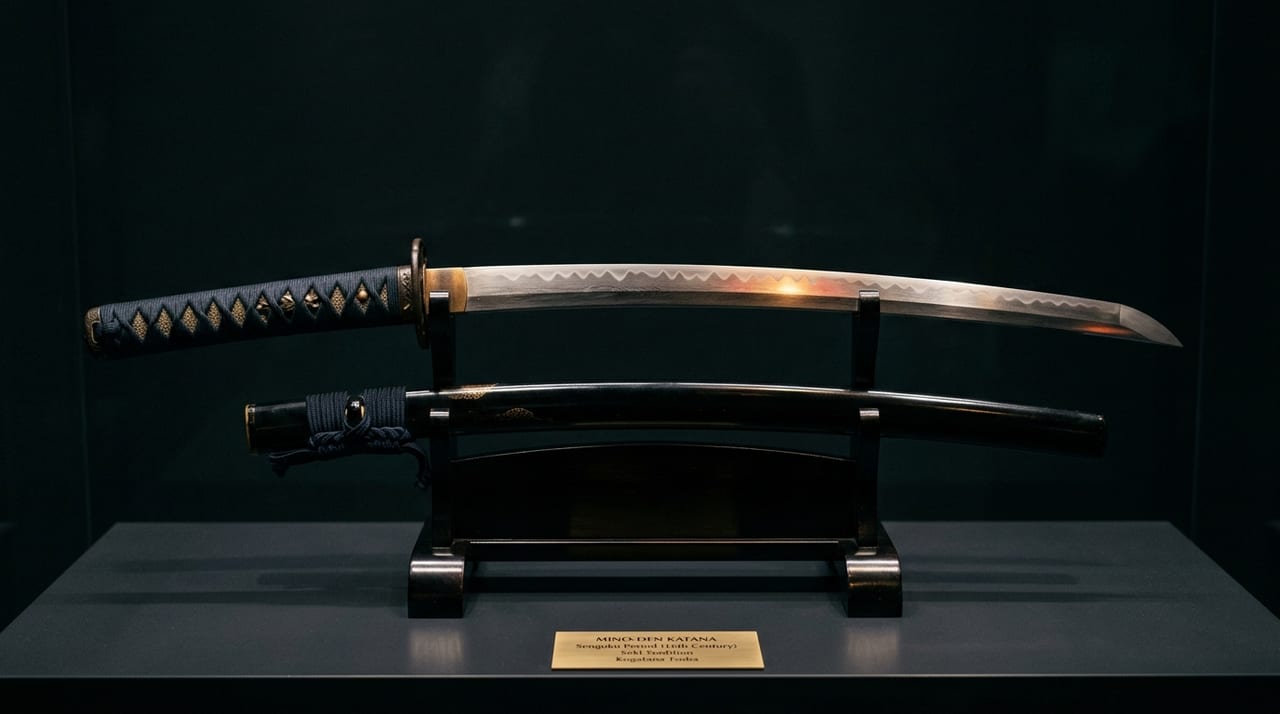 * Image is for illustrative purposes only.
Table of Contents
Mino Tradition — The Birthplace of Practical Blades That Armed Warring States Japan
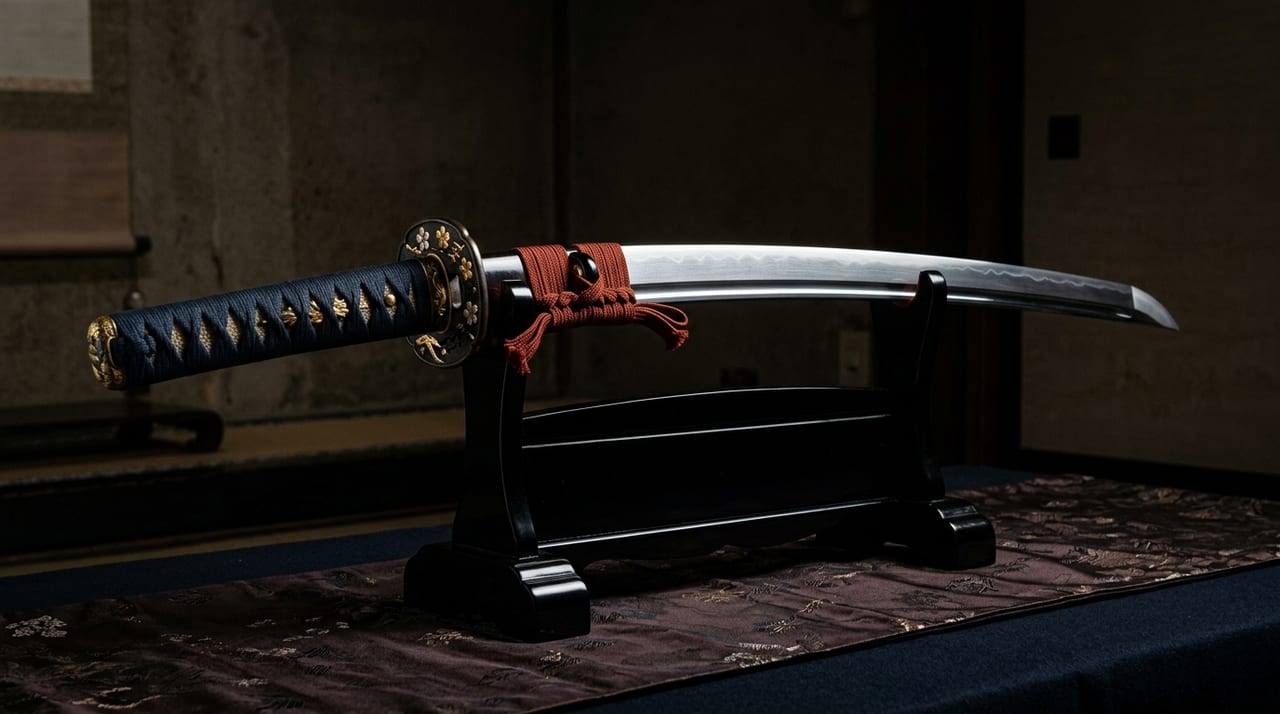
The Mino Tradition (Mino-den) is a sword-forging tradition that developed centered on Seki (関) in Mino Province (present-day Gifu Prefecture) and constitutes one of the five major sword traditions of Japanese blades. While holding historical importance equal to the other four traditions — Bizen, Soshu, Yamashiro, and Yamato — it occupies a unique position distinct from the other four, particularly in the aspect of "mass-produced practical blades of the Warring States period."
Seki City (関市) is still known today as the "town of blades" and serves as an industrial city that accounts for approximately ninety percent of Japan's blade production. Considering that the origins of this modern blade industry lie with the sword-smiths of the Mino Tradition, it becomes clear that the influence of the Mino Tradition extends to modern living culture.
Geographic and Historical Background of the Mino Tradition
Mino Province corresponded to the area of present-day southern Gifu Prefecture and was located in the basin of the Nagara River. This region has been known since ancient times as a source of iron sand, and was also abundant in forests that served as raw material for charcoal. These resources formed the material foundation that supported the development of the Mino Tradition.
Historically, the origins of the Mino Tradition trace back to the Northern and Southern Courts period (14th century). The central figure was Shizu Saburō Kaneuji (志津三郎兼氏), who, though of Yamato Tradition (Tegaki school) origin, was one of the Ten Greats of Masamune who studied under Masamune of Kamakura. After mastering the techniques of both the Yamato and Soshu Traditions, Kaneuji moved to Shizu in Mino (present-day vicinity of Hashima District, Gifu Prefecture), and the establishment of this technique in the Seki region is considered the origin of the Mino Tradition. That a single sword-smith embodied two traditions and pioneered a new one marks the starting point of the Mino Tradition, and the existence of Kaneuji, who bore the fusion of both traditions, is the essential characteristic of the Mino Tradition.
The Five-Fold Folding of the Mino Tradition — Technical Characteristics
The greatest technical characteristic distinguishing Mino Tradition blades from the other four traditions lies in a unique forging technique called "Mino Five-Fold Folding" (Mino gohon kitae). This is a method of folding and forging tamahagane five times, which involves fewer folding iterations compared to Bizen Tradition's fifteen folds or Soshu Tradition's eight folds. Due to this smaller number of folding iterations, the crystal structure of the steel remains relatively coarse, producing the characteristic appearance of the jihada unique to the Mino Tradition.
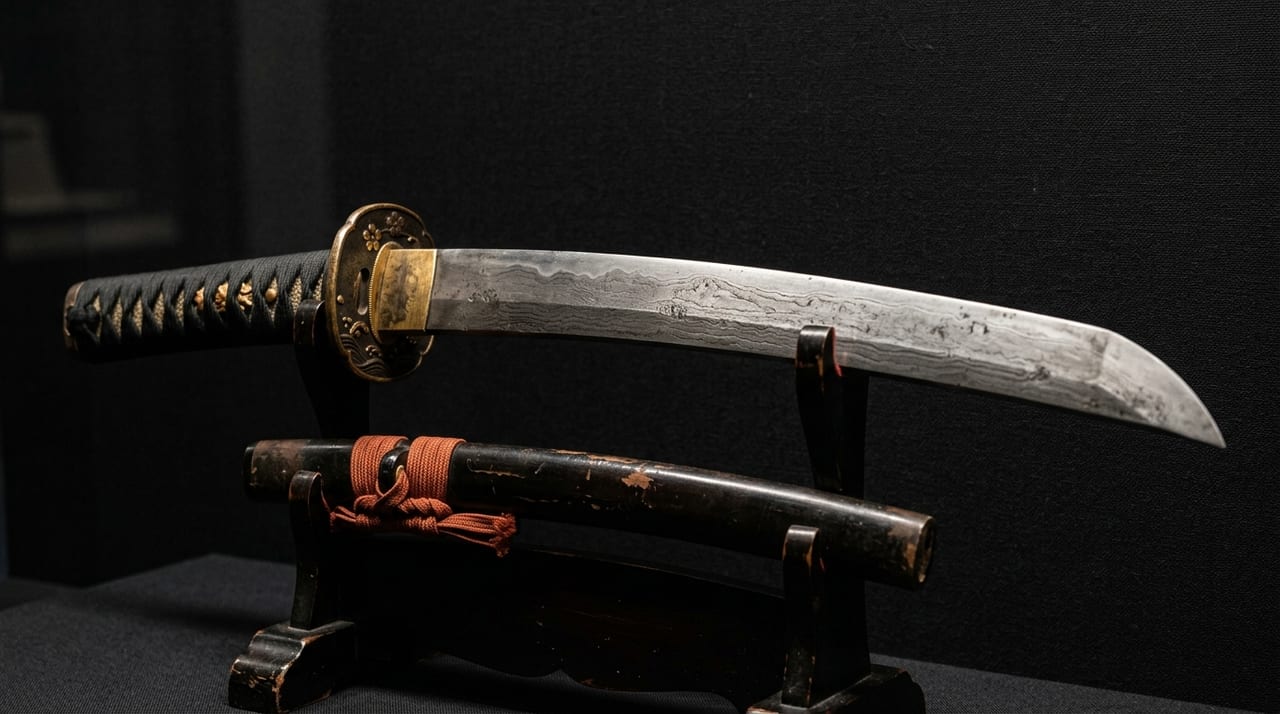
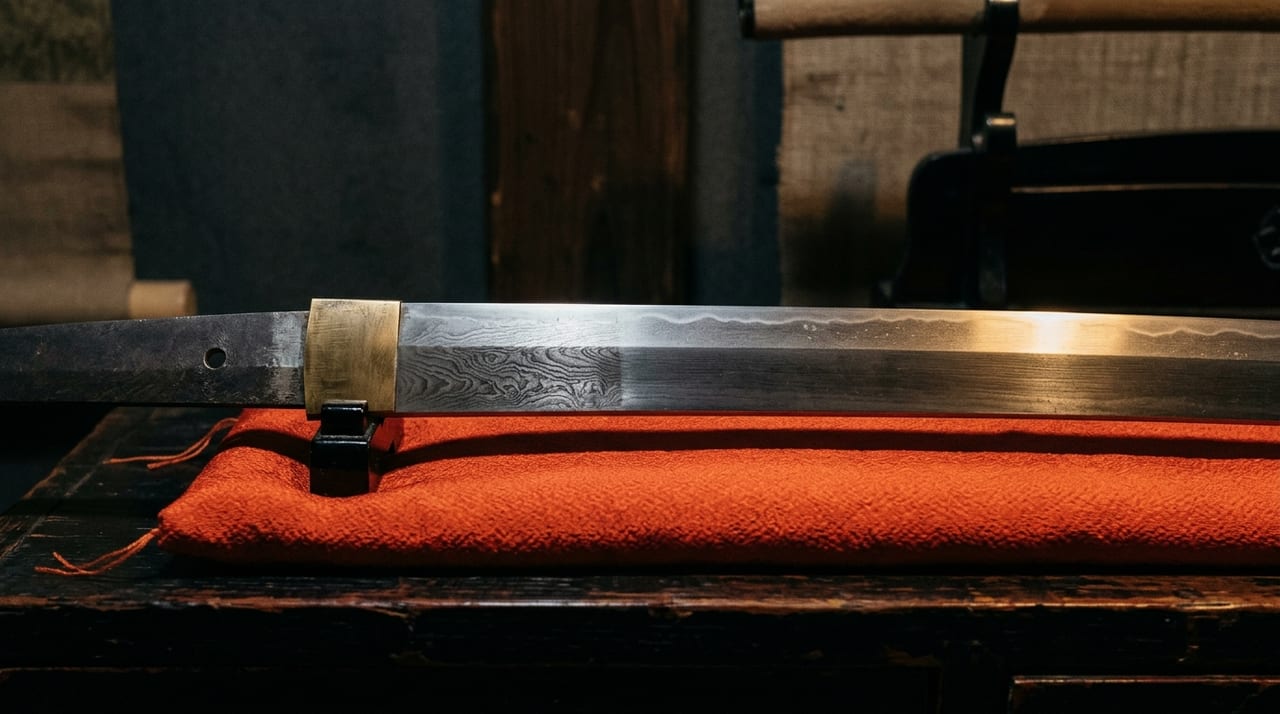
Characteristics of the Jihada: The jihada of the Mino Tradition is fundamentally an itame grain with masame flowing through it, which appears more subdued compared to the koshiba jihada of the Bizen Tradition and the large itame of the Soshu Tradition. While jinie attaches finely and uniformly, in many Mino Tradition works the jihada rarely takes the leading role, instead functioning as a background that enhances the prominence of the hamon.
Characteristics of the Hamon — Sambonsugi and Togi Gunome: The hamon most strongly characterizes the Mino Tradition. In particular, the hamon called "sambonsugi" is synonymous with the Mino Tradition, and the pattern where gunome repeat in shapes that point outward continuously like three cedar trees is the most distinctive design that makes the Mino Tradition instantly recognizable.
"Togi gunome" is also a typical hamon of the Mino Tradition, where the gunome takes a shape pointing sharply upward. These pointed hamons possess a visual impact entirely different from the koshiba midare of the Bizen Tradition or the niwaki-kudare of the Soshu Tradition, serving as an identifying element that distinguishes Mino Tradition blades at a glance from other traditions.
Principal Sword-Smith Lineages — The Kanemoto, Kanesada, and Kaneuji Lines
The number of sword-smiths in the Mino Tradition is very large, and it is said that from the Muromachi period through the Warring States period, dozens to hundreds of sword-smiths were active in the Seki region. Below we introduce the principal sword-smith lineages.
| Sword-Smith | Period | Characteristics |
|---|---|---|
| Shizu Kaneuji (志津兼氏) | Northern and Southern Courts period | Of Yamato Tradition origin and one of the Ten Greats of Masamune. Moved to Shizu in Mino and became one of the founders of the Mino Tradition |
| Seki no Mago-roku Kanemoto (関孫六兼元), Second generation | Warring States period | Received the highest evaluation of the Mino Tradition and ranked at the top in the wazamono ranking. The most typical example of sambonsugi |
| Izumi no Kami Kanesada (Nosada) (和泉守兼定(之定)) | Late Muromachi period / early 16th century | A renowned smith utilized by Warring States generals including Takeda Nobutora, Akechi Mitsuhide, and Hosokawa Tadaoki (Kasen Kanesada) |
| Izumi no Kami Kanesada, Aizu 11th generation (和泉守兼定(会津11代)) | Late Edo period | Favored by Hijikata Toshizo. An embodiment of the cutting power of the Mino Tradition |
| Kanemitsu, Kanetsugu, Kanefusa, Kanematsu, and others (Mino-kane) (兼光・兼次・兼房・兼松ほか(美濃兼)) | Warring States period | Numerous sword-smiths collectively called "Mino-kane" mass-produced practical blades |
Seki no Mago-roku Kanemoto (関孫六兼元): The sword-smith receiving the highest evaluation of the Mino Tradition is Seki no Mago-roku Kanemoto (second generation). Kanemoto, widely known by the name "Mago-roku Kanemoto," is renowned for having created blades with the finest cutting ability of the Warring States period, and is positioned at the top in the "wazamono ranking." While few works by Mago-roku Kanemoto survive today, nearly all of them are highly regarded, and they are known as the most typical examples of sambonsugi.
Izumi no Kami Kanesada (和泉守兼定): Izumi no Kami Kanesada encompasses sword-smiths across multiple generations, and it is particularly important to avoid confusing "Nosada" with "Aizu Kanesada." "Nosada" was a sword-smith of the late Muromachi period / early 16th century, and was a renowned smith favored by Warring States generals including Takeda Nobutora, Akechi Mitsuhide, and Hosokawa Tadaoki (Kasen Kanesada). On the other hand, what Hijikata Toshizo favored was the Aizu 11th generation Izumi no Kami Kanesada of the late Edo period, who was a different person from Nosada. Nosada is called "Nosada" because his signature includes the character "no" (之), and was highly evaluated as a practical blade of the Warring States period, whereas the Aizu 11th generation became widely favored by swordsmen and loyalists of the late Edo period and became an embodiment of the cutting power of the Mino Tradition. It is an important point in understanding the Mino Tradition not to confuse these two.
Shizu Kaneuji (志津兼氏): Shizu Kaneuji, a renowned smith of the Northern and Southern Courts period, is positioned as one of the founders of the Mino Tradition and established a unique style that fused techniques that flowed in from the Soshu Tradition with the influence of the Yamato Tradition. While few tachi by Shizu Kaneuji survive today, some of the existing works have been designated as Important Cultural Properties or National Treasures, making him a representative figure of the early period of the Mino Tradition.
Kanemitsu (兼光), Kanetsugu (兼次), and Many Others: In response to the massive demand of the Warring States period, many Mino Tradition sword-smiths bore the character "kane" (兼), including Kanemoto, Kanesada, Kanemitsu, Kanetsugu, Kanefusa, and Kanematsu, and these are sometimes collectively called "Mino-kane."
The Mass Production System of the Warring States Period
The major difference between the Mino Tradition and the other four traditions lies in the establishment of a "mass production system" during the Warring States period. While the Bizen Osafune school also conducted mass production during the Warring States period, the sword-smith collective in Seki of the Mino Tradition further established a more organized and efficient division of labor system, supplying practical blades in large quantities to the samurai class throughout the nation.
Most of the blades produced within this mass production system did not necessarily pursue the highest artistic quality, but rather possessed a strong character as "practical blades that cut well." For this reason, while the Mino Tradition is known as a "tradition of cutting power," it also sometimes receives evaluation as emphasizing "practicality over artistry."
However, when examining works by top-tier sword-smiths such as Seki no Mago-roku Kanemoto, it becomes clear that the Mino Tradition is not merely a source of mass-produced blades, but rather a tradition that produced renowned masters who reached the technical pinnacle of Japanese sword-smithing.
The Decline of the Mino Tradition and the Modern Era
The sword-smith collective of the Mino Tradition suffered a severe blow when the demand for swords as weapons declined sharply with the onset of the Edo period. Many sword-smiths converted to blade manufacturing (kitchen knives, scissors, etc.), which led to the modern blade industry of Seki City.
Even today, sword manufacturing continues in Seki City, and sword-smiths carrying on the Mino Tradition tradition exist. Some swords produced as "modern swords" (gendai-to) are based on Mino Tradition techniques, and attempts are being made to recreate the classical sambonsugi hamon in the modern era.
The contemporary significance of the Mino Tradition can be understood in two aspects: continuity with the blade industry, and the tradition of practical blades that supported the warrior culture of the Warring States period. As the tradition most "close to everyday life" among the five major traditions, the Mino Tradition can be understood as the source of modern Japan's blade culture. For those wishing to search for swords and blades related to the Mino Tradition online, please be sure to view our works list, and feel free to contact us via the web regarding items of interest.