Minamoto Kiyomaro — The Supreme Genius of Shinshintō, the Life and Swords of the Greatest Bakumatsu Swordsmith Who Burned Out in His Thirties
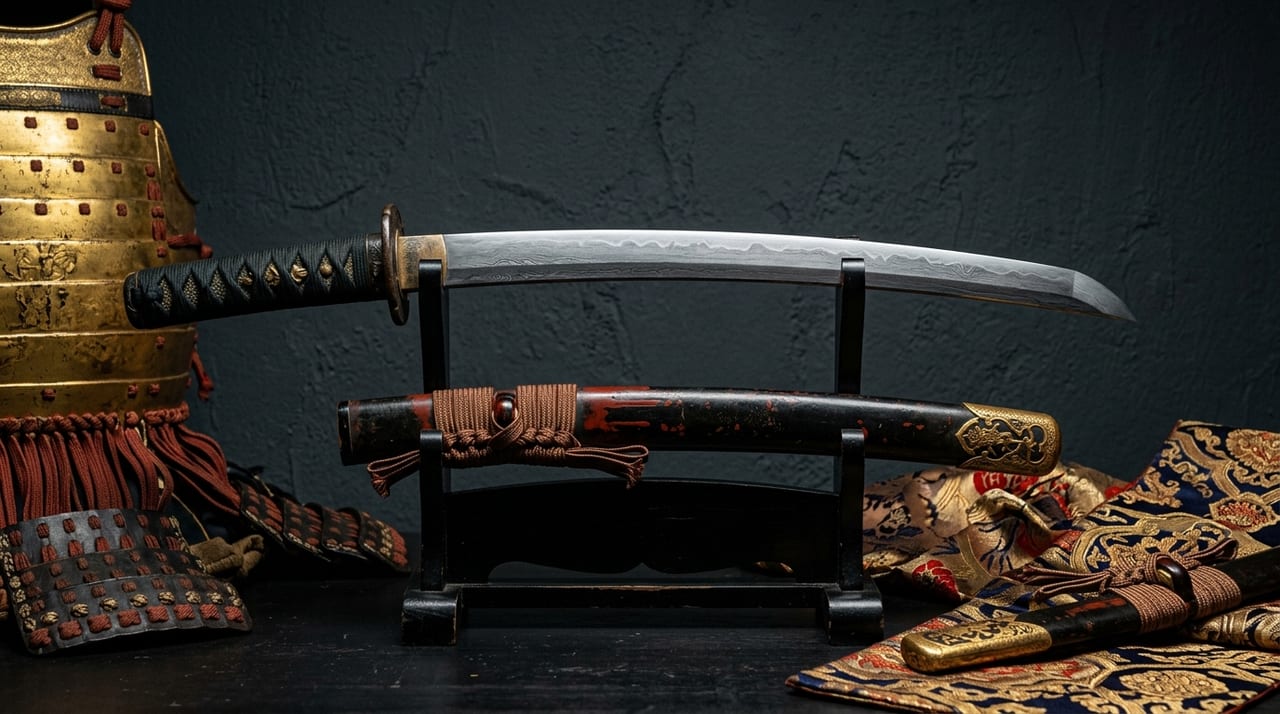 * Image is for illustrative purposes only.
Table of Contents
What Kind of Tōkō Was Minamoto Kiyomaro
Minamoto Kiyomaro (1813–1854) was a tōkō active mainly during the Tenpō and Kōka eras of the late Edo period (1830s–1840s), a figure who shines brilliantly in the history of Japanese swords as the supreme genius of shinshintō. Although he lived a short life, closing it at only 42 years of age, the overwhelming artistic energy emanating from his works has continued to be praised by later generations as "the greatest hamon of the Bakumatsu."
Kiyomaro's given name was Yamaura Tamaki. He was born in Chiisagata-gun, Shinano Province (present-day Nagano Prefecture), and his older brother Yamaura Saneo was also known as a tōkō. The name Kiyomaro is a gō (art name) that he adopted after gaining the patronage of the hatamoto Kubota Kiyone, and his formal mei reads "Minamoto Kiyomaro." It is also known that Kiyomaro changed his gō several times during his life, and accounts have been passed down describing how he gradually established the name "Kiyomaro" from his early gō. It is said that with each change of gō his range of work deepened, and the works he produced after adopting the name "Kiyomaro" in his mature period are regarded as the supreme masterpieces.
From Shinano to Edo — Encounter with the Sōshū-den
Kiyomaro's life traces a dramatic ascent from provincial tōkō in Shinano to the pinnacle of Edo. In his youth he produced regional swords in Shinano, but eventually made his way to Edo to place himself at the center of the sword culture of the day.
What Kiyomaro studied deeply was the Sōshū-den — the magnificent nie-deki hamon of the Kamakura through Nanbokuchō period, with Masamune at its apex. While many tōkō of the shinshintō era stopped at "formal imitation of kotō," Kiyomaro thoroughly studied the "spirit and technical essence" of the Sōshū-den and opened up a unique territory that transcended mere formal imitation.
The traditions of Japanese swords are broadly divided into the Gokaden (five traditions) — Yamashiro-den, Yamato-den, Bizen-den, Mino-den, and Sōshū-den — but the Sōshū-den is a tradition brought to perfection by Masamune in the late Kamakura period, characterized above all by the activity of the jigane and the beauty of nie. As the Edo period progressed, many tōkō came to favor the refined beauty of the Bizen-den style, while fewer and fewer tōkō inherited the wild beauty of nie unique to the Sōshū-den. Kiyomaro independently mastered the spirit of this nearly extinct Sōshū-den and is regarded as the central figure in the revival of the Sōshū-den in Edo.
Kiyomaro's Forging Style — The Furthest Reach of Shinshintō
Kiyomaro's style is characterized from four perspectives: hamon, jigane, form, and mei.
- Nie-deki hamon: Kiyomaro's hamon features great nie flying intensely, with elements unique to the Sōshū-den — ara-nie, tobiyaki, nijūha, and muneyaki — concentrated at high density. The magnificent movement of nie, praised as a return of Masamune, embodies an explosive energy uniquely Kiyomaro's own that transcends mere imitation.
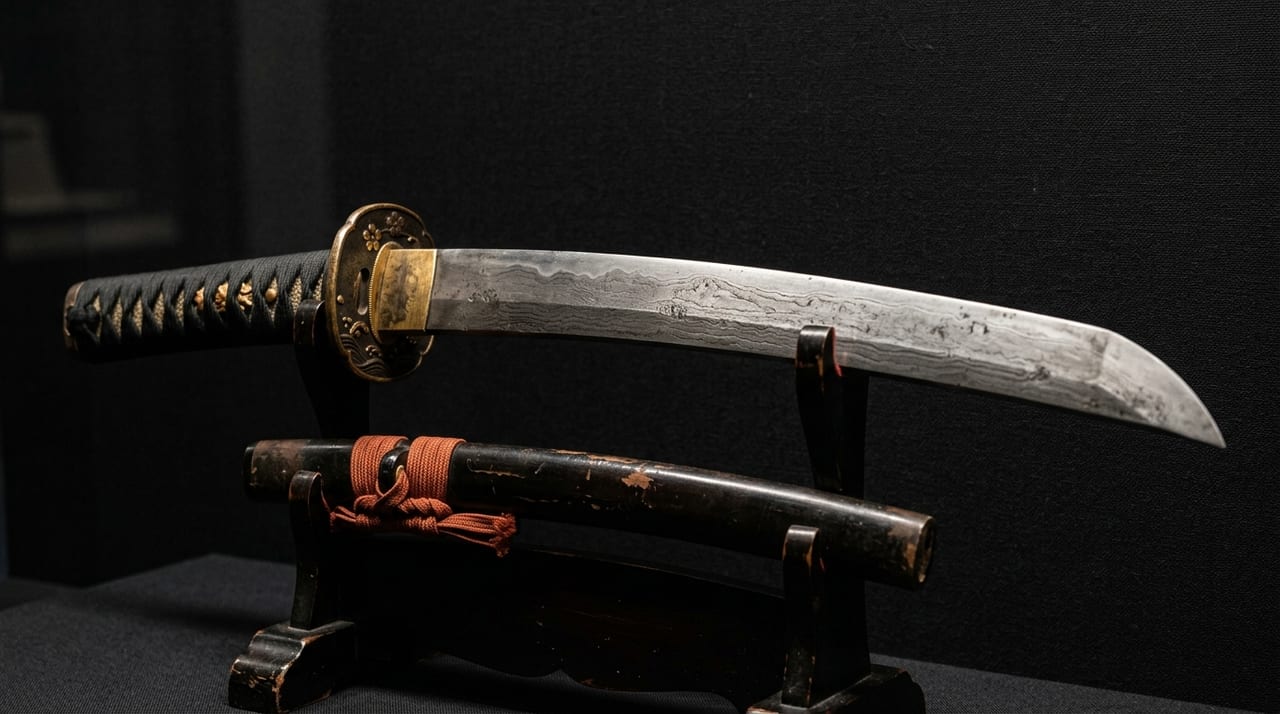
- Jigane: Large itame flows broadly, and a pattern resembling lightning called chikei runs through the jigane. To the rough kitae-hada characteristic of the Sōshū-den is added a deep blackness and solidity unique to Kiyomaro. Nie appears abundantly in the ji (ji-nie), and he reproduced in the late Edo period the essence of the Sōshū-den, in which hamon and ji become one.
- Form: Kiyomaro's swords center on uchigatana and wakizashi, but the form has kokaku — the weighty presence of the kotō period — and they possess an exceptional power for swords of the Bakumatsu era. There is a tendency toward wide mihaba, moderate kasane (thickness), and large kissaki.
- Characteristics of the mei: Kiyomaro's mei characters are powerful, with vigor in the nomi-zukai (chisel work), and the style of writing is said to show changes depending on the period of production. The force residing in each character of the mei is counted among the aesthetic appreciation points of Kiyomaro's swords and serves as an important clue for experts in judging authenticity and period of production.
Connection to the Tenpō Suikoden — Kiyomaro's Rush Through the Bakumatsu
Kiyomaro's name is also known through his association with swordsmen. His swords were actually favored by swordsmen of the Bakumatsu, and anecdotes of "charging in with a Kiyomaro sword" have been passed down in various places.
Of particular note is the fact that Kiyomaro gained the patronage of the hatamoto Kubota Kiyone and set up a forge at his private residence in Yotsuya, Edo. This private relationship of patronage stabilized Kiyomaro's working environment and became the foundation from which his finest works were born. At the same time, however, the demands were strict and the mental pressure was great. Because Kiyomaro established his workshop in Yotsuya, he came in later ages to be known by the sobriquet "Yotsuya Masamune." It is an appellation derived from the fact that he demonstrated in his Yotsuya workshop a skill praised as a return of Masamune, the great master of the Sōshū-den, and it eloquently testifies to the high esteem in which Kiyomaro is held.
Premature Death and Reputation — The Genius Who Burned Out
Minamoto Kiyomaro died suddenly in 1854 (Ansei 1) at the young age of 42. He ended his life on the 14th day of the 11th month of Kaei 7 (Ansei 1 = 1854) by jiban (seppuku). It is said that he was tormented by the fact that ill health from excessive drinking had caused his sword production to fall behind, and he could not fulfill orders for which he had received advance payment.
The evaluation of his works was extremely high even during Kiyomaro's lifetime, and the circulation of gansaku (forgeries) and false-mei pieces began at an early stage. Today, authenticating a genuine Kiyomaro requires thorough examination of hamon, jigane, and mei together with an official kanteisho.
The first thing to confirm when seeking a Kiyomaro sword is whether a kanteisho issued by an official authentication body such as NBTHK exists. The kanteisho reflects, in addition to the judgment on the authenticity of the mei, the results of expert examination as to whether the quality of the jigane and hamon matches Kiyomaro's style. Furthermore, works whose provenance (transmission history) and past owners are known tend to serve as reassuring evidence regarding authenticity. When considering a purchase, it is advisable to verify both the issuing body and the contents of the kanteisho, and to obtain the work from a trustworthy dealer who can clearly explain that it is a genuine piece.
In today's Japanese sword market, genuine Kiyomaro works command the highest prices among shinshintō. There are no works designated as kokuhō or jūyō bunkazai (by convention, kokuhō for swords is limited to kotō), but many have received Jūyō Tōken designation, and it is said that their evaluation in museums and collections is comparable to a kokuhō.
Kiyomaro's Place in the History of Japanese Swords
The shinshintō era began with Suishinshi Masahide's theory of restoration to the classical, as tōkō competed to revive the "beauty of nie" that had existed since Masamune. The highest point reached in this endeavor is Kiyomaro's works.
As the assessments "the return of Masamune" and "the genius of the Bakumatsu" indicate, Kiyomaro was not merely a tōkō of his time but a figure who formed one of the artistic summits in the history of Japanese swords, comparable to the Kamakura–Masamune period. In a lifetime of only 42 years, he carved an undying brilliance into the history of Japanese swords.
Today, when appreciating or owning Kiyomaro's works, proper maintenance to preserve their value as works of art — including regular upkeep such as uchiko and oil application — and storage in an environment with stable humidity are recommended. By handling them while consulting a reliable sword dealer or expert, their artistic value can be passed on to the next generation.