Dotanuki Blades: Higo's Practical Swordsmiths, Hamaguri-ba Edges and Thick Kasane
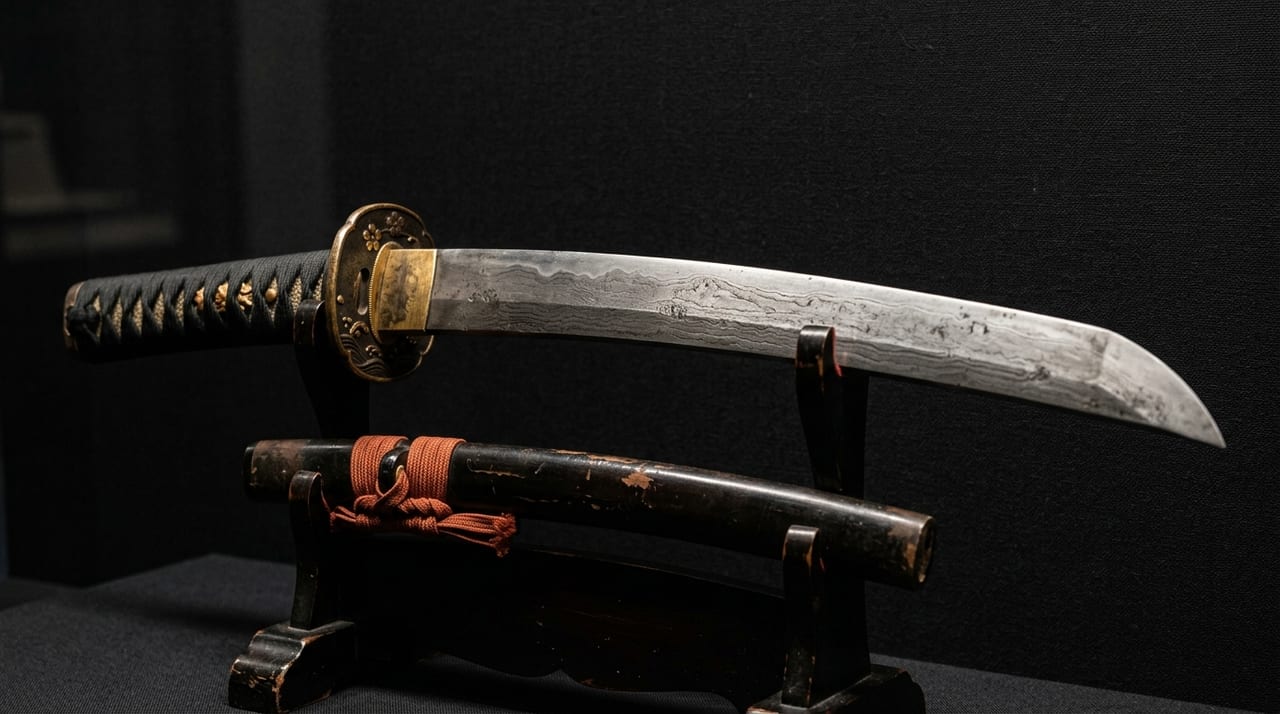 * Image is for illustrative purposes only.
Table of Contents
The Dōtanuki (同田貫) name has long been spoken of as a synonym for "a sword that cuts" and "a sword that does not break" in the sword world. Unlike the refined jigane of Kyoto-made swords or the splendid chōji-ba of Bizen-made swords—the evaluation criteria are completely different—the solid craftsmanship that prioritized use on the battlefield is the defining characteristic of this school. This article will organize information about how the Dōtanuki school, which flourished in Higo Province (present-day Kumamoto Prefecture), was born from what background, what appearance and jigane it possesses, and how it can be appreciated by modern standards.
Higo's Practical Sword-Making Community: The Dōtanuki School
The Dōtanuki school was a community of sword-makers active in Higo Province. It is said to have inherited the lineage of the Enjū school of the Yamashiro tradition, and the name "Dōtanuki" is believed to derive from a place name in Higo. The period of active sword-making was from the Azuchi-Momoyama period through the early Edo period, spanning the Tenshō through Keichō eras (approximately 1573–1615).
Essential to discussing this school is the figure of Katō Kiyomasa, who became the feudal lord of Higo. Kiyomasa is known as a warlord who also participated in the Korean Invasions (the Bunroku and Keichō campaigns), and the Katō clan, which commanded many troops, had significant demand for practical swords in quantity that were sturdy and dependable. The sword-makers of the Dōtanuki school are said to have honed their skills in response to such demand. Two smiths are frequently cited as representative figures:
- Dōtanuki Masakuni: A master smith representing the school, highly regarded as a maker of practical swords
- Dotanuki Kiyokuni: A sword-maker who is said to have received the character "Kiyo" from Kiyomasa's name
Detailed genealogies of the sword-makers can be found on the pages for Dōtanuki Masakuni and Dotanuki Kiyokuni. Additionally, the page for Katō Kiyomasa provides useful reference on the warlord who was their patron.
Hamaguri-ba and Thick Kasane—Reading the Appearance of Dōtanuki Swords
When you hold a Dōtanuki sword, your first impression is of sturdiness. In general, Dōtanuki swords are characterized by a broad blade, thick kasane, and a small difference between the width at the base and the width at the point. This form was born from battlefield demands—to resist breaking even under the impact of cutting blows and to use weight to slice through a target.
The Meaning of Hamaguri-ba
A hamaguri-ba is when the cross-section of the blade has a rounded shape like a clam shell. Compared to work that finishes the edge to a sharp angle and keeps it thin, this approach leaves more metal in the edge itself, making it more resistant to chipping and better able to withstand strong strikes. The practical swords of the Dōtanuki school are often said to exhibit this hamaguri-ba tendency, leading to evaluations of "unbreakable and unbendable."
However, since the hamaguri-ba shape changes over repeated polishing, the same cross-section may not be visible in every surviving individual sword. It is safer to understand it as a tendency of the school rather than an absolute characteristic.
Points of Attention When Viewing the Blade Shape
When actually viewing photographs or descriptions of swords, checking the following points will make the characteristics of Dōtanuki swords clearer:
- Is the blade broad, with a small difference between the width at the base and the width at the point?
- Is the kasane thick, giving the impression of substantial weight when held?
- Is the kissaki appropriately proportioned without excessive length, with a powerful, compact appearance?
- Is the curvature modest, with a straightforward form suited to practical combat?
For a deeper understanding of blade shape, reading the explanation of types of curvature in Japanese swords and their functional meaning alongside this discussion will enhance your appreciation.
The Strength Shown in Jigane and Hamon
The jigane of Dōtanuki swords is primarily characterized by itame with a raised, standing surface. The abundance of nie in the steel creates a sense of the raw strength of the iron itself, which is a major attraction. The hamon is based on gunome and midare patterns, with active nie working throughout, and examples showing gold lines and sumi-nagashi patterns also appear.
Unlike Kyoto-made work that displays a refined hamon, this is a type of sword where appreciation centers on a kind of "rough and powerful" quality. Rather than flashiness, the enjoyment lies in savoring the solidity of the forging.
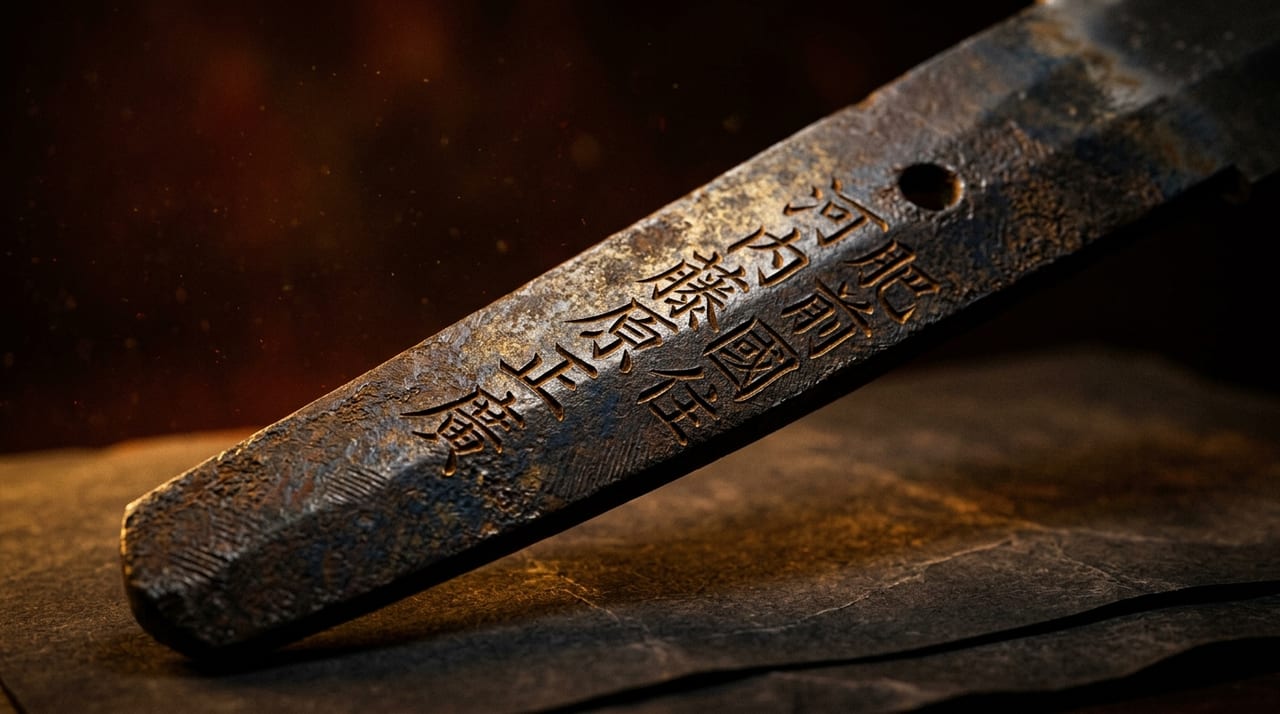
The tang bears a signature that includes "Dōtanuki." The script style and cutting technique of the signature vary by generation and period even within the same school, so authentication involves comprehensive judgment alongside other characteristics. One should avoid determining authenticity or dating based on the signature alone, a principle that extends to discussions of unsigned or forged signatures.
From Practical Swords to Modern Objects of Appreciation
From the Sengoku period through the early Edo period, Dōtanuki swords were valued as "swords for use." However, as the peaceful Edo period continued, the sword gradually took on a stronger character as an art object denoting the status of the warrior class. This transition is discussed in detail in practical swords of the Sengoku period and appreciation swords of the Edo period, which provides valuable context for understanding the position of Dōtanuki swords.
When the Katō clan was stripped of their domain in the early Edo period, the Dōtanuki school, having lost their patron, is said to have lost momentum. Thereafter, significant revival is said to have come only in the Shōwa period. The background to the lasting reputation of Dōtanuki swords as practical weapons is thought to lie in this history and in the accessible appeal of their straightforward, unadorned style.
Appreciating Dōtanuki Swords in Modern Times
For collectors today, the appeal of Dōtanuki swords can be summarized as follows:
- Direct engagement with "the essence of the sword" beyond ornamentation
- Opportunity to observe up close the powerful jigane and the working of nie
- Historical context that evokes the practical warfare of the Sengoku period
- A unique perspective on appreciation compared to ornate masterpiece swords
Swords like those of the Dōtanuki school, which embody "beauty through utility," have their appeal heightened when compared with other schools. If you would like to compare actual swords, TOUKENZA's online catalog (sword directory) allows you to view photographs of blade shape and jigane of the listed swords. For individual questions, please contact us via the inquiry form.
Summary
The Dōtanuki school was a community of sword-makers active during the era of Katō Kiyomasa in Higo Province, earning the reputation of "unbreakable and unbendable." All of their characteristic features—broad blade width, thick kasane, a tendency toward hamaguri-ba, and powerful jigane with abundant nie on an itame surface—arise from construction designed for use on the battlefield. When you shift your standard of beauty from "refinement" to "strength," the appeal of Dōtanuki swords comes into sharp focus. As you select swords, try to be conscious of the philosophical differences among schools.