Sengoku Practical Swords vs Edo Appreciation Blades: Form and Function
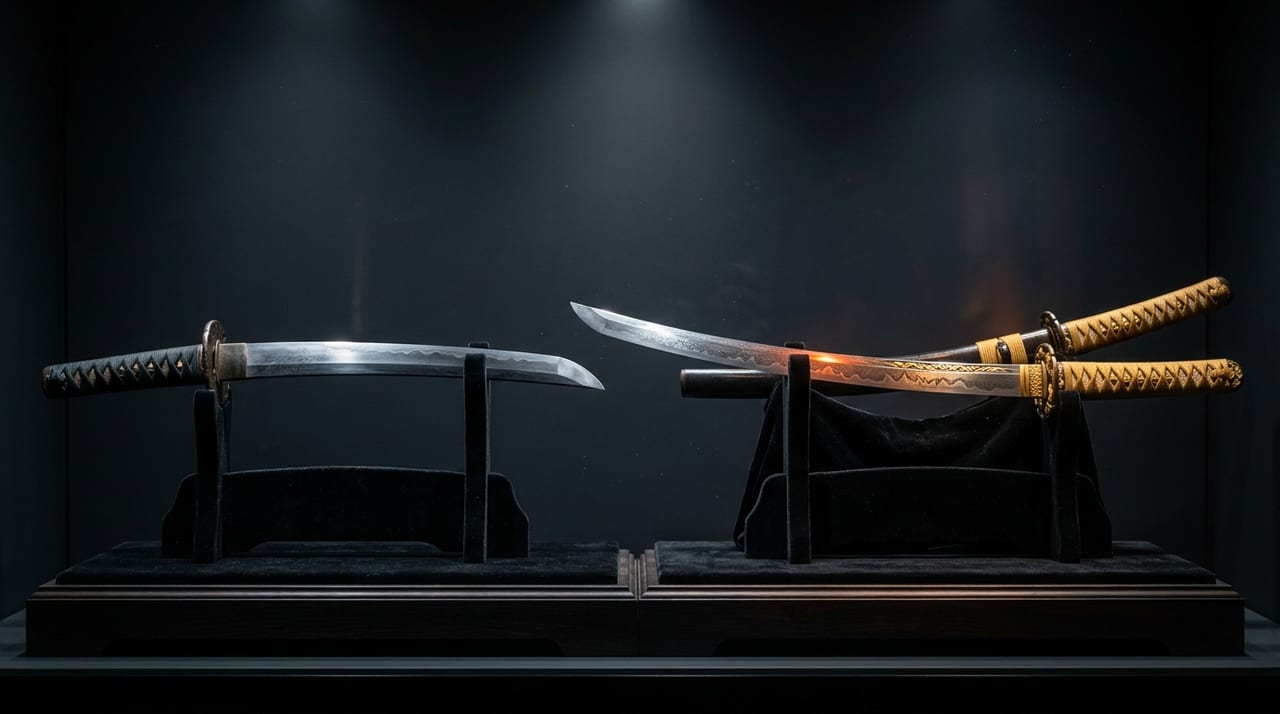 * Image is for illustrative purposes only.
Table of Contents
The transition from the Sengoku period to the Edo period was far more than a mere shift in social structure. It brought about fundamental changes in the form and function of swords themselves, and even in the social perception of swords. The blades that flourished during the Sengoku period were designed with practical utility in combat as the foremost priority. What warriors of that era sought were swords that could reliably strike down enemies and possessed the durability to withstand repeated use. In contrast, swords of the Edo period, particularly from the mid-period onward, transformed in character from practical war implements into works of art that expressed the status and aesthetic sensibility of their owners. In this process of transformation, the form of the sword changed dramatically, and two distinct sword styles became established.
Practical combat swords of the Sengoku period typically had relatively short blade lengths, with the center of gravity positioned near the middle of the blade. This form emerged from practical considerations designed for continuous combat with numerous adversaries. With a shorter blade length, the radius of rotation decreased, allowing swordsmen to swing their blades swiftly even in chaotic melees. Additionally, the closer the center of gravity was to the middle, the more efficiently a cutting strike could be delivered with the same amount of force—a distinct physical advantage. Furthermore, since practical combat swords demanded utility, decorative elements were kept to a minimum, and the handle wrapping was designed to prioritize durability. The tempering of the blade itself was focused on achieving a balance between strength and sharpness.
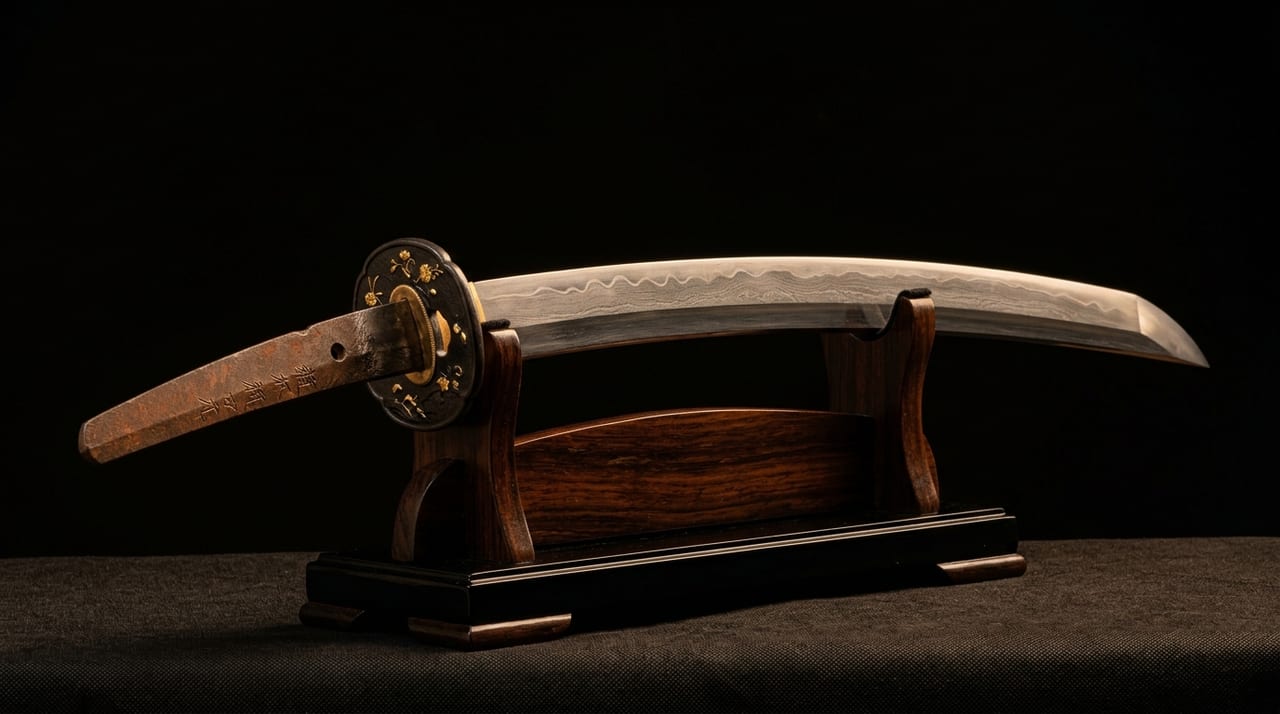
During the Edo period, particularly as lasting peace took hold, the role of the sword underwent dramatic change. The sword became a status symbol of the samurai class and transformed into a work of art expressing the aesthetic sensibility and cultural refinement of its owner. Accompanying this shift in perception, sword craftsmen began to pursue aesthetic value over practical utility. Edo period swords became longer, and the curve, or sori, became markedly deeper. This long, curved form emphasized the artistic grace of movements such as sword-drawing techniques and highlighted the elegance and refined sensibility of the owner. Decorative elements came to be greatly valued, and the jihada, the beauty of the yakiba, and the decorative qualities of attachments such as the tsuba and menuki became matters of considerable concern.
To summarize the characteristics outlined thus far:
| Item | Sengoku Period Practical Combat Sword | Edo Period Viewing Sword |
|---|---|---|
| Blade length | Relatively short | Long |
| Curve | Shallow or nearly straight | Deep, describing a beautiful curve |
| Decoration | Minimal, with handle wrapping prioritizing durability | Valued, with focus on jihada beauty, yakiba design, and decorative qualities of tsuba and menuki |
| Design and forging focus | Balance of strength and sharpness | Visual beauty and elegance |
Functional Transformation from Practical Sword to Viewing Sword
The challenges facing Sengoku period sword makers were eminently practical: how to effectively defeat enemies, and how to forge blades capable of withstanding the harsh conditions of the battlefield. The swords of this period reflected the reality faced by warriors confronted with questions of life and death. Every element—the weight, balance, and sharpness of the blade—was calculated around the efficiency of combat. Each blade was designed with the possibility that its wielder might face numerous enemy soldiers in succession.
By the Edo period, most sword owners no longer ventured onto the battlefield. Although swords were worn at the waist in daily life, they were virtually never actually used in combat. In response to this changed social situation, the design philosophy behind swords became entirely different. Craftsmen began to concentrate on expressing visual beauty when viewing the sword—the artistic patterns in the yakiba, the subtle expressions in the metal's jihada—beauty in a static state. The very act of drawing the sword became a "form" expressing refined movement and aesthetic sensibility, and the sword transformed into an instrument meant to enhance such movements.
Specific Differentiation of Form and Technical Background
The change in swords from the Sengoku to the Edo period was not merely an aesthetic matter; it also reflects a shift in the technical concerns of sword craftsmen. Sengoku period sword makers concentrated on metallurgical techniques to ensure blades would not bend or break and would maintain constant sharpness. Every process, from the selection of tamahagane to tempering, was positioned as a technique supporting practical utility. In contrast, Edo period craftsmen devoted their technical ingenuity to expressing beautiful jihada on the blade surface and creating complex, refined patterns in the yakiba. This was not a decline in technique but a major shift in what technical concerns were directed toward.
The change in the depth of the curve most starkly illustrates this transformation. Sengoku period swords often had shallow curves or forms nearly approaching straight blades. This form arose from the practical requirement to maintain strength while efficiently transmitting the force of a cutting strike. Edo period swords came to be idealized as possessing a beautiful curve. Visually, this curve expressed both elegance and tension simultaneously, and it also made the movements of sword-drawing techniques appear more beautiful. Similarly, blade length served to express visual elegance and functioned as a status symbol representing the owner's rank.
Transformation of Social Recognition and Establishment of Aesthetic Appreciation
For Sengoku period warriors, the sword was a tool ensuring survival on the battlefield and the most trusted weapon. Attachment to the sword stemmed from practical interest. However, as the Edo period began, the sword gradually took on increasingly symbolic meaning. It became an indicator of samurai class status and cultural refinement, and transformed into a medium expressing an individual's aesthetic sensibility and cultural level. Accompanying this shift, the social evaluation of swords also changed. Aesthetic value, completeness as a craft, and the reputation of the sword maker came to be valued over strength and practical utility.
This transformation fundamentally changed how craftsmen engaged with sword-making. Sengoku period sword makers approached their craft by imagining how their swords would perform when used in actual combat. However, Edo period sword makers created with an eye toward how the sword would appear and whether its beauty would be commensurate with the owner's status. Furthermore, a culture of sword appreciation and evaluation developed. The ability to appreciate swords by examining fine details such as the hamon and jihada, and to discern the technique and aesthetics of the craftsman, came to be expected of cultivated samurai. The sword transformed completely from an object of use into an object to be understood and appreciated.
Sengoku period practical combat swords and Edo period viewing swords, despite bearing the same name "Japanese sword," were designed based on entirely different values and aesthetics. The former evolved into optimal forms in response to reality where survival was at stake, while the latter pursued aesthetic value within a stable society. This transformation expresses the fundamental changes in Japanese society through the material object of the sword, and the history of the sword is simultaneously the history of Japanese culture and aesthetic sensibility.