Kanemoto (Magoroku Kanemoto) — The Pinnacle of the Mino Tradition, the Sanbon-sugi Hamon, and the Ultimate Practical Sword Beloved by Sengoku Warriors
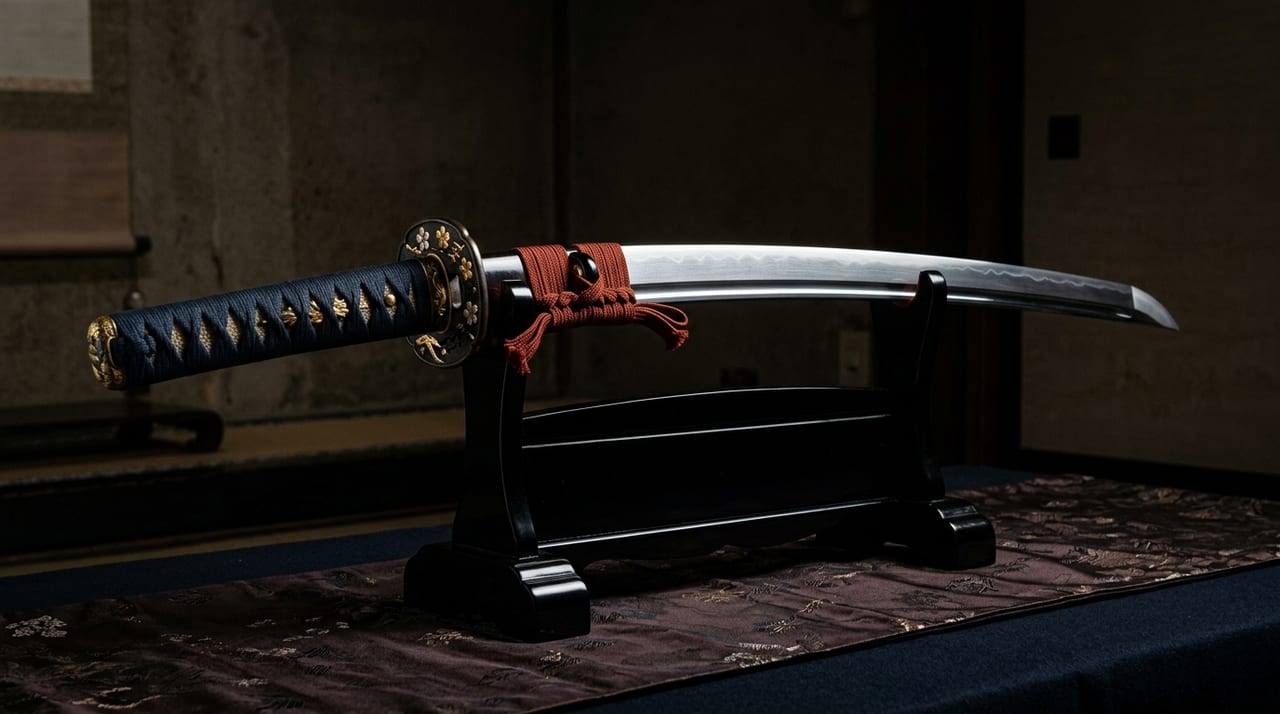 * Image is for illustrative purposes only.
Table of Contents
Who Was Magoroku Kanemoto?
Kanemoto, commonly known as "Magoroku Kanemoto," was a tōkō active in Seki in Mino Province (present-day Seki City, Gifu Prefecture) from the late Muromachi period through the Sengoku period — roughly the early 16th century. He left his name on the history of Japanese swords as a master smith representing the Mino Tradition, and his name is still widely known today as "Seki no Magoroku."
The Mino Tradition served as a "center for exporting tōkō," actively sending smiths to Owari, Ise, and the eastern provinces, and it met the enormous demand of the Sengoku period with swords excelling in the balance of practicality, productivity, and quality. Magoroku Kanemoto is regarded as the tōkō standing at the pinnacle of this Mino sword culture.
The mei "Kanemoto" was passed down across multiple generations, and it is particularly the "2nd-generation Kanemoto (around the Eishō era, early 16th century)" who is renowned as Magoroku Kanemoto. There is debate among researchers about the generational count, but the theory that "Magoroku Kanemoto = 2nd-generation Kanemoto (active during the Eishō and Daiei eras)" is the mainstream view.
Sanbon-sugi — The Symbol of Kanemoto's Hamon
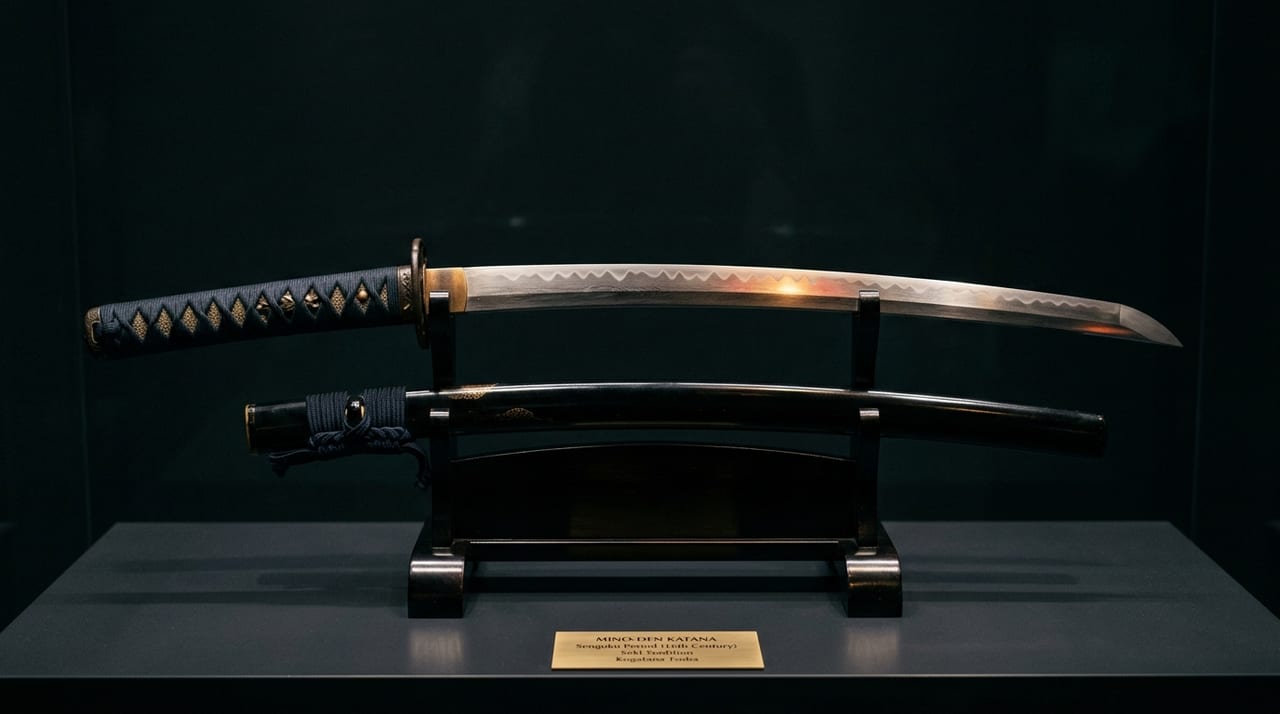
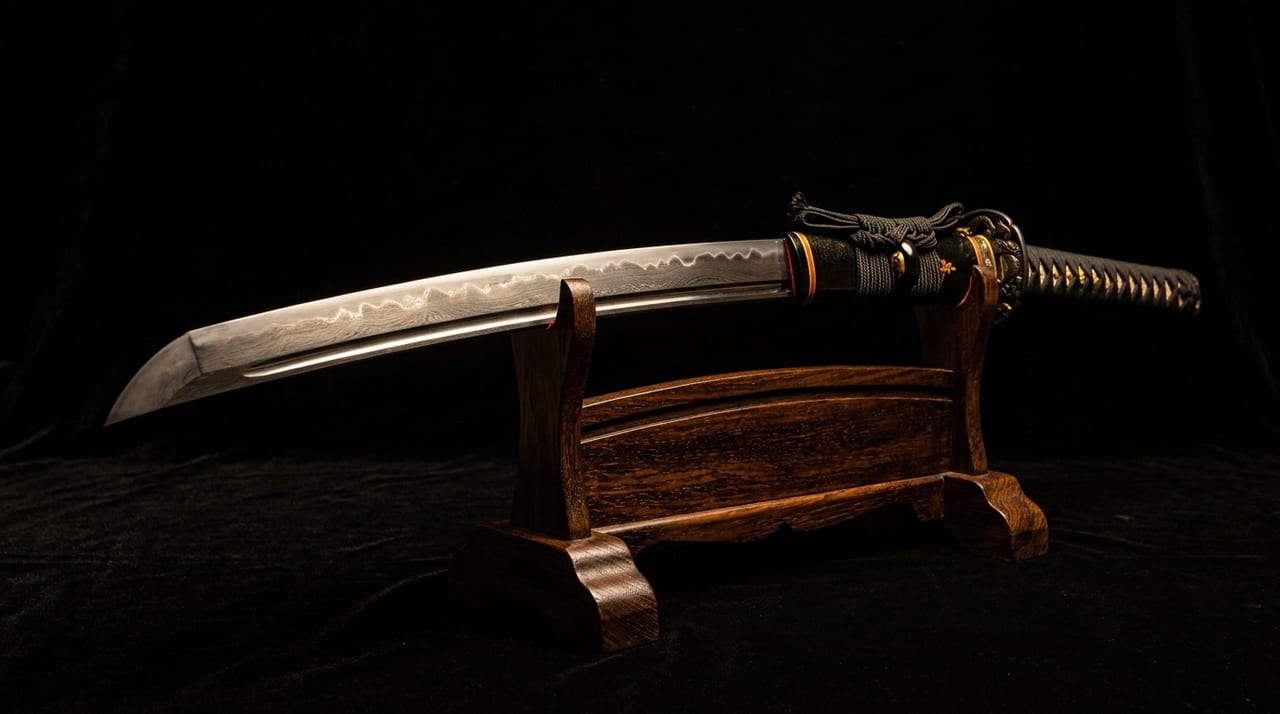
Indispensable when discussing Magoroku Kanemoto is the sanbon-sugi hamon. This is a distinctive hamon style that can be called Kanemoto's hallmark; each peak of the gunome midare forms a shape evoking three cedar trees — composed of repeating "triple-mountain forms."
Characteristics of sanbon-sugi:
- The peaks of the gunome form groups of three, and the hamon develops with a regular rhythm.
- The tops of the gunome have varying heights, with taller peaks appearing regularly every three (a succession of pointed gunome).
- The nie is bright and vigorous, giving the hamon strength and brilliance.
- Kanemoto's sanbon-sugi has many later forgeries and imitations, making a three-point comprehensive assessment — mei script style, jigane, and hamon — essential for identifying genuine works.
The aesthetics of sanbon-sugi: In the Sengoku period, an era when the practicality of weapons was the foremost priority, Kanemoto achieved both a beautiful hamon and high practicality. The regular rhythm of the sanbon-sugi was appreciated by the warriors of the time as embodying the "aesthetics of the martial spirit."
The Mino Tradition and Kanemoto's Technical Position
The Mino Tradition is the most recently established among the Gokaden — Yamashiro, Yamato, Sōshū, Bizen, and Mino — and was established in the Gifu and Seki region during the Nanbokuchō through Muromachi periods. The characteristics of the Mino Tradition are as follows.
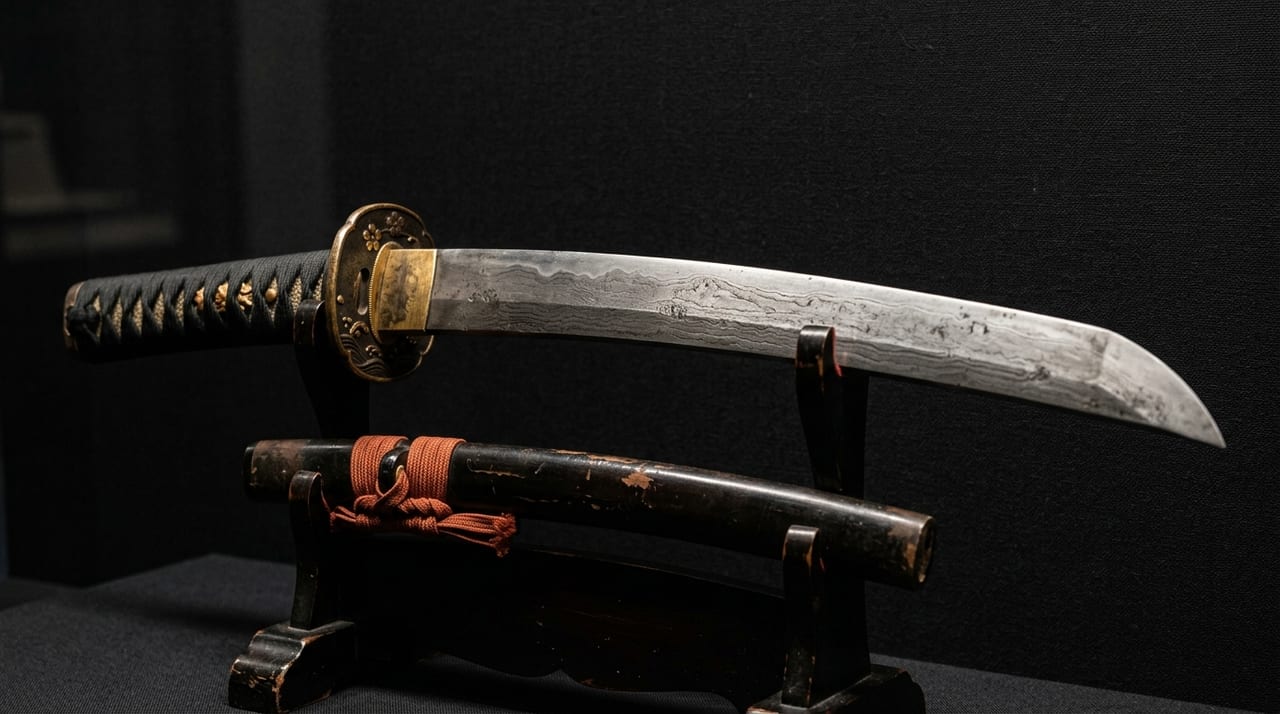
Jigane: Mostly flowing itame (nagare-itame), giving a somewhat rough and powerful impression. The kawagane is relatively thin, forming a structure that is easy to work for practical use.
Hamon: Predominantly gunome midare and togariba, with vigorous nie. The sanbon-sugi is an original style that Kanemoto perfected as a development of this Mino hamon.
Form: The foundation is a well-proportioned shape with a "medium kissaki and medium sori" that prioritizes practicality in the Muromachi through Sengoku periods. The practical, form-first appearance that excludes excessive ornamentation matched the demands of warriors in actual combat.
Magoroku Kanemoto's swords realize these qualities of the Mino Tradition at a high level, and it is said that "if you see Kanemoto, you understand everything about the Mino Tradition."
Kanemoto's Relationship with Sengoku Warriors — Those Who Used His Swords
Magoroku Kanemoto's swords were widely prized by warriors of the Sengoku period. Kanemoto swords, which met the three requirements of sharpness, sturdiness, and practicality at a high level, were ideal weapons for warriors who prioritized actual combat.
As a whole, the Seki kaji — the smiths of Mino Seki — supplied large quantities of commissioned swords to daimyo and warriors throughout the country. Kanemoto was recognized among these as producing "special commissions" and "finest signed works," and was sought after by commander-class warriors. Records remain in later documents that multiple Sengoku warriors possessed and used Kanemoto swords, and the name "Seki no Magoroku" became established throughout the Edo period as a byword for Japanese swords.
Kanemoto's Representative Works and Surviving Pieces
Surviving works by Magoroku Kanemoto are handed down in large numbers in museums and private collections both in Japan and abroad. At the same time, false mei and substitute mei are numerous, making expert appraisal indispensable for identifying genuine works.
Characteristics of the mei: Magoroku Kanemoto's mei is fundamentally a two-character mei reading "Kanemoto," but long mei such as "Nōshū Akasaka-jū Kanemoto" and kana mei are also seen. Power and fluidity coexist in the brushwork. Many works also have a bōhi engraved, and the precision of the hi finish is one of the appraisal points.
Jūyō bunkazai designated works: Multiple tachi, uchigatana, and wakizashi have been designated as jūyō bunkazai and jūyō bijutsuhin, and are exhibited at museums throughout the country.
Kanemoto's Evaluation in the Modern Era and the "Seki no Magoroku" Brand
The brand name "Seki no Magoroku" is still widely known today as a premium brand name for kitchen knives and cutlery, demonstrating that the fame of Magoroku Kanemoto extends its influence even into modern cutlery culture.
For Japanese sword collectors, genuine works by Magoroku Kanemoto receive the highest evaluation as the pinnacle of the Sengoku-period Mino Tradition, and the mere appearance of such a piece on the market is rare. As a work that embodies the ideal of Japanese swords — the simultaneous achievement of practical beauty and artistic beauty — the swords of Magoroku Kanemoto, combining the beauty of the sanbon-sugi hamon with their historical background, continue to be positioned as a centerpiece of the finest Japanese sword collections even today.