Ōsumi Toshihira — The Swordsmithing and Major Works of a Tōshō Who Became a Living National Treasure
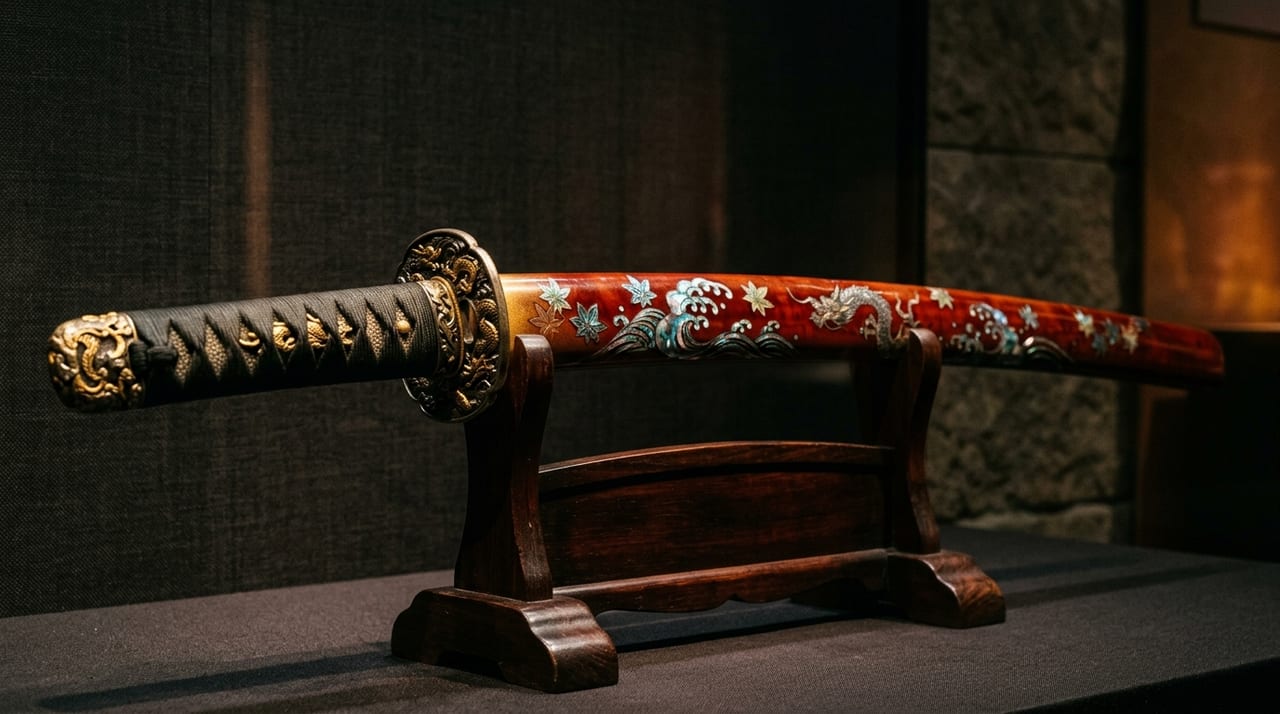 * Image is for illustrative purposes only.
Table of Contents
Ōsumi Toshihira — A Master Tōshō of the Modern Age
Ōsumi Toshihira (Ōsumi Toshihira, 1932–2009) was one of the foremost tōshō of modern Japan, active during the Shōwa and Heisei eras. In 1972 he became mukansa (mukansa) at the Shinsakumeitōten, and in 1997 (Heisei 9) he was designated a holder of the Important Intangible Cultural Property "Nihontō" (Living National Treasure) (Tokyo National Research Institute for Cultural Properties, "Ōsumi Toshihira").
Modern tōshō must obtain approval for the manufacture of each sword from the prefectural Board of Education of their place of residence (or, in cases specified by government ordinance, the Commissioner of the Agency for Cultural Affairs) (Act for Controlling the Possession of Firearms or Swords and Other Such Weapons (Jūtōhō) (e-Gov Hōrei Kensaku), Article 18-2). Ōsumi Toshihira obtained approval to forge swords from the Ministry of Education in 1957 and continued forging for many years (Tokyo National Research Institute for Cultural Properties, "Ōsumi Toshihira").
What Kind of Qualification Is Mukansa Tōshō?
Mukansa is a status that allows a tōshō to submit works to the open-entry exhibition of sword forging (Shinsakumeitōten, now the Gendaitō Shoku-ten) organized by NBTHK without being judged (NBTHK, "Gendaitō Shoku-ten (Swordsmithing Division)"). Tōshō who have accumulated prize-winning records have come to hold mukansa status. This is a separate system from the review in which NBTHK issues certificates such as Hozon Tōken and Jūyō Tōken; in that review, works by living artists are excluded from eligibility (NBTHK, "Review Criteria Based on Article 17, Paragraph 1 of the Review Regulations").
Ōsumi Toshihira apprenticed under the tōshō Miyairi Akihira in Sakaki-machi, Nagano Prefecture in 1952, accumulated special prizes including the Honorary Chairman's Prize at the Shinsakumeitōten, and became mukansa in 1972 (Tokyo National Research Institute for Cultural Properties, "Ōsumi Toshihira").
Style — Suguha Modeled on the Rai School and the Aoe School
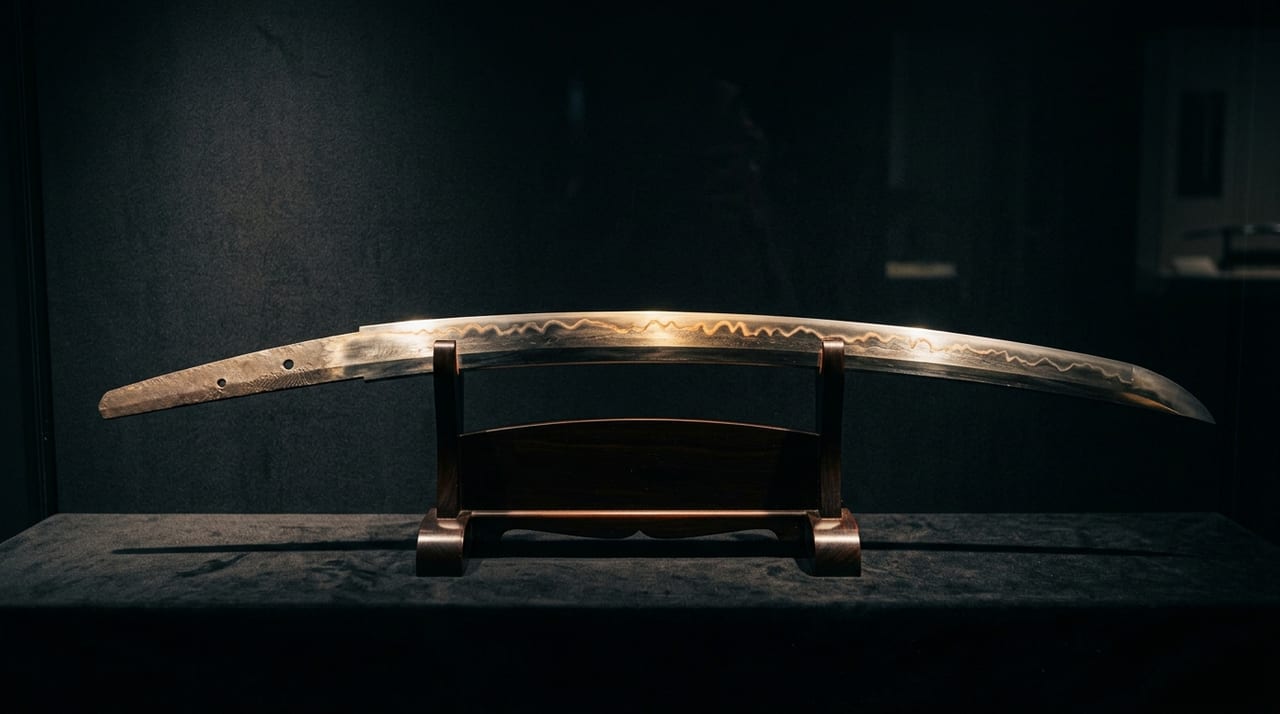
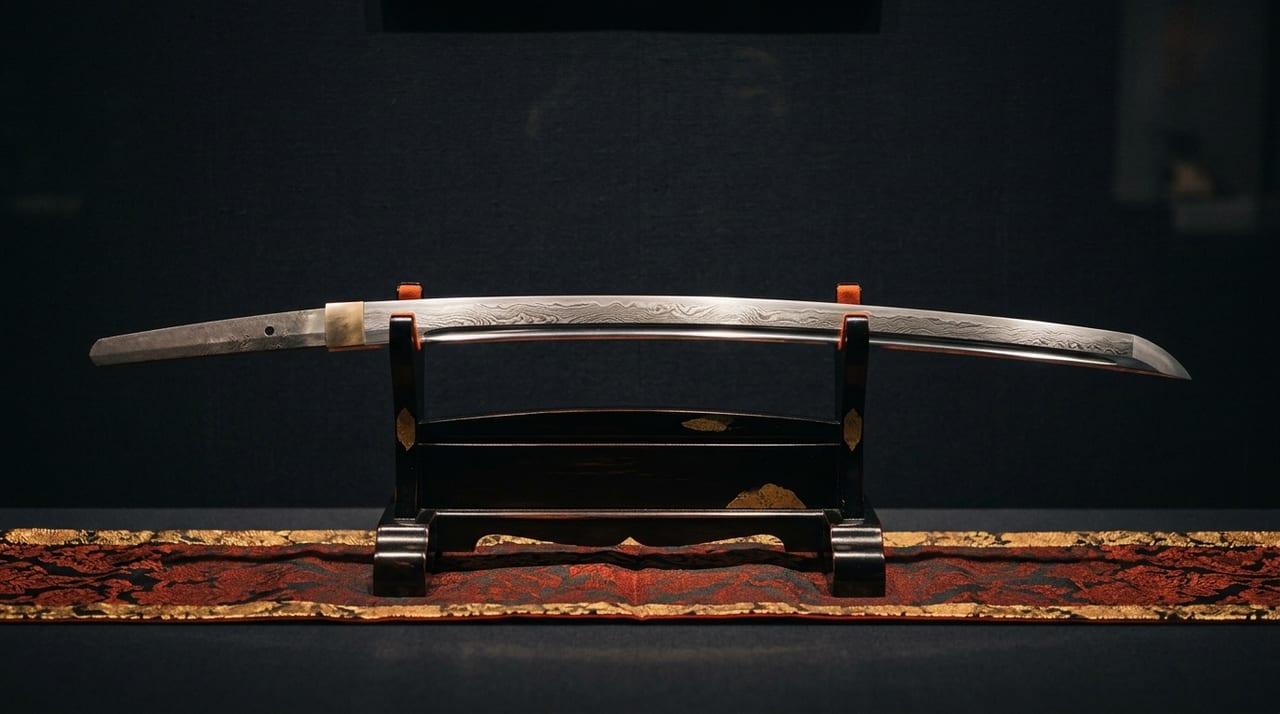
The style that Ōsumi Toshihira took as his ideal was that of the late Kamakura-period Rai School (raiha) of Kyoto and the Aoe School (aoeha) of Bitchū. His works include tachi, katana, and tantō; among the tachi there are also ōdachi exceeding 3 shaku (90 cm), displaying elegant forms with pronounced sori. The stylistic features cited in the obituary article are as follows (Tokyo National Research Institute for Cultural Properties, "Ōsumi Toshihira").
- Forging (jigane): ko-itame-hada (ko-itame-hada)
- Hamon (hamon): predominantly suguha (suguha) with ko-nie (ko-nie) as seen in Rai Kunitoshi and Rai Kunimitsu, mixed with small gunome and ko-ashi, as well as suguha with a tight nioiguchi characteristic of the Aoe School with reverse ashi
- Early works: Some works also feature gunome-midare or chōji-ha (chōjiba) hamon
For a more in-depth look at Ōsumi Toshihira's suguha technique, see also the article Ōsumi Toshihira's Suguha Technique.
Major Works and Awards
Ōsumi Toshihira won prizes repeatedly at the Shinsakumeitōten, and his works also extend to shinki (sacred treasures) and guardian swords. The main career highlights cited in the obituary article are as follows.
- Awards at the Shinsakumeitōten: He received the Honorary Chairman's Prize consecutively from the 3rd exhibition in 1967 through the 5th in 1969, and subsequently received the Agency for Cultural Affairs Director-General Prize and the Mainichi Shimbun Prize. In 1974 and 1978, he received the Masamune Prize as the best work among all entries including those by mukansa smiths.
- Shinki and guardian swords: He created a chokutō for the Ise Jingū sengu ceremony, as well as guardian swords for Prince Takamatsu, Princess Takamatsu, and Prince Takamado.
- Location of major works: A tachi held in the collection of the Tokyo National Museum and an ōdachi measuring 3 shaku 7 sun (112 cm) in Ōta City are cited as major works (Tokyo National Research Institute for Cultural Properties, "Ōsumi Toshihira").
His major works include the suguha tachi that won the Masamune Prize twice. With the Masamune Prize of 1974, he came to be recognized in name and in fact as one of the finest tōshō of the modern age (Tokyo National Research Institute for Cultural Properties, "Ōsumi Toshihira").
Designation as an Important Intangible Cultural Property and the Transmission of Sword Culture
Ōsumi Toshihira was designated a holder of the Important Intangible Cultural Property "Nihontō" in 1997 (Tokyo National Research Institute for Cultural Properties, "Ōsumi Toshihira"). When all holders have passed away, the designation of an Important Intangible Cultural Property is deemed to have been revoked (Act on Protection of Cultural Properties (e-Gov Hōrei Kensaku), Article 72, Paragraph 4), and even when searching for "Nihontō" in the Agency for Cultural Affairs' Database of Nationally Designated Cultural Properties, the designation of the Important Intangible Cultural Property "Nihontō" no longer appears (Agency for Cultural Affairs, "Database of Nationally Designated Cultural Properties," Sword Polishing). The overall situation of modern tōshō is introduced in detail in the article Gendaitō and Modern Tōshō.
How to Purchase and Appreciate Gendaitō
Swords made by Ōsumi Toshihira may sometimes be acquired through reputable sword dealers or at auction. Prices vary depending on the type of work, award history, and elegance of form.
The following points should be noted when considering purchase or appreciation.
- Verify certificates: Whether a certificate issued upon passing NBTHK review (such as a Hozon kanteisho or a Jūyō or Tokubetsu Jūyō designation certificate) is present (NBTHK, "Flow of the Review Process").
- Verify the registration certificate: The sword registration certificate issued by the prefectural Board of Education (transfers must be accompanied by the registration certificate = Firearms and Swords Control Act (Jūtōhō), Article 18).
- Verify the form and activity: Handle the actual piece and verify the hamon, jigane, and bōshi with the naked eye.
Gendaitō are a more accessible category to acquire compared to kotō, shintō, and shinshintō, but works by master smiths are rare, and early decisions may sometimes be required.
Sword Culture in Modern Japan and Ōsumi Toshihira's Place in It
After the Sword Abolishment Edict (Haitōrei) of 1876, the role of the nihontō as a practical weapon came to an end, and swords were reborn as "art and craft objects." Amid this transformation, modern tōshō have devoted themselves to the restoration, study, and development of classical techniques.
Within that current, Ōsumi Toshihira is one of the most highly regarded tōshō, and his works can be said to embody the standards of nihontō art in modern Japan. For passing down the nihontō as a "living traditional craft" to future generations, the existence of master smiths like Ōsumi is indispensable.
At the Japanese Sword Museum (Ryōgoku, Tokyo) and sword exhibitions held throughout Japan, there are opportunities to appreciate excellent gendaitō, and encountering the works of Ōsumi Toshihira will allow one to feel the heights that modern nihontō have reached.